


Project Overview
Rainy Day Restoration & Roofing performed water mitigation work at a residential property in Frisco, TX. The project involved interior water damage conditions that required moisture evaluation, flooring removal, drying access, equipment placement, and areas of selective demolition.
The source of the water loss was not identified in the provided project facts, so we are not assuming a cause. What we can say is that our team found moisture affecting interior areas of the home, including locations where flooring had to be removed and the concrete slab needed to be evaluated. We also opened affected wall and ceiling areas where access was needed to inspect and support drying of concealed building materials.
Water mitigation in a home requires a careful, practical approach. Our goal is to identify affected materials, remove what is necessary, create drying access where needed, and document the condition of the structure throughout the process. In this Frisco project, the mitigation work focused on reducing hidden moisture risk while avoiding unnecessary removal beyond the affected areas.
Project Photos
What We Did
Our team began by inspecting the affected interior areas and documenting the water damage conditions. Moisture evaluation was an important part of this project because water can remain trapped under flooring, along the slab, behind baseboards, or inside wall and ceiling cavities even after the surface looks dry.
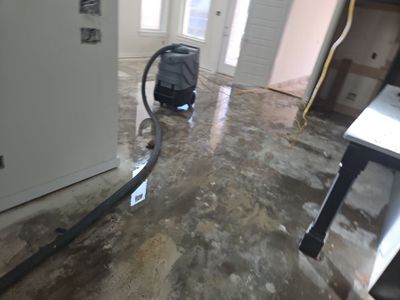
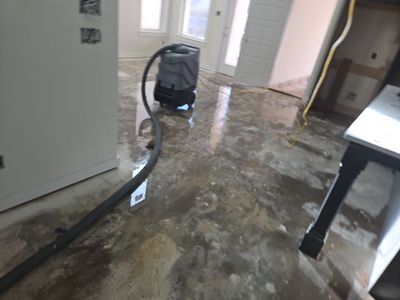
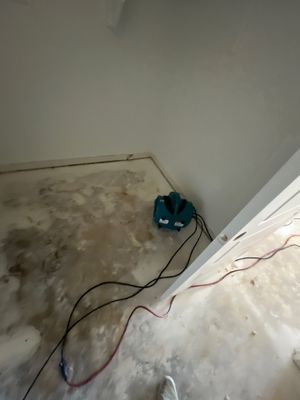
The project involved flooring removal in affected areas of the home. Once finished flooring was removed, our team was able to access the concrete slab and check moisture conditions more directly. This step matters because flooring materials can slow evaporation and hide moisture underneath. Exposing the slab helps the drying process and gives the mitigation team a better way to monitor the affected area.
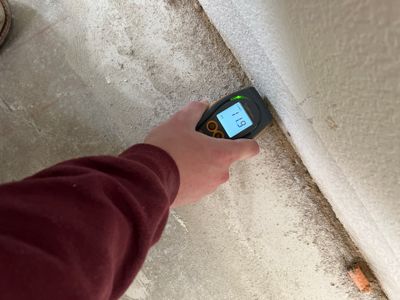
We also documented moisture conditions on the concrete slab. Exact readings are not included here, but slab testing was part of the mitigation process. Concrete can retain moisture, and that moisture can affect future flooring installation if it is not properly addressed. Checking the slab helps guide drying decisions and helps homeowners, adjusters, and repair teams understand the condition of the home before moving forward.
The mitigation work included selective interior demolition where needed. In some areas, affected finishes were removed to expose framing and ceiling joists. Opening these areas can be necessary when moisture has reached concealed spaces or when materials prevent proper drying. We focused on creating drying access, not removing more material than needed.
Our team also placed drying equipment inside the home to support moisture removal. Equipment placement is a key part of water mitigation because air movement and dehumidification help reduce moisture in affected materials and spaces. During active mitigation, technicians typically continue checking conditions and adjusting the approach based on what the structure needs.
Because the project facts do not confirm final completion, this case study does not describe the job as completed. It reflects the mitigation work performed and documented during the active response.
Why This Work Mattered
Water damage inside a home can move quickly through materials. Flooring, drywall, trim, framing, insulation, ceilings, and concrete can all respond differently to moisture. Some materials show damage quickly, while others can hold moisture out of sight.
That is why professional moisture evaluation matters. A room may look mostly dry after standing water is gone, but moisture may remain under flooring or inside building cavities. If affected materials are covered back up too soon, the homeowner may face additional damage later.
In this Frisco home, flooring removal and slab evaluation helped our team better understand where moisture was present. Opening affected wall and ceiling areas also helped create access to materials that could not dry properly while concealed. These steps can be disruptive, but they are often necessary to reduce the risk of trapped moisture and to prepare the home for the repair phase that may follow.
Documentation also matters. For homeowners and insurance adjusters, clear documentation helps connect the mitigation work to the actual conditions found onsite. It helps show what areas were affected, what materials were removed, where drying access was created, and why equipment was placed. This can make the claims and repair process easier to understand.
Fast response is especially important. The longer moisture remains in a structure, the more likely it is to spread into additional materials. Prompt mitigation can help limit the affected area and support better drying outcomes.
Local Service Area
This water mitigation project took place in Frisco, TX. Rainy Day Restoration & Roofing serves homeowners and property owners across the North Texas area with restoration and roofing services, including water mitigation for residential properties.
Homes in Frisco and surrounding communities can experience water damage from many different situations, but every job needs to be evaluated based on the actual conditions found onsite. We do not assume the cause of a loss without confirmation. Instead, our team inspects the affected areas, documents the conditions, checks moisture levels where appropriate, and explains the next steps clearly.
For this residential mitigation project, the work centered on flooring removal, slab moisture evaluation, selective demolition, exposed framing and ceiling areas, and drying equipment placement. These are common parts of a structured water mitigation response when moisture has reached materials beyond the surface.
Need Help With Similar Damage?
If your home has wet flooring, damp walls, water on a slab, stained ceilings, or signs that moisture may have reached hidden areas, it is important to act quickly. Waiting can allow water to move farther into the structure and make mitigation more involved.
Rainy Day Restoration & Roofing can inspect the affected areas, document the damage, help identify where moisture is present, remove affected materials when necessary, and place drying equipment to support the mitigation process.
If you are dealing with water damage in Frisco, TX, or a nearby North Texas community, contact Rainy Day Restoration & Roofing. Our team will help you understand what is affected, what needs to be addressed first, and what steps may be needed to protect the property before repairs begin.