


Project Overview
Rainy Day Restoration & Roofing responded to a commercial water mitigation project at a Salvation Army facility in Sherman, TX. The project involved interior water-related damage that required a careful inspection, moisture documentation, selective removal of affected materials, and preparation of wall areas for drying access or the next phase of repair planning.
Commercial water losses need to be handled with both urgency and control. In a facility setting, water can affect occupied rooms, service areas, storage spaces, offices, hallways, and wall systems that may not show the full extent of the problem at first glance. Our team focused on identifying affected materials, documenting moisture conditions, and opening areas where needed so hidden moisture could be evaluated instead of left behind.
Because the available project details do not identify the specific source of the water loss, this case study does not assume a cause. The focus of our response was the mitigation work itself: finding moisture, removing damaged materials where appropriate, and preparing affected areas so the building could move toward drying, evaluation, and repair planning.
Project Photos
What We Did
Our team inspected the affected interior areas and used moisture documentation to help determine where water had impacted the building materials. Moisture meters are important on commercial mitigation projects because wet materials are not always obvious by appearance alone. A wall can look mostly normal on the surface while moisture remains behind drywall, along base areas, or inside wall cavities.
The mitigation work included checking wall sections and other affected surfaces for moisture, documenting conditions, and using that information to guide the next steps. Rather than relying only on visible staining or surface damage, we worked to understand which materials needed attention and which areas required access for further evaluation.
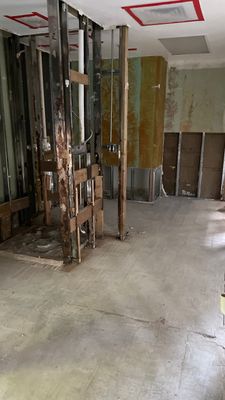
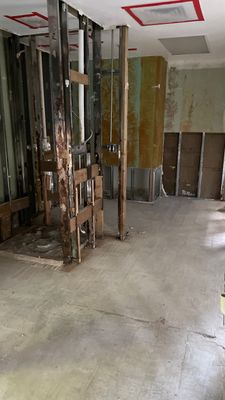
In affected wall areas, our team removed sections of drywall to reach damaged or wet materials and expose wall framing where needed. Selective removal is an important part of water mitigation when finished surfaces are holding moisture or blocking access to the wall cavity. Opening those areas helps improve drying access, allows the structure to be evaluated more clearly, and reduces the risk of concealed moisture remaining inside the assembly.
We also cleared and prepared affected sections so the space could be evaluated for drying or repair needs. Open wall cavities, exposed framing, and cleaned access points help create a more practical path forward. On a commercial job, this kind of preparation also helps facility contacts, property representatives, and insurance professionals understand what was affected and what work was performed.
Documentation was also a key part of the project. Our team documented the areas we inspected, the moisture conditions we encountered, and the materials that were opened or removed. Clear documentation matters on commercial losses because multiple parties may be involved in decisions, including facility managers, property owners, adjusters, and repair contractors.
Why This Work Mattered
Water damage in a commercial facility can become more complicated when moisture is not located and addressed quickly. Water can move into drywall, insulation, baseboards, framing, flooring edges, and adjacent rooms. Even after visible water is gone, trapped moisture may continue to affect building materials.
That is why our team focused on moisture tracking and controlled access. Moisture readings help separate affected areas from areas that may not require removal. This supports a more focused mitigation plan and helps avoid unnecessary demolition while still addressing materials that cannot be ignored.
Selective drywall removal also matters because closed wall systems can hide moisture. If wet drywall or damp wall cavities are left untreated, the building may face additional material damage or delayed repair planning. By opening affected areas, we created access for evaluation and drying preparation and gave the project a clearer path forward.
For organizations like the Salvation Army, building use and continuity matter. A water loss can interrupt normal operations, create planning challenges, and require coordination between staff, property contacts, and insurance representatives. A structured mitigation response helps everyone understand the affected areas, the work being performed, and the next decisions that need to be made.
We do not describe this project as fully complete because the provided scope reflects mixed-stage mitigation activity. What we can say is that our team performed the type of practical mitigation work that commercial properties need after water-related damage: inspection, moisture documentation, removal of affected wall materials where needed, and preparation of the space for drying access or repair planning.
Local Service Area
This project took place in Sherman, TX. Rainy Day Restoration & Roofing provides water mitigation services for commercial properties, nonprofit facilities, offices, churches, institutional buildings, and other facilities throughout Sherman and nearby North Texas communities.
Every water loss is different. Some projects involve a limited area of wet material, while others require multiple wall openings and more detailed documentation. In this Sherman commercial project, our work centered on interior moisture checks, affected drywall removal, exposed framing, and preparing wall areas so hidden moisture could be addressed appropriately.
Local response matters because timing can affect the scope of mitigation. The sooner affected materials are inspected and documented, the sooner a plan can be made for drying, removal, and repairs. For property managers and facility leaders, that can make communication and decision-making much easier.
Need Help With Similar Damage?
If your commercial property, nonprofit facility, office, church, or managed building has experienced water damage, Rainy Day Restoration & Roofing can help inspect the affected areas and begin the mitigation process. Our team can document moisture conditions, identify affected materials, open wall areas when needed, and prepare the space for drying or repair planning.
Water damage should not be judged by appearance alone. If walls, baseboards, flooring edges, or interior finishes have been exposed to water, hidden moisture may still be present. A prompt professional inspection can help you understand what is affected and what steps should come next.
Rainy Day Restoration & Roofing serves Sherman, TX and surrounding communities with practical, documented water mitigation services for commercial property owners, facility managers, property managers, and adjusters dealing with unexpected water-related damage.