





Project Overview
Rainy Day Restoration & Roofing performed commercial water mitigation work for Longhorn Mechanical in Irving, Texas. The project involved interior mitigation inside a commercial building, including affected hallways and rooms where moisture evaluation, drying equipment, and selective lower-wall removal were part of the response.
Commercial water mitigation needs to be organized, practical, and well documented. In a business setting, water can move beyond the first visible area and affect adjoining rooms, hallway walls, flooring edges, trim, base materials, and wall cavities. Our team focused on identifying affected areas, creating drying access, and placing equipment to help stabilize the environment.
Because this type of work can involve multiple stages, our public summary focuses on the mitigation activities performed and documented during the project. We are not presenting this as a reconstruction summary or making claims about final completion. The work described here reflects the water mitigation response our team provided at the property.
Project Photos
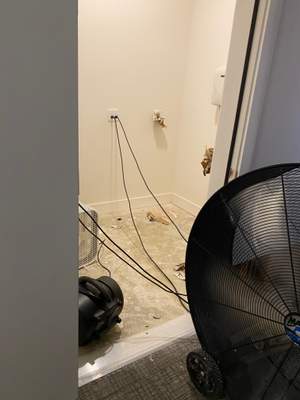
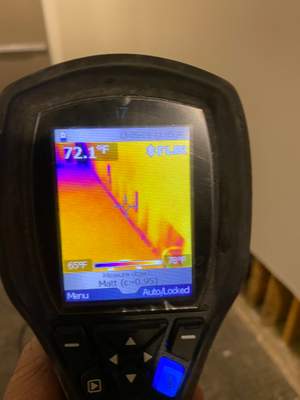
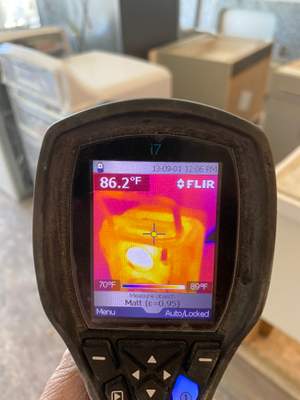
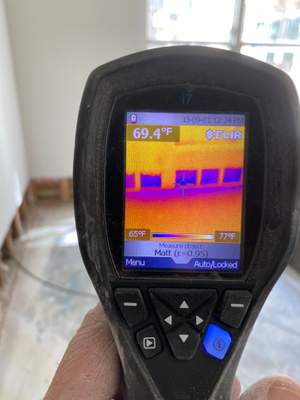
What We Did
Our team inspected the affected commercial interior areas and evaluated where moisture was present or likely to be trapped. In water mitigation, the wettest material is not always the most visible material. Moisture can move behind baseboards, into lower wall sections, under flooring transitions, and into concealed cavities. That is why inspection and moisture evaluation are important before and during the drying process.
We used thermal moisture inspection as part of the assessment. Thermal imaging can help guide the investigation by showing temperature differences that may be associated with moisture. It does not replace direct moisture verification, but it is a useful tool when checking walls, lower sections, and adjoining areas that may not show obvious surface staining.
The mitigation work included placing air movers in affected rooms and hallways to move air across damp surfaces and support evaporation. We also used dehumidification equipment to help control humidity inside the building. Air movement and dehumidification work together: air movers help release moisture from materials, while dehumidifiers remove moisture from the air so the space does not remain overly humid.
Our team also opened affected lower wall areas where drying access was needed. Lower-wall demolition, sometimes called flood cuts, can be necessary when water has affected drywall, insulation, or cavities near the floor. Opening those sections allows wet or damaged materials to be addressed and helps airflow reach areas that would otherwise stay closed off.
For a commercial building, equipment placement matters. We focused on setting up drying equipment in a way that supported the mitigation plan while keeping the work areas organized. In occupied or operational business spaces, access, safety, and communication are important parts of the job.
Why This Work Mattered
Water damage in a commercial property can create problems quickly if it is not addressed. Drywall, trim, insulation, and flooring materials can hold moisture, and high indoor humidity can slow drying across the affected space. If moisture remains trapped inside wall cavities or behind finish materials, the property may face additional damage later.
Opening affected lower wall sections helped improve drying access. This step is often important when lower walls have absorbed water or when moisture is suspected behind the surface. Simply drying the outside face of a wall may not be enough if the inside of the assembly is still wet. Selective removal can make the mitigation process more effective and reduce the chance of leaving hidden moisture behind.
The use of air movers and dehumidifiers also helped support a controlled drying environment. Commercial interiors often have larger connected spaces than a single-room residential loss. Hallways, offices, storage areas, and adjoining rooms can all be impacted depending on how water travels. A coordinated drying plan helps address the affected areas more efficiently.
Documentation was also important on this project. Our team documented the affected areas, the mitigation setup, moisture inspection activity, and opened wall sections. For property managers, facility managers, business owners, and insurance adjusters, clear documentation helps explain what was observed and what steps were taken. It can also support communication throughout the mitigation process.
Fast response matters because water damage can spread through materials before it is obvious. Early inspection and mitigation can help limit further damage, reduce uncertainty, and give property decision-makers a clearer plan. In a commercial setting, that clarity is especially valuable because building access, employee activity, tenant coordination, and insurance communication may all be involved.
Local Service Area
This project took place in Irving, Texas, where Rainy Day Restoration & Roofing provides water mitigation services for commercial properties and other buildings affected by interior moisture. Irving businesses, offices, industrial spaces, and managed properties can all experience water damage that requires prompt attention and professional drying.
Our team serves property owners, facility teams, property managers, and adjusters who need a mitigation contractor that can inspect affected areas, document the conditions, place drying equipment, and remove affected materials when appropriate. Every project is different, so we focus on the actual conditions in the building rather than using a one-size-fits-all approach.
For commercial water mitigation, the priority is to stabilize the affected areas, reduce moisture, and help prevent additional damage. That may include moisture checks, equipment setup, selective demolition, drying access, and ongoing adjustments as conditions change.
Need Help With Similar Damage?
If your commercial property has wet walls, damp flooring, moisture near baseboards, elevated humidity, or visible water damage, it is important to have the affected areas inspected quickly. Waiting can allow moisture to move farther into building materials and make mitigation more complicated.
Rainy Day Restoration & Roofing can help assess the affected spaces, document the damage, place drying equipment, perform moisture checks, and open affected areas when drying access is needed. We work with commercial property owners, facility managers, property managers, homeowners, and adjusters who need a practical mitigation plan after water damage.
If you need water mitigation in Irving, TX or the surrounding area, contact Rainy Day Restoration & Roofing to schedule an inspection and discuss the next steps for your property.