





Project Overview
Rainy Day Restoration & Roofing performed water mitigation for a residential freeze-related water loss in Dallas, Texas. The project involved interior areas of the home where water had affected ceilings, walls, flooring, and framing. Our team documented the conditions, opened affected materials where needed, removed debris, and placed drying equipment to support the mitigation process.
Freeze losses can be especially disruptive for homeowners because water may travel beyond the first visible area of damage. Moisture can move into ceiling cavities, behind walls, under flooring, and into framing assemblies before the full scope is obvious. In this Dallas home, our mitigation work focused on creating drying access and removing materials that could not remain in place or were blocking access to wet areas.
This case study describes the mitigation work performed. It does not state that the project was complete, and it does not describe a reconstruction scope. The focus here is the water mitigation phase: assessment, controlled demolition, debris removal, and structural drying support.
Project Photos
What We Did
Our team began by inspecting the affected interior areas and documenting the visible conditions throughout the home. With a freeze-related loss, it is important to look beyond surface damage and identify where water may have traveled inside the building materials. That process helps determine what can be dried in place and what needs to be removed to allow the structure to dry properly.
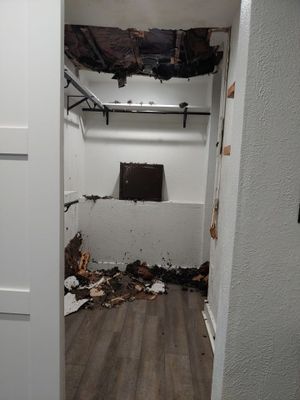
The mitigation work included ceiling and wall demolition in affected areas. We opened sections of drywall and other finish materials to expose cavities, framing, and wet building assemblies. This type of selective demolition is often necessary when moisture is trapped behind finished surfaces or when insulation, drywall, or related materials are too damaged to remain.
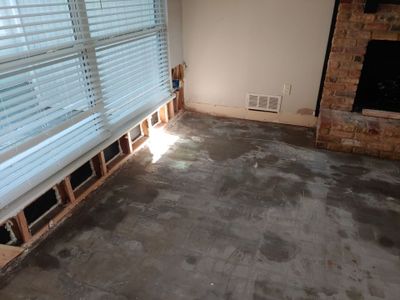
We also removed affected flooring in areas where access was needed. Water that gets under flooring can be difficult to address from the surface alone. If moisture remains trapped below flooring materials, it can extend drying time and create additional problems later. Removing flooring in the affected areas helped our team access the underlying surfaces and support a more thorough drying setup.
As materials were removed, we managed demolition debris so the work areas could be accessed safely and drying equipment could be positioned effectively. Debris removal is a practical but important part of mitigation because it clears the way for airflow, inspection, and continued monitoring.
Our team placed air movers and dehumidifiers throughout affected areas of the home. Air movers help circulate air across wet surfaces and into opened cavities, while dehumidifiers help reduce moisture in the indoor environment. Together, this equipment supports controlled drying after damaged materials have been removed and wet areas have been exposed.
We focused on drying access rather than simply placing equipment in closed-up rooms. When water has moved into ceilings, walls, flooring, or framing, drying from the surface may not be enough. Opening affected areas allows equipment to work more effectively and helps reduce the chance of moisture staying hidden inside the structure.
Why This Work Mattered
Fast, careful mitigation matters after a freeze-related water loss because building materials can continue absorbing moisture after the initial event. Even when standing water is no longer visible, moisture may remain inside drywall, wood framing, subflooring, insulation, trim, or other interior materials.
For homeowners, that hidden moisture is one of the biggest concerns. A room may look partially cleaned up while the building materials behind the finishes are still wet. That is why our team focused on identifying affected areas, opening materials where needed, and setting up drying equipment in a way that addressed the structure instead of only the visible surfaces.
Selective demolition can feel like a major step, but it is often part of responsible water mitigation. Removing damaged ceilings, walls, or flooring can help prevent trapped moisture from being sealed inside the home. It also allows the drying process to reach areas that would otherwise remain enclosed.
The Dallas project involved exposed framing, removed finishes, debris cleanup, and active drying equipment. Those are common elements of mitigation when a residential water loss affects multiple interior assemblies. The goal is to stabilize the property, reduce the potential for additional damage, and prepare the affected areas for the next appropriate phase once drying and evaluation are complete.
This type of work also creates useful documentation for the loss. Our team documents conditions and mitigation steps so homeowners, property managers, and adjusters can better understand what was affected and what work was performed during the mitigation phase.
Local Service Area
Rainy Day Restoration & Roofing provides water mitigation services in Dallas, TX, and surrounding communities. We help homeowners and property professionals respond to water damage caused by freeze events, plumbing failures, storm-related leaks, roof-related water intrusion, and other sudden water losses.
Every water loss is different. The right mitigation plan depends on where the water traveled, which materials were affected, how long the materials were wet, and what access is needed for drying. For residential properties, that can mean opening ceilings, removing wall materials, lifting or removing flooring, setting drying equipment, and monitoring conditions as the work progresses.
Our Dallas water mitigation team understands that homeowners need clear communication during a stressful event. We explain what we are doing, why certain materials may need to be removed, and how drying equipment supports the process. We also keep documentation organized so the mitigation work is easier to review.
Need Help With Similar Damage?
If your Dallas-area home has water damage from a freeze loss, do not rely only on what is visible at the surface. Water can remain inside walls, ceilings, flooring, and framing even after the obvious wet areas have been cleaned up.
Rainy Day Restoration & Roofing can inspect the affected areas, document the damage, remove damaged materials when needed, and place drying equipment to help stabilize the property. If you are dealing with a residential water loss in Dallas or nearby areas, contact our team for professional water mitigation support.