





Project Overview
Rainy Day Restoration & Roofing performed water mitigation work at a residential property in McKinney, Texas. The project involved a large home with interior water damage concerns that required careful inspection, moisture evaluation, and selective removal of affected materials.
When water reaches finished interior spaces, the visible damage is often only part of the problem. Moisture can move behind baseboards, under flooring, into drywall, around cabinetry, and through wall cavities. For this McKinney home, our team focused on identifying affected areas, documenting moisture conditions, and opening materials where access was needed for mitigation.
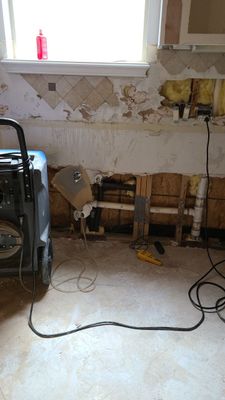
The mitigation work included investigation in kitchen and living areas, moisture and thermal checks, flood cuts, exposed framing, and interior demolition where materials had been affected. Because this case study is focused on mitigation, we are not presenting final reconstruction details or claiming a completed rebuild. The purpose here is to show how our team approached the water damage response and why those early mitigation steps matter.
Project Photos
What We Did
Our team began by inspecting the affected interior areas and checking for signs of moisture beyond the obvious surface damage. In a home with finished walls, cabinets, trim, and connected living spaces, water can travel farther than a homeowner may expect. We used moisture evaluation and thermal inspection methods to help determine where water had impacted building materials and where additional access was needed.
After identifying affected sections, we opened portions of the walls to create drying and inspection access. This included flood cuts in selected wall areas. A flood cut is a controlled removal of drywall, typically performed when the lower portion of a wall has been impacted by water and the wall cavity needs to be opened. Once the drywall is removed, the framing and interior cavity can be inspected more clearly.
The project also involved selective demolition in kitchen and living areas. Our team removed impacted materials where necessary so the mitigation process could move beyond surface-level cleanup. In water damage work, this step is important because leaving wet or damaged materials in place can slow drying and create additional issues later.
As affected areas were opened, framing became visible and accessible for further evaluation. Exposed framing helps our team understand the extent of the impact, confirm what has been removed, and determine where additional mitigation attention may be needed. We also documented conditions during the process so the homeowner and any involved parties could better understand the scope of affected areas.
We did not assume the source of the loss or assign a cause that was not confirmed for this case study. Our role in the mitigation phase was to investigate the interior impact, remove affected materials where needed, and prepare impacted areas for proper drying and next-step evaluation.
Why This Work Mattered
Water mitigation is time-sensitive because building materials can continue to hold moisture after the obvious water is gone. Drywall, trim, insulation, cabinetry areas, flooring systems, and wall cavities may stay wet even when the surface feels dry. If those conditions are not addressed, the damage can become more complicated and more expensive to resolve.
For this McKinney project, opening affected areas was not about doing unnecessary demolition. It was about creating access. When water gets behind finished surfaces, our team needs a way to verify conditions, remove materials that cannot be saved, and allow affected assemblies to be evaluated properly. Flood cuts and selective demolition can look disruptive, but they are often necessary steps when moisture is trapped inside wall systems.
Moisture documentation also matters. Homeowners, property managers, and insurance adjusters need clear information about what was affected and what work was performed. Our team documented the mitigation process so decisions could be based on the actual site conditions rather than guesswork.
In larger homes, water damage can involve multiple connected spaces. A leak or water event in one area may affect nearby walls, shared cavities, flooring transitions, or rooms on the other side of a wall. That is why our team works methodically: inspect, document, open affected materials where appropriate, and continue evaluating as more of the building assembly becomes visible.
The goal of mitigation is to reduce further damage and create a clearer path forward. Before reconstruction decisions can be made, the affected materials need to be understood and addressed. This project is a good example of why early mitigation work is so important after water affects finished interior spaces.
Local Service Area
Rainy Day Restoration & Roofing provides water mitigation services in McKinney, TX, and surrounding North Texas communities. We help homeowners respond to water damage inside kitchens, living rooms, bedrooms, bathrooms, utility areas, and other interior spaces.
Every water damage situation is different. Some projects require limited drying and monitoring, while others require selective demolition, flood cuts, cabinet-area evaluation, or access into wall cavities. Our team evaluates the conditions on site and recommends mitigation steps based on what is actually affected.
For homeowners in McKinney, working with a local restoration team can make the process easier. We understand the importance of clear communication, documentation, and practical next steps when water damage disrupts a home.
Need Help With Similar Damage?
If you have water damage in a McKinney-area home, Rainy Day Restoration & Roofing can help inspect the affected areas and recommend the right mitigation approach. Even if the damage looks limited, moisture may be hidden behind walls, trim, cabinets, or flooring.
Our team can assess the situation, document conditions, open affected areas when needed, and help you understand the next steps. If you suspect water has affected your home, contacting a mitigation team promptly can help limit additional damage and give you a clearer plan for moving forward.