





Project Overview
Rainy Day Restoration & Roofing performed water mitigation work at a residential property in Allen, TX after interior areas of the home were affected by moisture. The project involved multiple living areas, including kitchen and bathroom spaces, where water had reached materials that could not be addressed by surface cleanup alone.
Our team inspected the affected areas, documented the conditions, and focused on creating drying access where needed. In a home, moisture can move under flooring, behind cabinets, into wall cavities, and around trim and finish materials. When those spaces stay closed, trapped moisture can continue to affect the structure and may lead to additional damage over time.
Because the specific source of the water damage was not included in the project information available for this public case study, we are not speculating about the cause of loss. This write-up focuses on the mitigation work our team performed and the type of response homeowners in Allen may need when water affects finished interior spaces.
The work included a combination of mitigation activity and some later repair or finish-stage work. We are not presenting this as a confirmed full reconstruction completion story. Instead, this case study highlights the practical steps involved in opening affected areas, removing damaged materials, and setting up equipment to help dry the home properly.
Project Photos
What We Did
Our team began by evaluating the affected rooms and identifying areas where moisture had impacted finished surfaces and concealed spaces. The work included bathroom and kitchen areas, both of which can be challenging during water mitigation because of the number of materials packed into a small footprint: cabinets, flooring, baseboards, drywall, tile, fixtures, and wall assemblies.
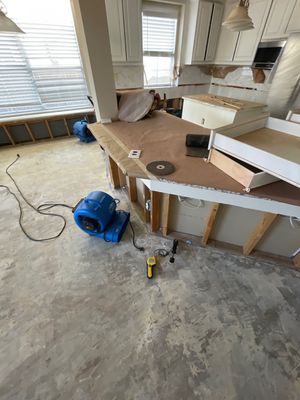
In the kitchen, our team removed affected cabinetry and flooring materials where necessary to access areas that needed to dry. Water can travel beneath cabinets and flooring, and those areas often cannot be dried correctly unless the right materials are opened or removed. We focused on drying access rather than only addressing what was visible from the surface.
In the bathroom area, our team opened affected finishes and exposed impacted spaces so moisture could be addressed more effectively. Bathrooms already handle normal humidity and water use, so when a water loss affects those materials, it is important to distinguish between surface dampness and moisture that has entered the structure or finish layers.
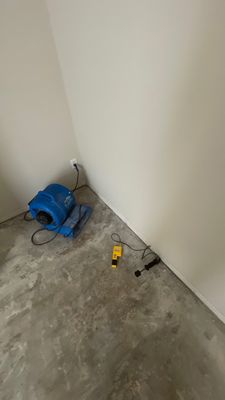
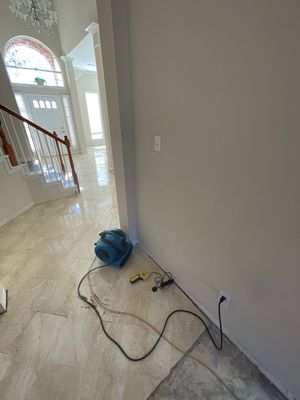
The mitigation work included placing air movers and moisture-related drying equipment throughout the affected areas. This equipment helps move air across wet materials and supports the drying process in areas that may otherwise hold moisture. Equipment placement is an important part of water mitigation because airflow needs to reach the materials and spaces that are actually affected, not just the most visible area.
Our team also documented the work as it progressed. Good documentation helps homeowners, property managers, and insurance professionals understand what was affected, what materials were removed, where drying equipment was placed, and how the project moved from mitigation into later repair or finish-stage activity.
Why This Work Mattered
Water mitigation is time-sensitive because water does not always stay where it first appears. In a residential property, moisture can migrate under finished flooring, behind baseboards, into lower wall sections, and beneath built-in cabinetry. By the time staining, swelling, or soft materials are visible, the affected area may be larger than it first seemed.
Opening affected areas is sometimes necessary to prevent hidden moisture from being trapped behind finishes. While removing cabinets, flooring, or portions of wall material can feel disruptive, it may be the most practical way to create airflow and allow wet materials to dry. Leaving wet materials closed in place can make the drying process less effective and may create conditions for additional damage.
The kitchen and bathroom portions of this Allen home required careful attention because both spaces include materials that can hold or hide moisture. Cabinet boxes, toe kicks, underlayment, flooring layers, and wall finishes can all be affected. Our team’s goal was to address the areas that needed drying access while documenting the work clearly for the homeowner and any parties involved in the claim or repair planning process.
Drying equipment also matters because a room that looks dry is not always dry inside the affected materials. Air movers and other drying tools help manage the environment and move air where it is needed. Moisture control during mitigation is about reducing hidden risk, not simply improving the appearance of the space.
This project also showed how water mitigation can overlap with later repair-stage activity. After affected materials are removed and the drying process is underway or completed as appropriate, the home may move toward repairs, finishes, or reconstruction planning. Since the available project details include mixed work stages, we are careful not to overstate the final status. What we can say is that the project involved both mitigation work and some later-stage activity in the affected areas.
Local Service Area
Rainy Day Restoration & Roofing provides residential water mitigation services in Allen, TX and surrounding North Texas communities. We help homeowners respond to water damage affecting kitchens, bathrooms, flooring, walls, cabinetry, and other interior materials.
Local response matters because water damage often needs prompt attention. A nearby team can inspect the affected areas, begin documentation, remove materials where necessary, and place drying equipment to help limit further damage. Every home is different, and the right mitigation plan depends on the materials involved, how far moisture has traveled, and what we find during the inspection.
For homeowners, the process can feel overwhelming. Our role is to make the next steps clearer: identify the affected areas, explain why certain materials may need to be opened or removed, set up drying where appropriate, and document the work so the homeowner has a clearer record of what happened.
Need Help With Similar Damage?
If your home in Allen, TX has water damage in a kitchen, bathroom, flooring area, or wall cavity, Rainy Day Restoration & Roofing can help evaluate the situation and begin the mitigation process. Warning signs may include wet flooring, swollen cabinets, soft baseboards, staining, musty odors, or moisture that seems to have spread beyond the original area.
Water damage can be difficult to judge from the surface. Our team can inspect the affected areas, document the conditions, open materials when needed for drying access, and place drying equipment as part of a practical mitigation plan.
If you are dealing with water damage in Allen or a nearby North Texas community, contact Rainy Day Restoration & Roofing for help with residential water mitigation.