Roof Replacement
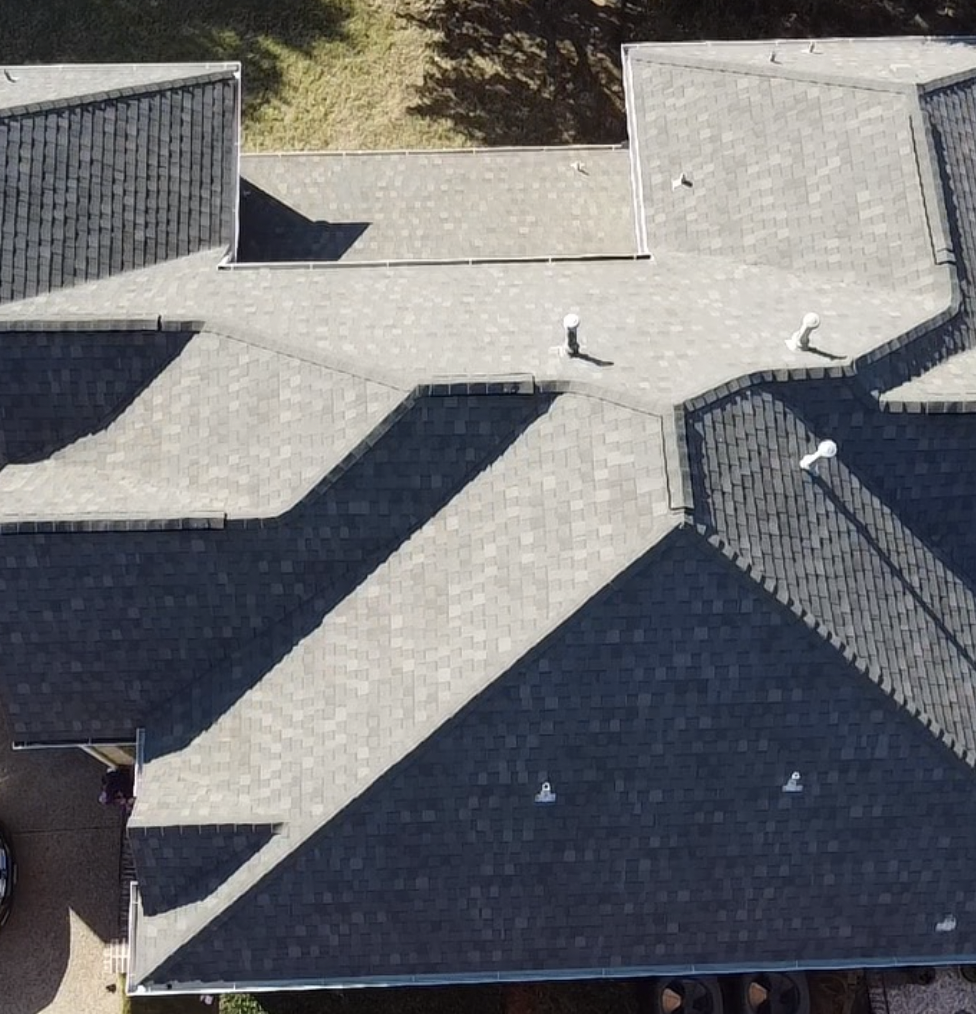
Roofing is where Rainy Day started in 1999, and it’s still the trade the whole company grew out of. When a roof is past repair — storm-damaged, aged out, or leaking in more places than it’s sound — we replace it right the first time, clean up like we were never there, and back the labor for five years. We’re experienced installing all the major shingle systems — CertainTeed, GAF, Owens Corning, TAMKO, Atlas, and more — so you’re choosing from real options, not whatever a crew happened to have on the truck. And because Josh came up as a roofer with a home inspector’s eye, we look at the whole roof — decking, flashing, ventilation, drainage — not just the shingles on top.
Conditions That Point to Replacement
- Widespread or repeated storm and hail damage
- Decking that’s compromised, not just the shingles
- A roof you’ve patched two or three times already
- Shingles that have simply aged out
- Hail damage that runs deeper than it looks from the street
When Replacement Is the Right Call
We’re not going to sell you a roof you don’t need — we do plenty of repairs, and we’ll tell you when a repair will get you several more good years. But replacement is usually the honest answer when the decking itself is compromised, when a storm hit hard enough to damage the structure and not just the surface, or when you’re patching the same roof for the third time.
After a bad hail event, the damage often runs deeper than it looks. We once replaced a roof where softball-sized hail had punched clean through the plywood decking and dented the wood floor inside the house — from the street, it just looked like a rough day. That’s why we get up on the roof and into the attic before we quote anything.
How We Handle a Replacement
- Inspect and document. We get on the roof and into the attic, photograph everything, and check decking, flashing, and ventilation — not just the shingles. If it’s a storm claim, this is also the file your adjuster will need.
- Walk you through your options. Shingle system, color, and any ventilation or drainage fixes, with a clear written scope. No pressure, no upsell you didn’t ask for.
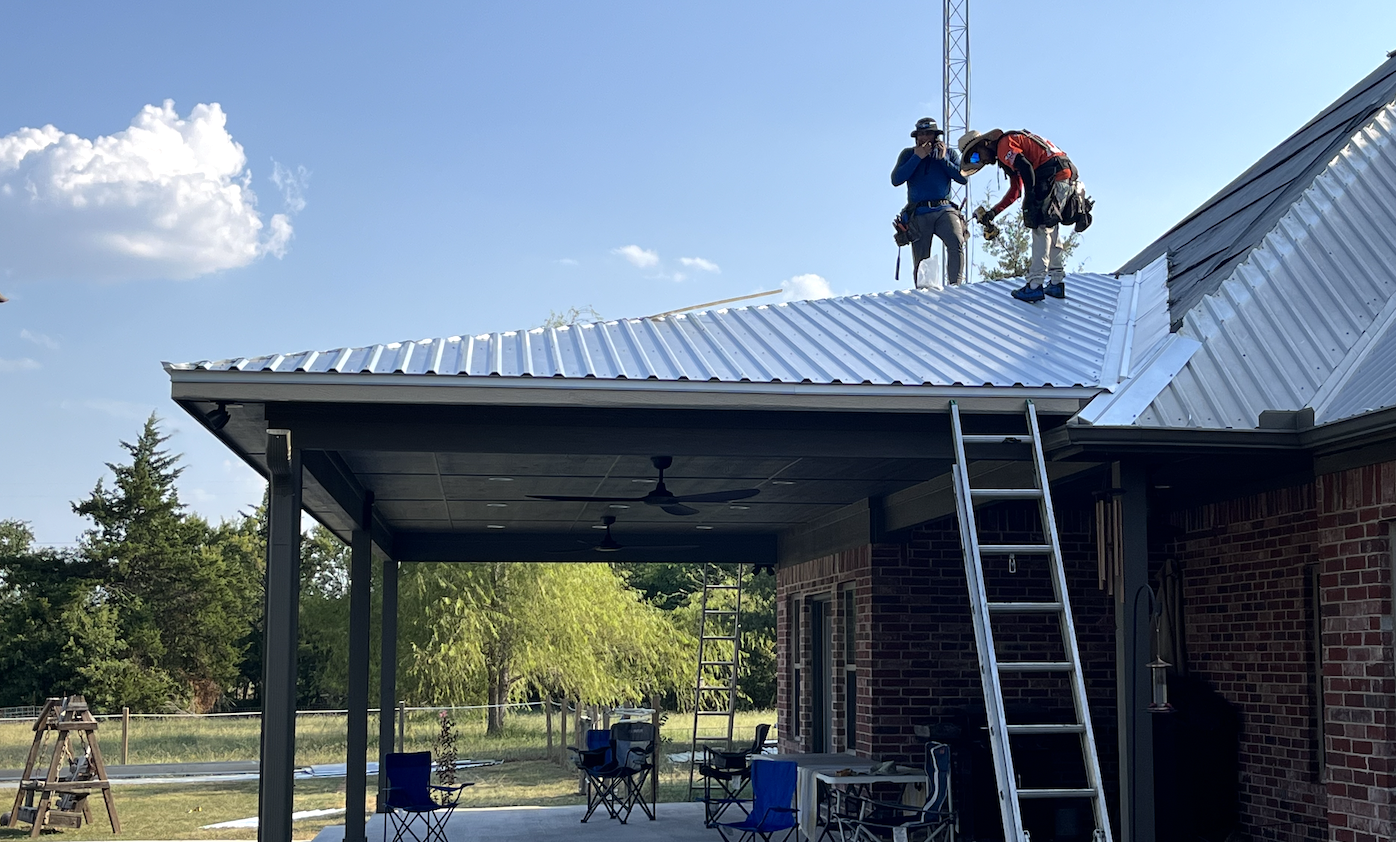
- Tear off and inspect the deck. Once the old roof is off, we can see the decking for real — and we’ll show you anything that needs to be replaced before the new roof goes on.
- Install and clean up. Most residential roofs go on in a day. Before we start, we protect your landscaping and pool with The Catchall debris-containment system, and when we’re done we clean up meticulously — magnetic sweeps for nails, the works.
- Back it. Five-year labor warranty on the install, on top of the manufacturer’s material warranty.
What Affects Roof Replacement Cost?
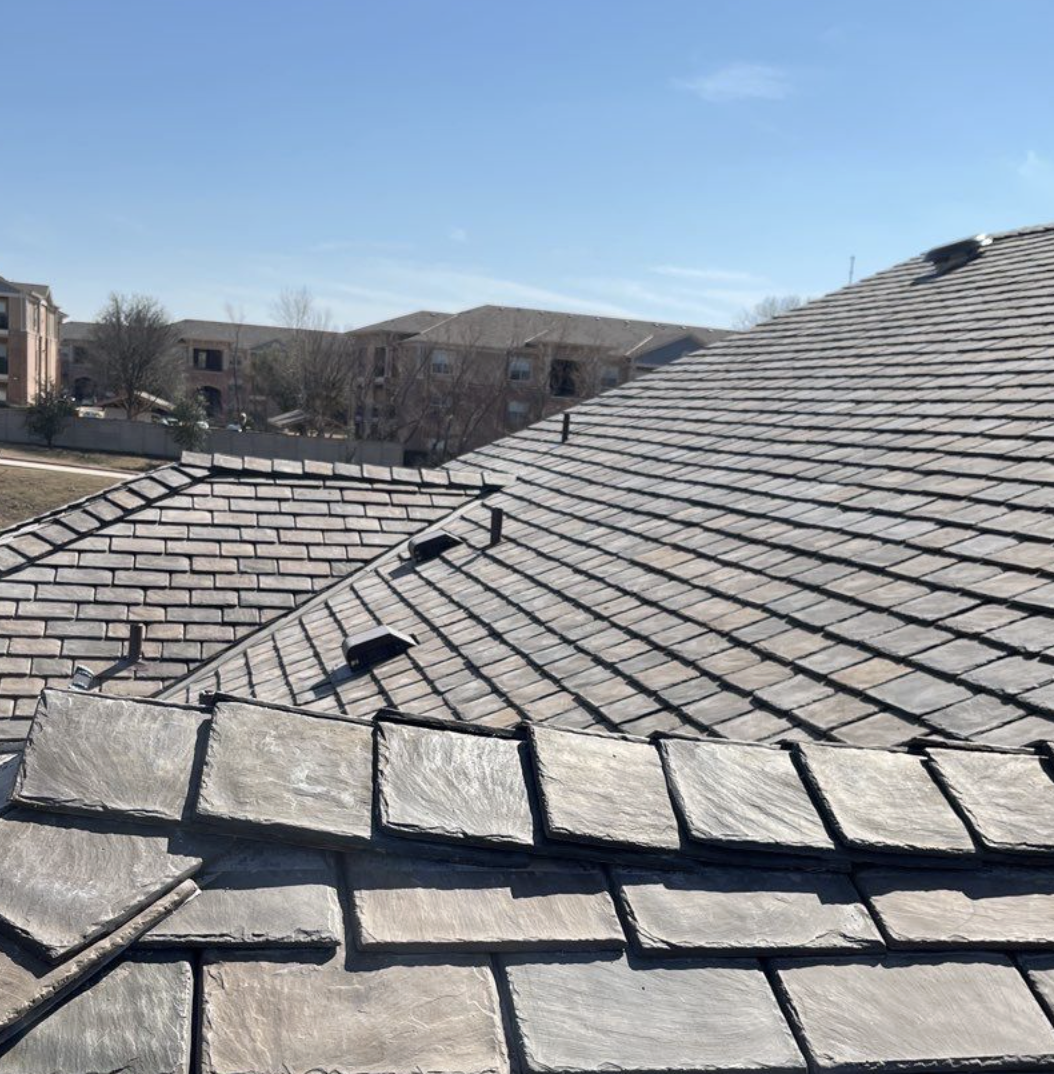
A roof replacement depends on size, pitch, the shingle system you choose, how much decking needs replacing, and whether it’s an insurance claim or out of pocket.
We’ll give you a firm written scope after we’ve actually been on the roof — not a number over the phone.
What a Roof Replacement Includes
- Full roof inspection and an honest recommendation
- Complete tear-off and disposal
- Decking replacement where needed
- New underlayment, flashing, and shingle system
- Landscaping and pool protection with The Catchall
- Gutters and drainage where they’re needed
- Meticulous cleanup and magnetic nail sweep
- 5-year labor warranty on the install
Not just shingles — commercial and flat roofs too. We’re also set up for commercial flat-roof systems. We replaced the roof on the Main Street title building in Bonham — pulling a failing metal roof and installing flute filler, insulation board, a TPO membrane, and new metal coping — and at the Fannin County Children’s Advocacy Center we scraped an old tar-and-gravel roof, repaired the decking, and installed a full TPO system with new perimeter coping. If you own or manage a commercial building with a flat or low-slope roof, we can take care of you.
Gutters and drainage, while we’re up there. Foundation companies in North Texas refer people to us for gutters, and there’s a reason: our expansive clay soil moves with moisture, and a roof that dumps water against the foundation is a slow-motion foundation problem. If your drainage needs help, we can add or replace gutters as part of the job.
Insurance & Financing
Insurance and Financing
Storm-damaged roof? Here’s the honest version of how we help, because plenty of roofers overpromise. We’re not licensed public adjusters, so we can’t legally negotiate your settlement or pricing with your carrier — only the scope of the work. What we do is document the damage and hand you paperwork in the format carriers generally expect, explain exactly what we did and what it costs, and help you get that documentation submitted. You handle the communication with your insurer and collecting the payment; if they stall or lowball you, we can refer you to a reputable licensed public adjuster.
We offer financing, including on your deductible. (In Texas, no honest contractor can waive a deductible — it’s illegal — and we won’t pretend to.) When a homeowner is truly up against it, we’ve been known to go further than we had to: after a tornado took out a Dallas family’s roof a couple of years back, we replaced a large section at no charge because they were struggling. That’s not a promotion — it’s just who we’ve tried to be for 27 years.
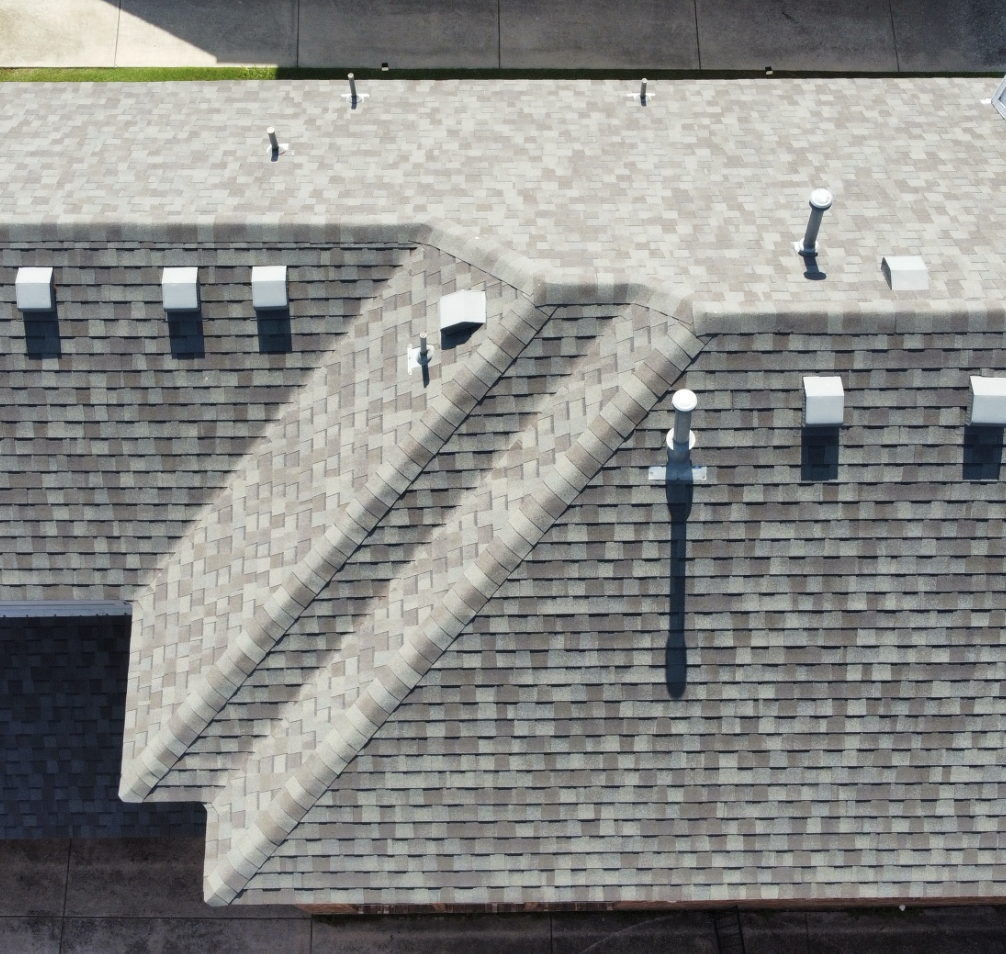
Shingle Brands We Install




Questions Property Owners Ask First
How long does a roof replacement take?
Do all roofs need complete decking replacement?
What is an impact-resistant roof?
Can I finance my roof replacement?
Can I get an estimate before an inspection?
Get a Straight Answer About Your Roof
Project Evidence
See How Similar Problems Were Solved.
Review documented North Texas projects that show the visible condition, investigation, work performed, and finished result. Roof replacement projects will be highlighted as the library grows.
Project Evidence
Compare Similar North Texas Projects
Use the project library to review documented conditions, investigation, repair scope, and finished results.