A commercial roof rarely fails all at once. On a low-slope building, water finds a seam, a penetration, or a tired patch of membrane, then travels sideways until it shows up over a tenant’s space. Once a flat roof reaches that point, patching it one more time often costs more over its remaining life than replacing it. This downtown Bonham project shows how Rainy Day installs a new white TPO membrane roof on a commercial building, and what an owner should weigh when choosing between another repair and a new roof.
What We Found in Downtown Bonham
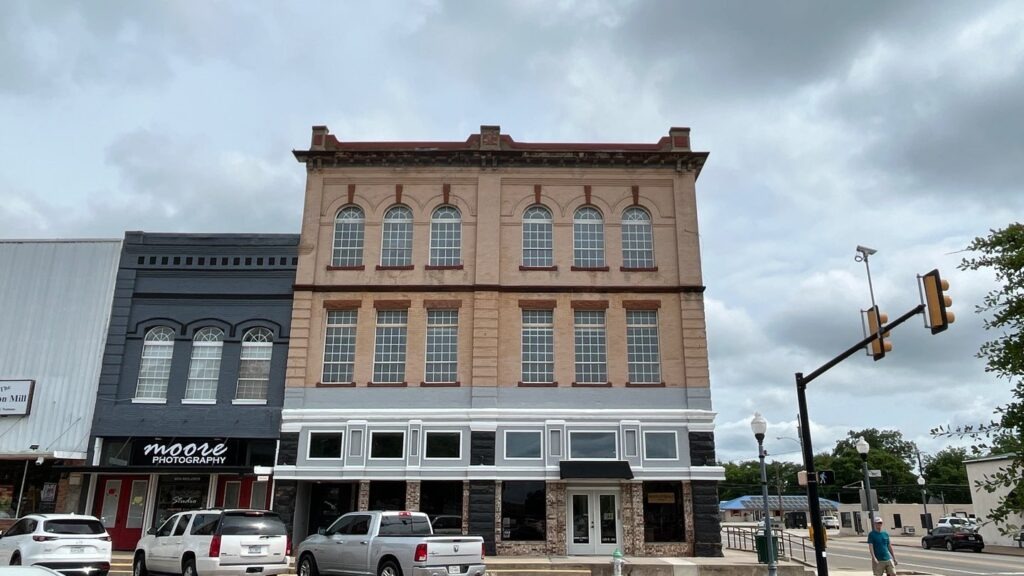
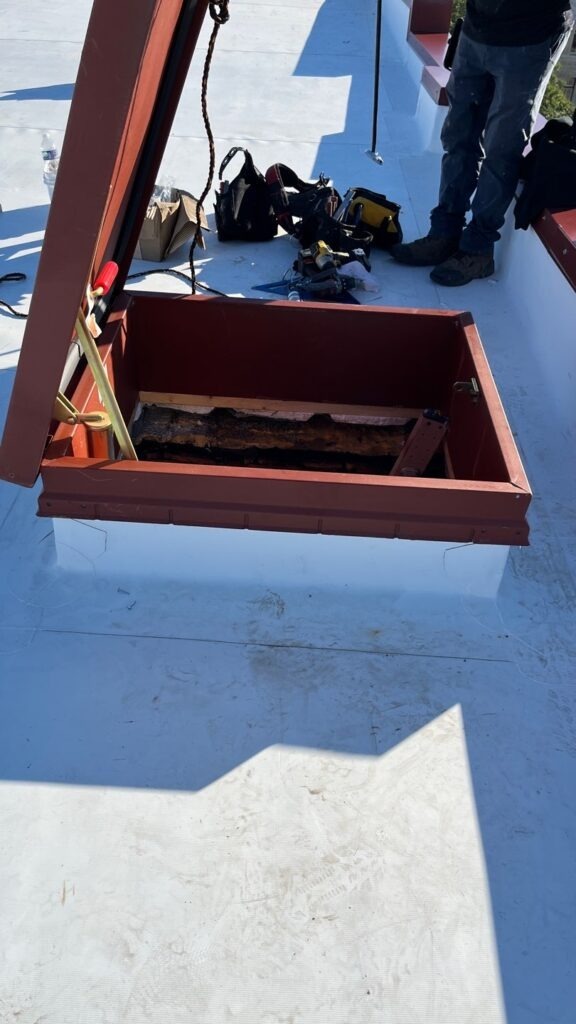
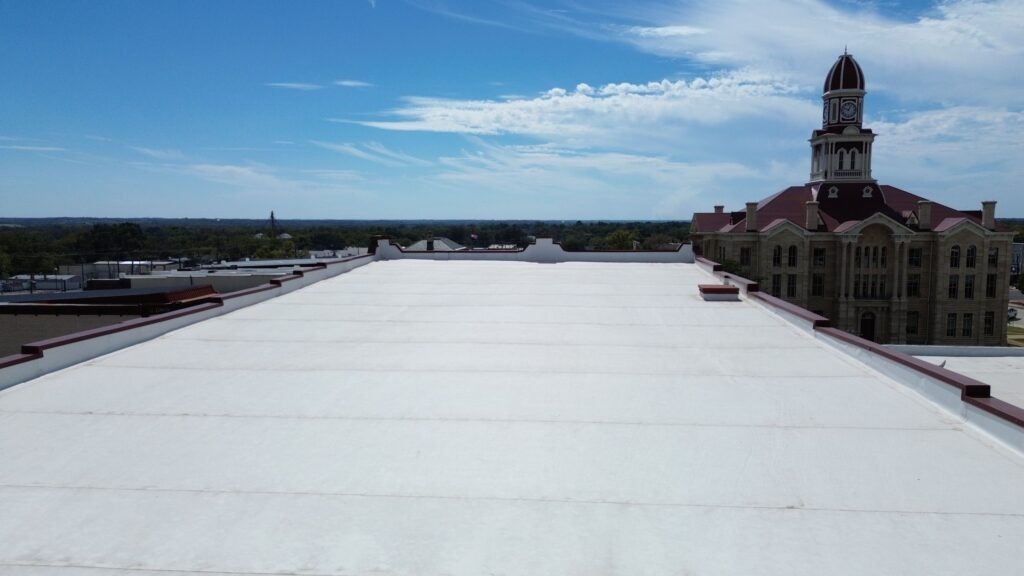
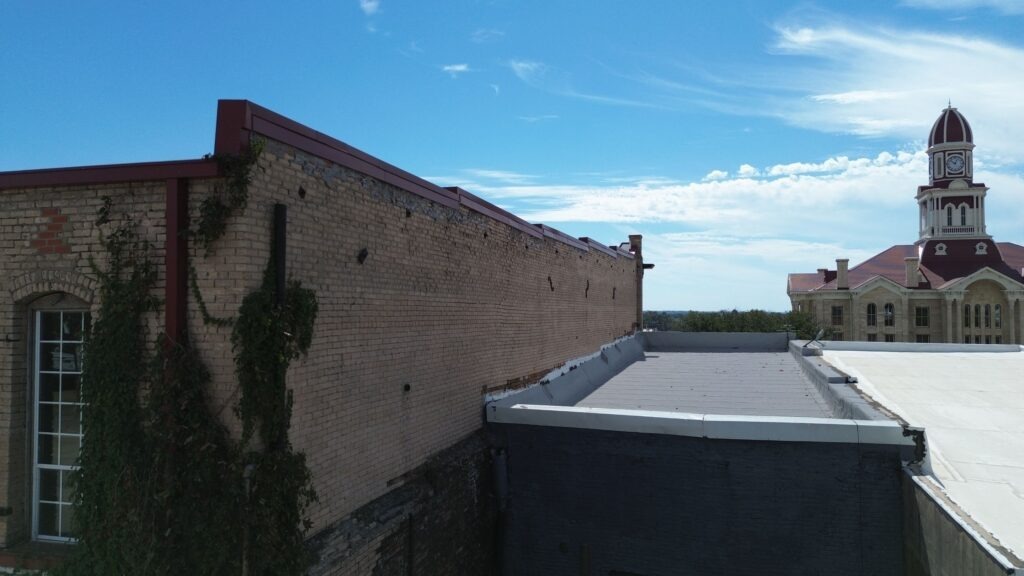
The project centered on a downtown Bonham commercial brick building with an aging low-slope roof. After assessing the existing roof, the documented work was a full installation of a new white TPO membrane system. Reaching the roof safely on a building like this is its own task, which is why the project record includes staged lift equipment and a secured roof-access point before any roofing began.
Rainy Day’s Role
Rainy Day Restoration and Roofing handled the documented scope from access to finish: preparing the low-slope surface and installing the new white TPO membrane roof shown in the photographs. Because Rainy Day runs commercial and builder projects as one company from the first call through completion, the same team managed the lift and staging, the roofing installation, and the wrap-up, which keeps a business’s roof project from stalling between trades.
What We Did
With safe roof access established, the documented work was the installation of a new white TPO membrane roof across the low-slope surface, along with the roof-access detailing shown in the photographs. The photos also document the lift equipment and staging required to move crews and materials onto a downtown commercial roof.
Why a New TPO Roof, and Why It Is Different
A pitched residential roof sheds water by gravity. A commercial low-slope roof does not: it relies on an intact membrane and working drainage to move water off the building. A single-ply membrane like white TPO is built for exactly that. It seals the low-slope surface in one continuous, heat-welded sheet and reflects sunlight instead of absorbing it, which is why TPO is a common choice for commercial roofs across North Texas. When an older flat roof reaches the point where seams, flashing, and patches keep failing, installing a new membrane is usually more cost-effective than chasing the next leak, because a fresh, properly welded TPO surface removes the weak points instead of covering them.
Result and Next Step
The project record documents the roof assessment, the access and staging, and the installation of the new white TPO membrane roof shown in the completed photos. For an owner weighing another patch against a new roof, the right next step is a professional inspection that evaluates the condition of the existing membrane, seams, and drainage before deciding.
Guidance for Commercial Property Owners
Watch for the signs a commercial flat roof is nearing the end of its service life: recurring interior stains after rain, blistered or lifting membrane, water that ponds and does not drain within a day or two, and seams or flashing that keep separating no matter how often they are sealed. When repairs start stacking up, a new TPO installation is often the point where cost and disruption finally go down instead of up.
Related Guidance
Frequently asked questions
Why did this Bonham commercial building need a full TPO roof instead of another repair?
The building’s aging low-slope roof had reached the point where patching, seams, and flashing kept failing, and at that stage another repair typically costs more over the roof’s remaining life than a full replacement. Rainy Day installed a new white TPO membrane system to remove those weak points rather than cover them again.
More Rainy Day projects: Commercial Water Damage Mitigation in Bonham, TX.
What does a commercial TPO roof installation actually involve?
Work starts with establishing safe roof access, which on this downtown Bonham building meant staged lift equipment and a secured roof-access point before roofing began. From there, crews prepare the low-slope surface and install a new white TPO membrane roof, all documented in the project’s photos.
Why is TPO membrane a common choice for flat commercial roofs in North Texas?
Unlike a pitched residential roof that sheds water by gravity, a low-slope commercial roof depends on an intact membrane and working drainage. White TPO seals the surface in one continuous, heat-welded sheet and reflects sunlight instead of absorbing it, which is why it’s a common choice for commercial roofs across North Texas.
“We have had Rainy Day do 2 big projects with our house. The first was installing gutters. And the second was a roof repair that we had already contacted insurance about. We had a wonderful experience e both times with this company. The gutters have been up for almost 4 years and we have not had a single problem with them. The roof repair was done in the last month. We contacted our insurance and they sent us a check then we chose the company to fix the roof. Rainy day had no idea when the insurance paid us to fix the roof but their estimate was within 10 dollars of what the insurance sent us. The job was done quickly and we are so happy with the results! Thank you Rainy Day restoration for being there when we needed you. I will definitely use this company again!”