
Mold Remediation
Mold is almost never the real problem — it’s the symptom of a water problem that didn’t get handled. That’s why we got licensed for it in 2017: we kept finding mold on water and roofing jobs and didn’t want to hand our customers off to someone else halfway through. We’re a licensed Texas mold-remediation contractor (MRC1508 and MRC1925), we contain and remove the mold correctly, and — because we do water and roofing too — we fix the moisture source so it doesn’t come back. Removing mold without stopping the water is just scheduling its return.
Licensed TX Mold Remediation Contractor (MRC1508) · IICRC-certified · A+ with the BBB · ~4.7★ · 97%+ first-pass clearance
When to Call Us About Mold
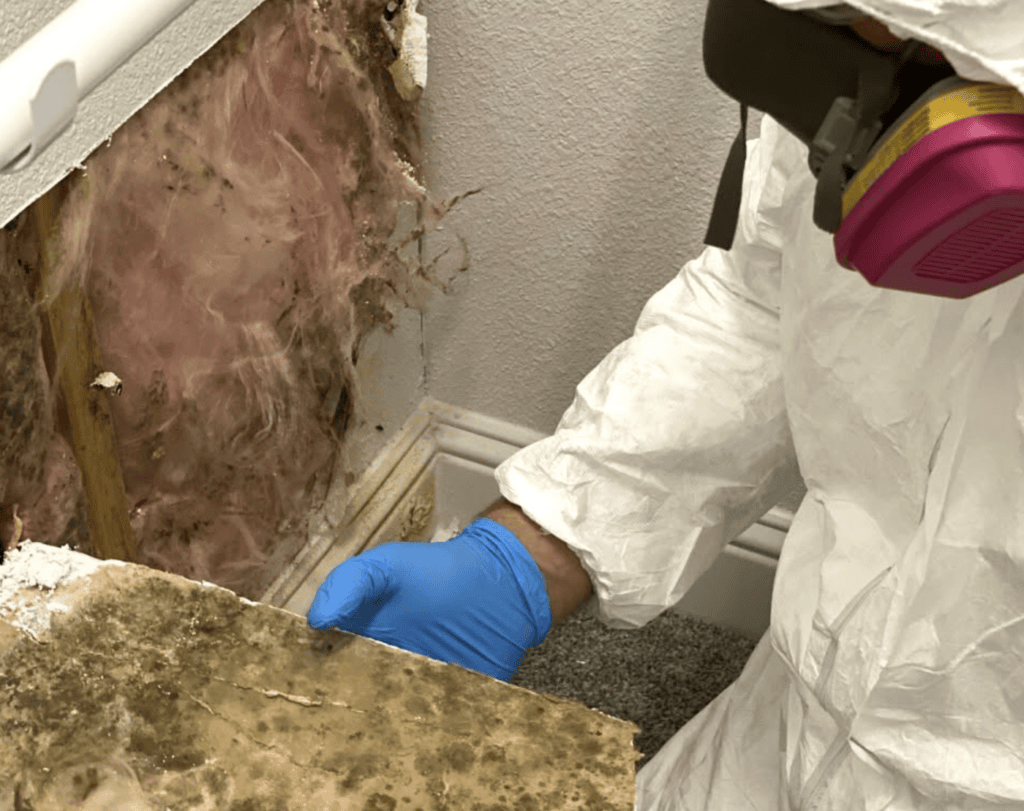
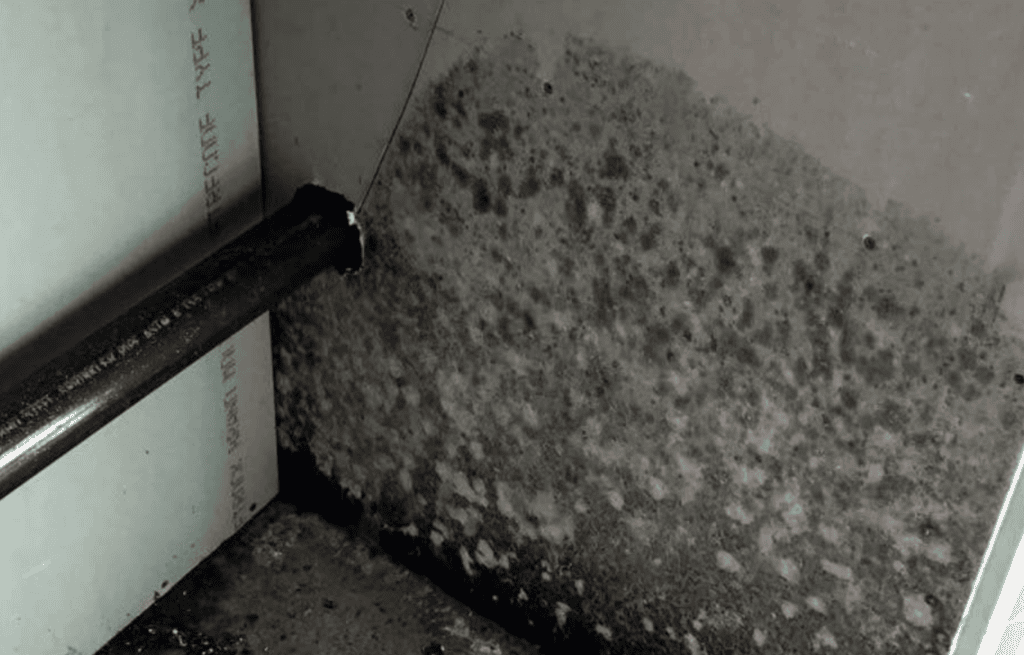
- You can see it — on drywall, framing, in a closet, around a window
- A persistent musty smell you can’t track down
- Mold that appeared after a leak, flood, or roof problem
- Ongoing allergy or respiratory symptoms that ease when you leave the house
- You’re buying or selling and an inspection flagged it
- Water damage that sat longer than a day or two before it was dried
Seeing or smelling mold? Don’t paint over it and don’t wait it out — it only spreads, and so does the cost. Call us for a straight answer on how big the problem really is.
Why Homeowners Trust Us With Mold
Licensed, and done to standard. We’re a licensed Texas mold-remediation contractor (MRC1508 & MRC1925). We contain the area and remove mold the right way — not with bleach and a prayer.
We fix what’s feeding it. Because we also do roofing and water restoration, we stop the moisture source so the mold doesn’t just grow back in a few months.
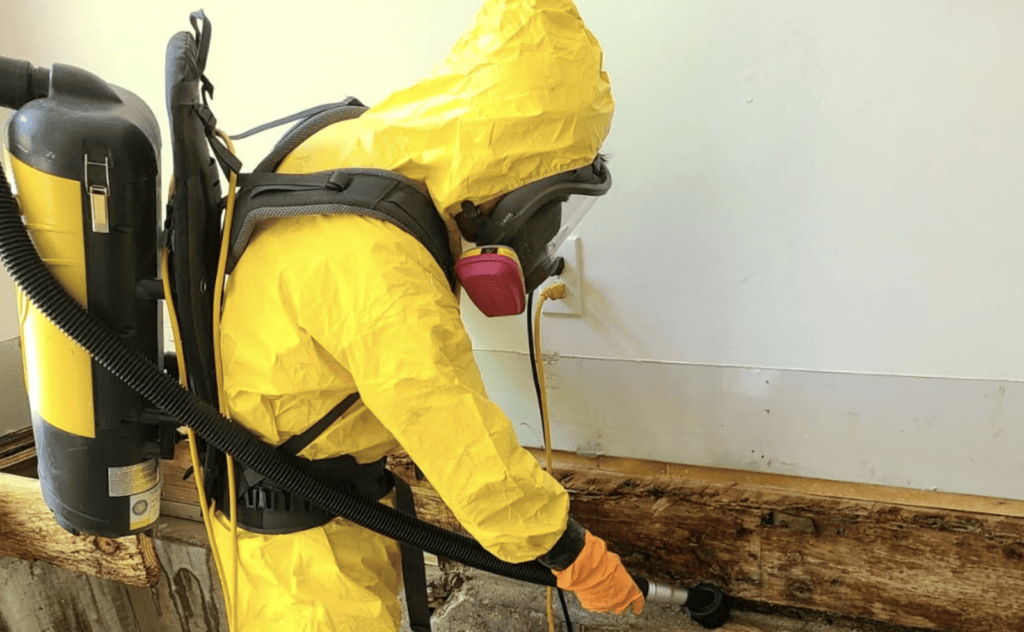
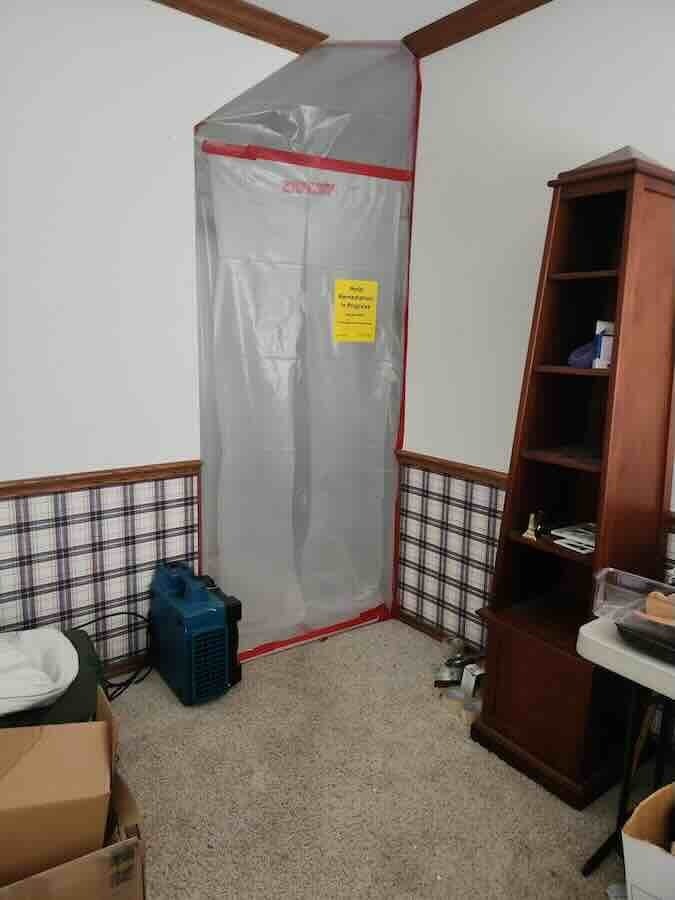
We protect your air while we work. HEPA-filtered scrubbers and proper containment keep spores from spreading into the rest of your home during removal.
Straight answers on severity. Some jobs are smaller than you fear — and if yours is, we’ll tell you, not scare you into a bigger bill.
How We Handle Mold the Right Way
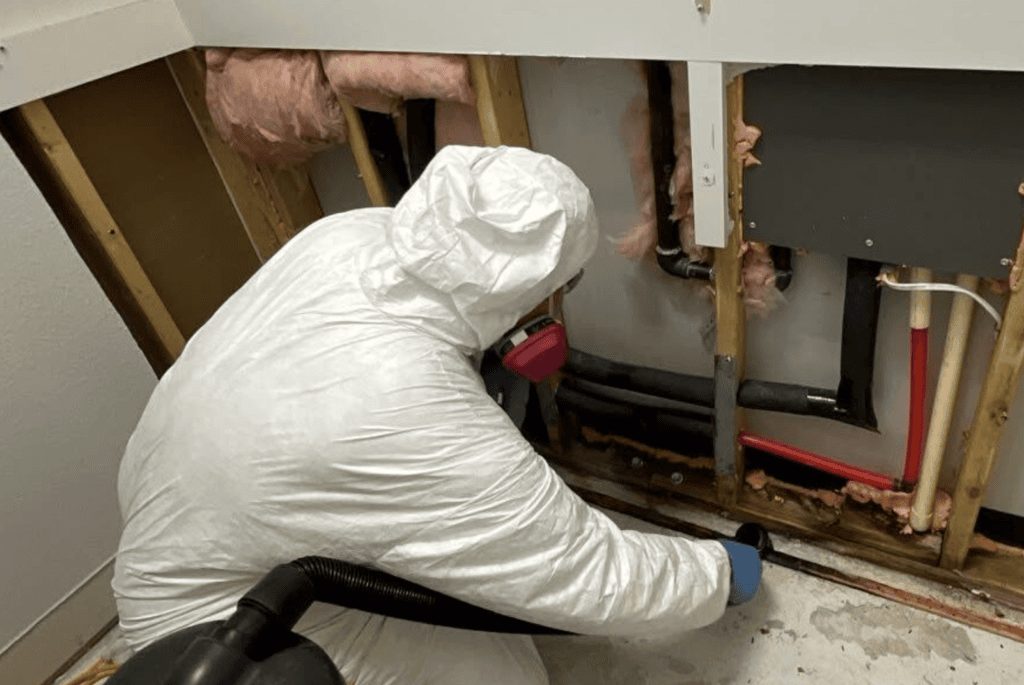
- Find and stop the moisture source. We don’t touch the mold until we know what’s feeding it — a roof leak, a plumbing leak, crawl-space humidity, or a past water loss that never dried. This is where being a roofing and restoration company actually matters.
- Test through a third party. If there are signs of mold — visible growth or a musty odor — we bring in an independent Mold Assessment Consultant (MAC), licensed by the State of Texas, to test and confirm it. Texas keeps assessment and remediation separate on purpose, and we can refer you to any of the many licensed MACs we work with.
- Work to a formal protocol. If the MAC confirms mold, nothing gets torn out until they’ve written a formal remediation protocol. That protocol drives the work — containing the area with HEPA-filtered air scrubbers and negative air so spores don’t spread, removing and treating affected materials to standard (not spraying bleach and hoping), and drying the space with a clearance check to confirm conditions are back to normal.
- Fix the source and rebuild. Then we repair whatever let the water in — roof, plumbing, or drainage — and put back what was removed. One team, start to finish.
What Affects Mold Remediation Cost?
Mold jobs range from a contained, single-room removal to a larger remediation with reconstruction. Cost depends on how far it’s spread, what materials are affected, how hard the source is to reach and fix, and whether it’s tied to an insurance claim.
We’ll come out, do a moisture inspection, tell you honestly how big the problem really is, and give you a clear scope before any work starts — and if formal testing is needed first, we’ll point you to a Mold Assessment Consultant.
What Our Mold Service Includes
- Texas-licensed mold remediation (MRC1508 & MRC1925)
- Moisture-source diagnosis
- Containment and HEPA-filtered air scrubbing
- Removal of affected materials
- Cleaning and antimicrobial treatment
- Drying and verification
- Source repair — roof, plumbing, or drainage
- Reconstruction of what was removed
How Mold Works in Texas
Why the Assessor–Remediator Split Protects You
Texas keeps mold assessment and mold remediation separate on purpose: the licensed consultant who inspects, tests, and writes the protocol can’t be the same company that does the removal. That rule is on your side — it means an independent expert grades the work.
Here’s how we fit in. We don’t perform mold inspections or testing ourselves. What we can do is come out, perform a moisture inspection to find and confirm the water problem behind the mold, and tell you exactly what your next step should be — including connecting you with a licensed Mold Assessment Consultant (MAC) when formal testing and a protocol are needed. Then we carry out that protocol to the letter.
The Mold Assessment Consultants we work with refer homeowners to us constantly, because they’ve seen how cleanly we work and how our jobs hold up. Our first-pass clearance rate on independent clearance testing is over 97% — when a third party is grading the job and you pass the first time, that’s not marketing, that’s the work done right.
Questions Property Owners Ask First
Can Rainy Day test my property for mold?
Texas separates mold assessment from mold remediation. A licensed mold assessor may be required to evaluate the condition, prepare a protocol, and perform post-remediation verification.
Can mold just be cleaned or painted over?
Surface cleaning or paint may hide the appearance without correcting affected materials or the moisture source. The proper response depends on the material and defined scope.
Do I need to leave the property during remediation?
That depends on the location, size, containment, occupants, HVAC configuration, and protocol. The project team should explain access restrictions before work begins.
What happens after remediation?
Required verification or clearance should be completed before affected areas are rebuilt. Moisture problems must also be corrected to reduce recurrence.
Is every dark stain mold?
No. Appearance alone cannot identify the material or establish the full condition. Evaluation should consider moisture, material history, and professional assessment.
Handle It Once, the Right Way
Project Evidence
See How Similar Problems Were Solved.
Review documented North Texas projects that show the visible condition, investigation, work performed, and finished result. Mold remediation projects will be highlighted as the library grows.
Project Evidence
Compare Similar North Texas Projects
Use the project library to review documented conditions, investigation, repair scope, and finished results.