
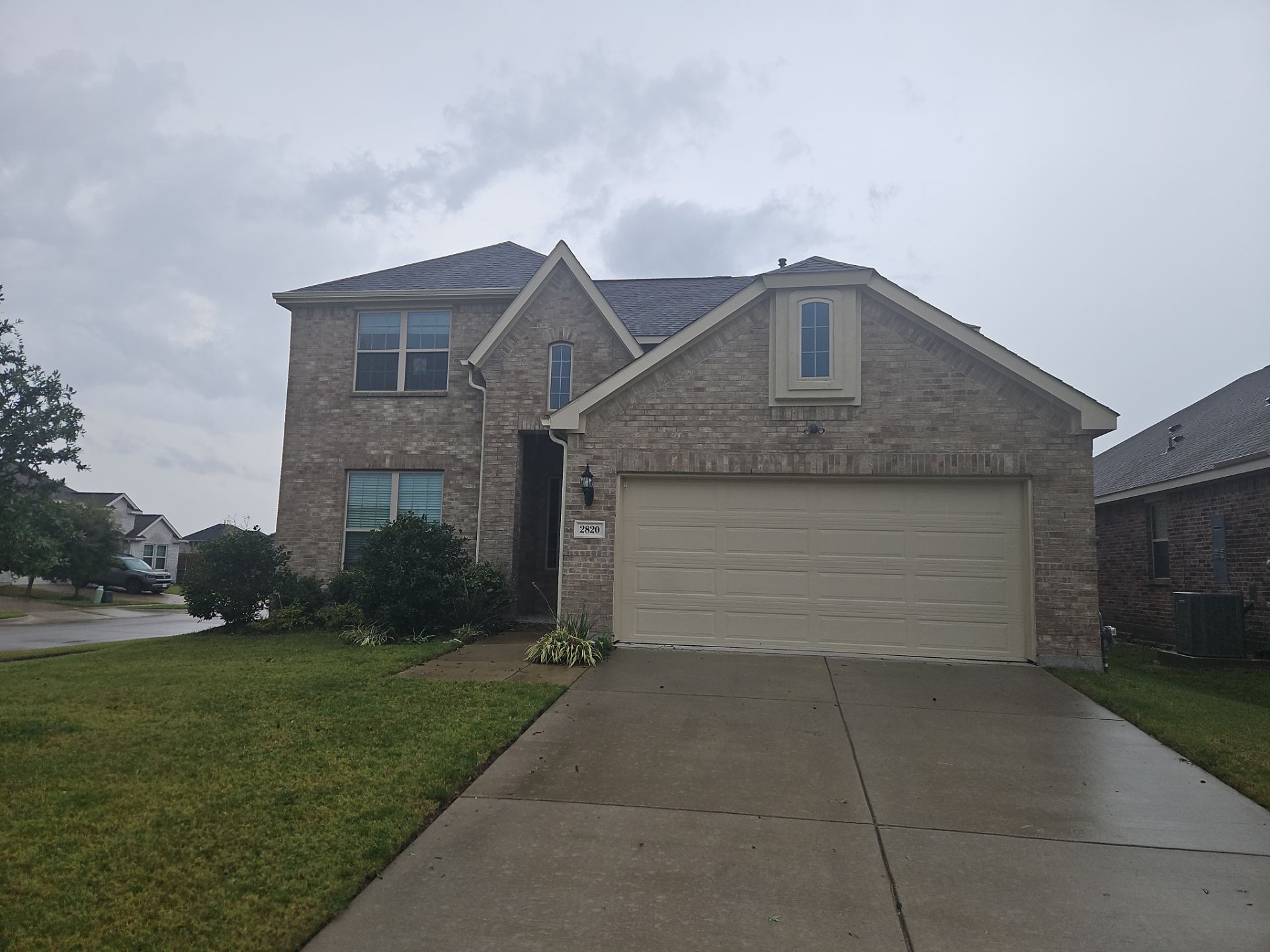
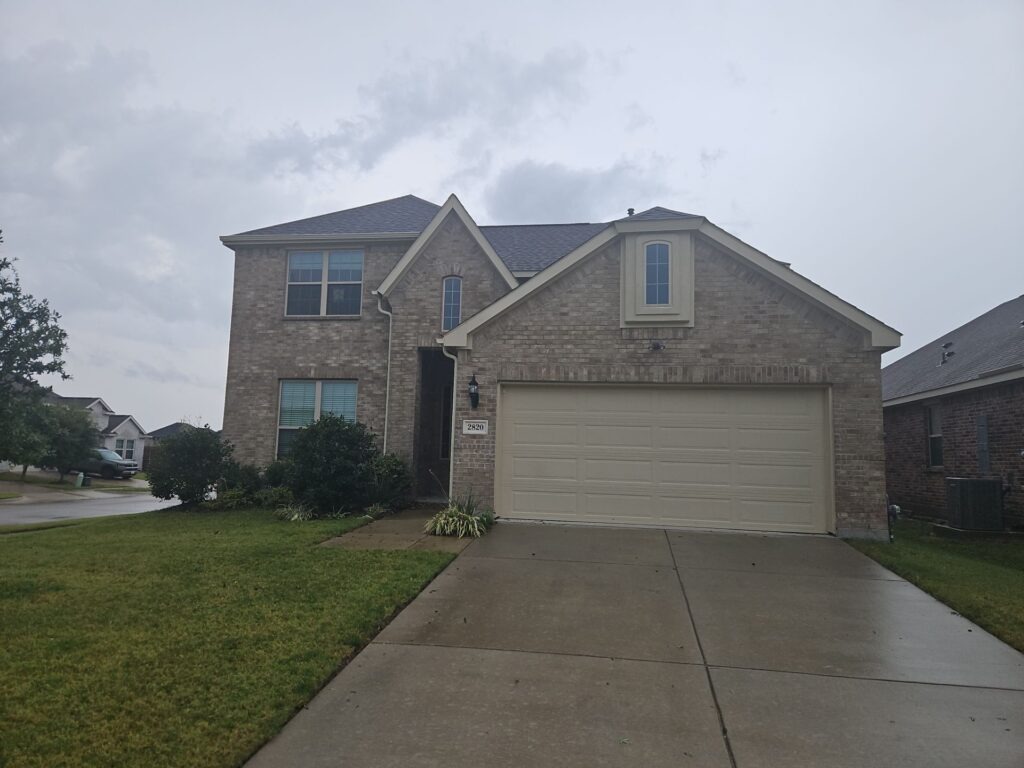
Hail damage roof replacement in Melissa, TX became the clear answer after a storm bruised and cracked shingles across the whole roof. Hail is hard on a roof, and the damage often looks worse once you get up close than it does from the ground. A single storm can knock loose the protective granules and shorten a roof’s life all at once. This Melissa project shows what a proper replacement involves. It starts with documenting the storm damage. It ends with installing the water barrier beneath the new shingles that most homeowners never see.
What the inspection documented
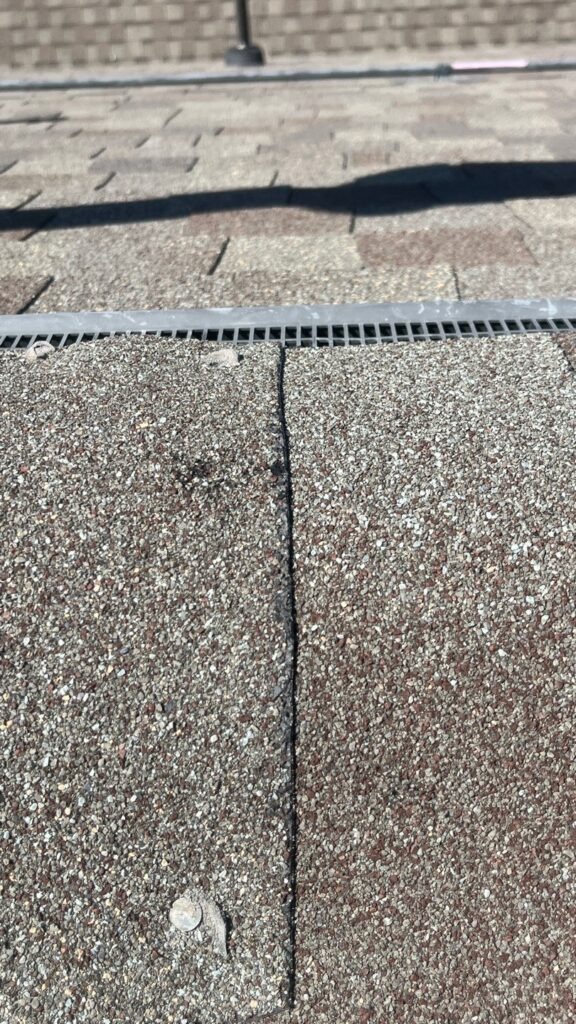
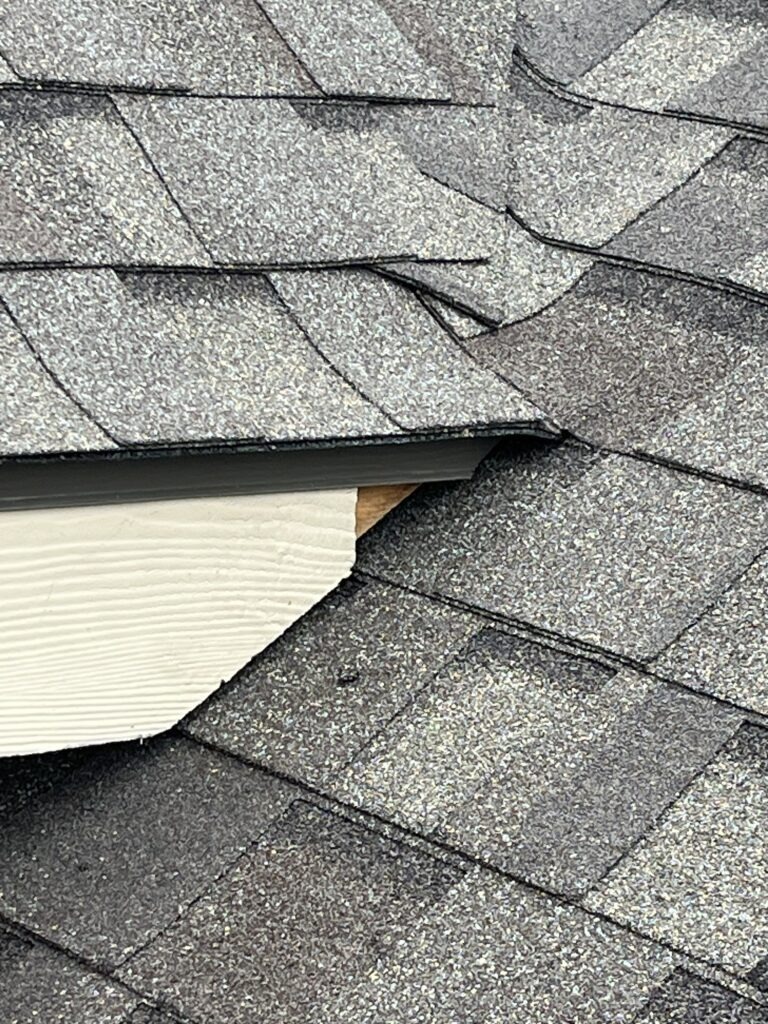
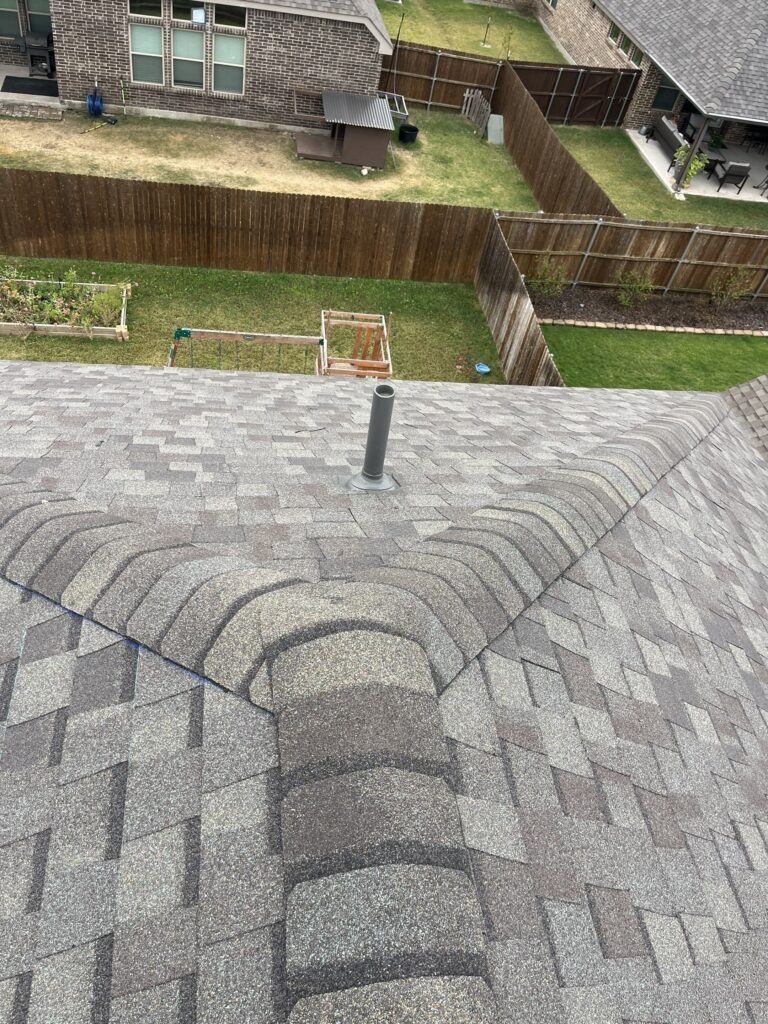
Before any work began, our crew inspected the roof and documented the damage across the whole surface. They found worn and damaged asphalt shingles. They found shingles that had lifted and exposed the roof edge. They also found granule loss consistent with hail impact across the slopes and ridge. That documentation matters for two reasons. It gives the homeowner a clear record of the roof’s real condition. It also gives an insurance adjuster exactly what they need to evaluate a hail claim. When storm damage spreads across a roof like this, spot repairs only offer a short-term patch. A full replacement is the sound long-term decision.
Why this roof needed replacement
The damage here was not isolated to one area. Hail had affected shingles across the roof, bruising and cracking them. It stripped the granules that protect the asphalt underneath from the sun. Once that damage spreads this wide, the roof ages rapidly. It becomes prone to leaks no matter how many individual spots get patched. Replacing the roof resets the whole system, shingles, underlayment, and all, on a sound deck. That beats chasing hail-damaged shingles one repair at a time.
The layer under the shingles
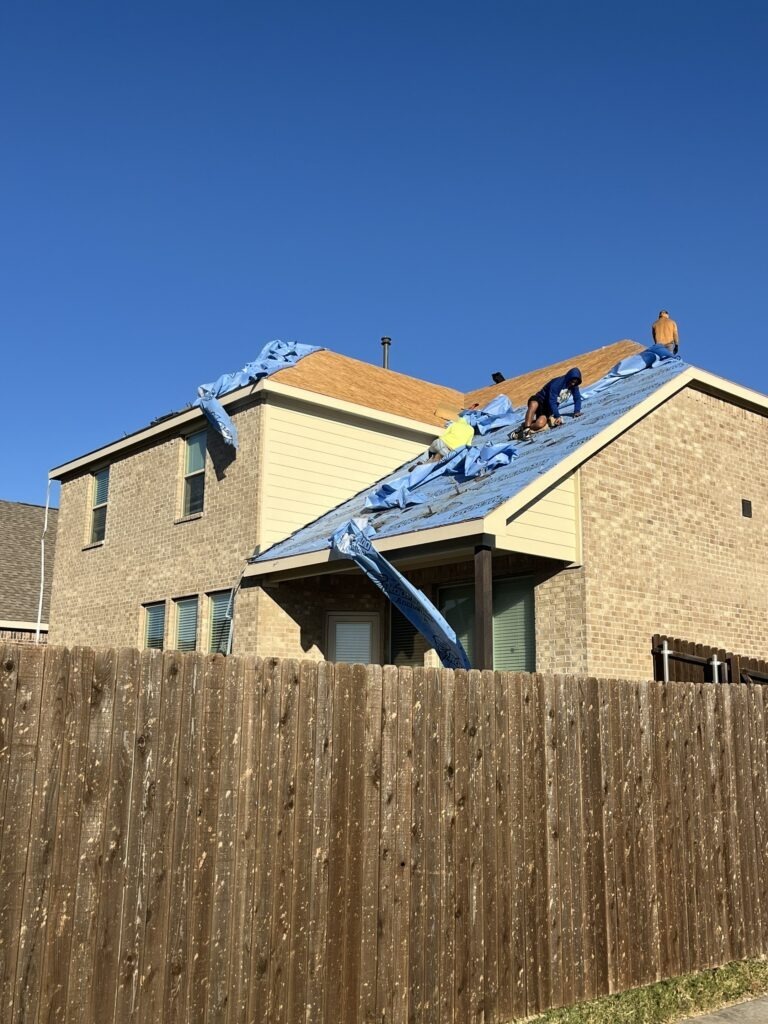
One of the photos shows the crew installing synthetic underlayment over the roof deck. Underlayment serves as the secondary water barrier beneath the shingles, and it does quiet but critical work. If wind ever drives rain past a shingle, the underlayment still keeps water off the deck and out of the home. Modern synthetic underlayment offers more durability and water resistance than the old felt paper it replaced. Installing it correctly across the whole deck is one of the details that separates a roof that lasts from one that leaks within a few years.
Result and next step
This hail damage roof replacement in Melissa, TX now has a complete project record. It documents the roof inspection, the hail-related shingle damage, and the roof replacement, including the synthetic underlayment that now covers the deck at this Melissa home. If a hailstorm has hit your roof, start with a documented inspection. That way, your repair-or-replace decision and any insurance claim rest on the roof’s actual condition rather than a guess.
Guidance for property owners in Melissa and North Texas
North Texas sees frequent hail, and the damage is not always visible from the ground. After a storm, watch for granules collecting in gutters, shingles that look bruised, cracked, or lifted, and any interior ceiling staining. Have the roof inspected and documented after significant hail even if it is not leaking yet. That record supports a fair insurance claim. When hail damage spreads wide, a full replacement often delivers the better long-term value.
Related guidance
Learn more about our roofing services, or get help now to schedule a documented roof inspection.
Frequently asked questions
Why did this Melissa roof need a hail damage roof replacement instead of a repair?
The hail damage was not isolated to one area; it bruised and cracked shingles and stripped granules across the entire roof. Once damage spreads that wide, patching individual spots only offers a short-term fix, so full replacement became the sound long-term decision.
What did the inspection find on this Melissa roof?
The inspection documented worn and damaged asphalt shingles, shingles that had lifted and exposed the roof edge, and granule loss consistent with hail impact across the slopes and ridge. This documentation gives the homeowner a clear record of the roof’s condition, and it gives an insurance adjuster exactly what they need to evaluate a hail claim.
What is the synthetic underlayment installed during this roof replacement, and why does it matter?
Underlayment serves as the secondary water barrier installed beneath the shingles over the roof deck. So if wind ever drives rain past a shingle, it still keeps water off the deck and out of the home. Modern synthetic underlayment offers more durability and water resistance than old felt paper, and installing it correctly across the whole deck separates a roof that lasts from one that leaks within a few years.
“I am selling my house. After the general inspector gave my roof the okay, the buyer hired an “expert” roofer to inspect it again. The expert said it needed to be replaced completely. I called my insurance to file a claim. The adjuster said the roof was in no need of repair. Rainy Day had also sent out a representative with the adjuster, but that person didn’t have clearance to go on the roof. I was skeptical. The third party had not been on the roof; and, I had 2 wildly different opinions from 2 financially motivated sources. After talking to Rainy Day, Josh came out himself. He climbed on the roof in 100 degree heat. He declared it undamaged. I could finally have peace of mind. I appreciate the employees at Rainy Day for going above and beyond. I have used them in the past and would recommend their work and integrity to anyone!”