This mold remediation in Rockwall, TX began after a home sat vacant for months with an unaddressed water source. Nobody occupied the house during that time, so the moisture went unnoticed. By the time our team arrived, visible mold growth, a musty odor, and elevated humidity readings confirmed what the water source had already started. Our first job was not demolition. It was containment, so spores already in the air would not spread further into unaffected rooms while the crew prepared for safe removal.
What we found in Rockwall
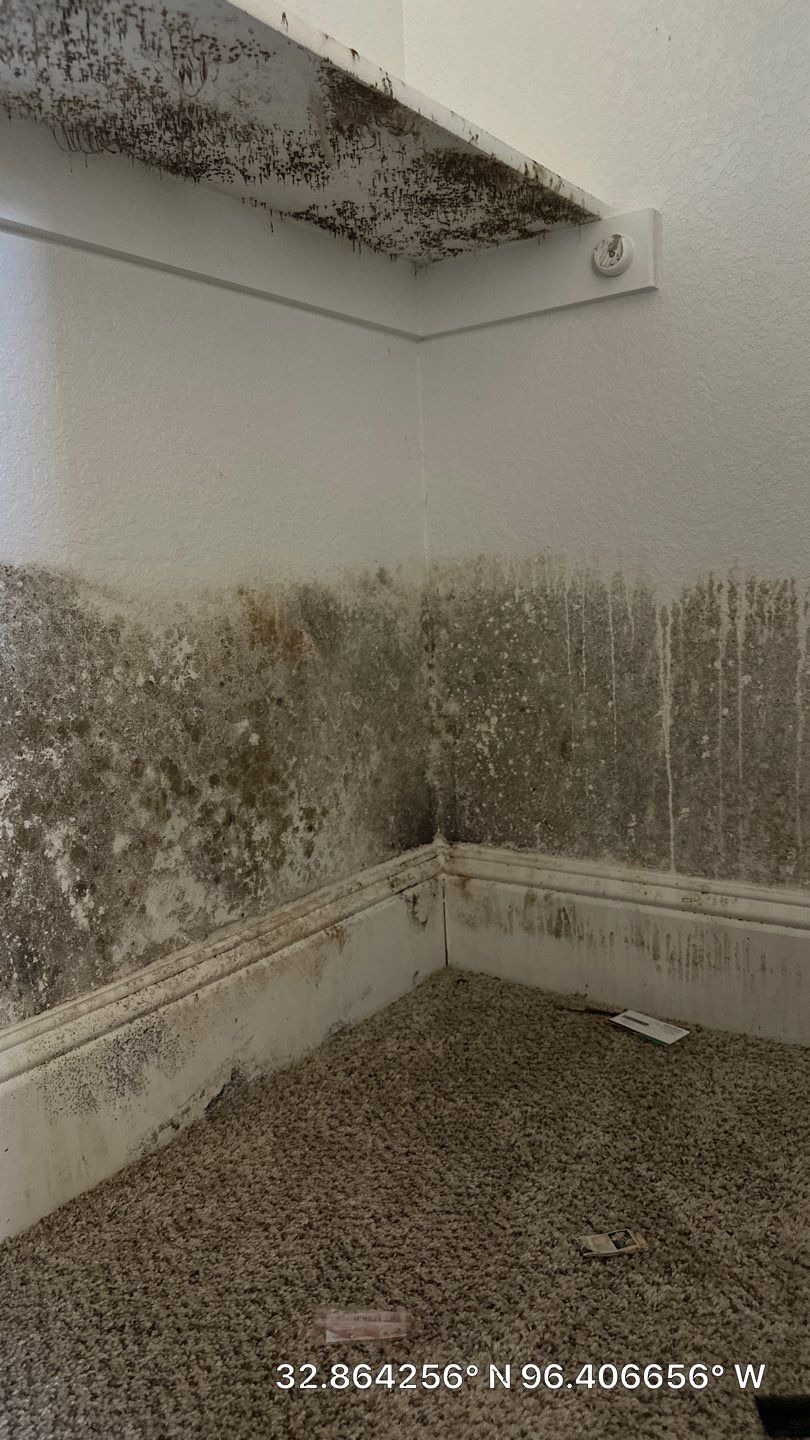
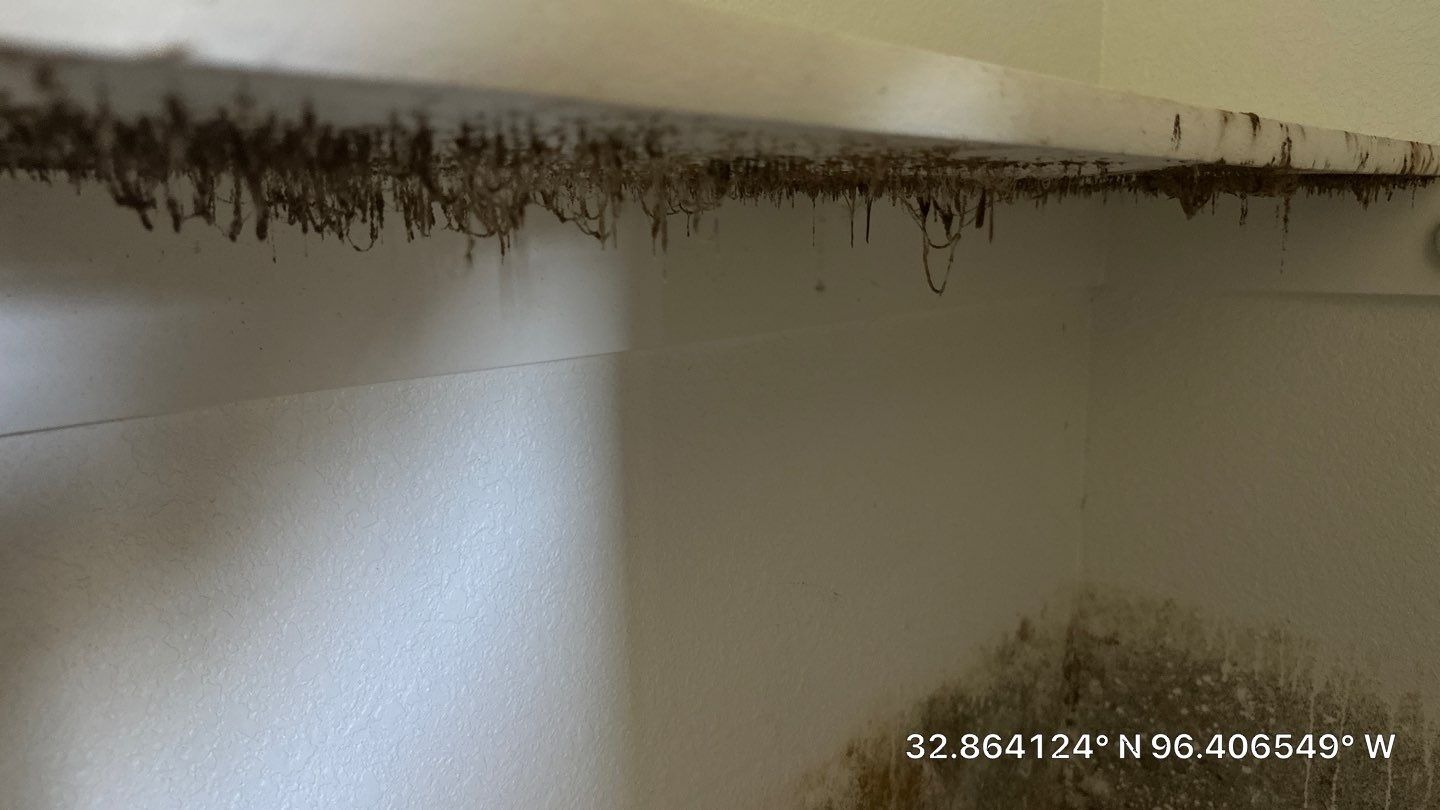
Our inspection turned up several connected problems. Moisture readings were high in the affected areas, and visible mold covered surfaces near the water source. A musty odor filled the space, which is often the first sign a homeowner notices before visible growth appears. We identified the water source itself, though the record does not specify what caused the original leak or intrusion. Because the home was vacant for an extended period, the moisture had time to settle into materials rather than dry out on its own.
Rainy Day’s role
Rainy Day Restoration & Roofing has worked on North Texas homes since 1999, and mold work like this falls under our RCO1416 license with IICRC-certified protocols. John Hopewell, our on-site technician, holds TDLR MRC1508 certification along with IICRC training. That combination matters here because Texas requires a documented, licensed approach to mold remediation once visible growth reaches this scale. We handled this job from the first inspection through the remediation steps still underway, using the same team throughout.
The mold remediation in Rockwall, step by step
We followed MAC protocol, which sets the standard sequence for safe mold remediation. First, the crew established full containment around the affected areas to stop spores from traveling into the rest of the home. Next, we set up HEPA air scrubbers to filter airborne particles continuously during the work. Because the water loss happened while the home sat empty, the affected materials required careful handling rather than a quick cleanup.
Proper containment for a job like this includes sealed barriers and, when a crew must exit through the house rather than straight outdoors, a decontamination chamber to prevent cross-contamination. Our team wore full PPE throughout. Demolition of affected materials was scheduled for the end of the week, followed by deep cleaning and the actual remediation process once the damaged materials were out.
What the photos show
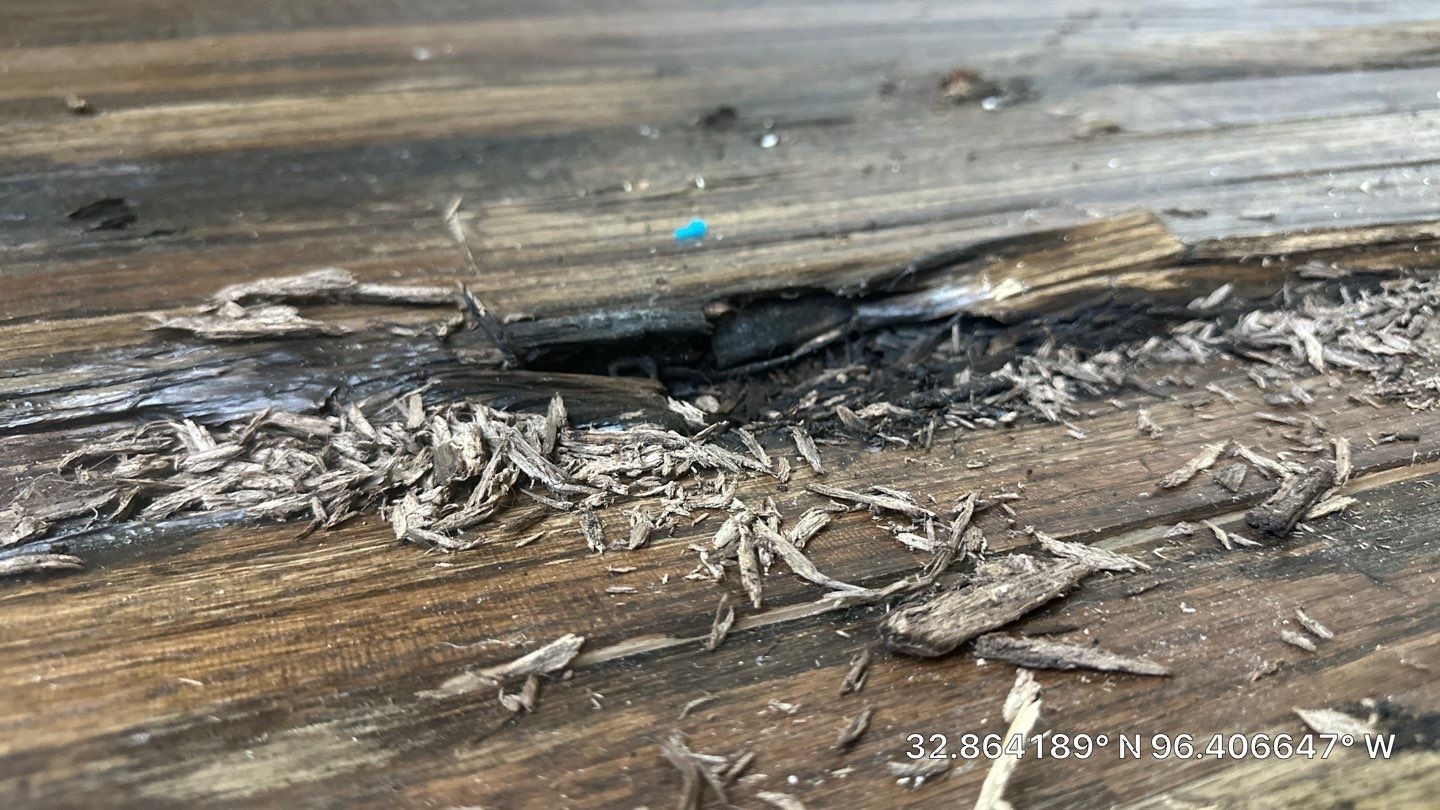
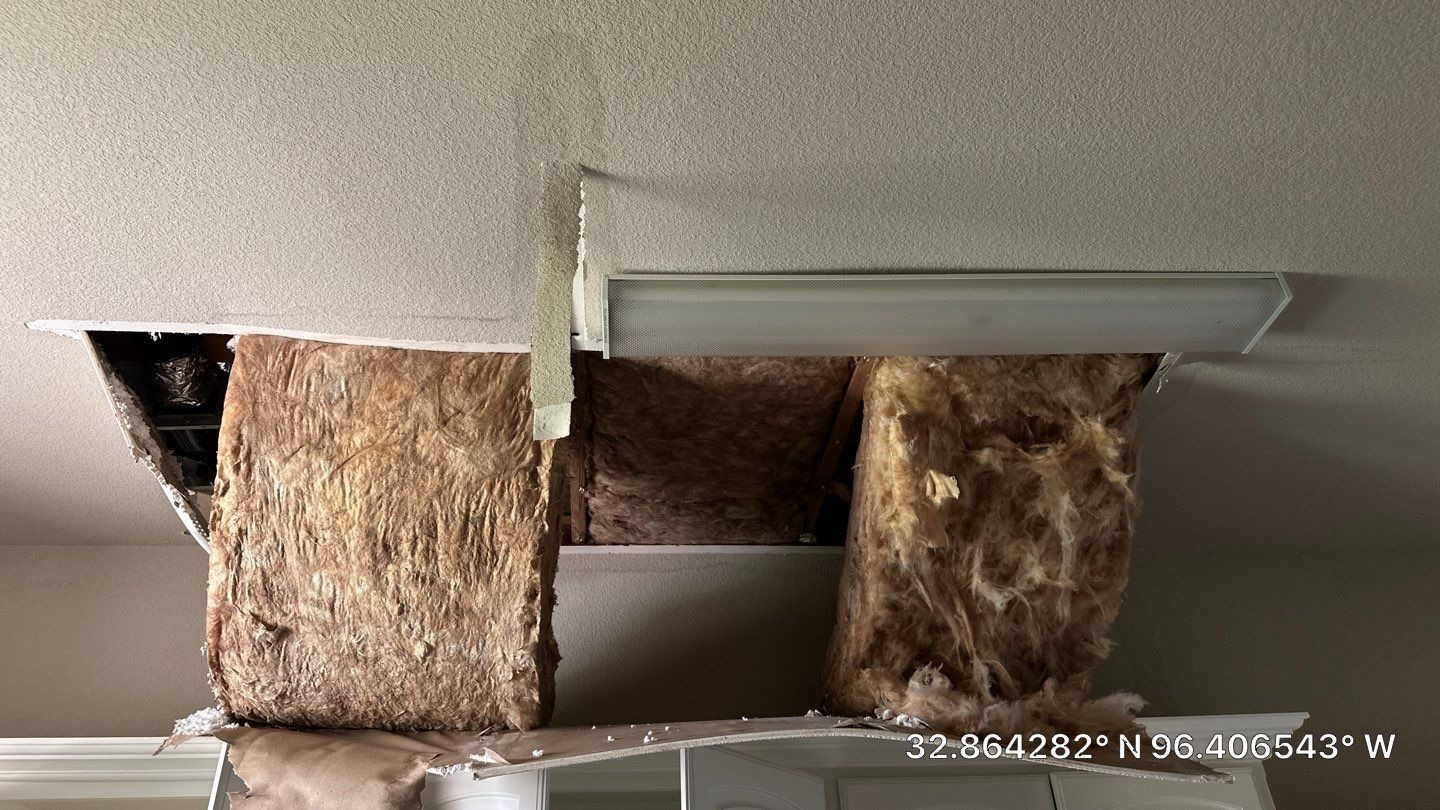
The photos from this visit document the containment setup and the conditions that made it necessary. They show the affected areas before demolition, with visible growth and the barriers going up around them.
Why mold growth is worth taking seriously
Mold does not need much time once moisture and organic material meet. A water source left untreated for months, as documented here, gives spores far more time to establish than a leak caught the same week. Musty odors and elevated humidity are early warning signs, but by the time growth becomes visible, it has often spread further than it appears on the surface. That is why containment comes before demolition, not after. Cutting into affected materials without sealing the area first risks pushing spores into clean parts of the home.
Result and next step
This mold remediation in Rockwall is still in progress, with clearance testing still ahead once demolition and deep cleaning finish. Containment is in place, HEPA air scrubbers are running, and the crew has scheduled demolition for later this week. After that, the deep cleaning phase begins, followed by post-remediation clearance testing to confirm the space meets the standard before anyone calls the job finished. We do not report clearance results until that testing actually happens.
Guidance for property owners in Rockwall and North Texas
If you own a vacant property, schedule periodic check-ins, especially after storms or plumbing issues elsewhere in the home. A water source that goes unnoticed for even a few weeks can lead to the kind of growth documented in this job. Musty odors and visible discoloration are signs worth acting on right away rather than waiting. For homeowners dealing with active moisture or suspected mold, our mold removal page outlines what proper containment and remediation involve. If you’re noticing a lingering smell or discoloration on walls or ceilings, our ceiling stain guidance explains what that can signal. When you need to talk through next steps, our get help page connects you with our team.
Related guidance
For homeowners facing similar moisture issues, these resources may help: our mold removal service page, our guidance on water in crawl space conditions, and our get help page to start a conversation about your property.
Frequently asked questions
What does mold remediation in Rockwall involve after a long-term water loss?
It starts with containment and HEPA air filtration, then moves to demolition of affected materials, deep cleaning, and finally clearance testing before the job is considered done.
Why does containment happen before demolition?
Containment seals off the affected area so spores don’t spread into clean parts of the home once demolition disturbs mold-covered materials.
How long can a vacant home sit with a water source before mold becomes a problem?
This job involved months of untreated moisture, which gave mold significant time to establish. Shorter periods can still lead to growth depending on humidity and the amount of water involved.
Is this mold job licensed and IICRC-certified?
Yes. Our mold and water work operates under RCO1416, and our technician on this job holds IICRC certification along with TDLR mold remediation credentials.