Mold is a moisture problem before it is a mold problem. It does not appear on a clean, dry wall; it shows up where water has been sitting, usually behind drywall or under flooring where no one can see it. This Sherman project shows how Rainy Day finds the moisture, contains the area, removes what is affected, and gets a home back to dry and clean, and what a homeowner should do the moment they see or smell mold.
What We Found in Sherman
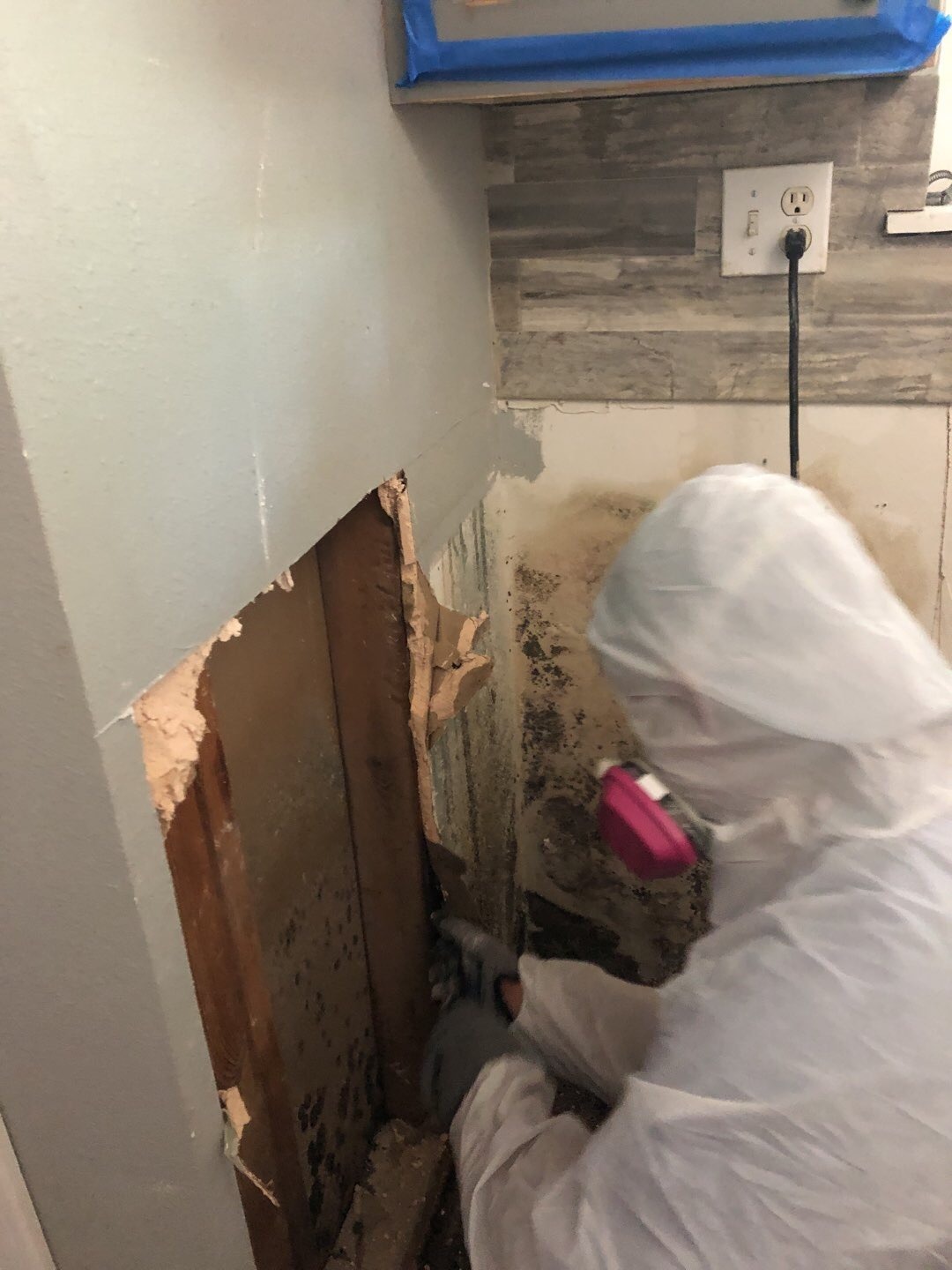
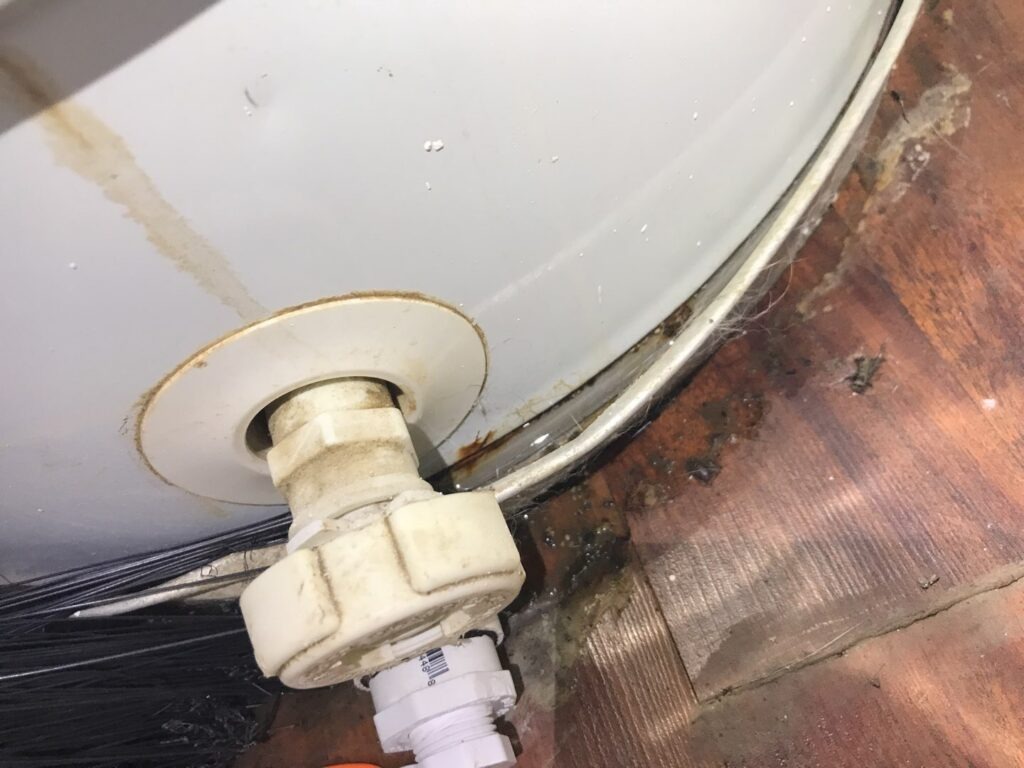
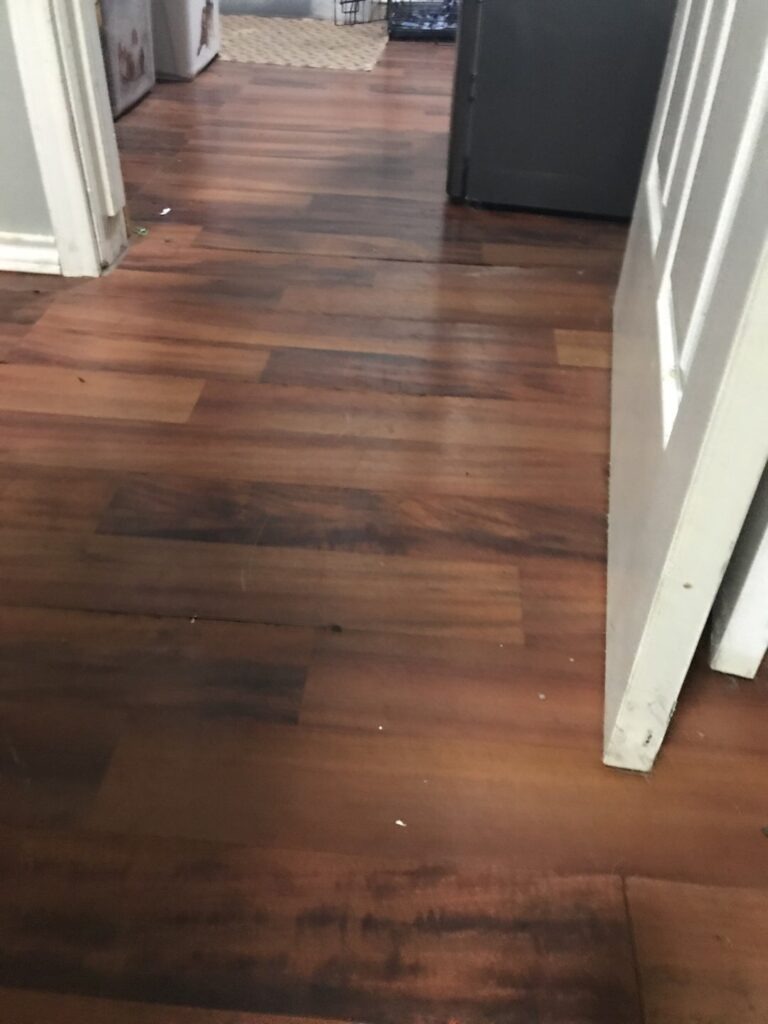
At this Sherman home, the visible signs pointed to a moisture problem that had been feeding mold for a while. The documented conditions included mold growth and water damage around the base of a water heater and dark water staining across the hallway flooring, with more mold found once wall finishes were opened in the bathroom area. As is almost always the case, what showed on the surface was smaller than what was behind it.
Rainy Day’s Role
Rainy Day Restoration and Roofing handled the documented mold-remediation scope as a licensed Texas mold remediation firm: investigating the moisture, containing the work area, removing the affected materials, cleaning, and preparing the space for repair. Because Rainy Day carries a project from the first call through the rebuild, the same team that opened the walls also managed the drying and the path back to a finished room.
What We Did
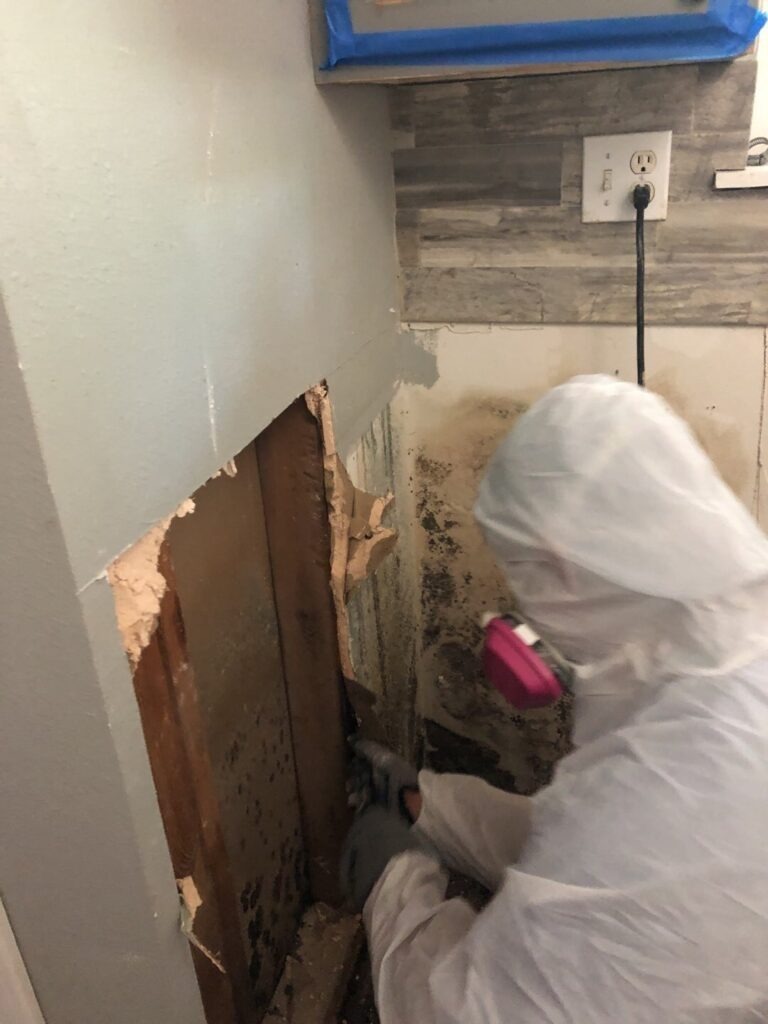
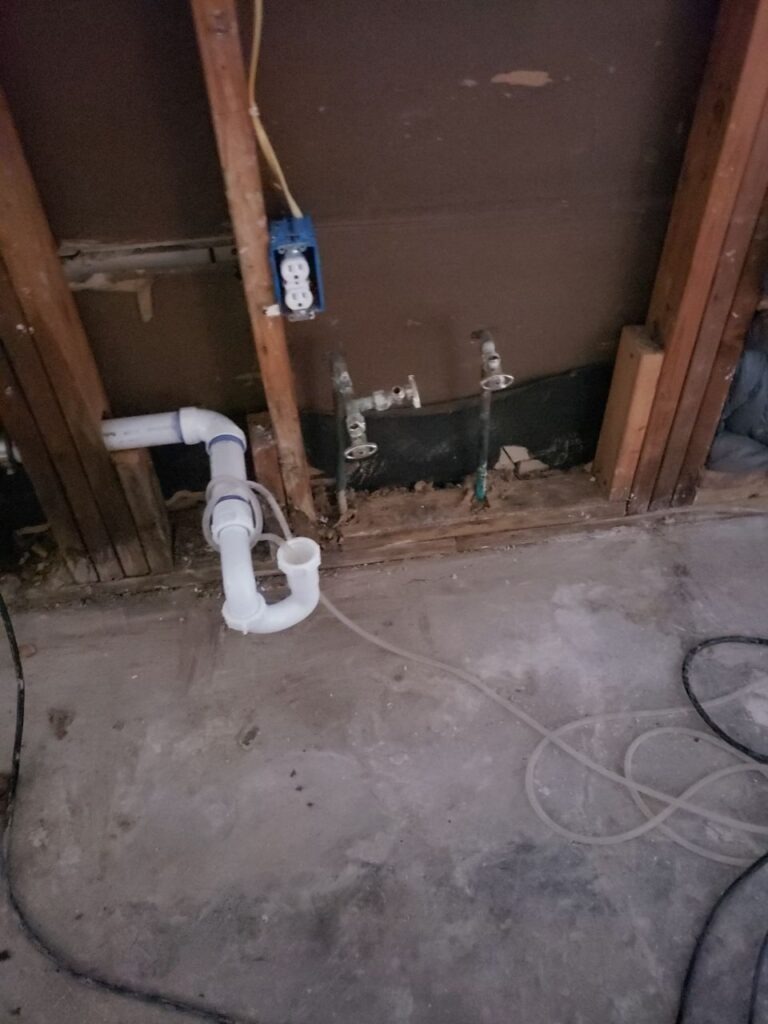
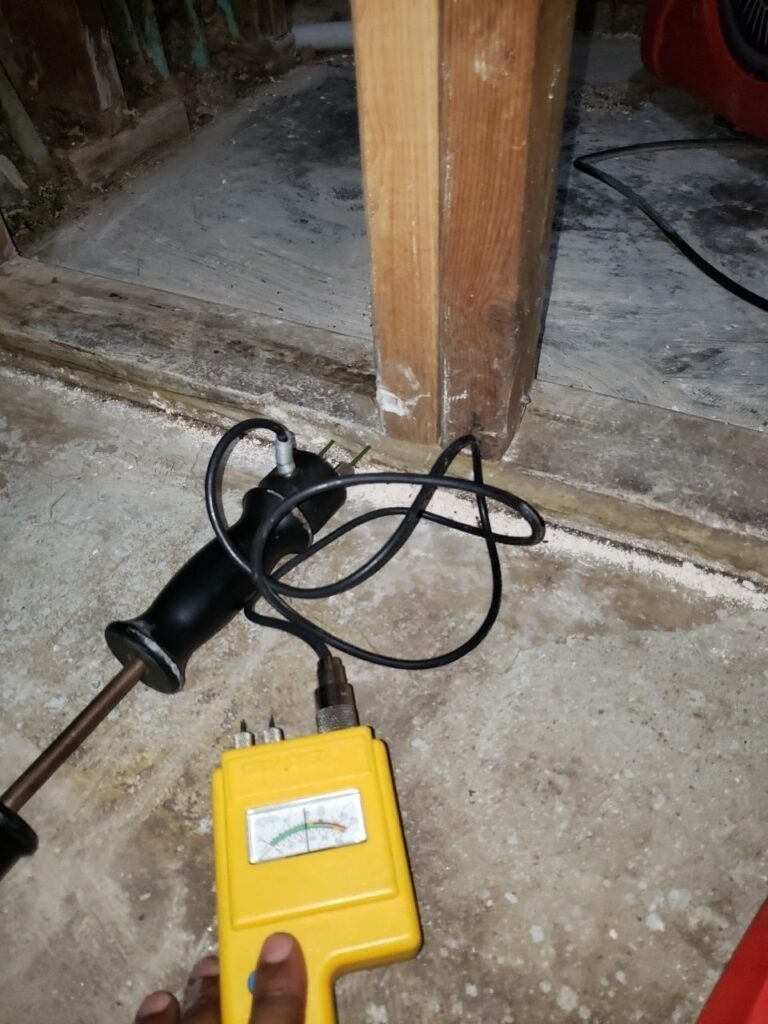
The work followed the sequence proper mold remediation requires. First, a moisture investigation to understand where the water was and how far it had traveled. Then containment, so that disturbing the mold did not push spores through the rest of the home. From there, controlled removal of the affected drywall and finishes, which exposed the framing and plumbing and revealed the full extent of the growth. Moisture testing confirmed how wet the remaining structure still was, and the area was cleaned and prepared for the rebuild. The photographs document a technician in full protective gear and a respirator working inside the contained area, which is exactly what remediation is supposed to look like.
Why Hidden Mold Is Worth Doing Right
It is tempting to treat mold as a surface stain: wipe it, spray it, paint over it. But the mold you can see is fed by moisture inside the wall, and until that source is corrected and the wet material is removed, it comes back. Disturbing mold without containment can also push spores into clean parts of the home, turning a one-room problem into a whole-house one. That is why professional remediation follows a specific order: find and stop the moisture, contain the area, remove what is affected, clean, verify the structure is dry, and only then rebuild. Skipping steps is what turns a small mold job into a recurring one.
Result and Next Step
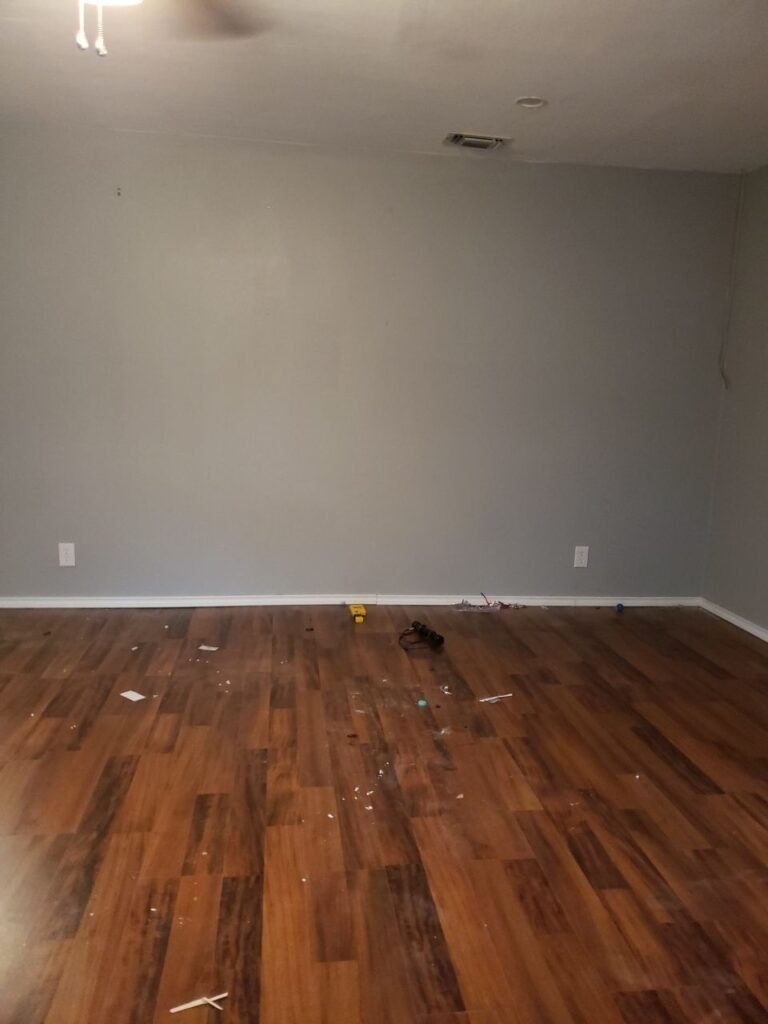
The project record documents the moisture investigation, the containment, the material removal, the cleaning, and the cleared space prepared for repair. If you are seeing mold or smelling that musty, earthy odor, the right next step is not to paint over it. It is to have the moisture source found and the affected area properly assessed before anyone starts pulling out material.
Guidance for Property Owners
Watch for the early signs of a hidden moisture and mold problem: a musty smell that does not go away, dark staining on walls, ceilings, or flooring, paint or drywall that bubbles or softens, or visible growth around plumbing, water heaters, and bathrooms. Any of these is worth a professional evaluation. Mold caught early is a contained, straightforward job; mold left to spread behind the walls is not.
Related Guidance
Frequently asked questions
What caused the mold problem at this Sherman home?
The mold was traced to a moisture problem, with documented conditions including growth and water damage around the base of a water heater and dark water staining across the hallway flooring. Once the bathroom wall finishes were opened, additional mold was found, showing that the visible signs were smaller than the actual extent of the problem.
What steps did Rainy Day take to remediate the mold in Sherman?
Rainy Day, a licensed Texas mold remediation firm, followed a set sequence: investigating the moisture, containing the work area, removing the affected drywall and finishes, testing remaining moisture, and cleaning and preparing the space for rebuild. Because Rainy Day carries a project from the first call through the rebuild, the same team that opened the walls also managed the drying and the path back to a finished room.
Why shouldn’t I just clean or paint over visible mold myself?
Visible mold is fed by moisture hidden inside the wall, and until that source is corrected and the wet material removed, it will keep coming back. Disturbing mold without proper containment can also push spores into clean parts of the home, turning a one-room problem into a whole-house one, which is why a professional evaluation of the moisture source is the right first step.