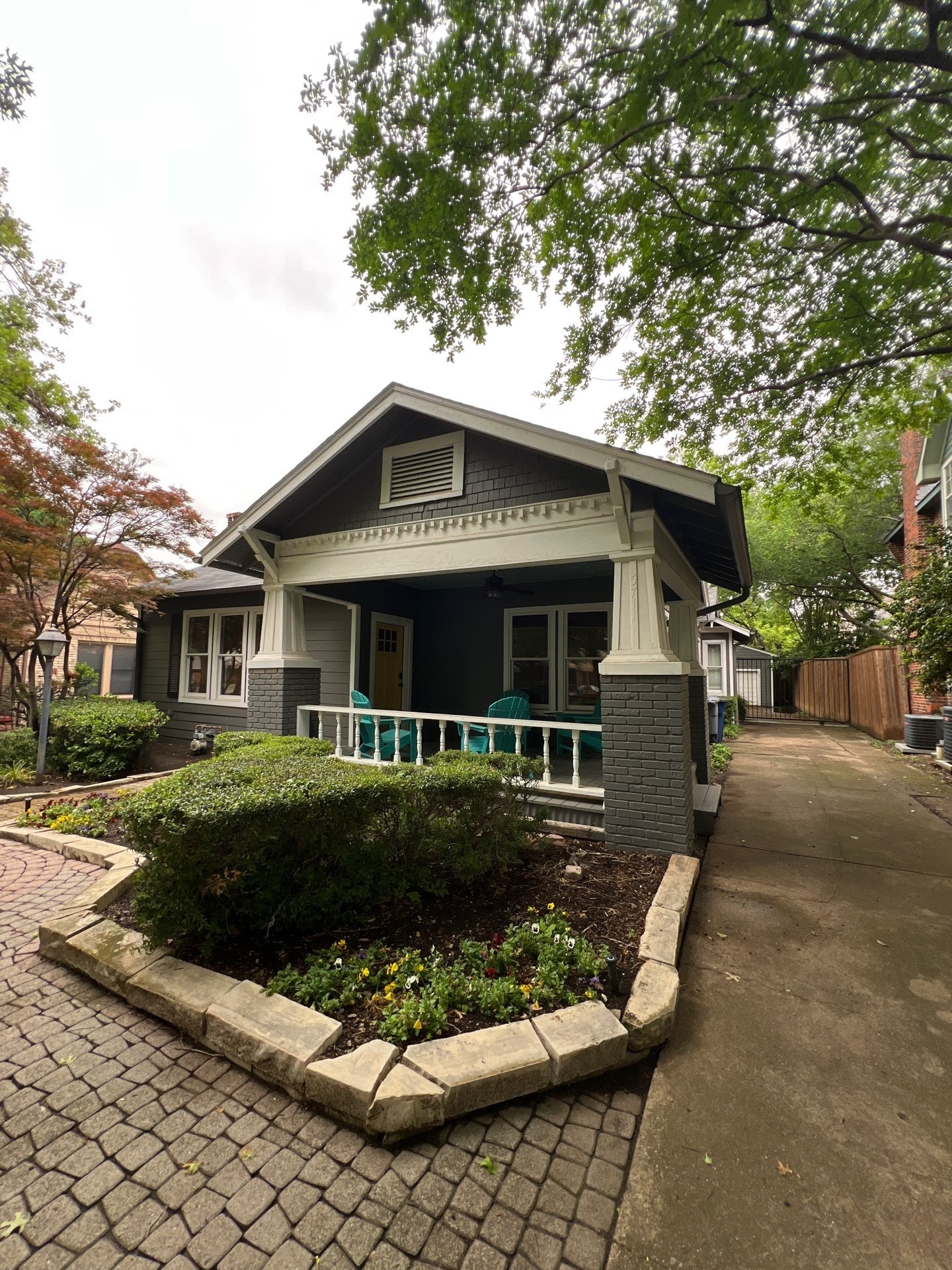
Plumbing causes a lot of bathroom mold remediation Dallas TX cases we see. Supply lines, drains, and the connections under a sink or toilet can leak slowly for a long time. This leak hides under the floor and behind the cabinets, so mold often appears before anyone spots a puddle. This Dallas project shows a bathroom mold remediation where crews pulled up the floor to reach the plumbing source. It illustrates the careful, contained way that kind of work should happen.
Getting down to the source
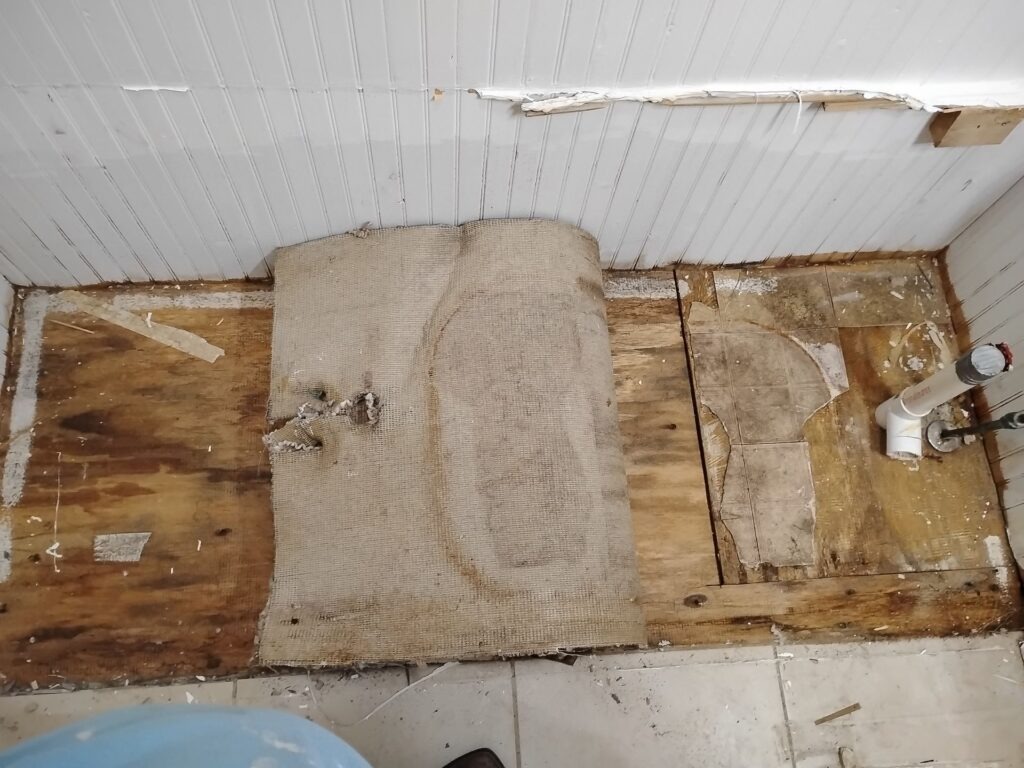
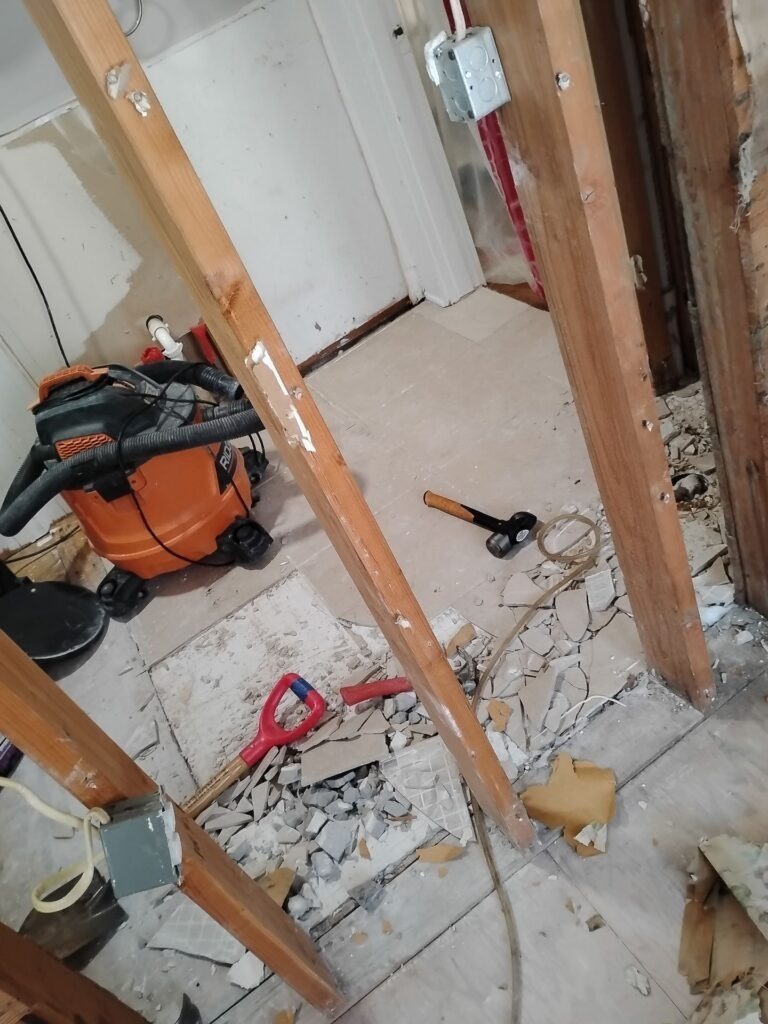
At this Dallas home, crews removed the bathroom floor to expose the subfloor and the plumbing openings beneath it. That is where bathroom moisture problems usually start: a slow leak at a plumbing connection keeps the subfloor damp, and damp wood in a dark, enclosed space is exactly what mold needs. Opening the floor let our team see the plumbing area directly. They could then address the moisture at its origin instead of treating the mold as a surface problem.
Careful demolition and removal
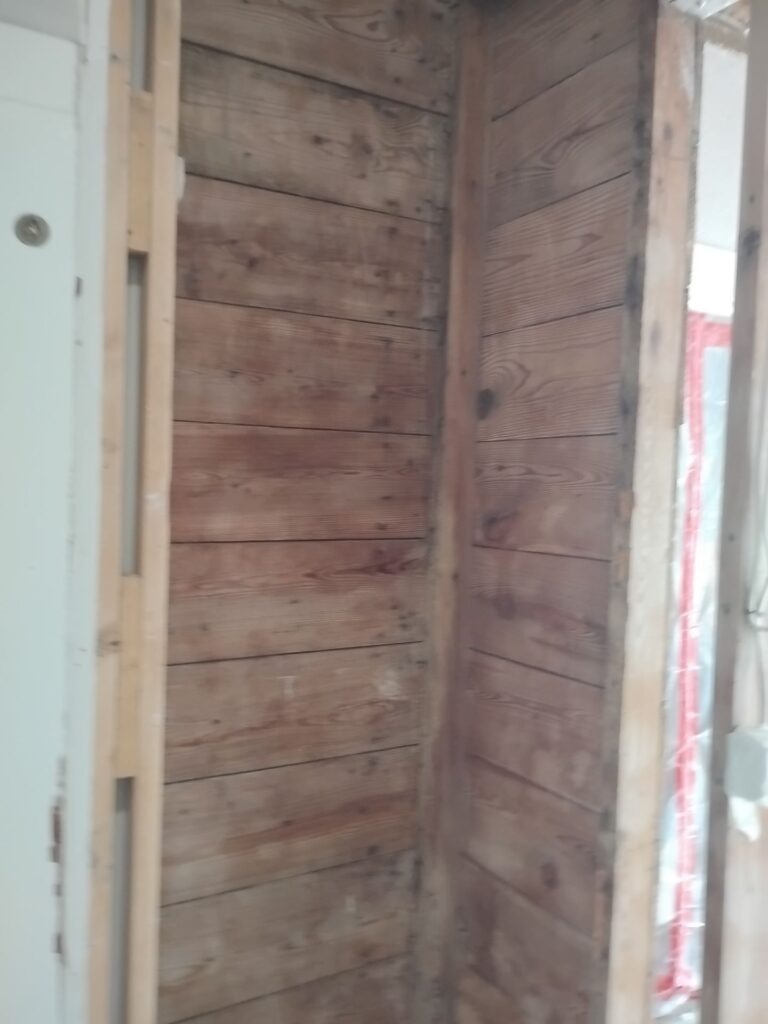
The remediation plan called for removing the affected flooring and opening the walls to expose the wood framing. Crews also removed broken tile and other materials that could not be salvaged. The team used remediation vacuum equipment during cleanup to capture mold particles rather than stir them into the air. Every removal here has a purpose: expose the framing so crews can treat and dry it, then take out materials that are too contaminated to keep.
Protecting the rest of the home
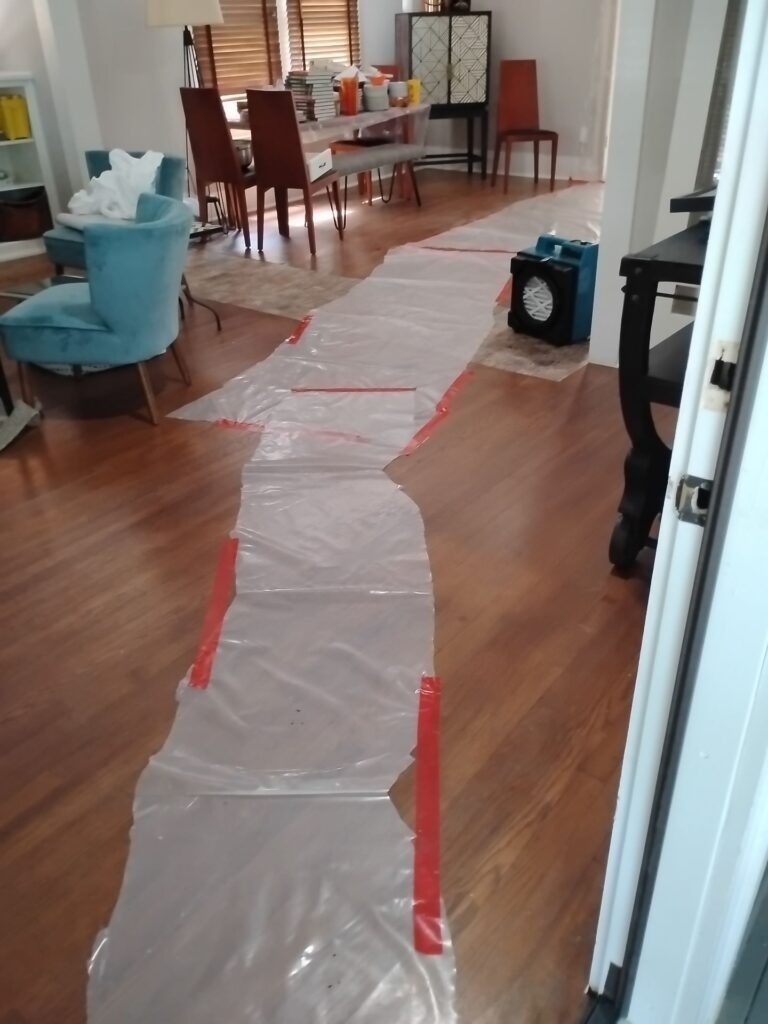
Mold work releases spores, so protecting the rest of the house matters. A taped plastic floor covering created a clean, protected access path through the interior. This let the crew and materials move in and out without tracking contamination through the home. Details like a protected path and captured debris keep a remediation from spreading the very problem it aims to solve.
Result and next step
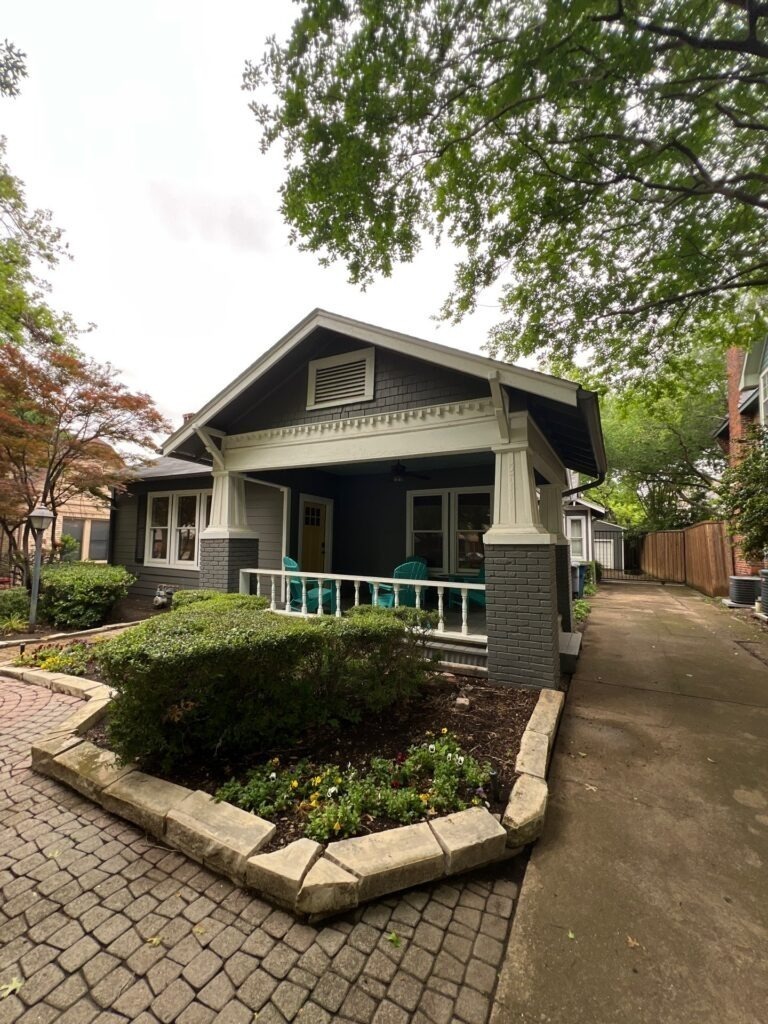
The project record documents the exterior, the bathroom floor demolition exposing the subfloor and plumbing, the exposed framing, the remediation cleanup, and the protected access path at this Dallas home. If you have bathroom mold, start with an assessment that checks the plumbing and subfloor. Resolving the growth means finding and fixing the moisture source underneath.
Guidance for property owners in Dallas and North Texas
In bathrooms, treat recurring mold as a plumbing question. A musty smell, soft or discolored flooring near a toilet or vanity, or mold that returns after cleaning can all point to a slow leak keeping the subfloor wet. Surface cleaning will not fix that problem. A professional assessment that checks the plumbing and the subfloor finds the source and remediates the mold for good.
Related guidance
Learn more about our mold remediation service, or get help now if you have found mold in a bathroom.
Frequently asked questions
What usually causes bathroom mold remediation Dallas TX cases like this?
Bathroom mold often traces back to a slow, hidden leak at a plumbing connection under a sink or toilet. That leak keeps the subfloor damp in a dark, enclosed space where mold can grow. In this Dallas project, crews removed the bathroom floor to expose the subfloor and plumbing openings, which is where the moisture problem started.
Why did the crew remove the flooring and open the walls instead of just cleaning the mold?
Cleaning the surface alone does not address the moisture source. So the team removed affected flooring, opened walls to expose wood framing, and removed broken tile and other materials that could not be salvaged. This exposed the framing so crews could treat and dry it, while remediation vacuum equipment captured mold particles during cleanup instead of stirring them into the air.
How is the rest of the home protected during bathroom mold remediation?
Mold work releases spores, so the crew used a taped plastic floor covering to create a clean, protected access path through the interior of this Dallas home. This let the crew and materials move in and out without tracking contamination through the rest of the house.
“⭐⭐⭐⭐⭐ An incredible act of service! I don’t usually take the time to write reviews, but this is one I feel strongly about sharing. My family recently went through a very difficult season, and we found ourselves dealing with a serious mold issue in our home during a time when we were already struggling financially. It was an overwhelming situation and we honestly didn’t know what we were going to do. Through a friend, we were connected with Rainy Day Roofing and Restoration, and what they did for our family meant more than we can properly put into words. They stepped in during a time of real need and chose to help us when they absolutely didn’t have to. Their willingness to work with us and show genuine compassion made it possible for us to take care of a major problem in our home that otherwise would have been out of reach for us. Not only did they help us when we needed it most, but the work they did was professional, thorough, and high quality. Throughout the entire process they treated us with kindness, respect, and understanding. Businesses that operate with this level of integrity and heart are rare. Rainy Day Roofing and Restoration didn’t just provide a service — they truly helped our family during a very hard time. If you’re looking for a company you can trust that stands behind their work and genuinely cares about people, I highly recommend them. We will always be grateful for what they did for us. Thank you again. 🙏”