In this completed mold remediation in Frisco job, a plumbing supply-line leak caused mold growth behind drywall in a new-construction home. Rainy Day Restoration built containment, ran HEPA air scrubbers, and removed affected drywall and spray foam insulation. Our crew applied antimicrobial treatment, and the work passed first-round clearance testing performed by an independent assessor. The builder contacted our team directly once they found the leak. Our scope covered structural drying and mold remediation so the property could move forward with repairs on a documented, tested foundation.
What we found in Frisco
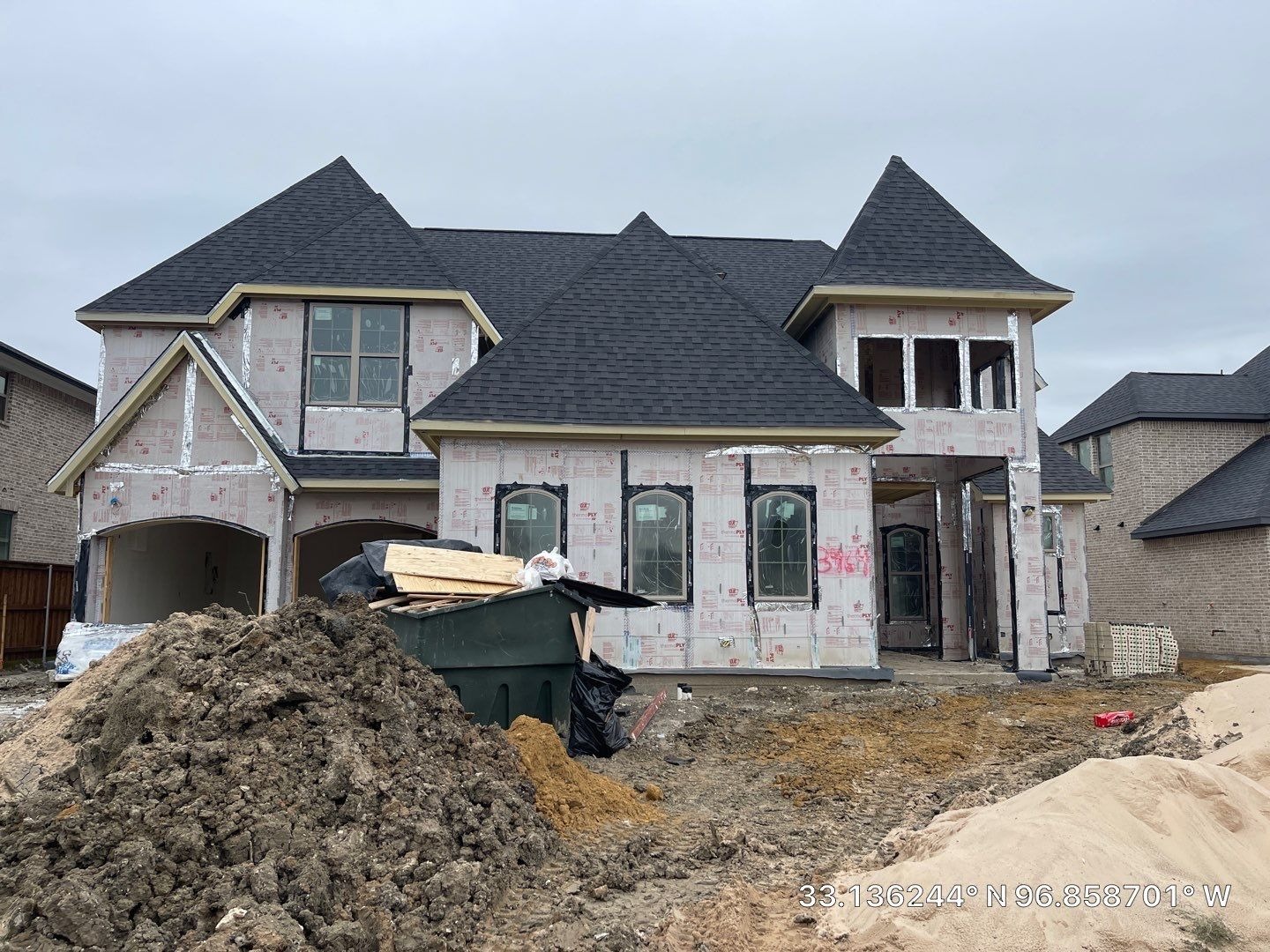
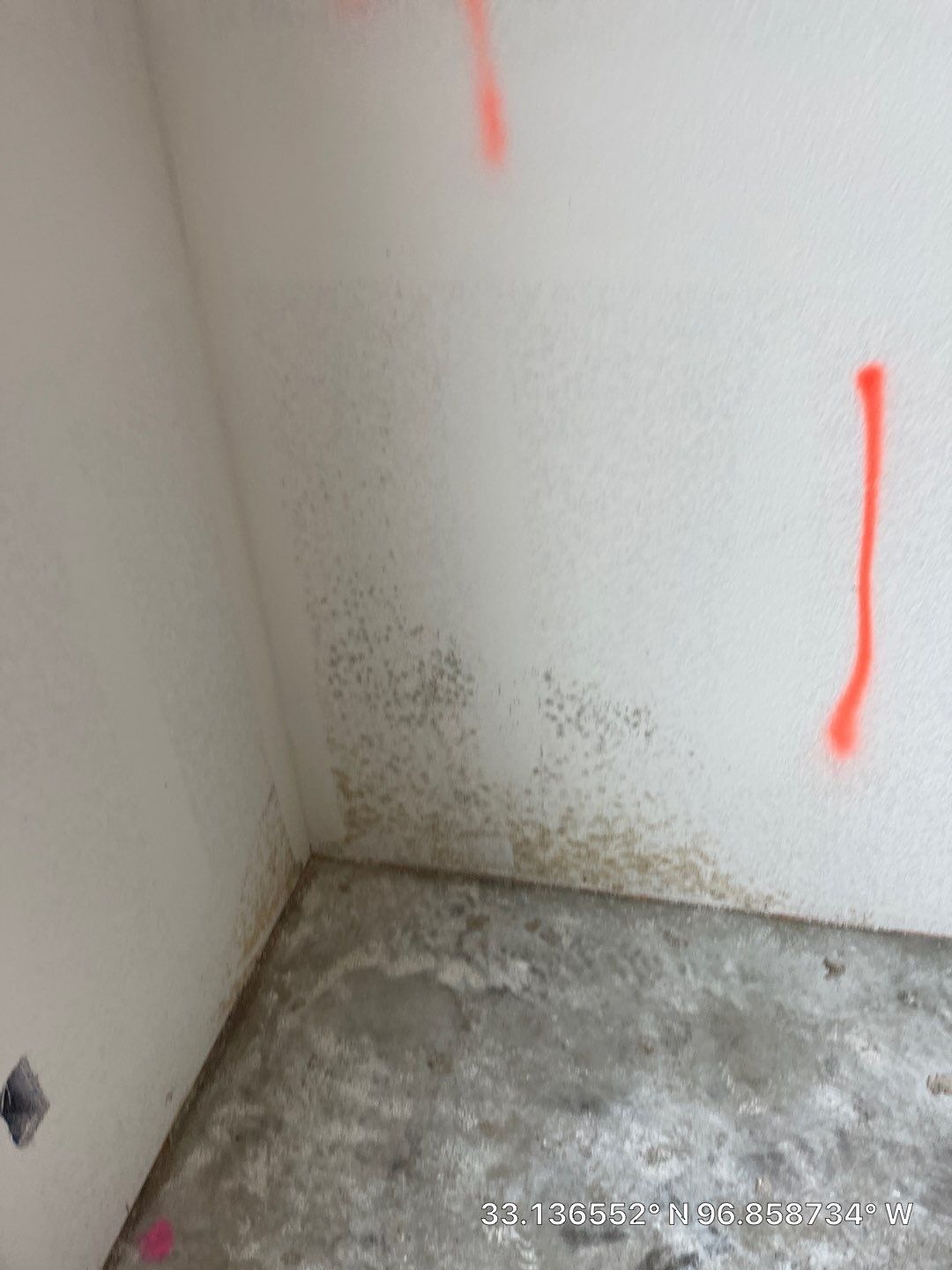
This was a new-construction home, which surprises a lot of property owners – mold doesn’t wait for a house to age. A plumbing supply line had been leaking, and by the time the builder caught it, moisture had worked its way into the wall cavity. Our inspection documented visible mold growth, a musty odor, and elevated humidity readings in the affected area. We identified the water source as the supply line leak. That let us scope the remediation to the areas actually impacted rather than guessing at boundaries.
Rainy Day’s role
As a licensed (RCO1416) restoration company, we work as one company from first call through rebuild. On this job, though, our scope was specifically structural drying and mold remediation. Mold protocols require third-party oversight, so we referred the project to a Mold Assessment Consultant (MAC) and followed their written protocol throughout the job. That protocol governs containment design, equipment run times, material removal boundaries, and the clearance testing standard. Our IICRC-certified crew executed the work to that spec.
The mold remediation in Frisco, TX, step by step
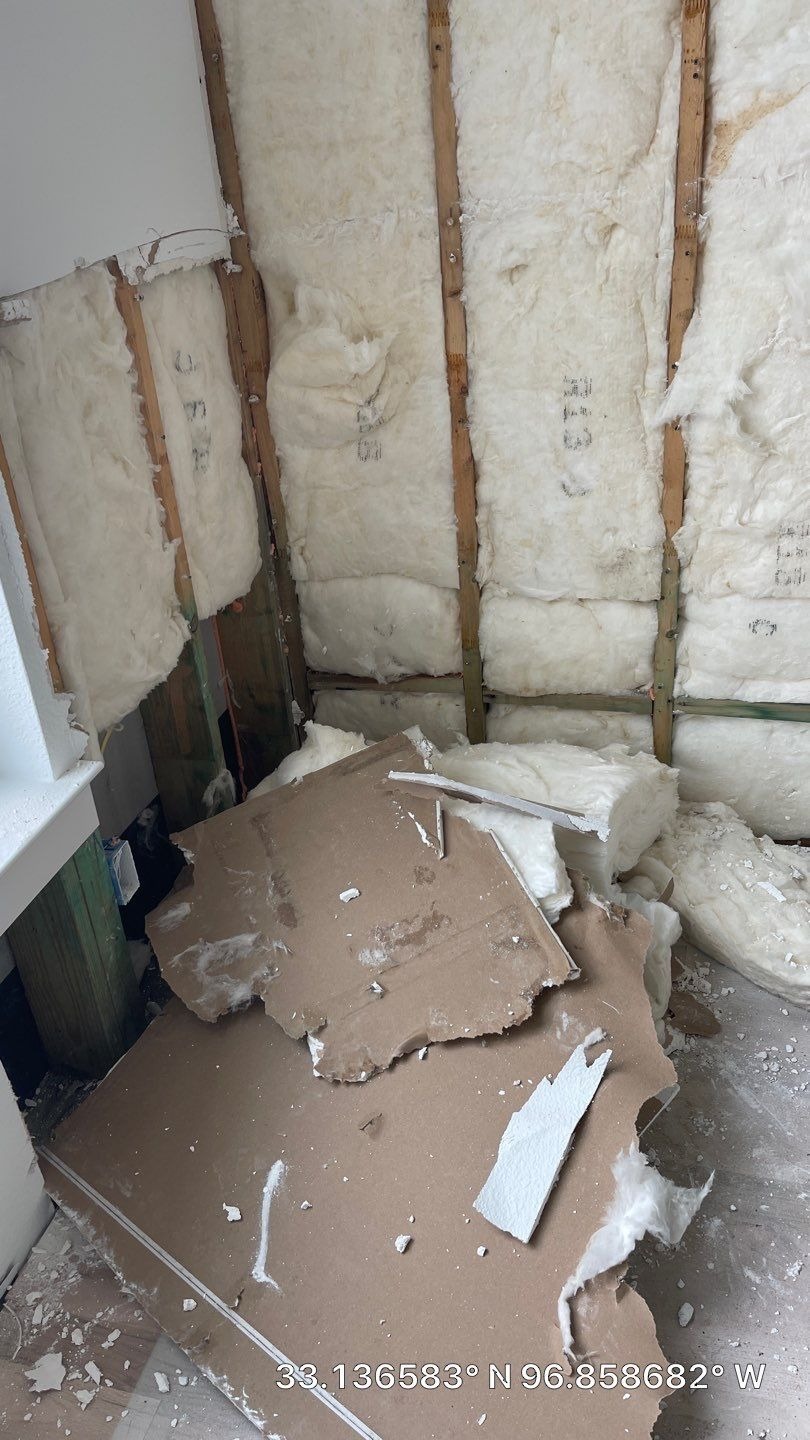
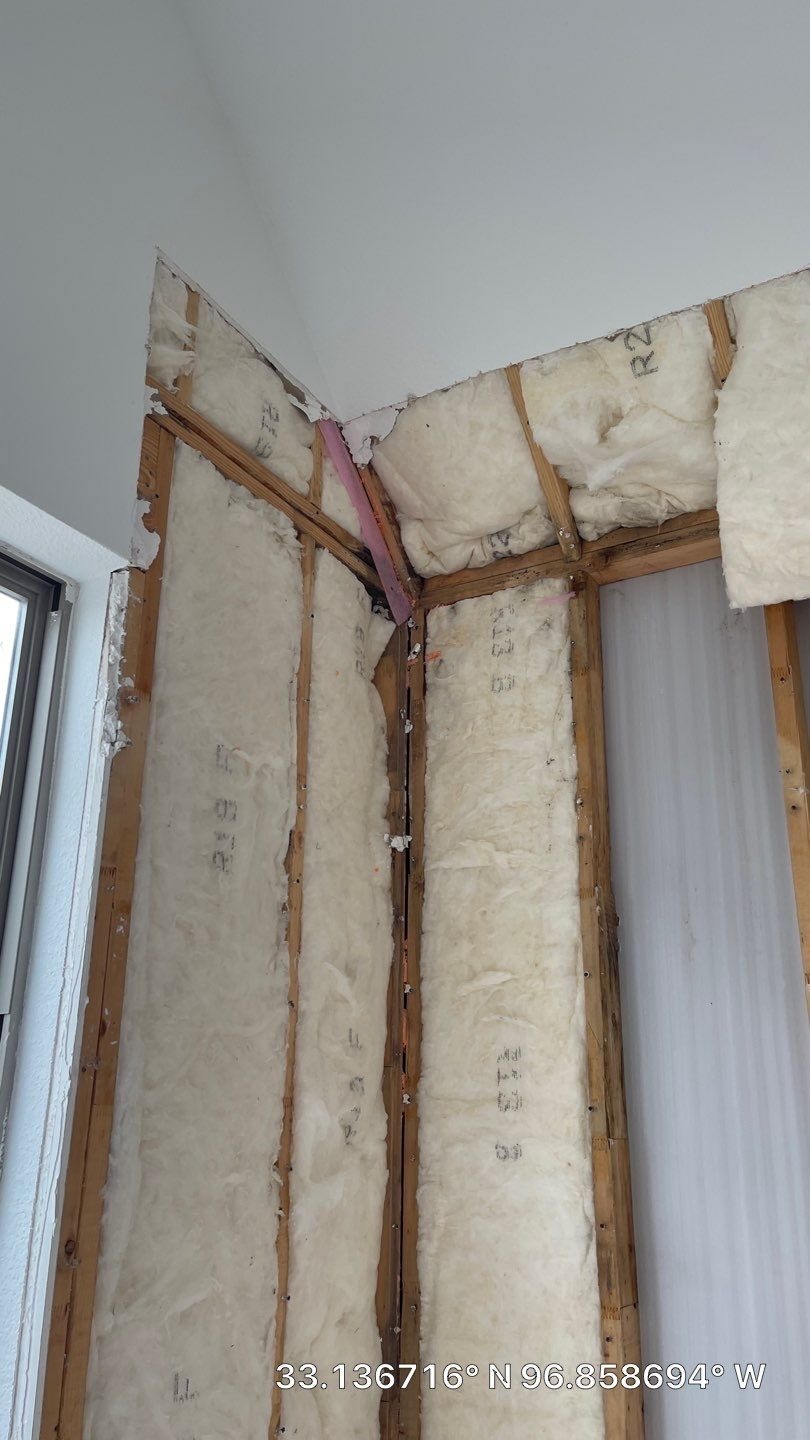
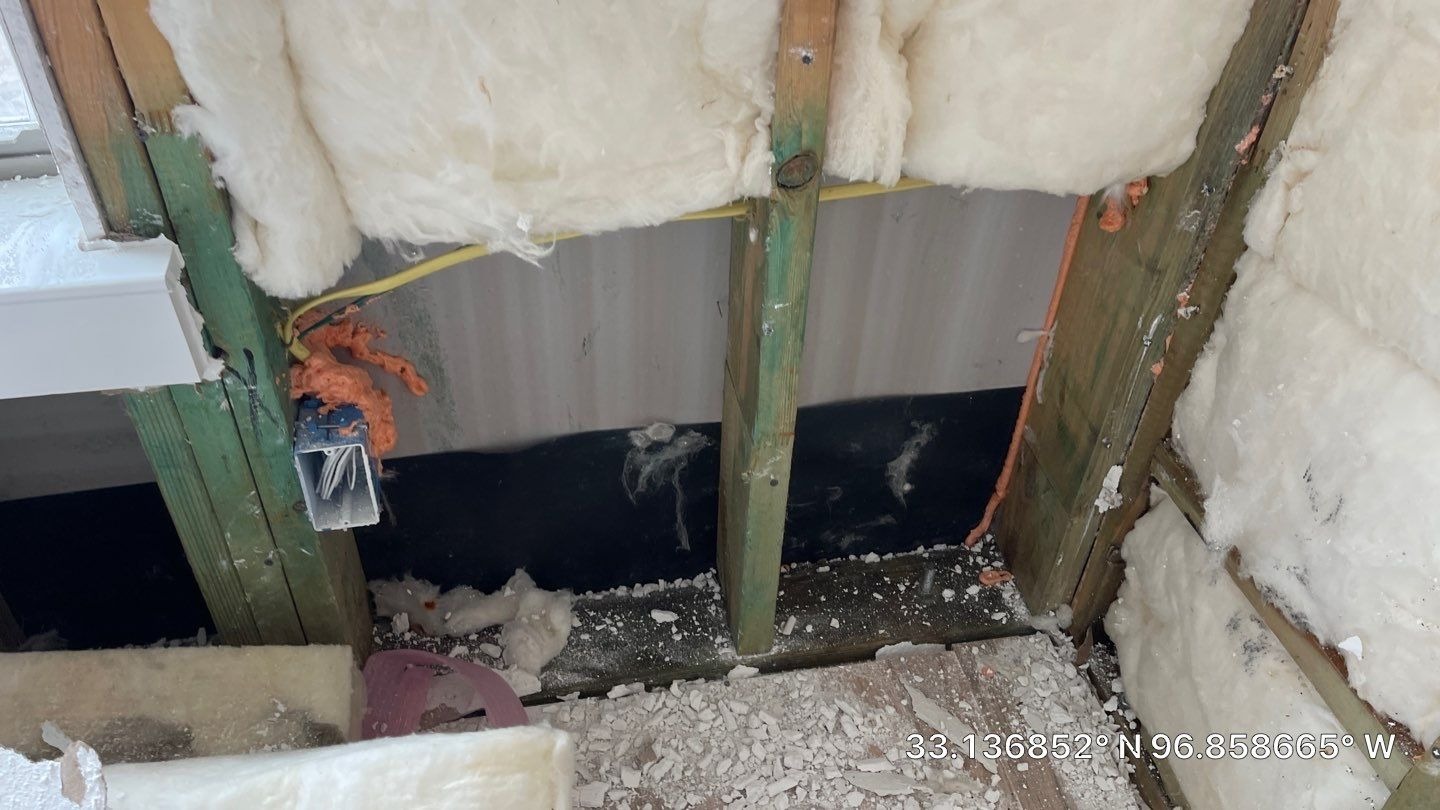
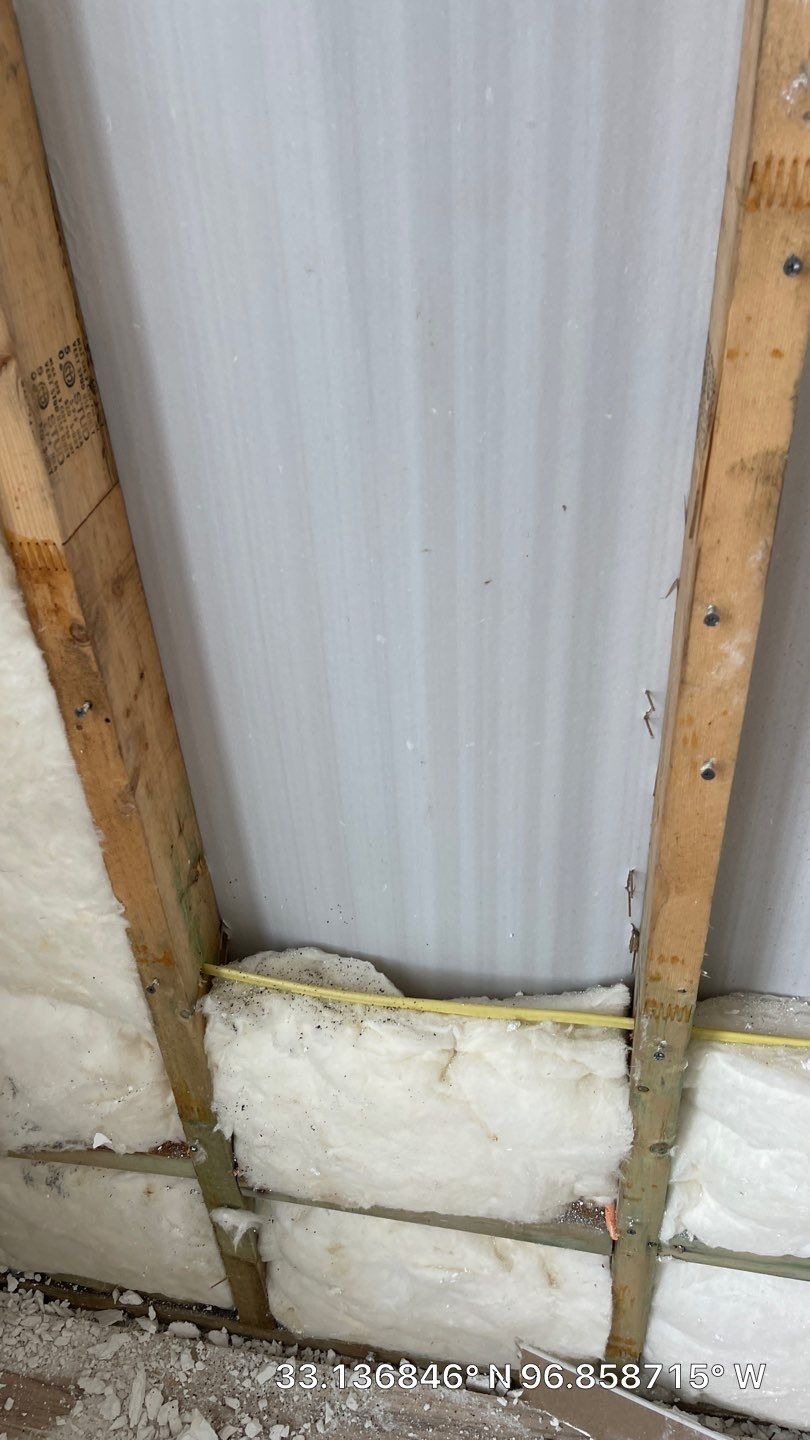
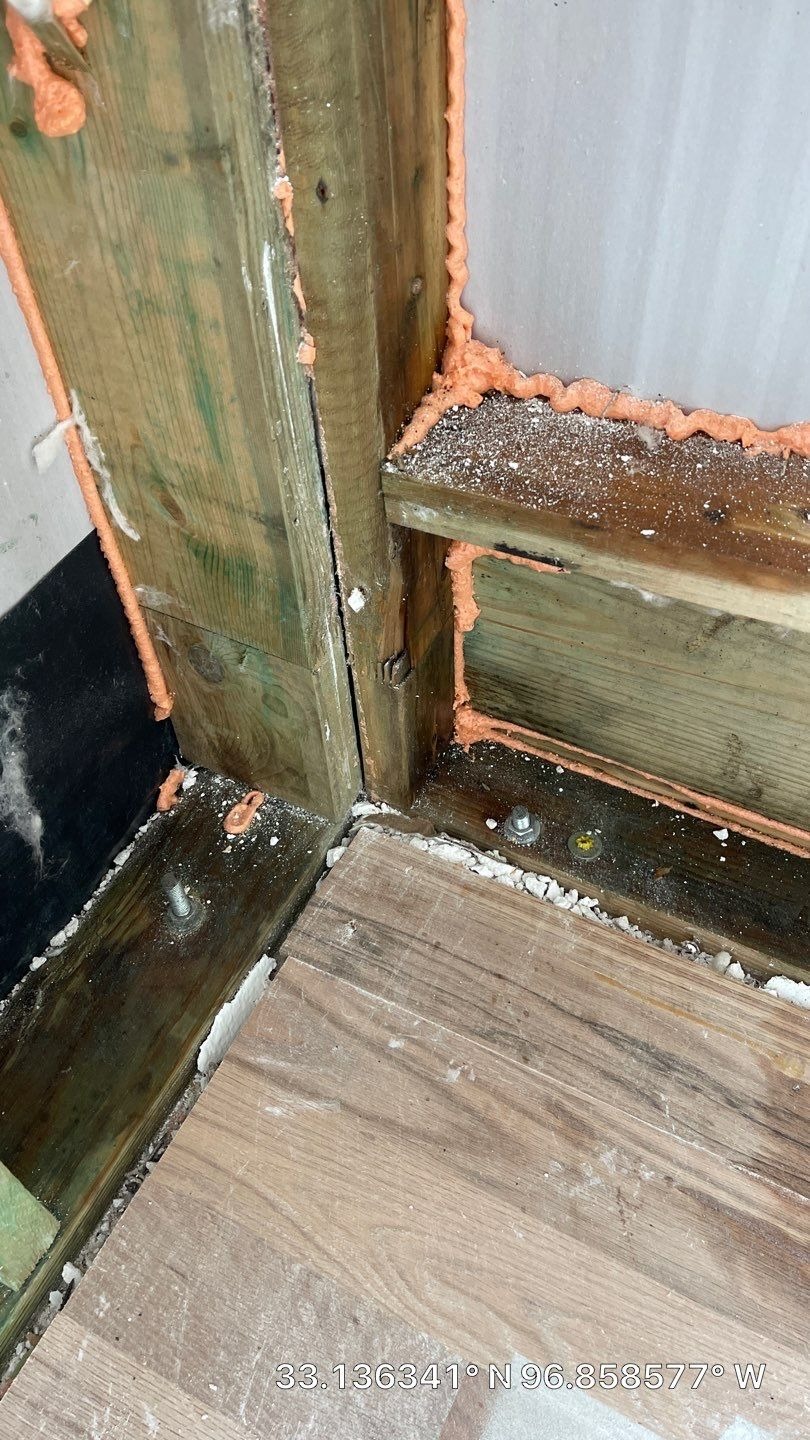
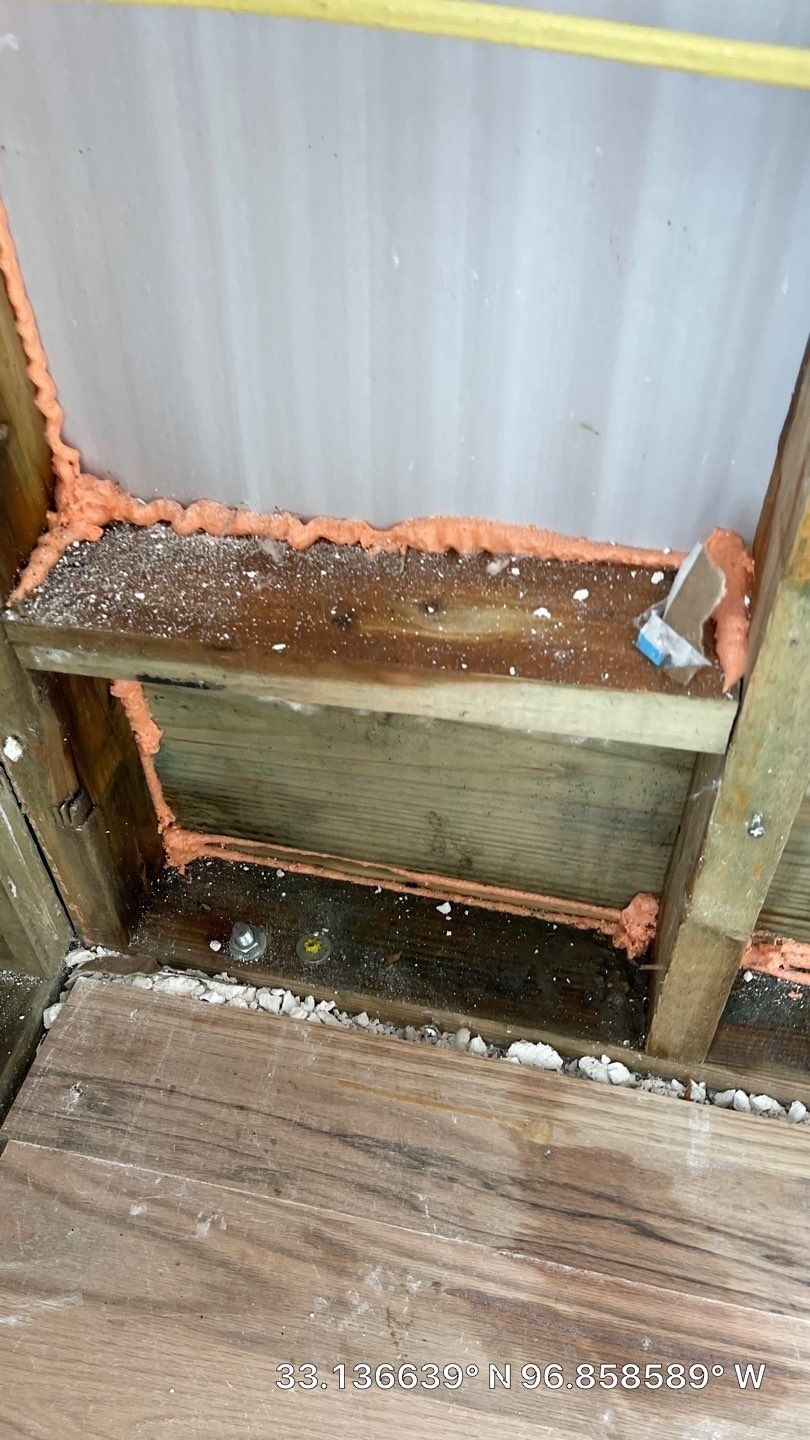
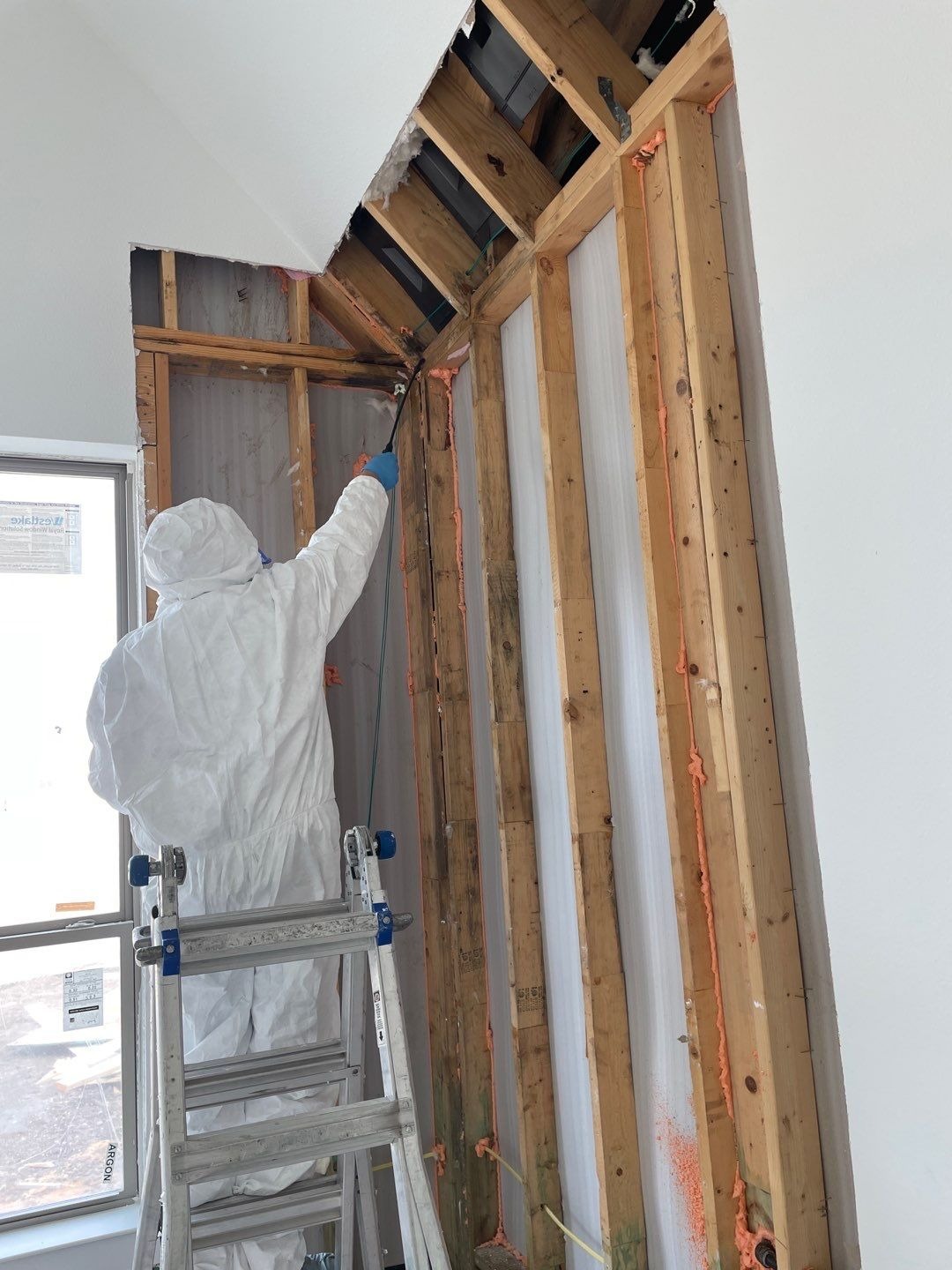
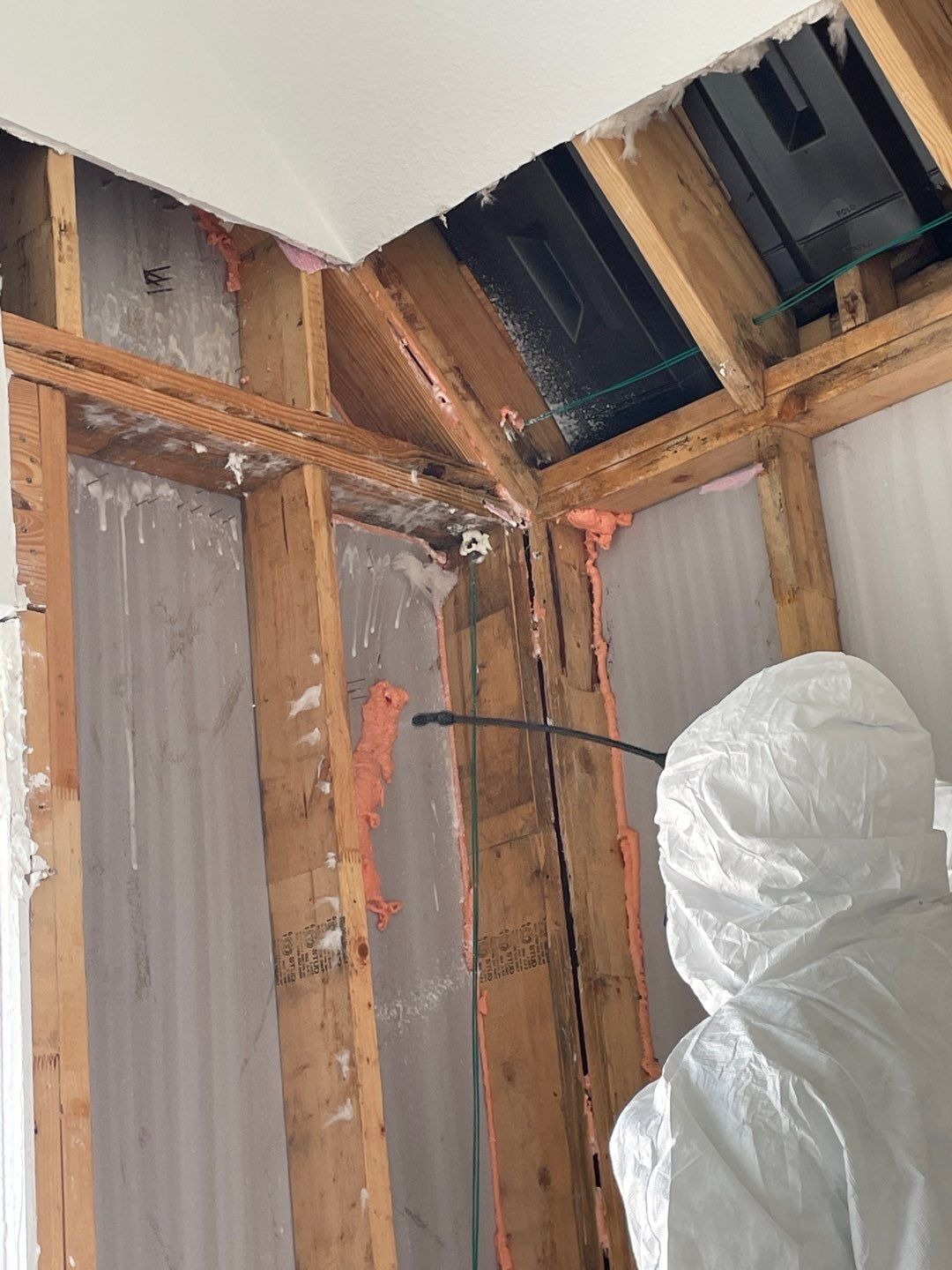
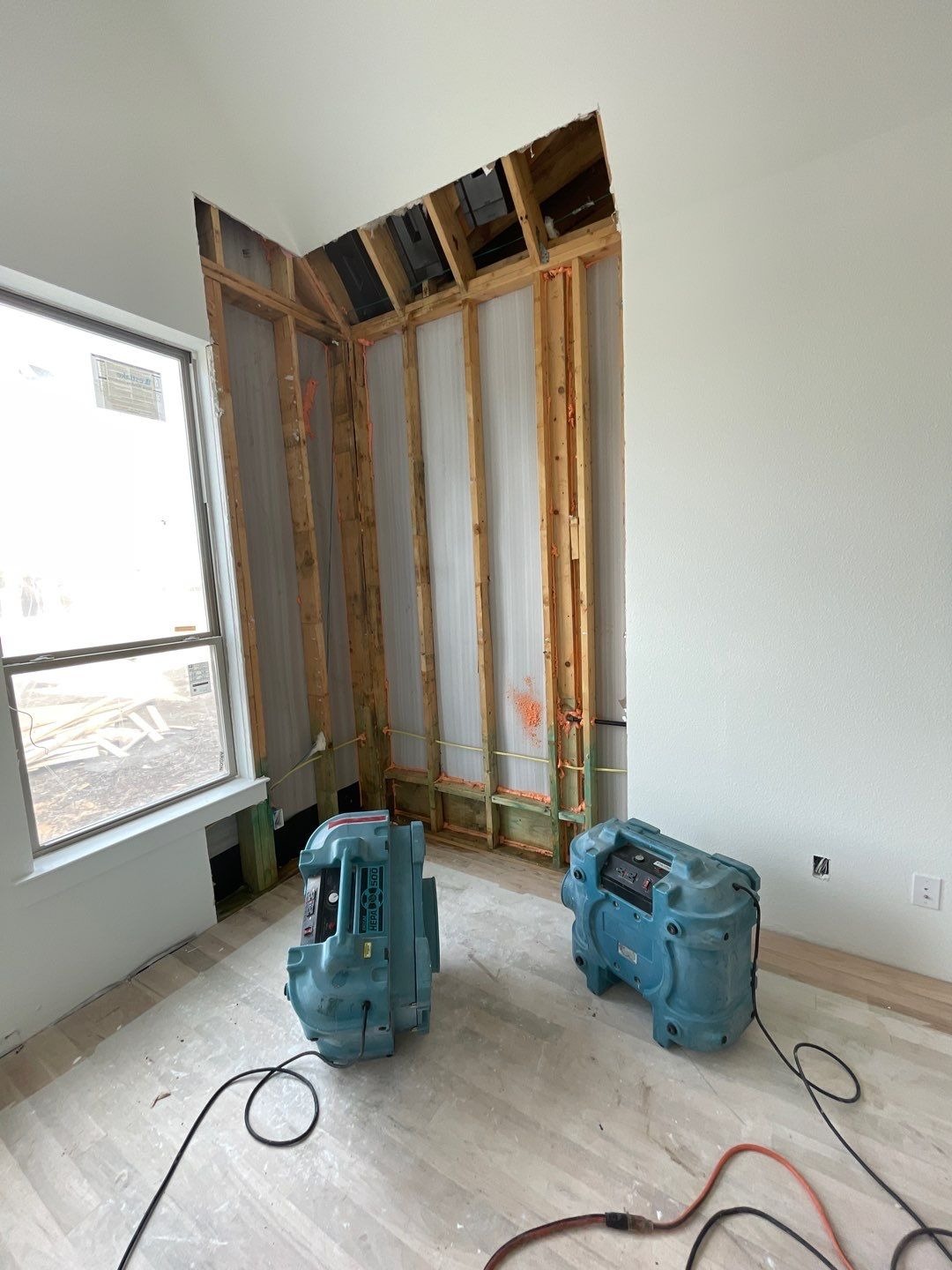
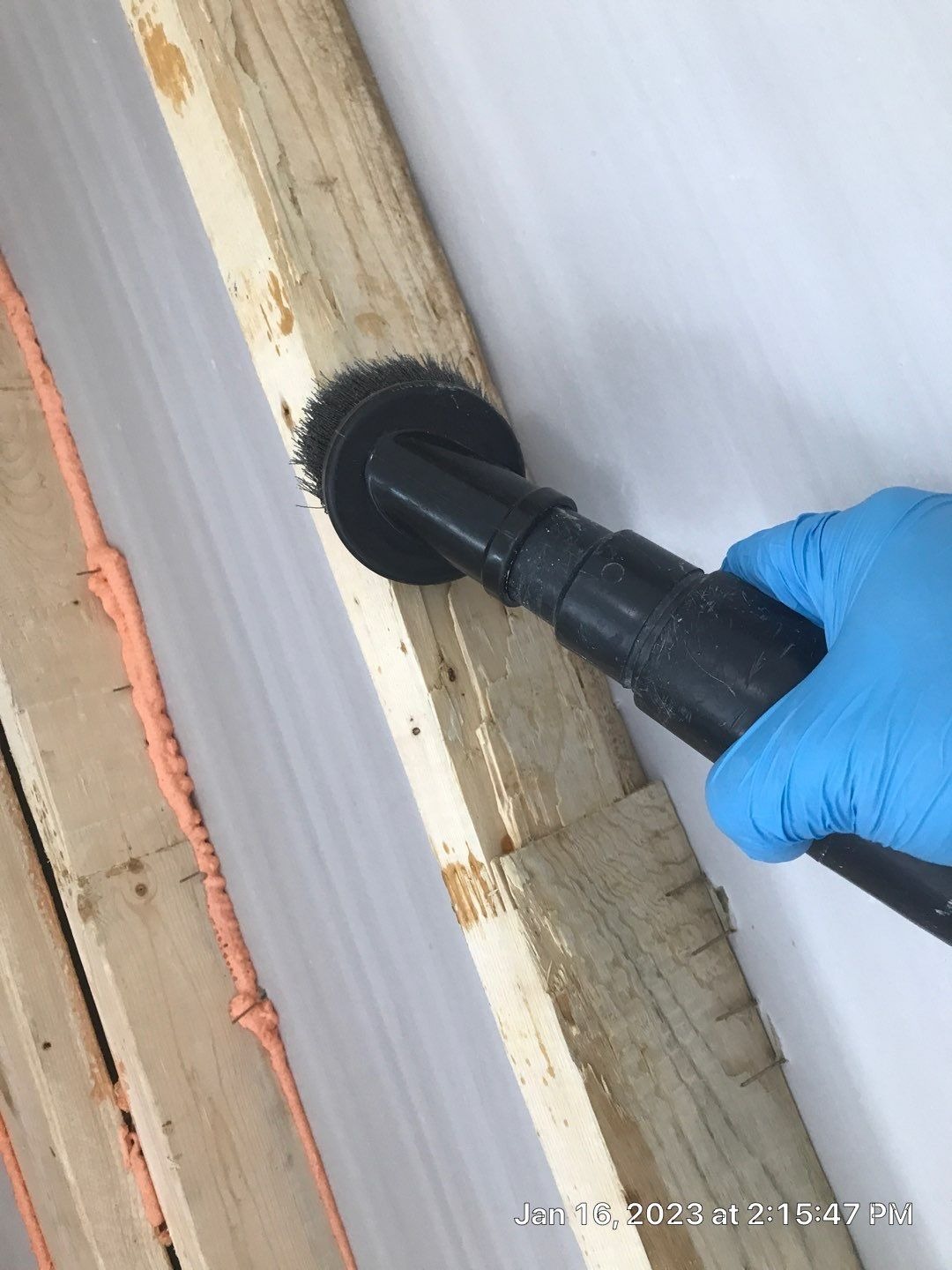
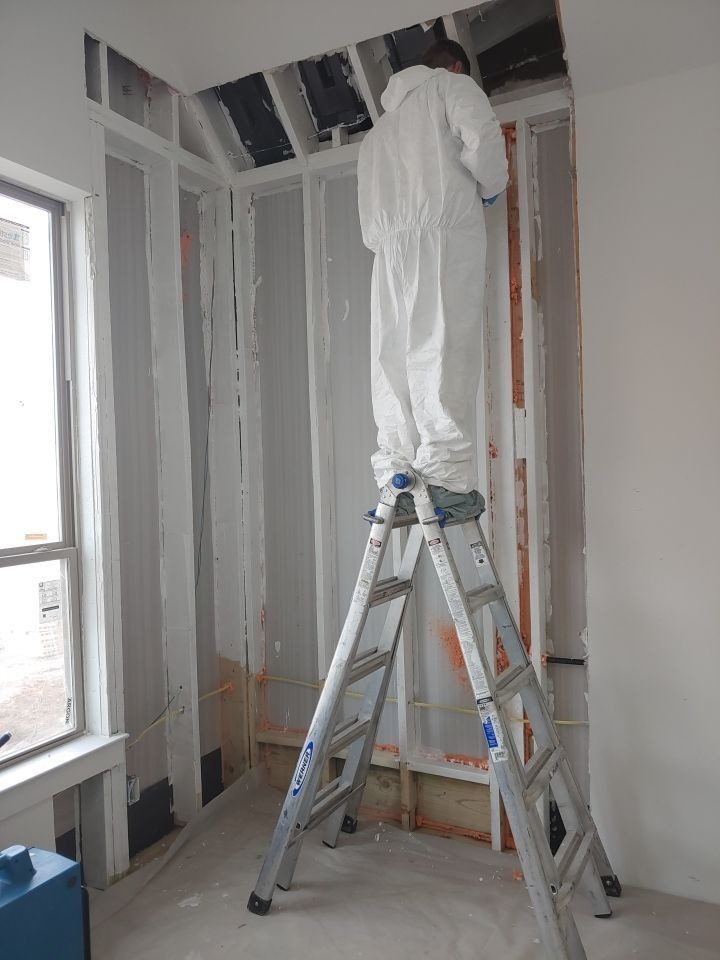
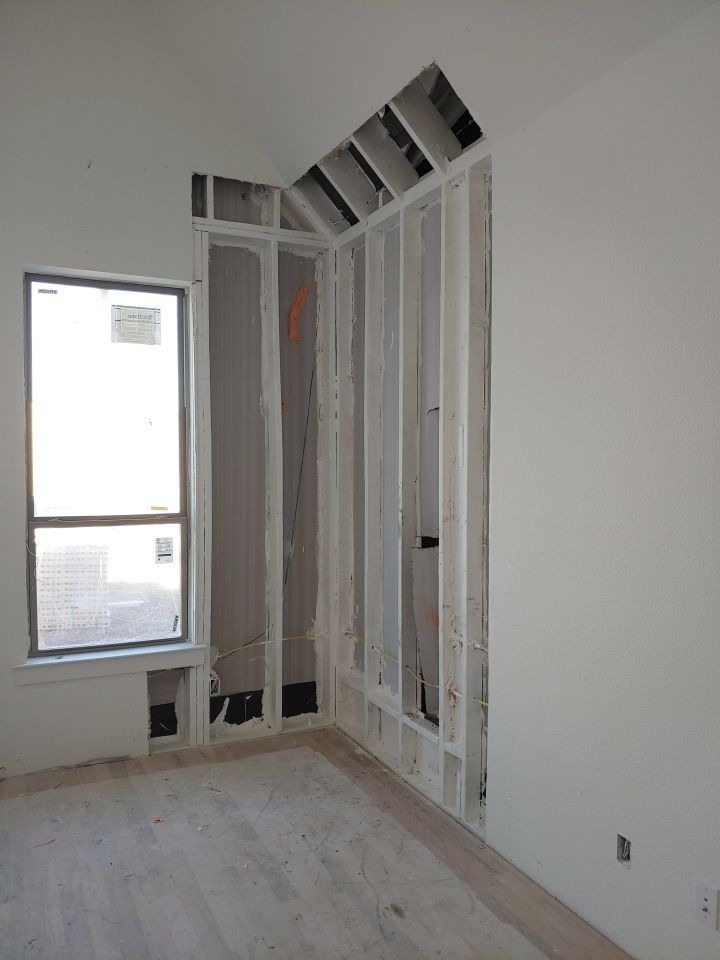
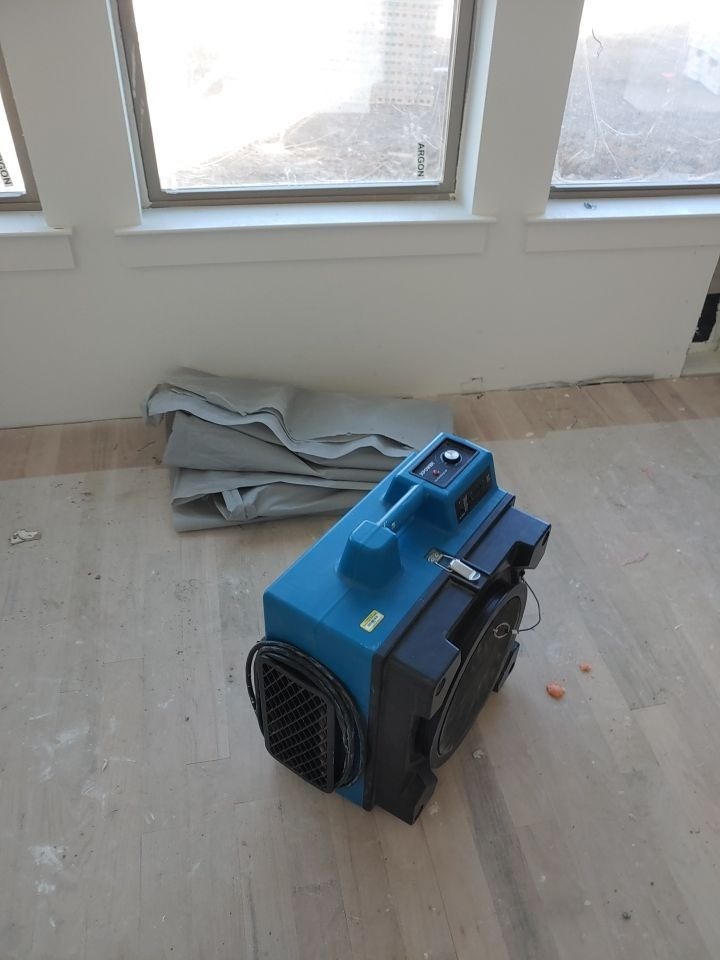
We established physical containment around the affected wall area to keep spores from spreading into unaffected parts of the home during demolition. HEPA air scrubbers ran continuously to manage airborne particulate. Our crew removed the affected drywall and the spray foam insulation behind it, since porous and semi-porous materials that have supported mold growth typically can’t be cleaned back to a safe condition. After demolition, our team HEPA vacuumed and wiped down all surfaces in the work area. Then we applied an antimicrobial treatment to the remaining structural framing as directed by the MAC protocol.
What the photos show
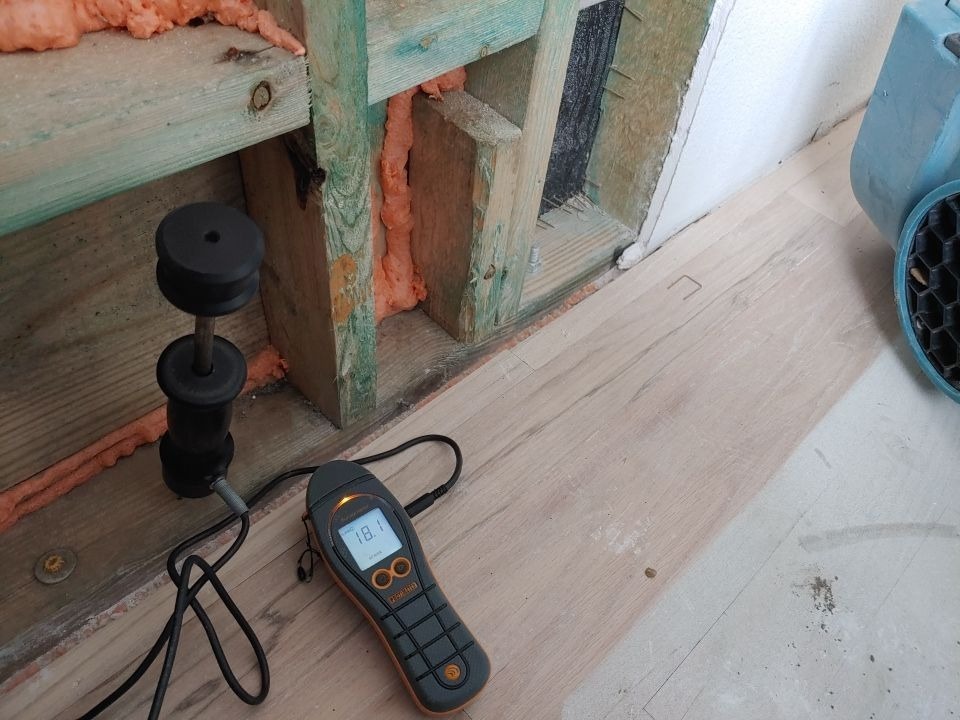
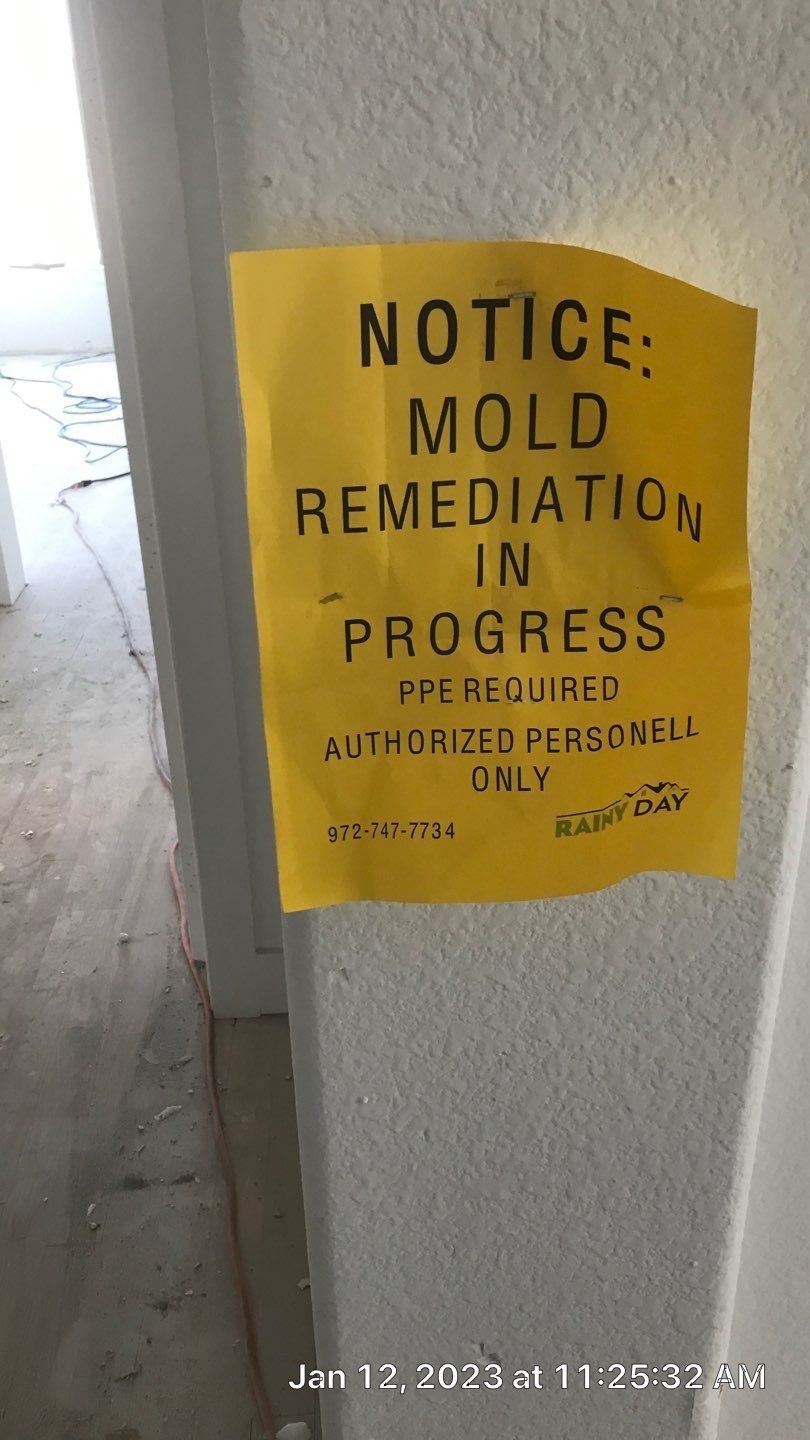
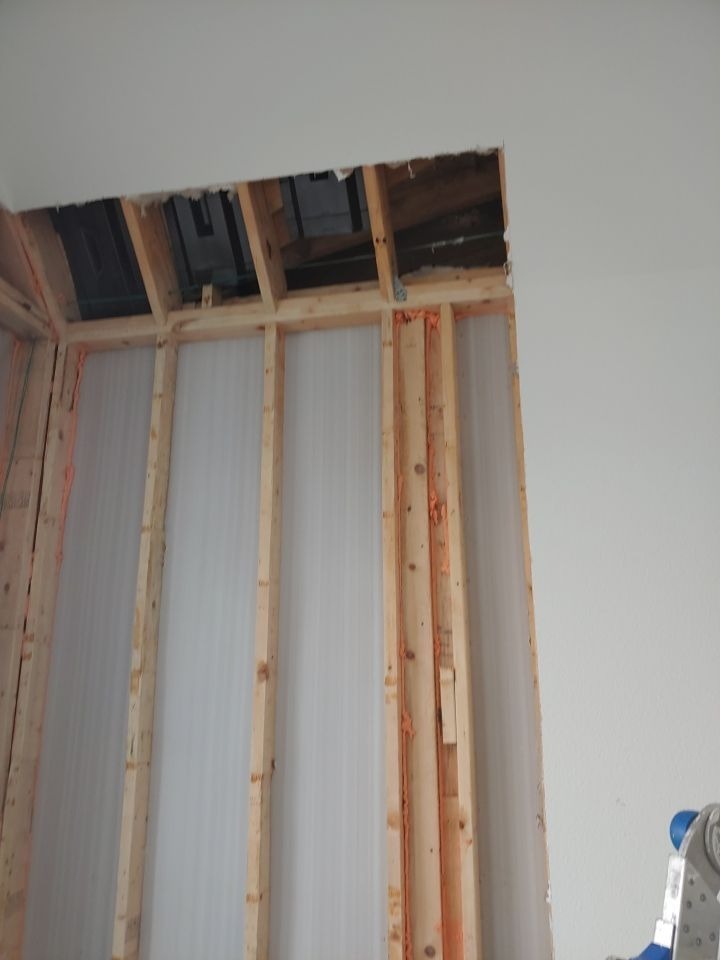
The photo set documents the containment barriers going up, the exposed wall cavity after drywall and insulation removal, and the condition of the framing once affected material was cleared. It also shows the wipe-down and antimicrobial application steps. Together they show a job that moved in sequence – contain, remove, clean, treat – rather than skipping ahead to cosmetic repairs before the underlying material was addressed.
Why mold is worth taking seriously
Mold growth tied to a hidden plumbing leak is easy to underestimate because the surface drywall can look fine right up until someone opens it up. Musty odor and elevated humidity both signal that moisture has been present long enough to support growth, even in a house that’s brand new. Left unaddressed, affected materials can let mold spread into adjoining cavities. Remediation without a documented protocol and clearance testing leaves no way to confirm the space is safe to close back up.
Result and next step
This mold remediation in Frisco passed first-round clearance testing, confirming the MAC’s post-remediation verification standard was met without a second round of cleaning. With clearance passed, the space was ready for the builder’s team to move forward with drywall and insulation replacement and finish work. Our role concluded with that documented result and clear next steps handed off for the rebuild phase.
Guidance for property owners in Frisco and North Texas
If you notice a musty odor, visible discoloration, or unexplained humidity in any room – new construction or not – it’s worth having the moisture source identified before assuming it’s cosmetic. A documented water source and a third-party clearance standard are what separate a guess from a verified outcome. Acting on a leak early, before it has time to feed sustained mold growth, keeps remediation scope smaller and more contained.
Related guidance
For homes dealing with active moisture problems, our mold removal team can evaluate what’s driving conditions like a ceiling stain or lingering odor. If you’re facing a similar issue, reach out to our team to talk through next steps.
Frequently asked questions
What caused the mold growth in this Frisco home?
A plumbing supply-line leak was the water source. Moisture from the leak got into the wall cavity. Over time that created conditions that supported mold growth on the drywall and insulation.
Did Rainy Day Restoration perform the mold remediation alone?
No. Because this was a mold job, we referred the project to a Mold Assessment Consultant (MAC). We followed their written protocol for containment, removal, and clearance testing. Our crew performed the structural drying and remediation work under that protocol.
What does ‘passed clearance’ mean for mold remediation in Frisco?
It means that after remediation, independent clearance testing confirmed the space met the MAC’s post-remediation verification standard on the first round. The area didn’t need additional cleaning before clearance for rebuild.
Is mold growth common in new-construction homes?
Yes, it can occur any time moisture is present long enough, regardless of a home’s age. In this case, a supply-line leak introduced moisture into a wall cavity in a home that was still new construction.
“Had a great experience with these guys working a complicated leak on my house. They took the time to make sure the leak was fully taken care of before finalizing the job. It had a few entry points and they were very patient in helping us determine all the ways the water was getting in. much appreciated!”