Bathroom mold remediation in The Colony, TX starts long before anyone touches a scrub brush, because bathrooms are where mold most often takes hold. It makes sense: they combine constant moisture with materials that trap it and corners no one inspects closely. This project in The Colony shows how a crew remediates a bathroom mold problem the right way. The process is more careful and more methodical than most people expect. It is not about spraying a cleaner on a spot. Instead, the crew contains the area, finds the moisture that caused the growth, removes what is affected, and cleans thoroughly enough that the mold does not simply return.
Getting behind the surface
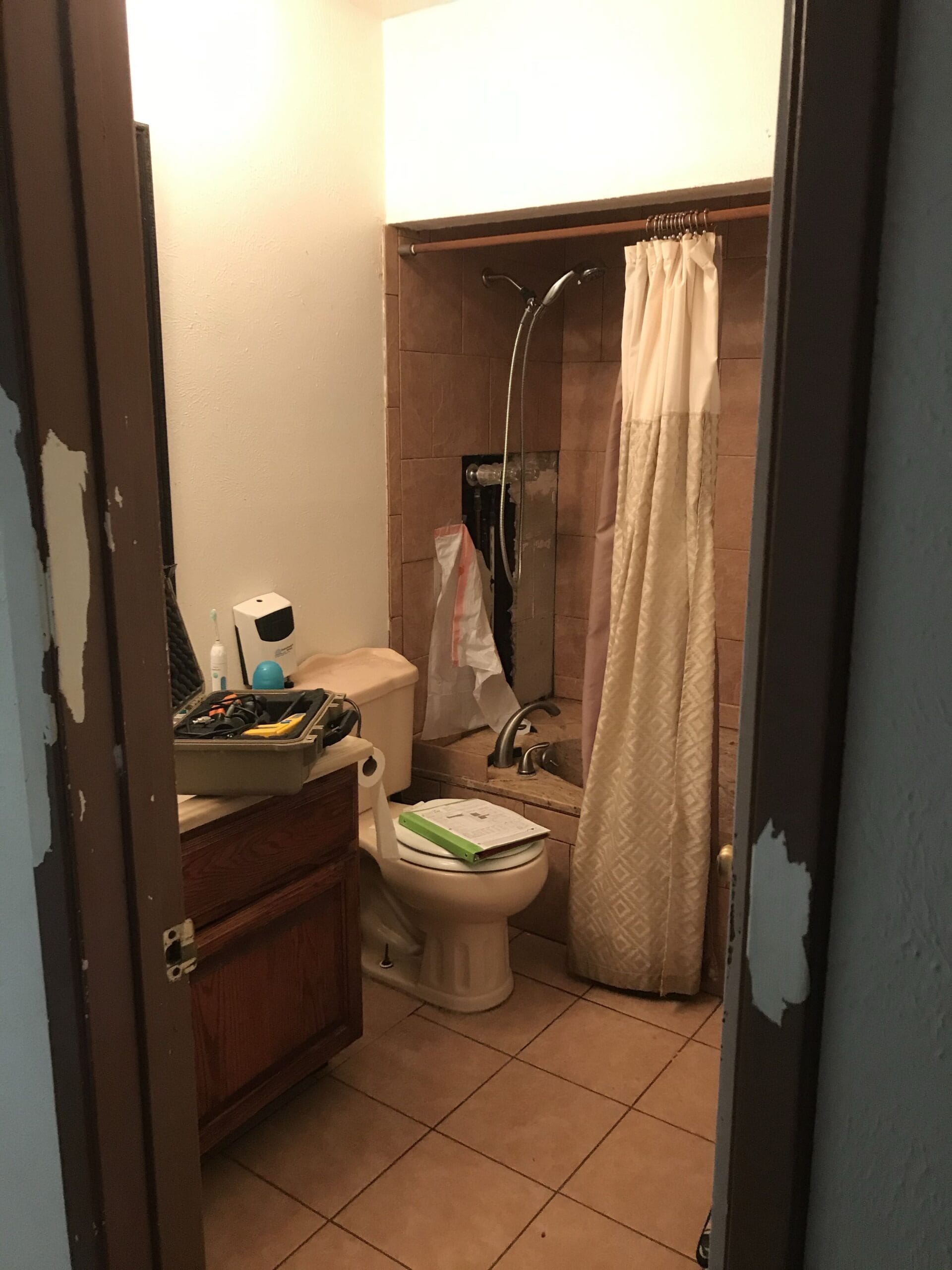
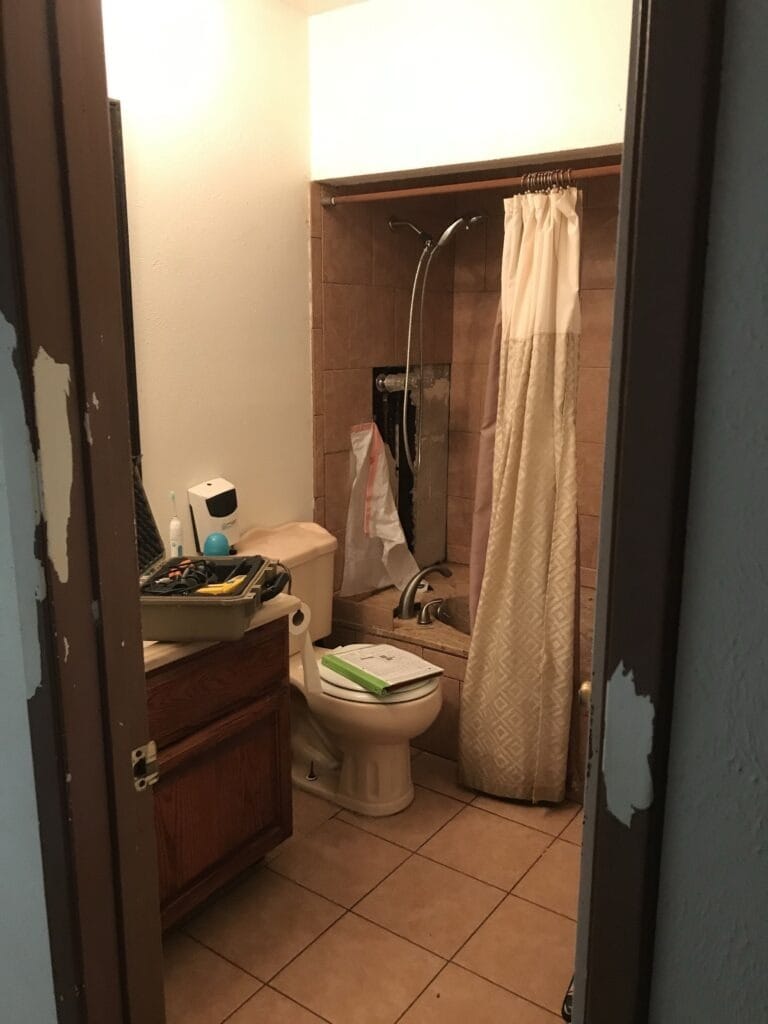
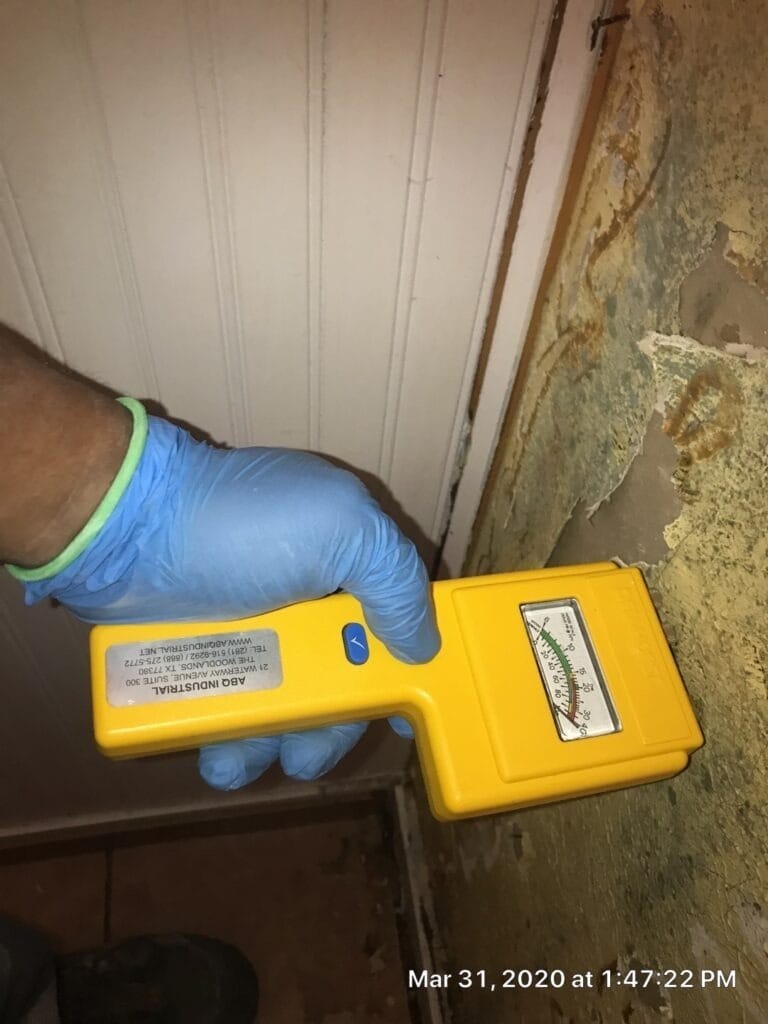
At this bathroom in The Colony, our team opened the wall near the shower to reach the affected areas. Bathroom mold usually extends past the visible spot into the wall cavity behind it. Our technician used a moisture meter on the exposed cavity to find the elevated moisture that allowed the mold to grow in the first place. That step is essential: mold is a moisture problem. Remediating the growth without addressing the moisture source just resets the clock until it comes back.
Containing the work area
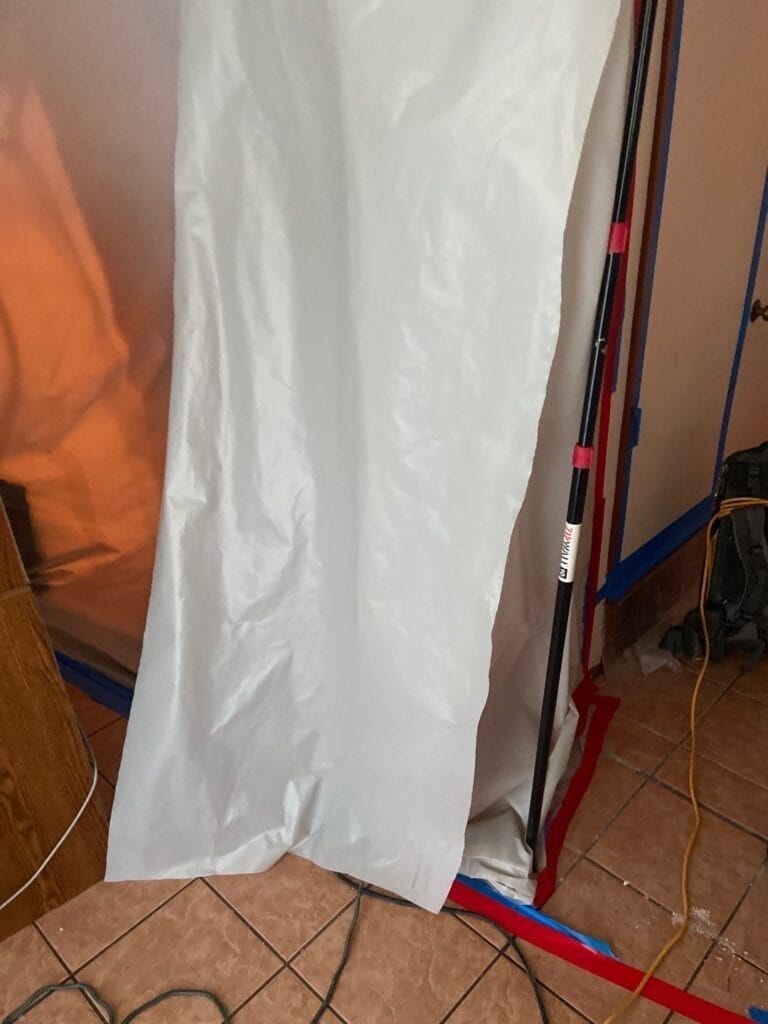
Disturbing mold releases spores, so the crew sealed off the work area with plastic containment at the bathroom doorway. Containment keeps spores from spreading into the rest of the home during removal and cleaning. It protects the family and keeps the problem from migrating to clean rooms. This step is one of the clearest signs of a professional remediation versus a quick surface cleaning that can actually make things worse by scattering spores.
Verifying and cleaning, not just wiping
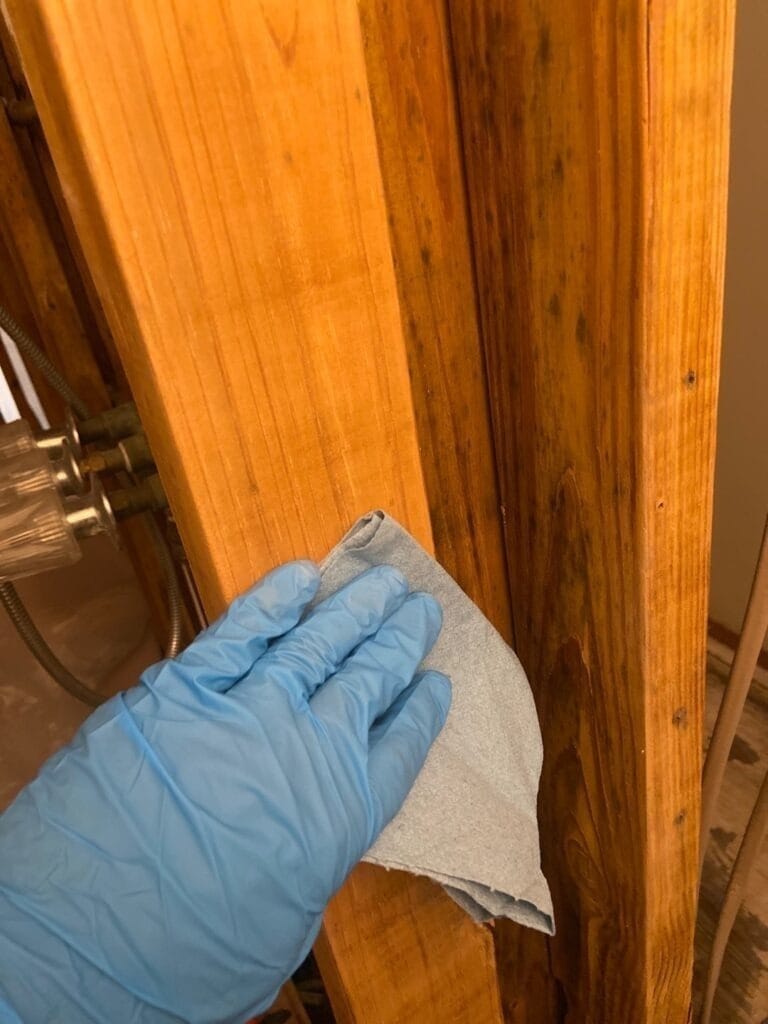
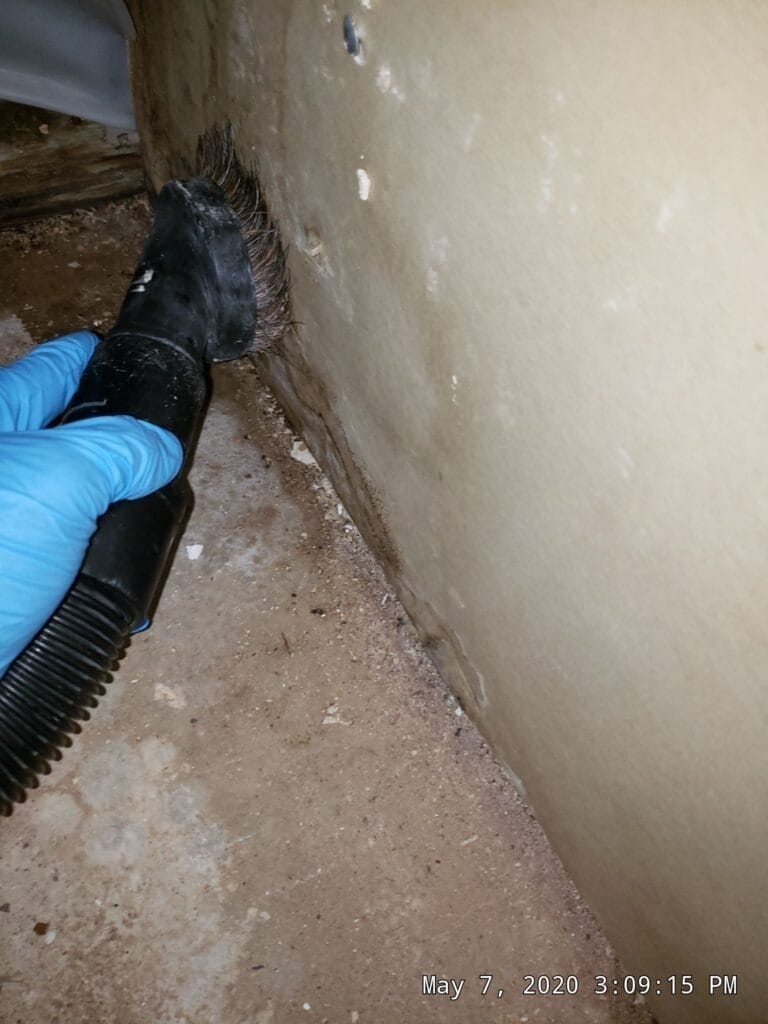
Our team documented the conditions with a surface sample from the stained trim. They also performed detailed HEPA vacuuming along the wall base. HEPA vacuuming captures fine mold particles that ordinary cleaning leaves behind. Sampling and documentation give a record of what the crew found and addressed. This level of detail, sampling, HEPA cleaning, and moisture verification, is what separates real remediation from cosmetic cleanup.
The bathroom mold remediation in The Colony, TX, step by step
The project record documents the wall opening at the shower, the moisture reading in the cavity, the containment, the surface sampling, and the HEPA cleanup in this The Colony bathroom. Bathroom mold remediation in The Colony, TX works best when every one of these steps happens in order. If you have found mold in a bathroom, the right next step is an assessment that checks behind the surface and identifies the moisture source. That way, the remediation treats both the growth and the cause.
Guidance for property owners in The Colony and North Texas
Keep an eye on your bathrooms, since they are the most common place for mold to start. A musty smell, discoloration on trim or grout that returns after cleaning, or a spot that keeps coming back all point to moisture behind the surface. Cleaning the surface alone will not resolve it. A professional assessment that finds the moisture source is the way to fix it for good rather than fighting it repeatedly.
Related guidance
Learn more about our mold remediation service, or get help now if you have found mold in a bathroom.
Frequently asked questions
Why did the crew open the wall instead of just cleaning the visible mold during bathroom mold remediation in The Colony, TX?
Bathroom mold usually extends past the visible spot into the wall cavity behind it, so the team opened the wall near the shower to reach the affected areas. Removing only the surface growth without checking behind it would leave hidden mold and the moisture causing it untouched.
How did the crew identify the moisture source during this remediation?
Our technician used a moisture meter on the exposed wall cavity to find the elevated moisture that allowed the mold to grow in the first place. Mold is a moisture problem, so addressing that source is essential. Remediating the growth alone just resets the clock until it returns.
What steps kept the mold from spreading to the rest of the home during the work?
The crew sealed off the work area with plastic containment at the bathroom doorway to keep spores from spreading during removal and cleaning. The team also collected a surface sample from stained trim and performed detailed HEPA vacuuming along the wall base. This captured fine particles that ordinary cleaning would leave behind and documented the conditions found and addressed.
“The crew arrived early, which was appreciated. I could hear them at work even if I could not see the results.”