Commercial mold remediation in Commerce, TX rarely stays a one-room problem. Shared HVAC, drop ceilings, and open floor plans give mold a path to travel. What starts above one ceiling tile can affect the air an entire office breathes. This Commerce project shows how Rainy Day contains and remediates commercial mold with the least possible disruption to the business. It also shows what a property manager should do at the first sign of it.
What We Found in Commerce
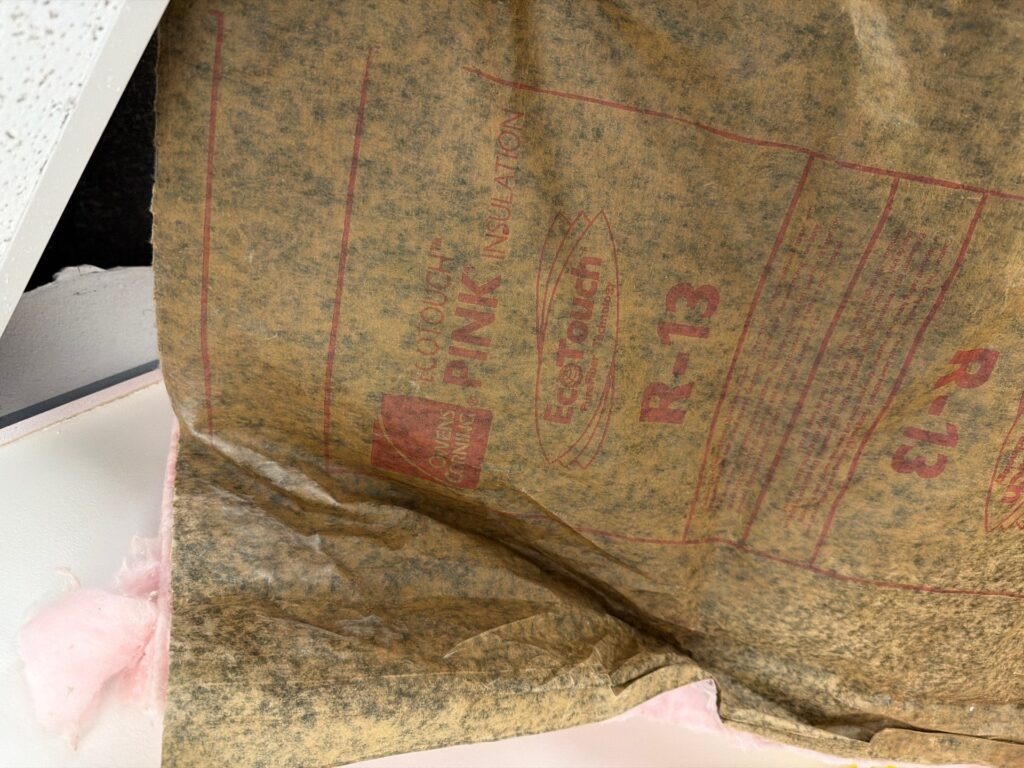
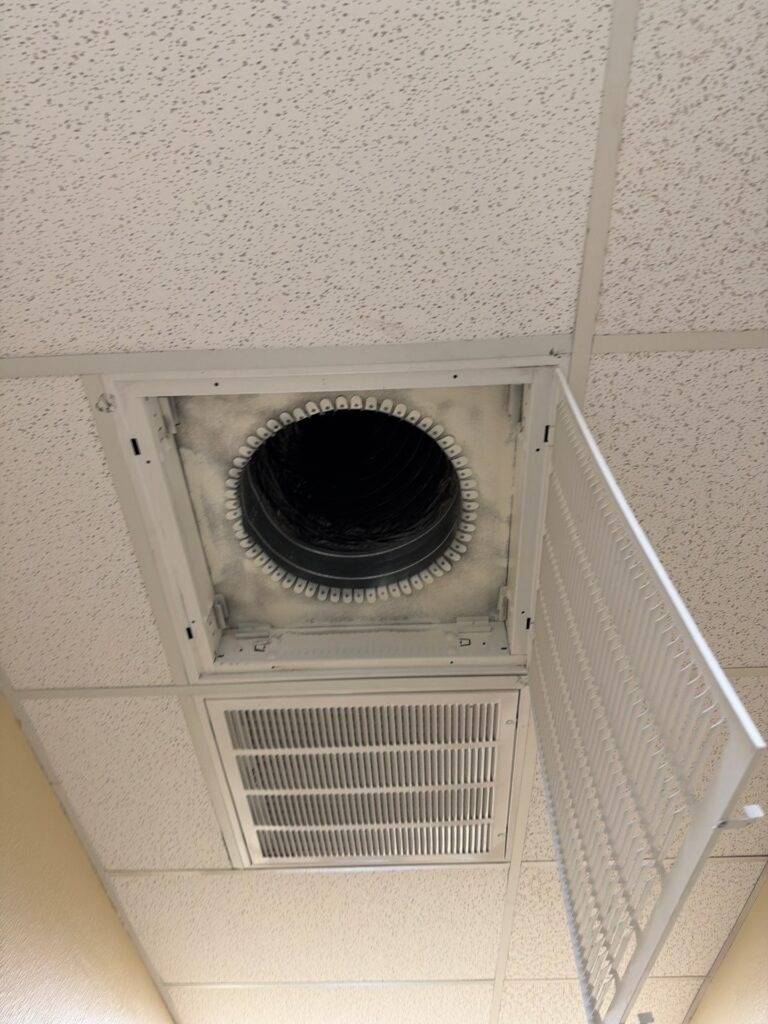
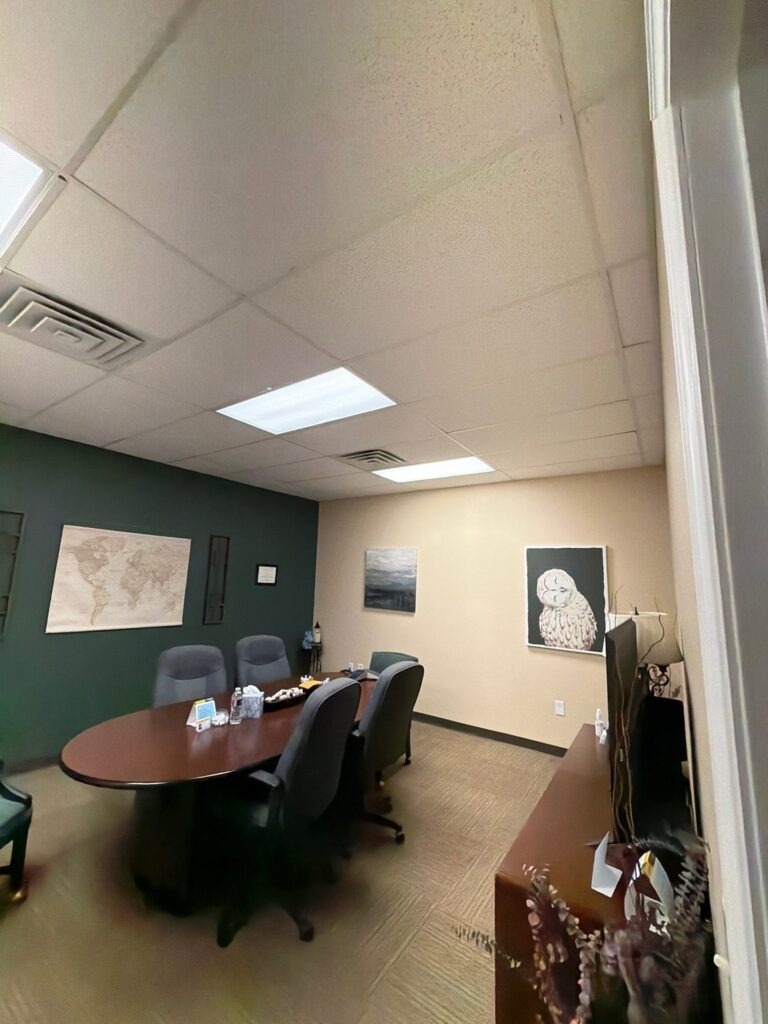
The project involved a commercial office in Commerce with mold tied to the ceiling and HVAC system. The documented conditions included staining and growth around ceiling tiles and HVAC vents. The affected ceiling insulation had to come out. This space was a conference room with a drop ceiling and shared air handling. In a space like this, the visible spots on a tile are usually the smallest part of the story.
Rainy Day’s Role
Rainy Day Restoration and Roofing handled the documented commercial mold-remediation scope as a licensed Texas mold remediation firm. The team assessed the moisture and mold, contained the work area, and removed affected ceiling materials. Crews then cleaned the HVAC vents and surfaces and ran air scrubbing to clear the space. Because Rainy Day works commercial projects as one company from the first call through completion, the business dealt with one team rather than a chain of subcontractors.
The commercial mold remediation in Commerce, TX, Step by Step
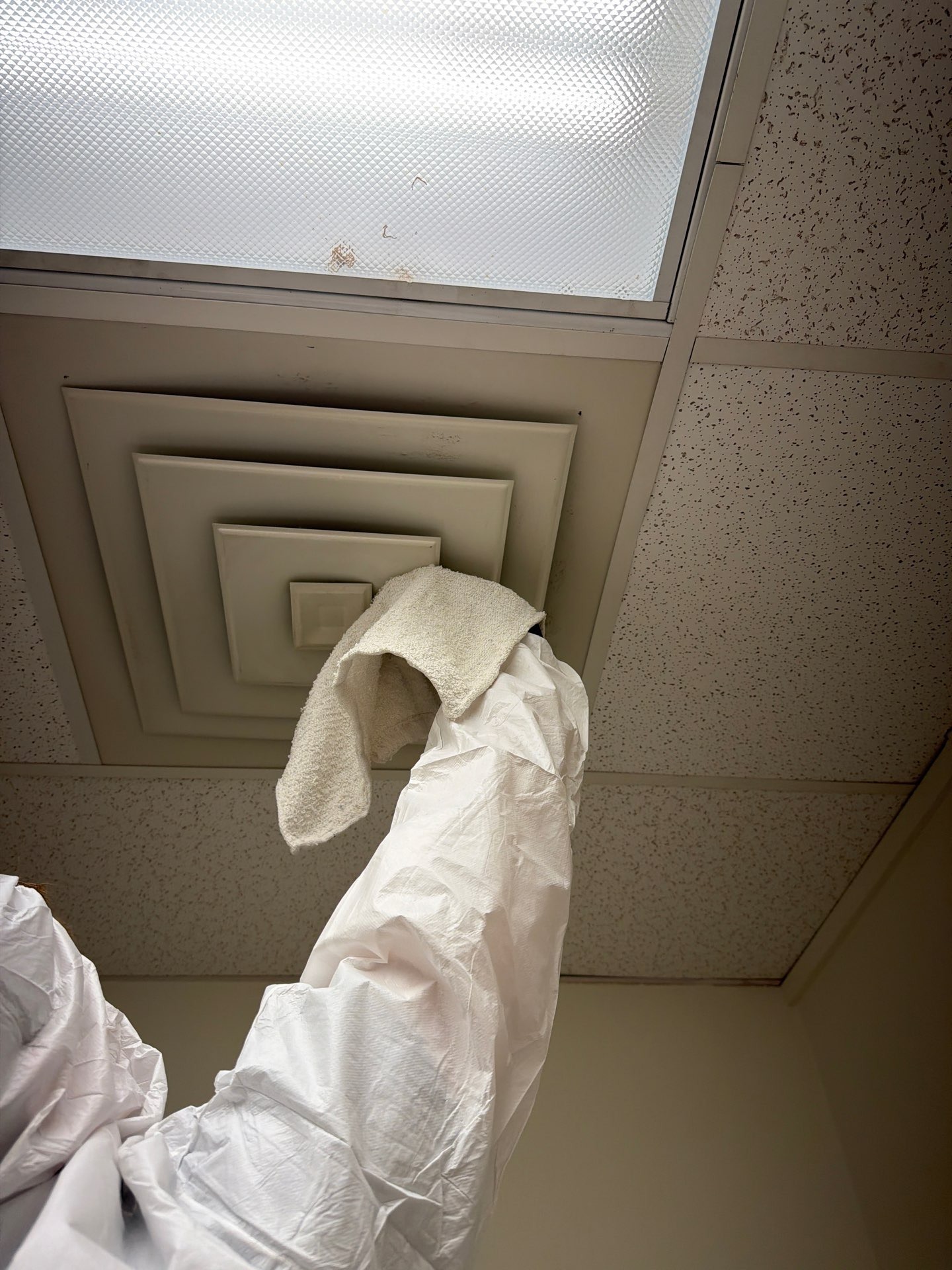
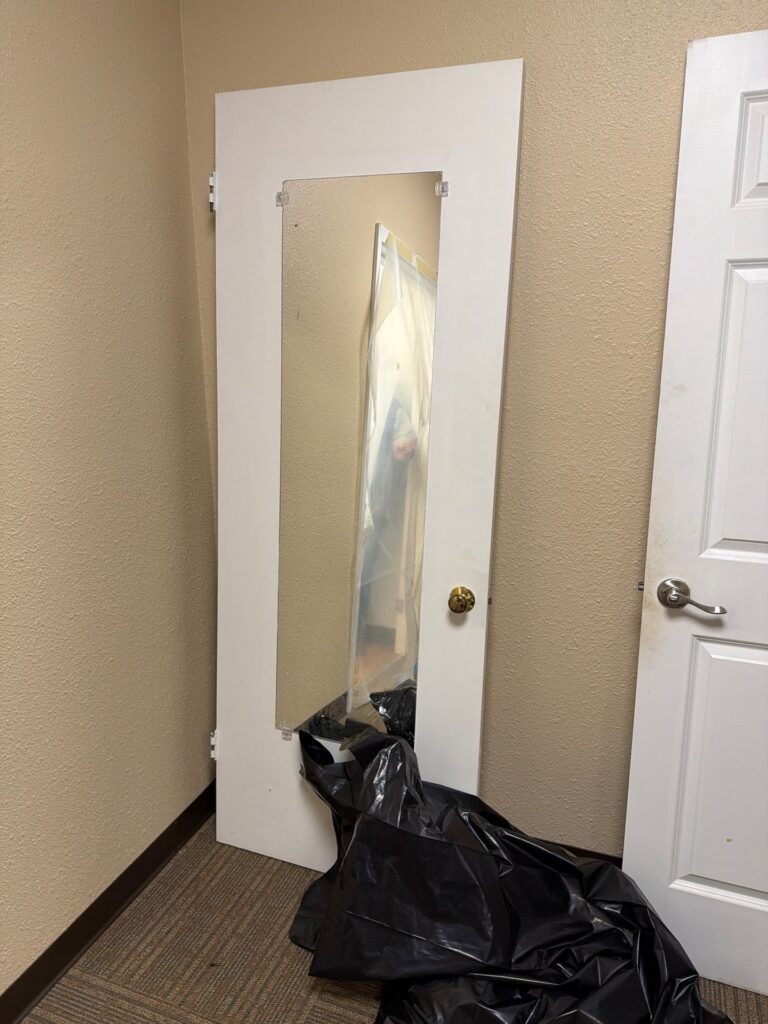
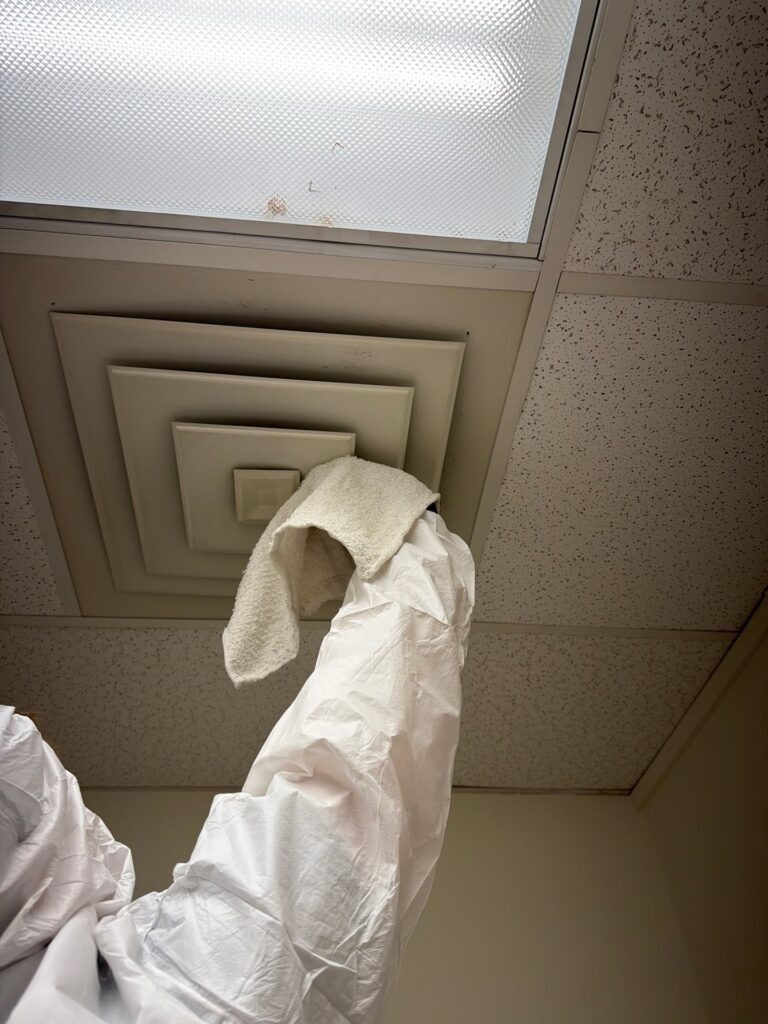
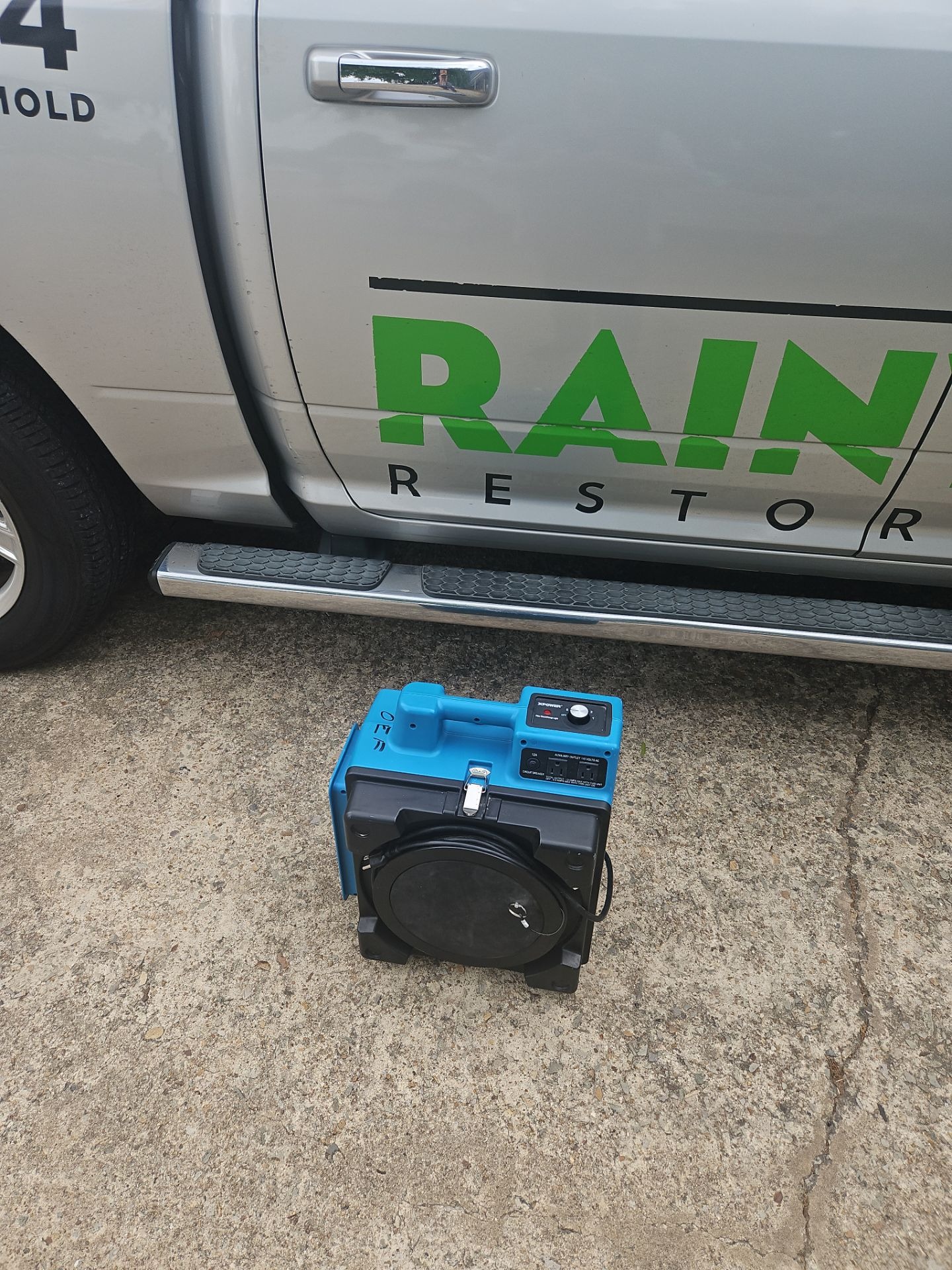
The work followed the commercial-remediation sequence. Crews assessed and contained the area first. They staged and bagged debris inside the controlled zone so the work did not spread spores into the rest of the office. Next, the team removed affected ceiling tile and insulation. They cleaned the HVAC vents and diffusers, then ran portable air scrubbers to filter airborne particles out of the space. The photographs document a technician in protective gear working the ceiling and vents, the exposed insulation after tile removal, and an air scrubber staged at the building.
Why Commercial Mold Is Handled Differently
A home has one family and one set of lungs to protect. A commercial building has employees, customers, and a business that needs to keep running. It also has an HVAC system that can move mold spores from one room to every room. That is why commercial remediation leans hard on containment and air scrubbing. The goal is not just to remove the mold you can see. Crews also work to keep the process from contaminating occupied space and to clear the air before people return. Skipping containment in a shared building is how a localized ceiling problem becomes a building-wide one.
Result and Next Step
This commercial mold remediation in Commerce, TX, documents the assessment, containment, removal of affected ceiling materials, HVAC cleaning, and air scrubbing that returned the space to a clean, controlled condition. A property manager may see stained ceiling tiles or smell a musty odor near the vents. Some property managers field air-quality complaints instead. Either way, the right next step is a professional assessment that checks the ceiling cavity and the HVAC path, not just the visible tile.
Guidance for Commercial Property Owners
Watch for the commercial-building signs of hidden mold: stained or sagging ceiling tiles, a musty smell that grows strongest near the vents or when the HVAC runs, and employees reporting stuffiness or symptoms that ease when they leave the building. Any of these signs is worth a professional evaluation. In a shared building, catching and containing mold early protects both the structure and the people using it. Early action also keeps a small remediation from becoming a business interruption.
Related Guidance
Frequently asked questions
Why does mold in one part of a commercial building need to be treated so carefully?
Shared HVAC systems, drop ceilings, and open floor plans can carry mold spores from one room to the entire building. A problem above a single ceiling tile can affect the air the whole office breathes. That is why commercial remediation, like the Commerce project, relies on containment and air scrubbing rather than just removing what is visible.
What does commercial mold remediation in Commerce, TX actually involve?
In the Commerce office, Rainy Day assessed the moisture and mold, contained the work area, and removed the affected ceiling tile and insulation. Crews cleaned the HVAC vents and surfaces, then ran portable air scrubbers to filter airborne particles from the space. The team staged and bagged debris inside the controlled zone so the work did not spread spores into the rest of the office.
What signs should a property manager watch for, and who handles the whole job?
Stained or sagging ceiling tiles, a musty smell near the vents, and employees reporting stuffiness that eases when they leave the building are all signs worth a professional evaluation. Rainy Day Restoration and Roofing, a licensed Texas mold remediation firm (RCO1416) and family-owned since 1999, works commercial projects as one company from the first call through completion. That structure means the business deals with one team rather than a chain of subcontractors.