Crawlspace mold remediation in Plano tackles some of the worst mold in a house, the kind that grows where no one ever looks: on the underside of the floor. In a home over a crawlspace, moisture in the ground and the air collects under the subfloor and feeds mold on the joists and floorboards. It often grows for a long time before anyone upstairs notices a musty smell or a soft spot in the floor. This Plano project shows how Rainy Day gets under the house, finds the mold, and removes it at the source. It also shows what a homeowner should watch for.
What We Found in Plano
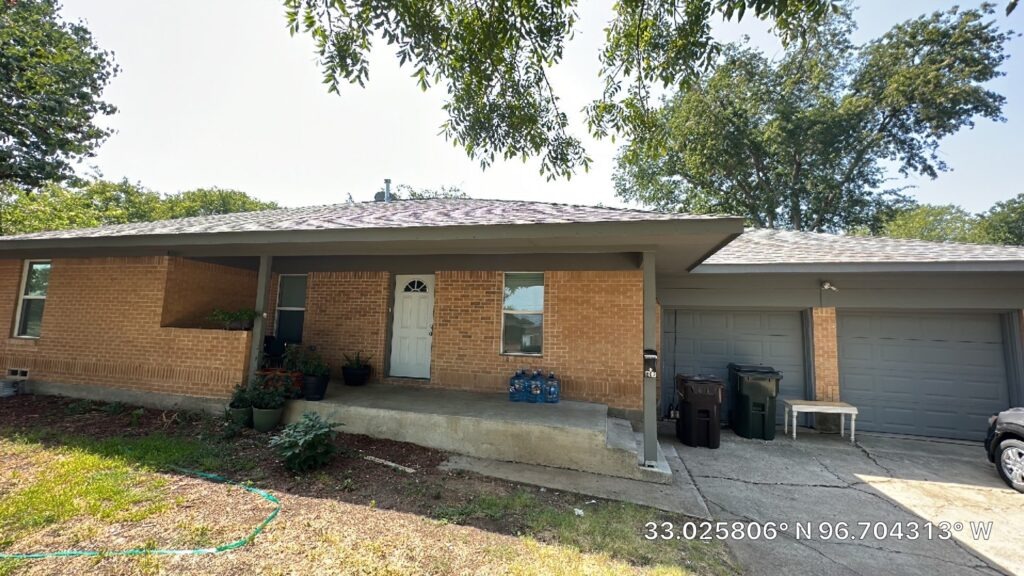
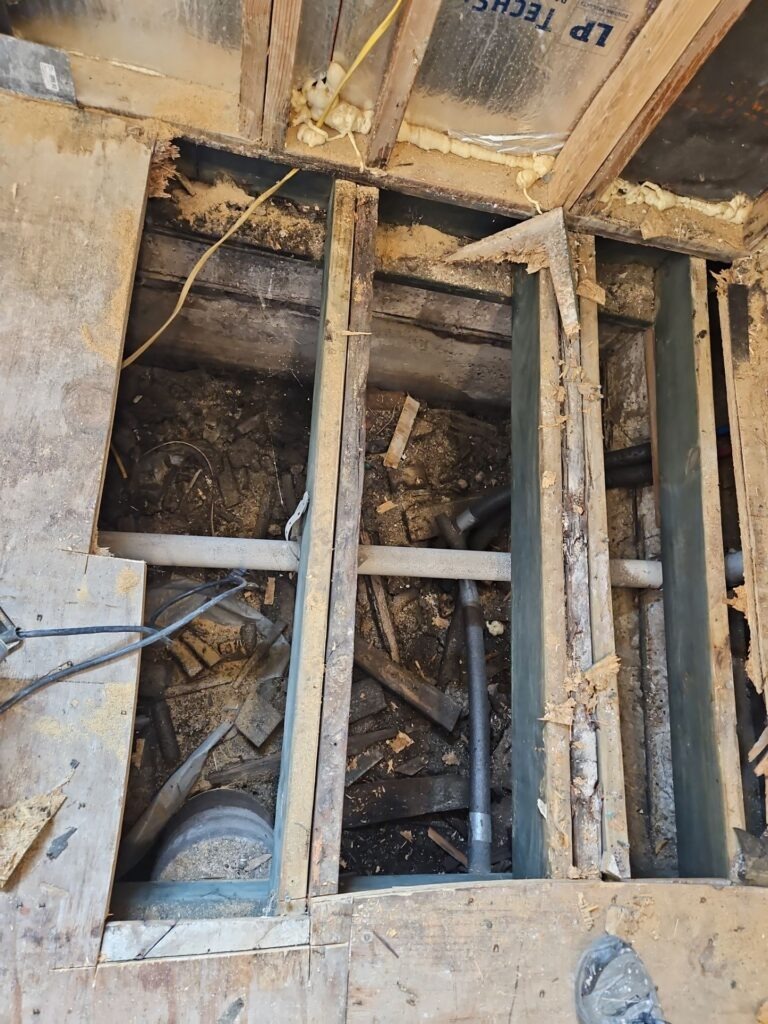
This was a single-story Plano home with mold under the floor. The documented conditions included elevated moisture readings in the subfloor and mold on the underside of the flooring and the crawlspace framing. That is why the work moved below the living space rather than staying in the rooms above. Reaching this kind of mold means opening the floor and working in the crawlspace, not just cleaning a wall.
Rainy Day’s Role
Rainy Day Restoration and Roofing handled the documented crawlspace mold-remediation scope as a licensed Texas mold remediation firm. The crew measured the moisture, contained the area, removed the affected subfloor and materials, cleaned the exposed framing, and prepared the structure for repair. Because Rainy Day carries a project from the first call through the rebuild, the same team that went into the crawlspace also handled the floor above it.
The crawlspace mold remediation in Plano, step by step
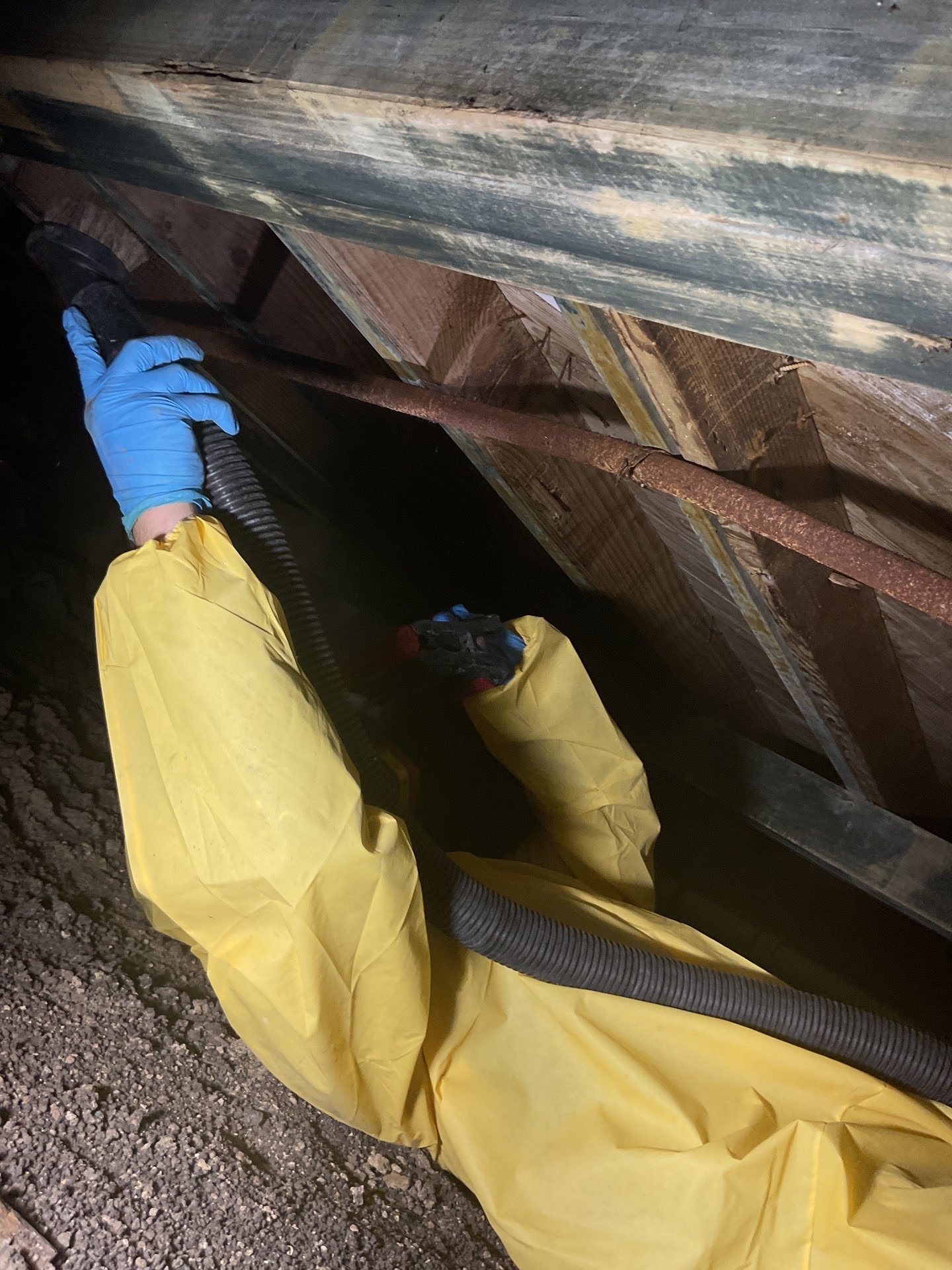
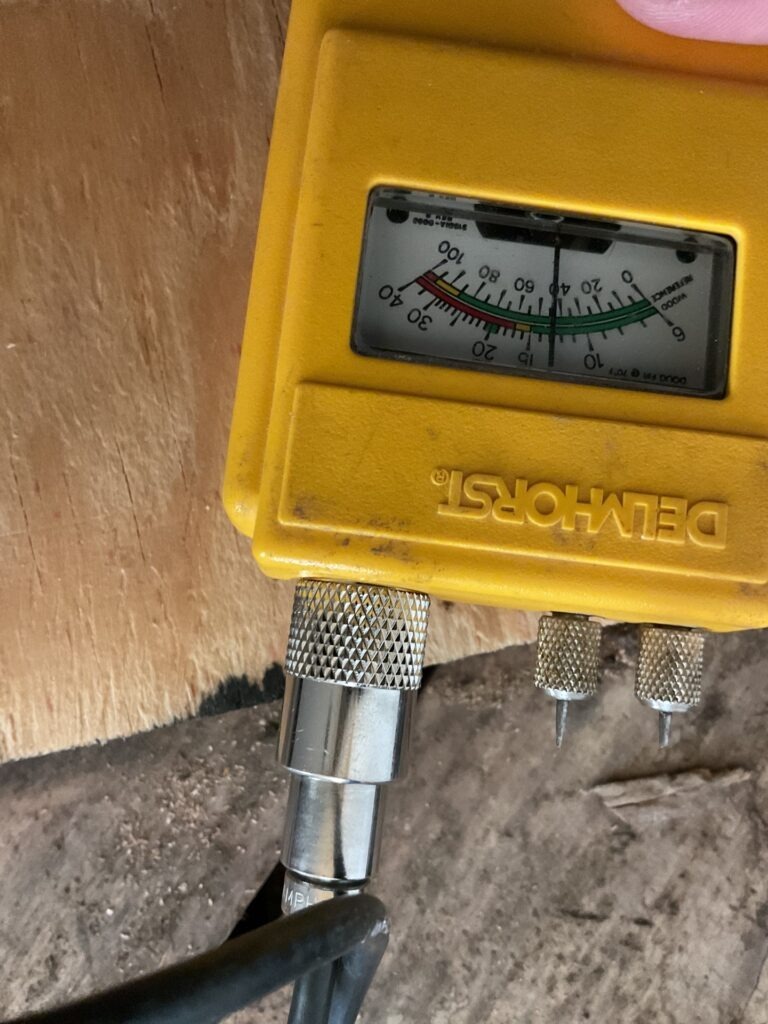
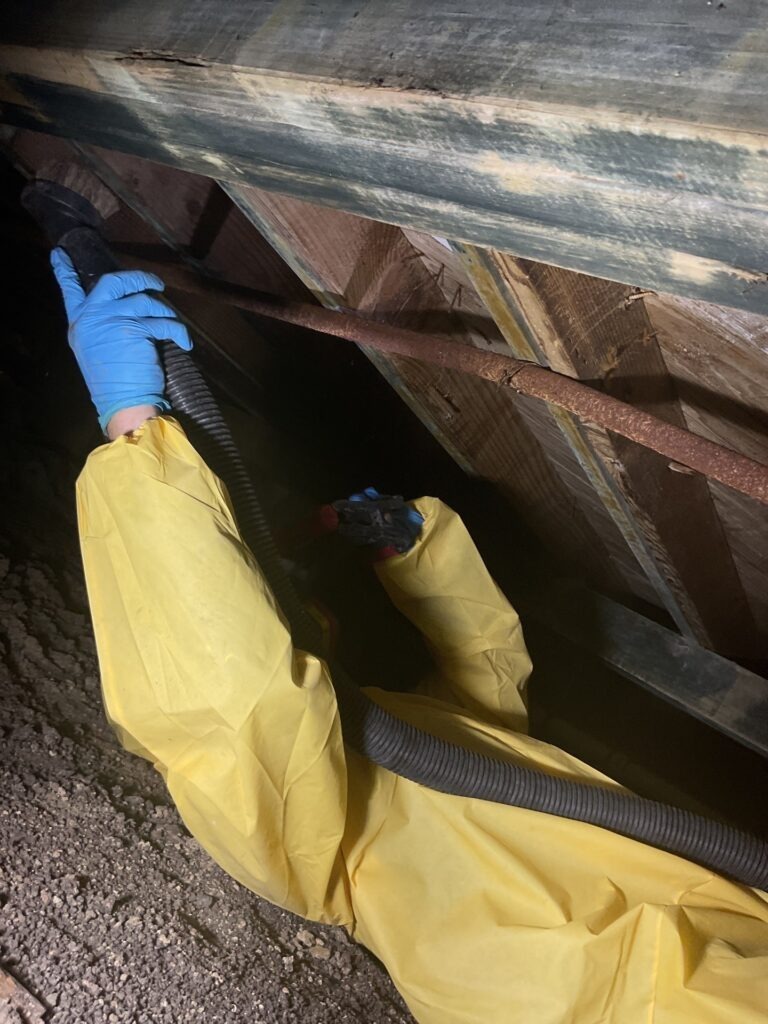
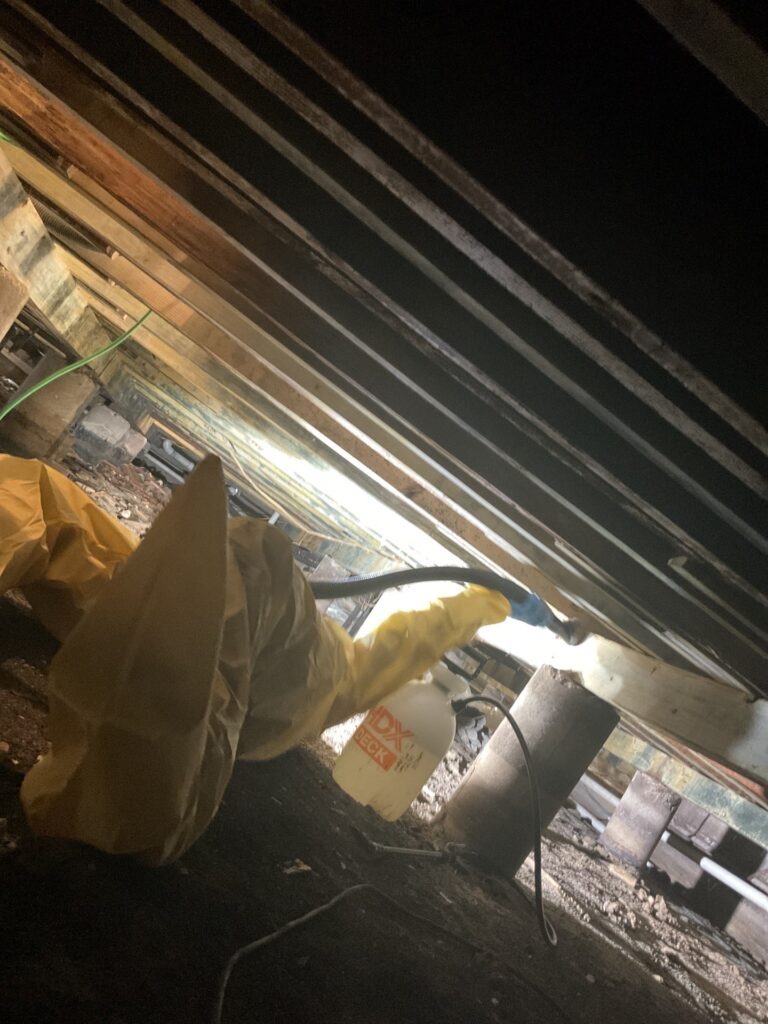
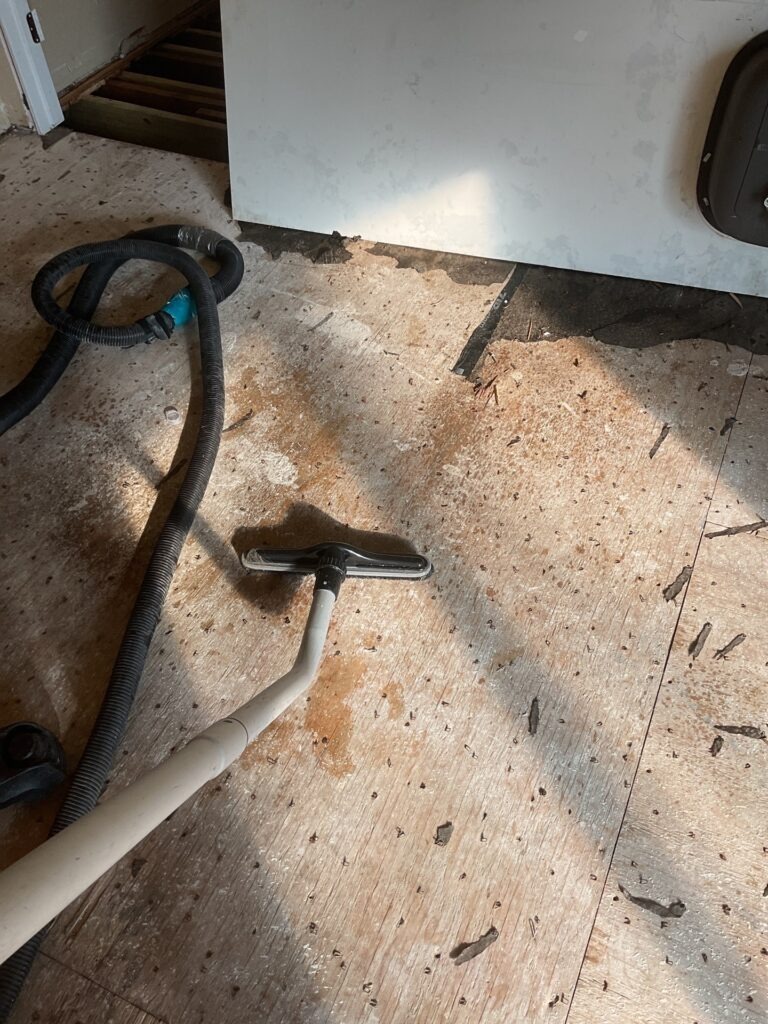
The work started with moisture testing to confirm how wet the subfloor and framing were and how far the problem reached. Crews removed the affected flooring and subfloor to expose the joists and reach the mold directly. They used containment and extraction to keep debris and spores from spreading into the home. A technician in protective gear worked the crawlspace, cleaning the mold-stained framing and clearing the affected material. The photographs document the moisture testing, the opened floor and exposed joists, and the crawlspace work itself.
Why Crawlspace Mold Is Easy to Miss, and Worth Doing Right
Mold under the floor has two things going for it: it stays out of sight, and it has a steady moisture supply. A crawlspace holds humidity. If there is a plumbing leak, poor drainage, or ground moisture underneath, the underside of the subfloor stays damp enough for mold to keep growing. Because it stays hidden, people often treat the symptoms upstairs, a musty smell, allergy flare-ups, cupping floors, without realizing the source sits below them. Real remediation means getting into the crawlspace, removing the affected material, cleaning the framing, and, just as importantly, correcting the moisture so it does not come back. Cleaning the mold without fixing the moisture just resets the clock.
Result and Next Step
This crawlspace mold remediation in Plano documents the moisture testing, the removal of affected subfloor and materials, and the cleaning of the exposed framing. The crew returned the crawlspace to a cleared, controlled condition. If your floors smell musty, feel soft, or have started to cup, and especially if your home sits over a crawlspace, the right next step is to have the subfloor and crawlspace inspected, not just the rooms you can see.
Guidance for Property Owners
Watch for the signs of mold under the floor: a musty smell that is strongest at floor level or near vents, flooring that cups, softens, or lifts, and allergy or respiratory symptoms that ease when you leave the house. In a home over a crawlspace, these signs are worth a professional inspection that looks underneath, because crawlspace mold caught early costs far less than a subfloor that has to be rebuilt.
Related Guidance
Frequently asked questions
How do you know if there’s mold under the floor in a crawlspace home?
Warning signs include a musty smell that’s strongest at floor level or near vents, flooring that cups, softens, or lifts, and allergy or respiratory symptoms that ease when you leave the house. In this Plano home, elevated moisture readings and visible mold on the subfloor underside and crawlspace framing confirmed the problem. That is why a professional inspection that looks underneath the floor matters.
What does crawlspace mold remediation in Plano actually involve?
In this Plano project, the work started with moisture testing to confirm how wet the subfloor and framing were and how far the problem reached. Next came containment, removal of the affected flooring and subfloor, and cleaning of the exposed joists. A technician in protective gear worked directly in the crawlspace to clear the mold-stained material and prepare the structure for repair.
Will the mold come back after remediation?
Cleaning the mold without correcting the underlying moisture just resets the clock, since a damp crawlspace gives mold a steady supply to grow again. Rainy Day Restoration and Roofing, a licensed Texas mold remediation firm, carries a project from the first call through the rebuild. That means the same team handling the crawlspace also addresses the floor above it.
“Great to work with Josh Hopewell and his team. Very professional and on time. We highly recommend Rainy Restoration services. Thanks to Josh and his entire team.”