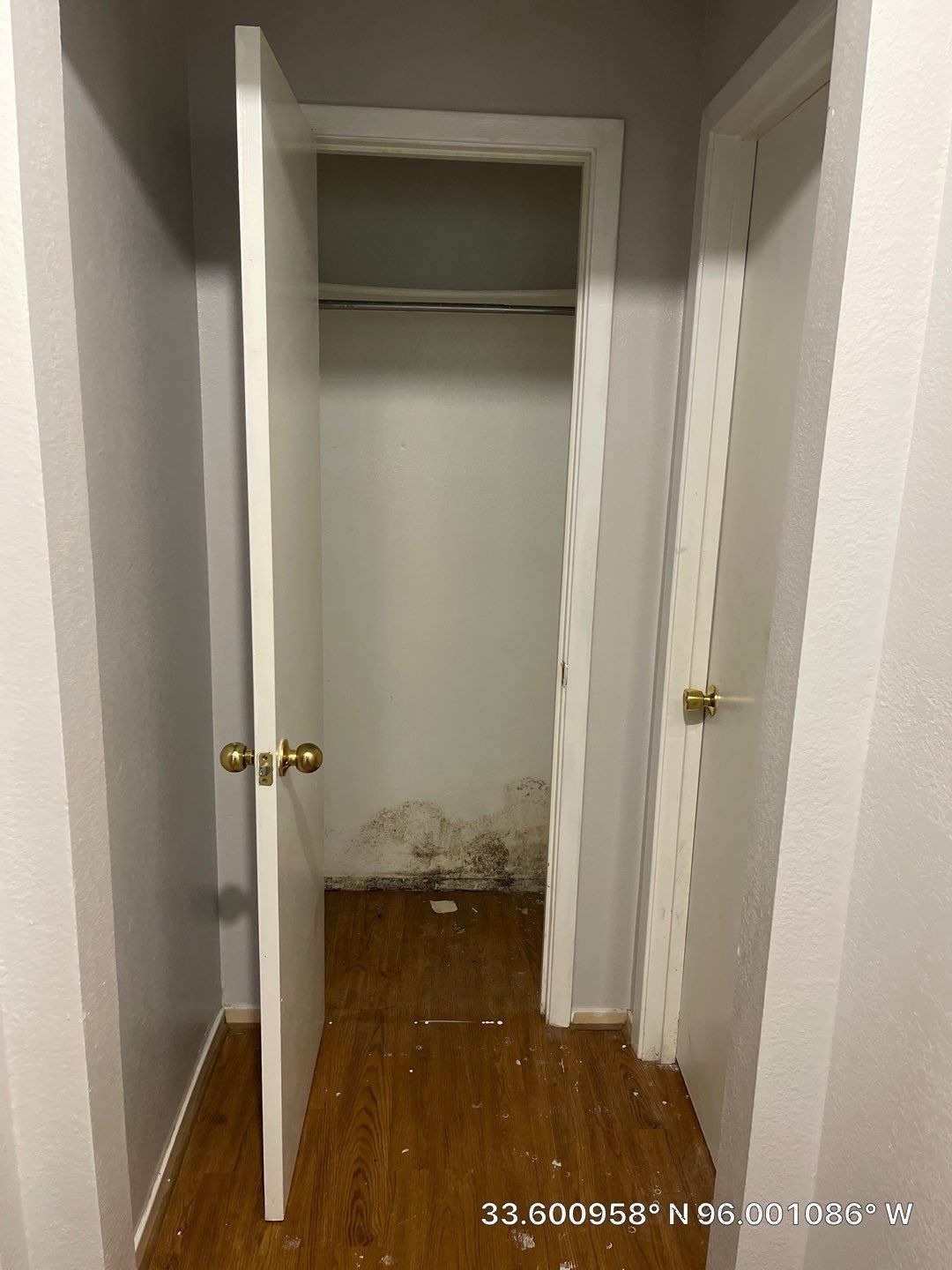
Mold found growing in a hall closet and along damp bathroom walls led this Dodd City home to reconstruction Dodd City TX work after crews traced the growth to an exterior wall leak caused by missing siding. The homeowner noticed a musty odor and called Rainy Day Restoration & Roofing. An independent assessor set a documented remediation protocol, and the crew followed it closely. The crew removed affected drywall, contained and treated the space, and the property passed first-round clearance testing before repairs and rebuild work began.
What we found in Dodd City
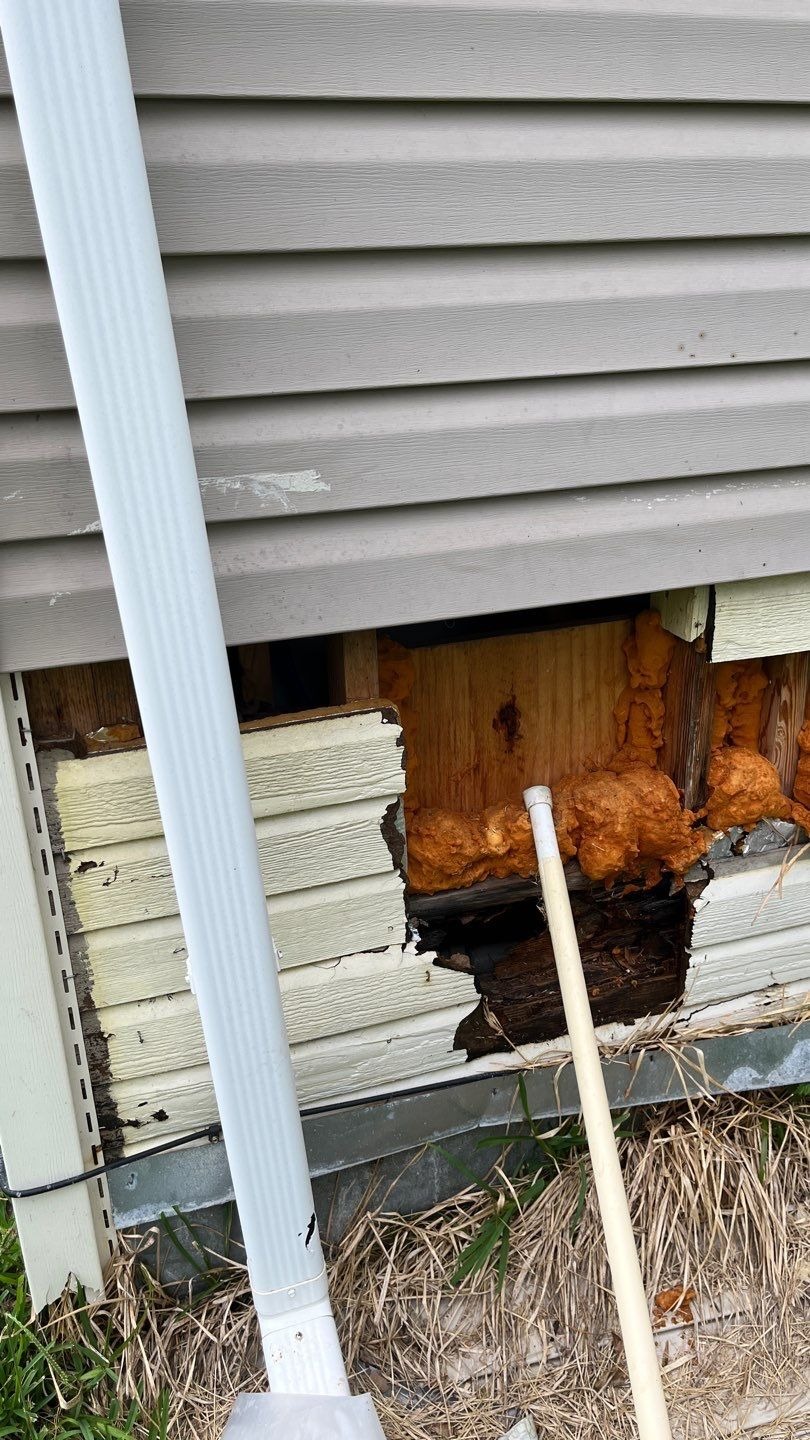
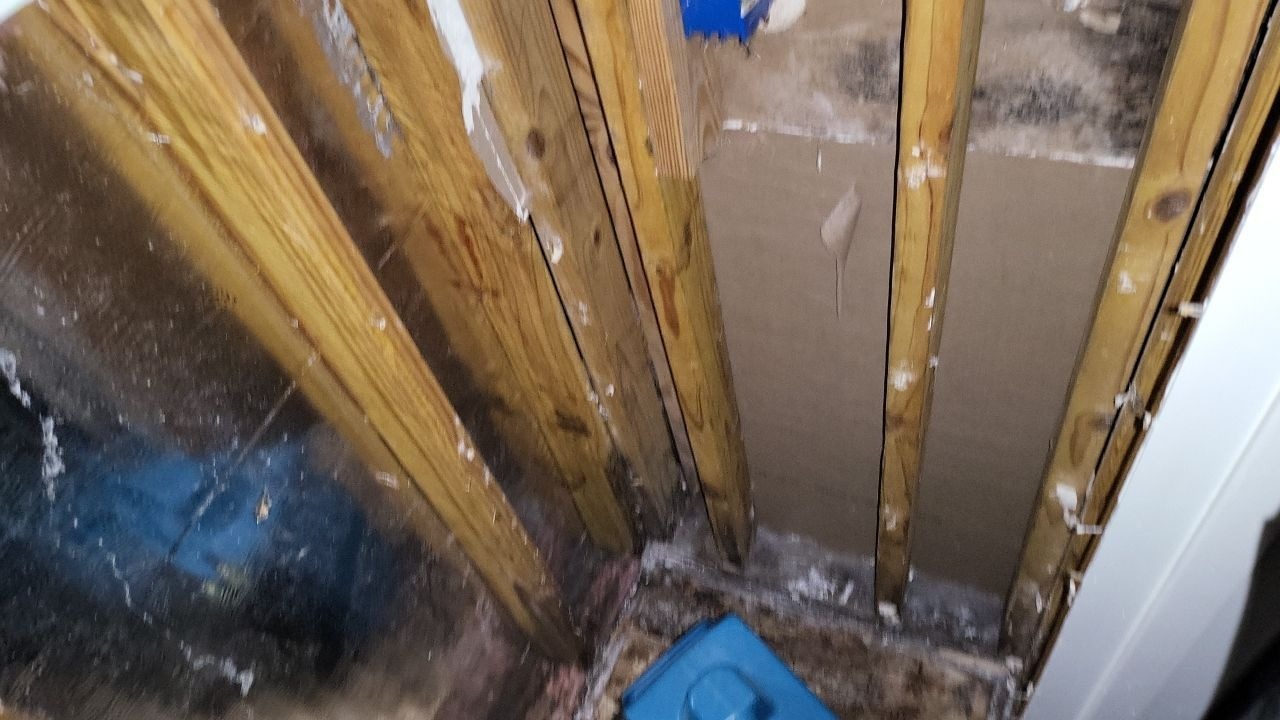
The initial inspection centered on a musty odor coming from a hall closet. A closer look revealed visible mold growth on materials inside the closet. The team also found damp walls in the adjoining bathroom. Moisture readings confirmed active water intrusion rather than a one-time event. The crew traced the source to an exterior wall leak related to missing siding on the home’s exterior. Because visible growth was already present, the team recommended sampling to document conditions before starting any remediation work.
Rainy Day’s role
Given the scope of visible growth, Rainy Day referred the project to a mold assessment consultant (MAC) to establish a written remediation protocol. Rainy Day is a family-owned company that has operated in North Texas since 1999 and holds IICRC certification. Rainy Day served as the single point of contact from that referral through the remediation and the rebuild that followed. The team coordinated each phase under license RCO1416.
The reconstruction Dodd City TX project, step by step
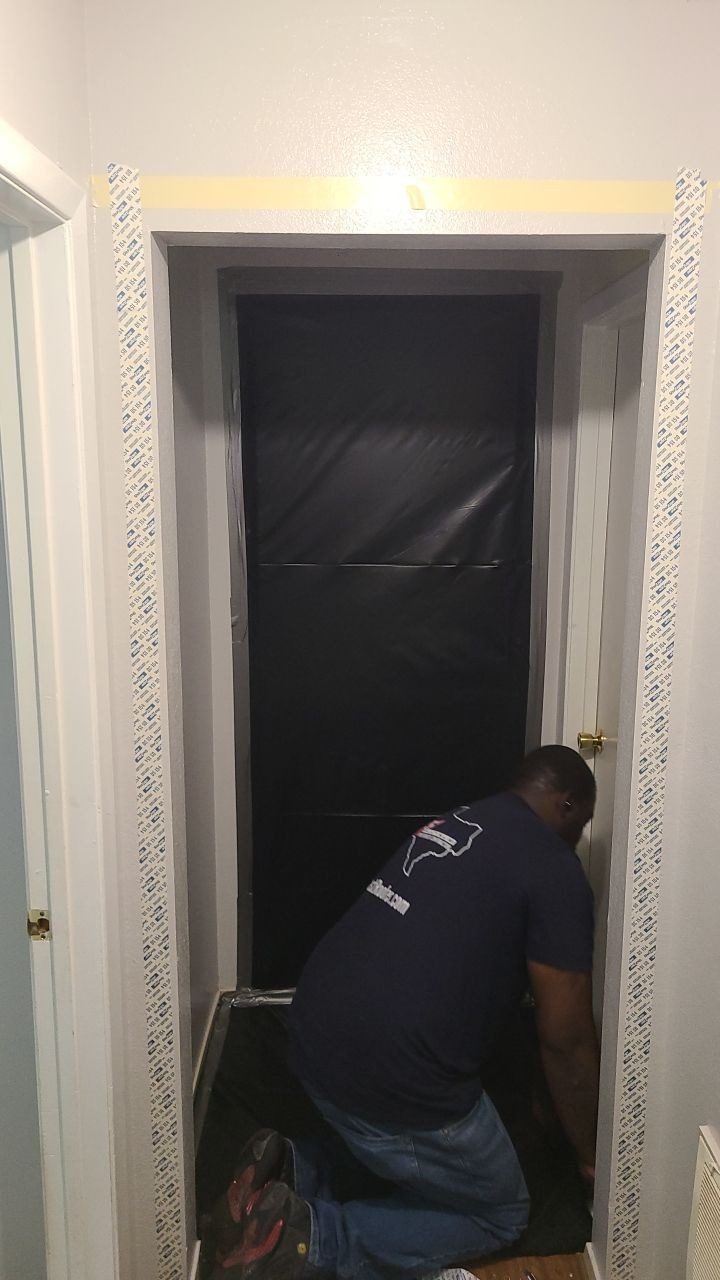
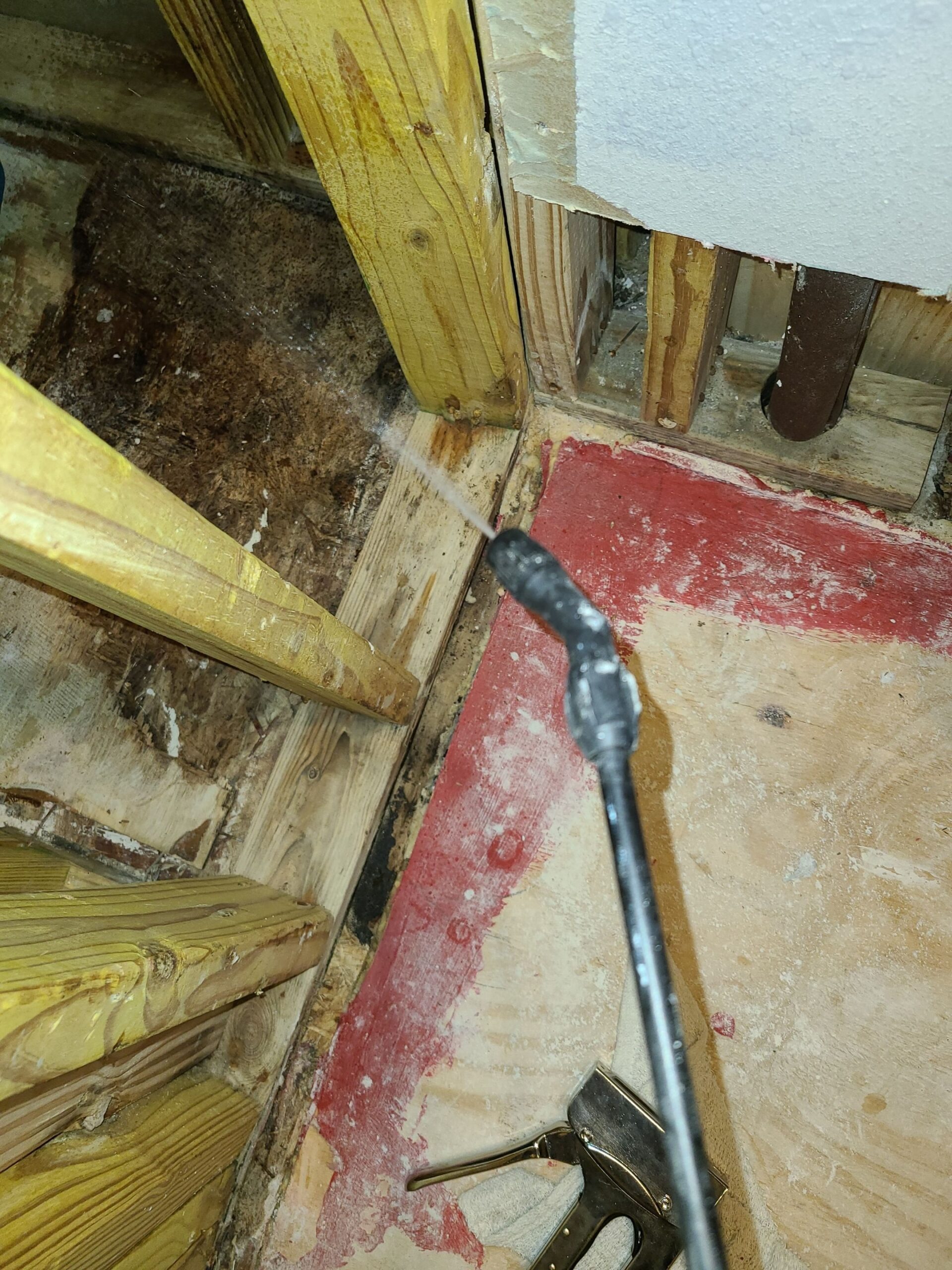
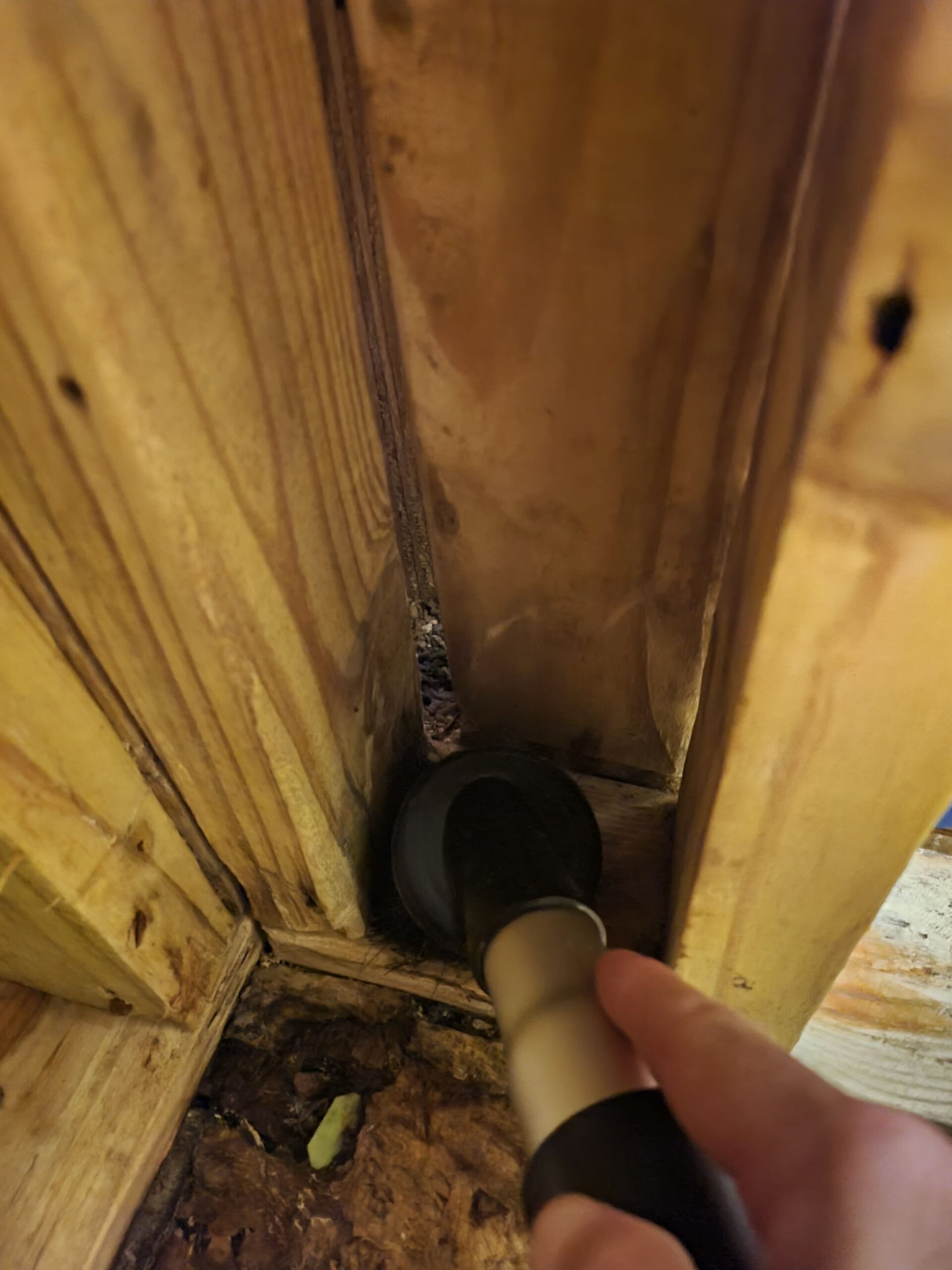
The crew followed the MAC’s protocol step by step. First, they established containment around the hall closet to stop spores from spreading into the rest of the home. Next, they ran HEPA air scrubbers throughout the remediation. The crew removed affected drywall in the closet. Then all surfaces in the work area received a HEPA vacuum and wipe-down before an antimicrobial application. These steps follow standard practice for documented mold remediation. They’re designed to leave a verifiable, testable result rather than a guess at cleanliness.
What the photos show
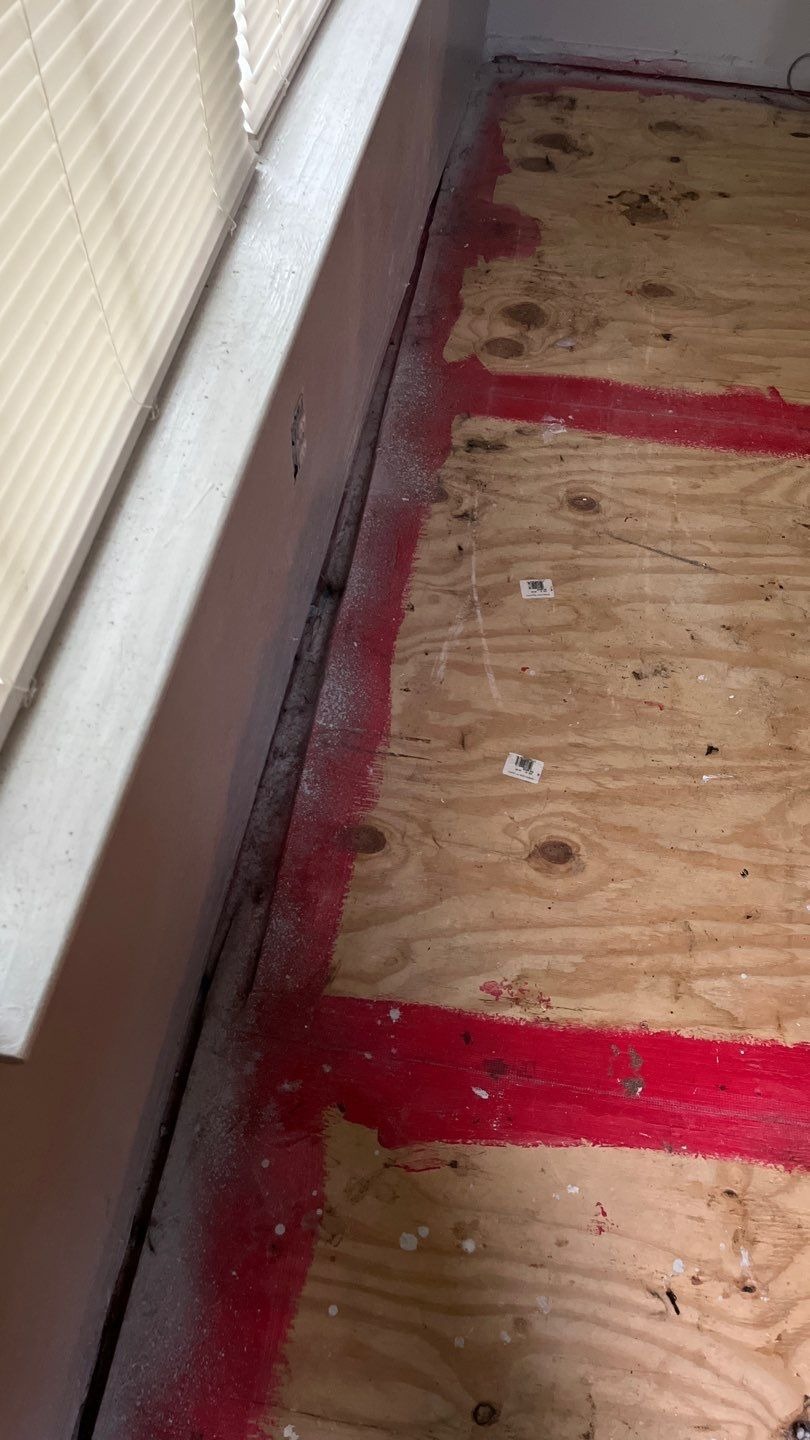
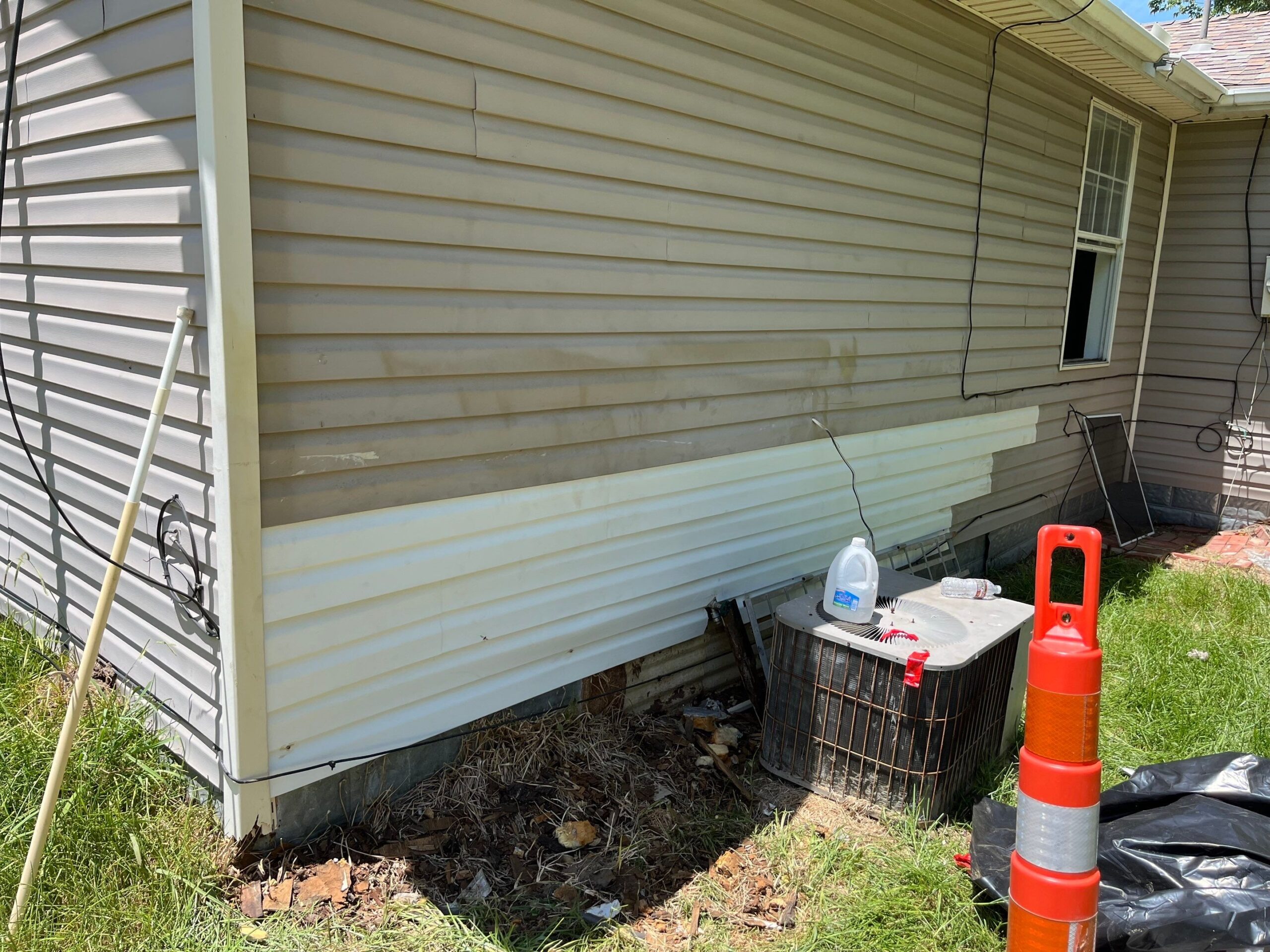
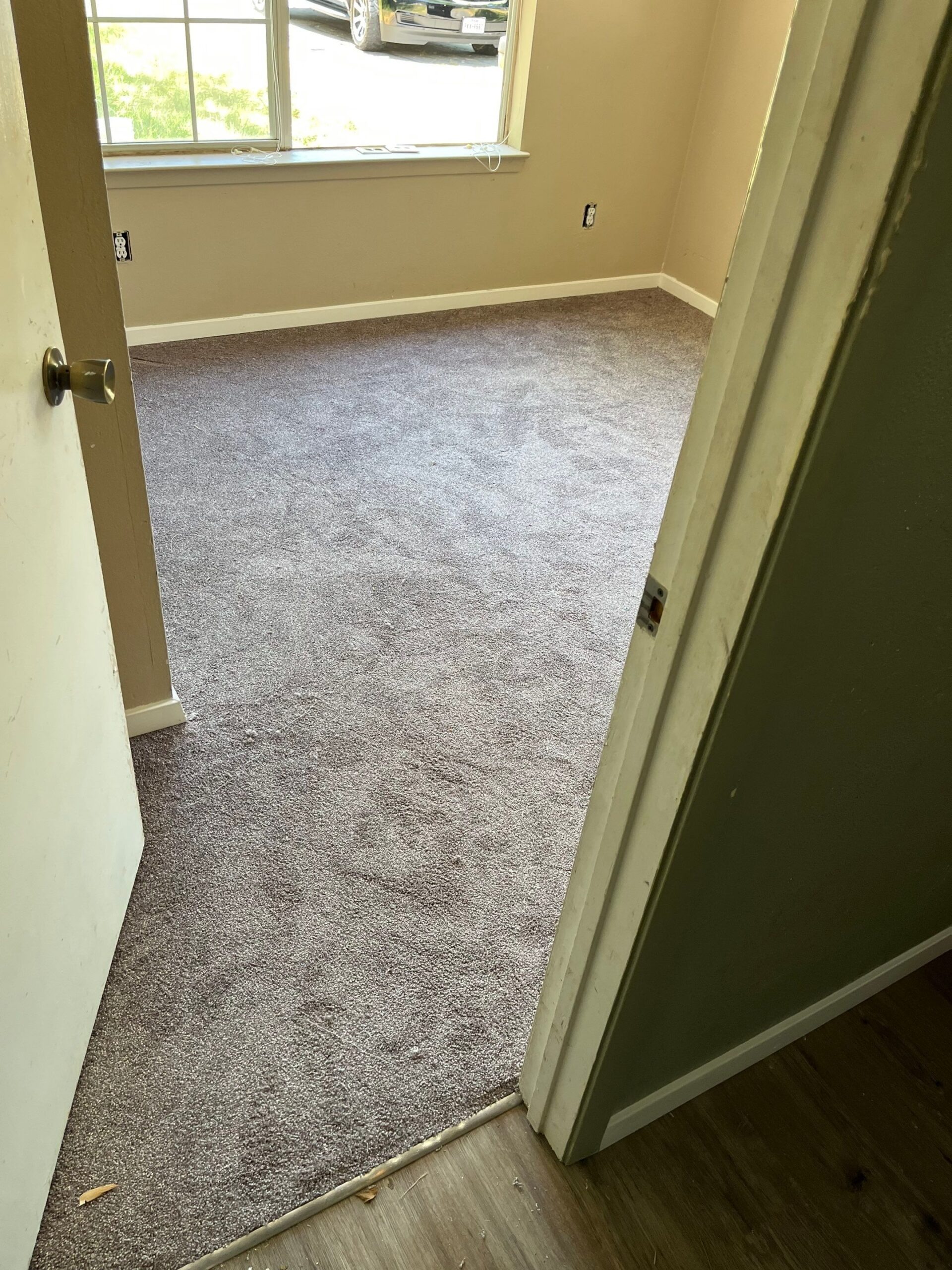
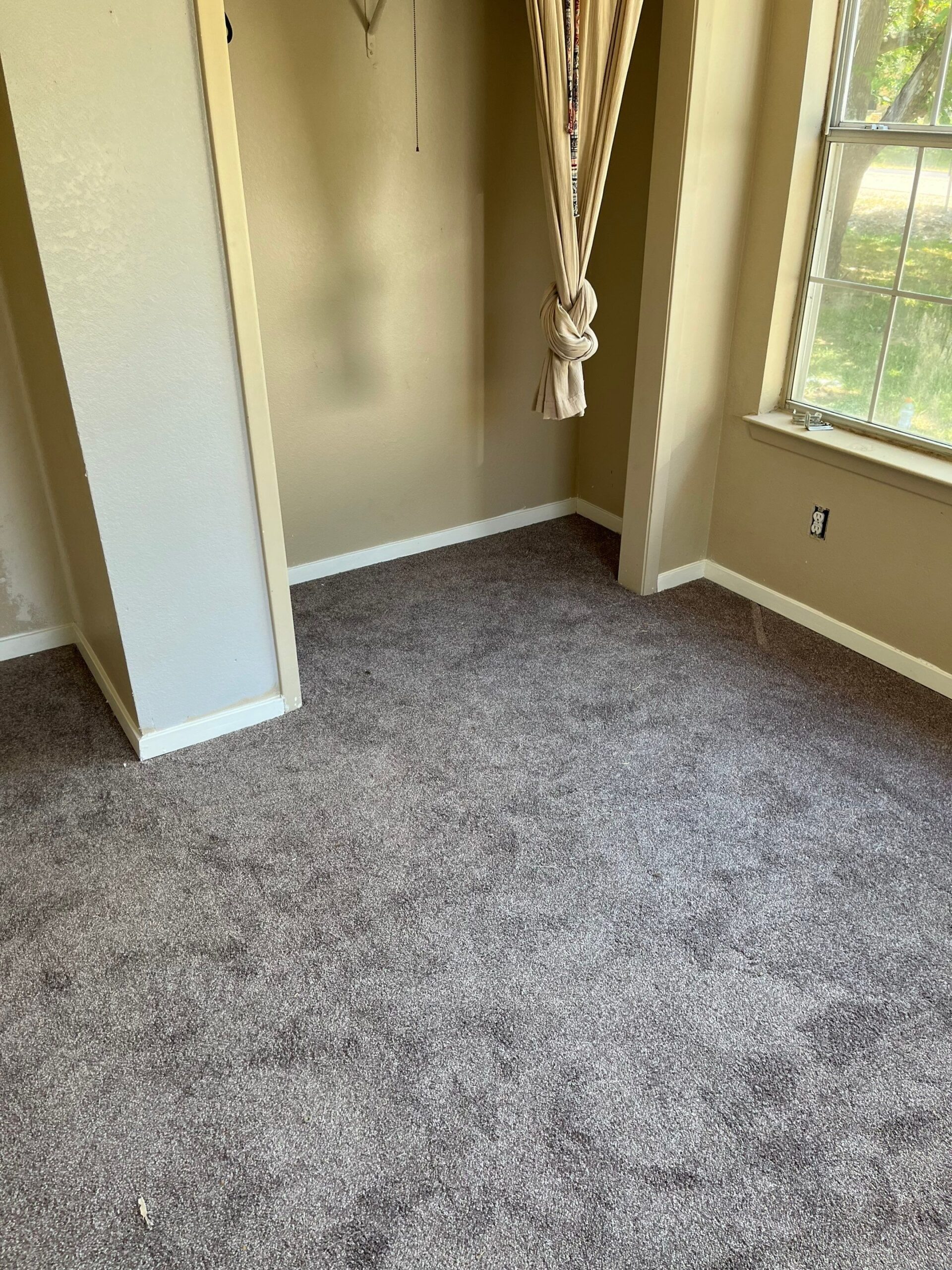
The photo set documents the closet before removal and the exposed wall cavity after the crew took out the drywall. It also shows containment barriers in place and the treated surfaces once cleaning and antimicrobial application were complete. Later images show the exterior siding repair and the rebuilt closet and bathroom finishes.
Why mold is worth taking seriously
Mold growth behind walls or in closets rarely stays contained to where someone first notices it. Once moisture has a consistent source, like a gap in exterior siding, nearby materials stay damp long enough for growth to spread into framing, insulation, and flooring. A musty odor is often the first sign. But by the time it’s noticeable, moisture has usually been present for a while. Identifying and closing off the water source matters just as much as removing the growth itself.
Result and next step
This reconstruction Dodd City TX project reached a clear result: the property passed first-round clearance testing following remediation, confirming that conditions in the treated area met the standard set in the MAC’s protocol. With clearance achieved, Rainy Day completed the repairs. The crew replaced the missing exterior siding that had let water in. They also replaced carpet and laminate flooring throughout the house, replaced tile flooring and the vanity in the adjacent bathroom, rebuilt drywall in the affected closet, and painted the closet and bathroom.
Guidance for property owners in Dodd City and North Texas
If you notice a musty smell in a closet, or walls near an exterior corner that feel consistently damp, don’t just wipe down visible spots. Have the moisture source checked. Exterior issues like missing or damaged siding can let water into wall cavities for months without an obvious interior sign. Addressing the source and documenting conditions with sampling or clearance testing gives you a clear record of what the crew found and what they did, rather than an assumption that the problem is gone.
Related guidance
Learn more about our mold removal process, what a ceiling stain or wall stain can indicate about hidden moisture, or get help scheduling an assessment for your property.
Frequently asked questions
What caused the mold in this Dodd City home?
An exterior wall leak caused the mold. Missing siding let moisture into the wall cavity near the hall closet and bathroom over time.
Why was a mold assessment consultant (MAC) involved?
Because visible mold growth was found, Rainy Day referred the project to a MAC to establish a written remediation protocol. That protocol guided containment, removal, and clearance testing.
Did the home pass clearance testing after remediation?
Yes. The property passed first-round clearance testing following the remediation work. This confirmed conditions met the protocol’s standard before rebuild work began.
What did the reconstruction Dodd City TX project include after mold remediation?
Rainy Day replaced the missing exterior siding and replaced carpet and laminate flooring throughout the house. The crew also replaced tile flooring and the vanity in the bathroom, rebuilt drywall in the closet, and painted both spaces.