Subfloor water damage mitigation in Dallas, TX addresses a part of the home almost no one thinks about until water gets to it. The subfloor sits beneath the finished flooring and ties the structure together. When it stays wet, it can stain, warp, weaken, and grow mold, all hidden under a floor that looks fine on top. This Dallas project shows what it takes to properly address subfloor water damage. Crews remove the finished flooring, expose the subfloor and framing, measure the moisture, and dry the structure before anyone rebuilds anything.
Getting down to the subfloor
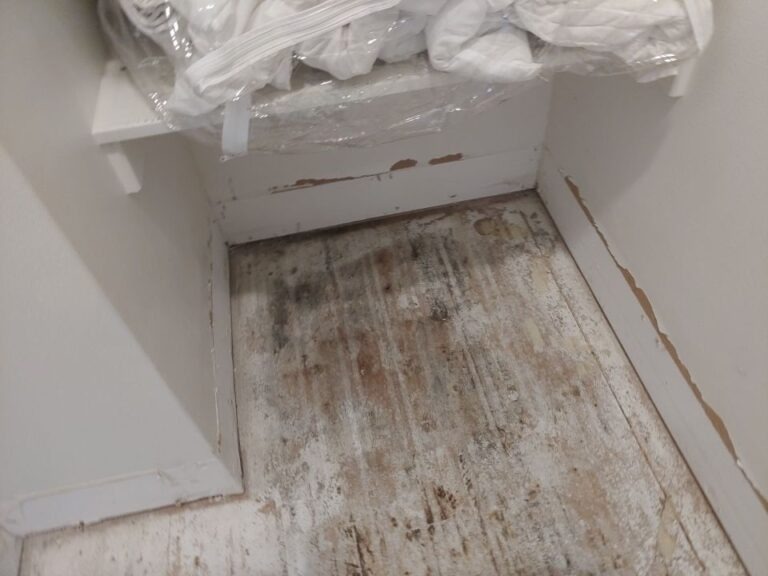
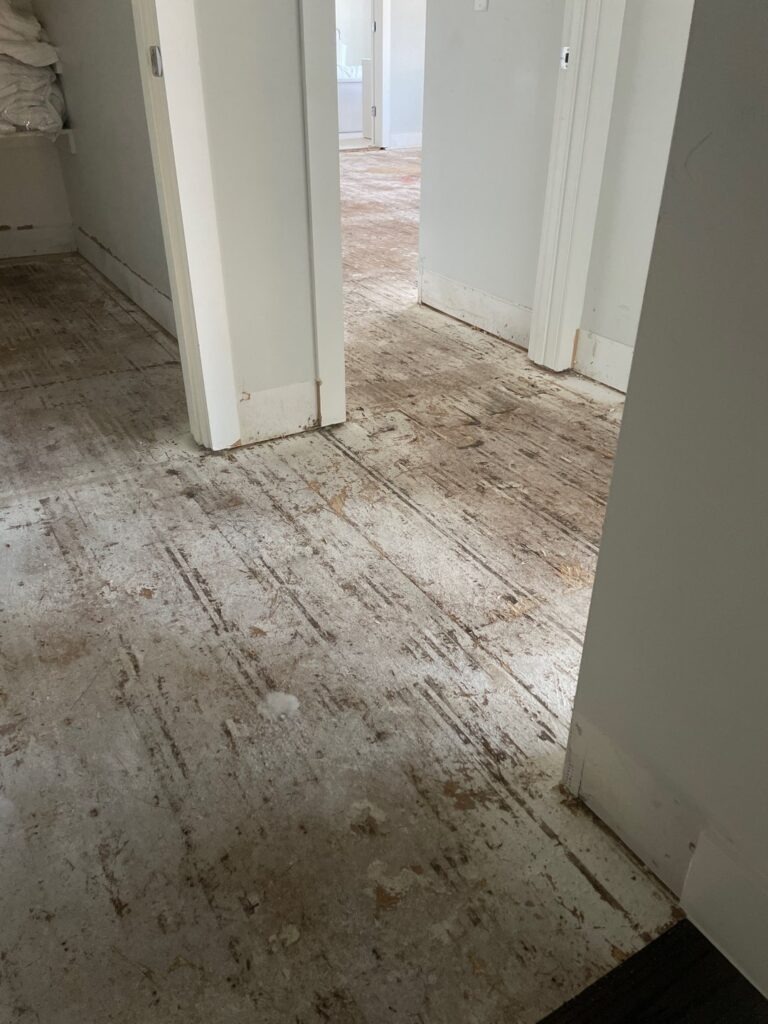
At this Dallas home, crews removed the finished flooring to expose the subfloor, which showed staining from the water. Once water soaks a floor, the finished flooring often has to come up so the subfloor beneath can be reached and dried. A wet subfloor sealed under new flooring is a mold problem waiting to happen. The staining on the exposed subfloor is exactly the kind of evidence that would have stayed hidden if crews had only dried the surface.
Opening the walls where the water traveled
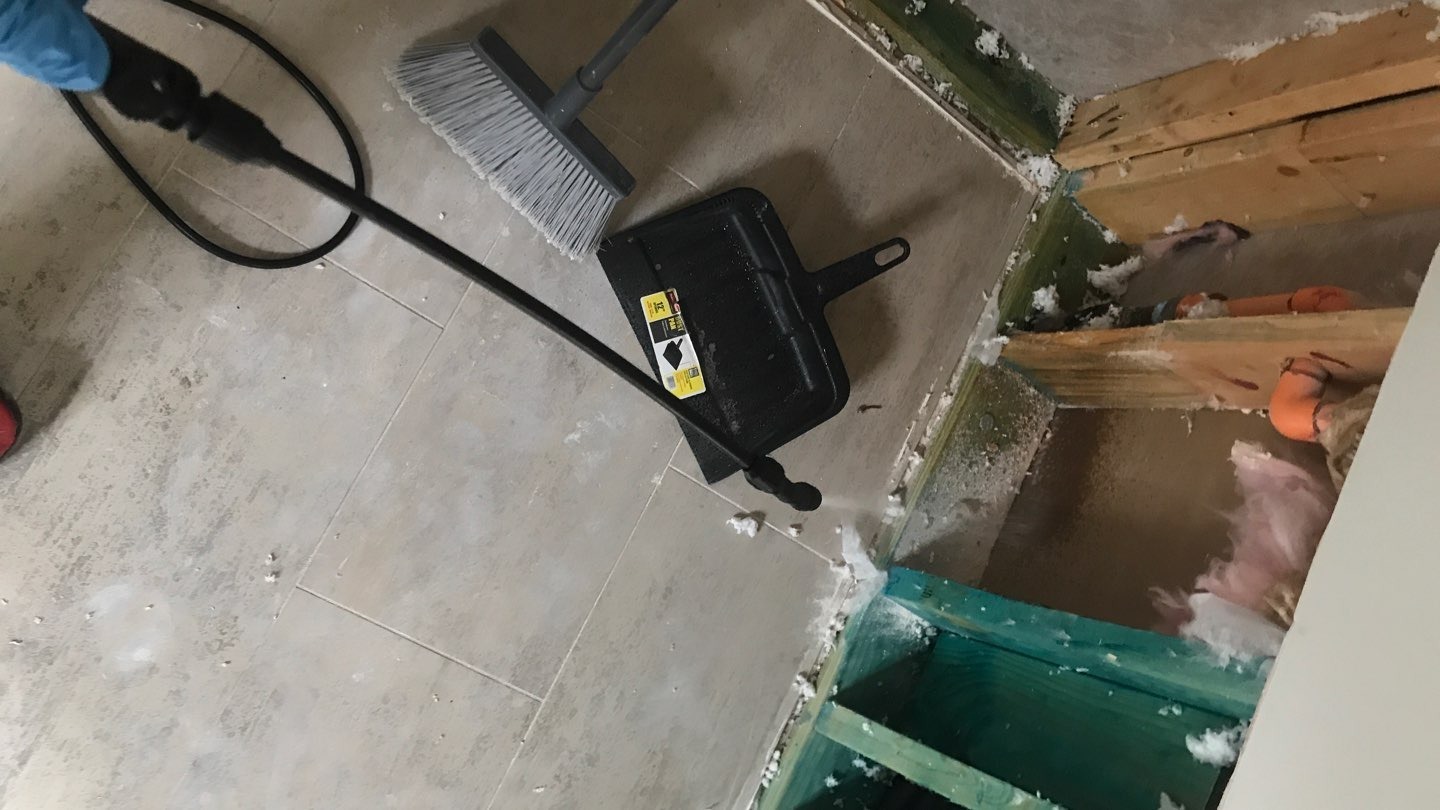
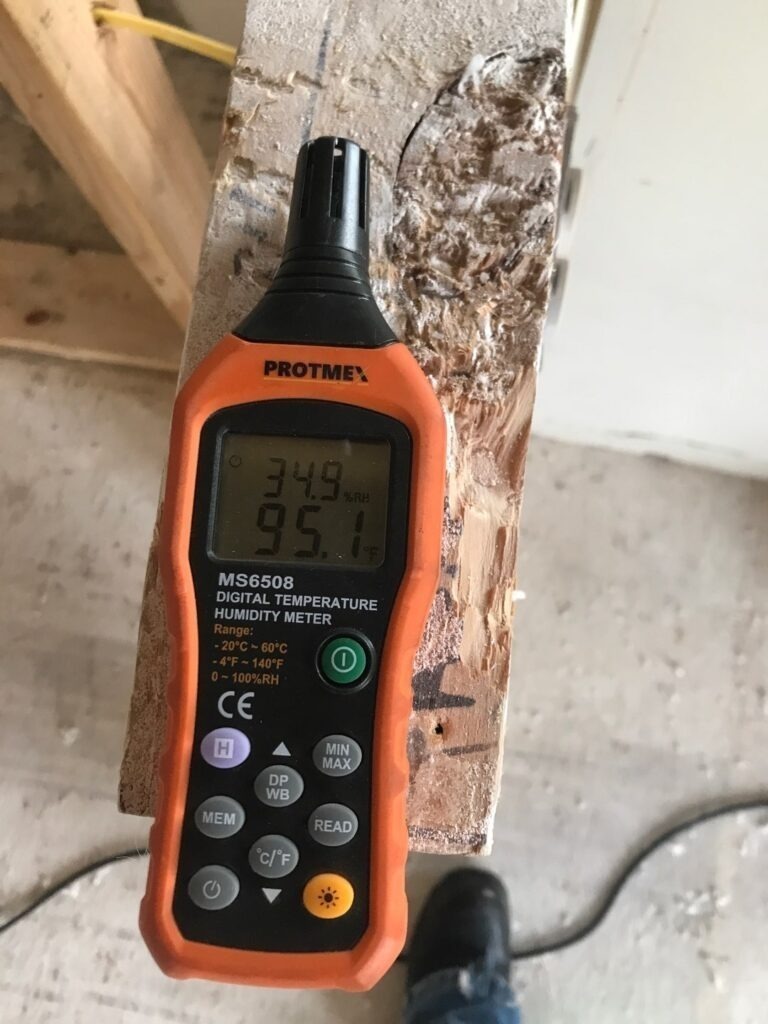
Water at the subfloor almost always means water reaches the base of the walls too. So crews opened the wall cavities to expose the framing and sheathing. A moisture meter on the exposed framing showed elevated readings. This confirmed the moisture had reached into the structure and not just the floor. Measuring the framing tells the crew how far the water actually went and how much they need to dry.
Containing the work and drying the structure
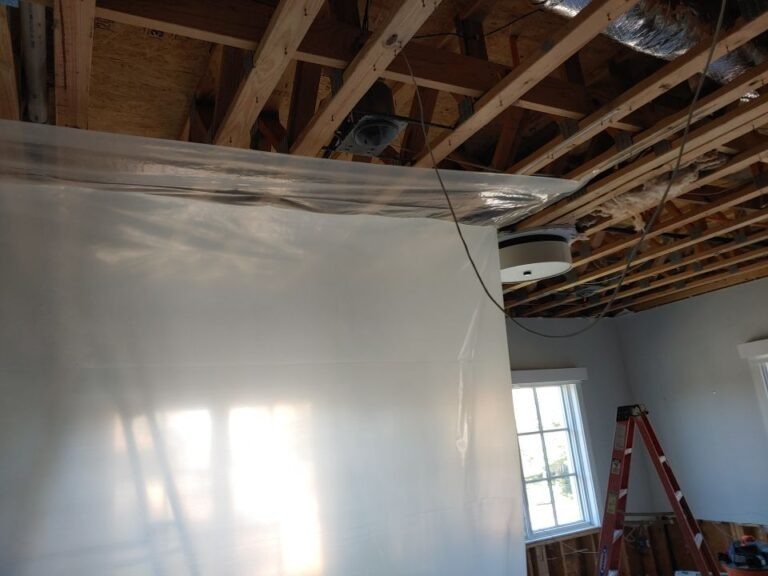
Crews set up the work area with plastic containment, including beneath an opened ceiling, to keep dust and any microbial growth from spreading through the home. With the subfloor and framing exposed and contained, drying equipment brought the structure back to normal moisture levels. Because meter readings drive the drying process, equipment stays in place until the subfloor and framing measure dry. That is the point where new flooring can safely go back down.
Result and next step
This subfloor water damage mitigation in Dallas, TX project record documents the removed flooring and stained subfloor, the exposed wall framing, the elevated moisture readings, the containment, and the structural drying at this Dallas home. If water has reached your floors, the right next step is a mitigation that removes the flooring where needed and dries the subfloor and framing to measured levels. That way, new flooring goes over a dry, sound structure.
Guidance for property owners in Dallas and North Texas
Do not judge water damage by the surface of the floor. A floor can feel dry on top while the subfloor beneath it stays wet, and that trapped moisture is a leading cause of mold and flooring failures after a loss. Ask the restoration company to confirm the subfloor is dry with meter readings before any new flooring goes in.
Related guidance
Learn more about our water damage restoration service, or get help now for an inspection.
Frequently asked questions
Why did the flooring have to be removed for this subfloor water damage mitigation in Dallas, TX?
Once water reaches the subfloor, the finished flooring often has to come up so the subfloor beneath can be exposed and dried. A wet subfloor sealed under new flooring is a mold problem waiting to happen. At this Dallas home, removing the flooring revealed staining on the subfloor that confirmed water had reached it.
Why were the walls opened during this subfloor mitigation?
Water at the subfloor almost always means water has reached the base of the walls too. So crews opened the wall cavities to expose the framing and sheathing. A moisture meter on the exposed framing showed elevated readings, confirming the moisture had traveled into the structure beyond just the floor.
How do you know when the subfloor and framing are dry enough to rebuild?
Moisture meter readings drive the drying process. Equipment stays in place until the subfloor and framing measure dry rather than just feeling dry on the surface. That measured point is when new flooring can safely go back down over a dry, sound structure.
“Very professional and responsive.”