This crawl space moisture control in Dallas job started with a simple request: apply an antimicrobial as a preventative step before conditions got worse. The crawlspace had poor ventilation, and that trapped humidity in the air below the home. High humidity alone does not always mean active mold, but it creates the exact conditions mold needs. Homeowners in this situation want to know two things: is anything growing yet, and how do we stop the next problem before it starts. Here is what we found, what we did, and why the follow-up recommendation matters as much as the treatment itself.
What we found in Dallas
Our technician arrived to inspect a crawlspace with elevated humidity levels. The ventilation in the space was inadequate, which let moist air linger instead of cycling out. No active water intrusion was documented during this visit. However, humidity by itself is a warning sign worth acting on, because it sets the stage for microbial growth over time if left unaddressed.
Rainy Day’s role
Rainy Day Restoration & Roofing has served North Texas homeowners since 1999, and we’re one company from first call through rebuild. Our mold and water division carries IICRC certification and holds Texas mold remediation license RCO1416, so this crawl space work fell under that licensed, certified scope. John Hopewell, our technician on this job, holds his own TDLR mold remediation certification and IICRC training as well.
What we did
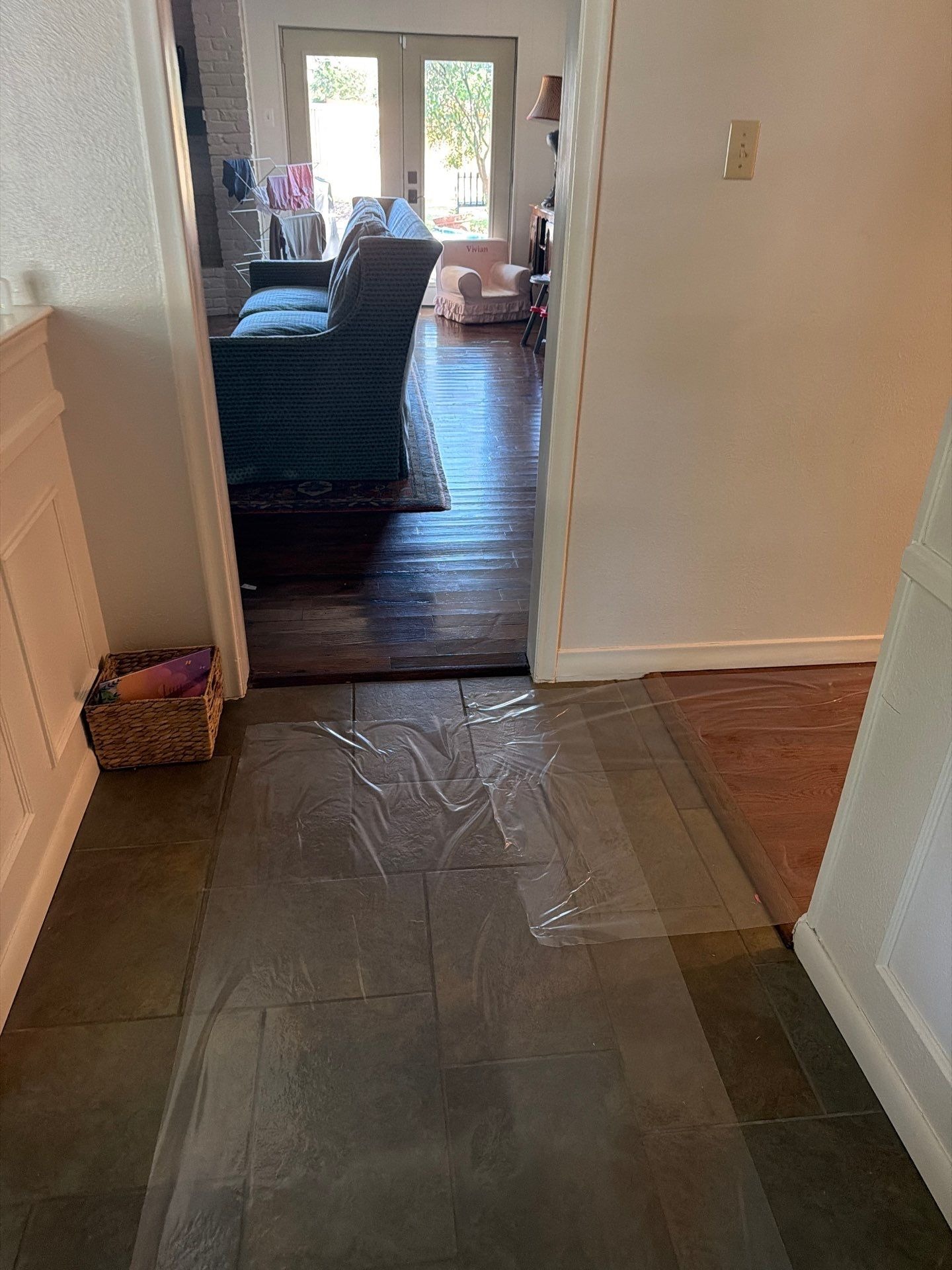
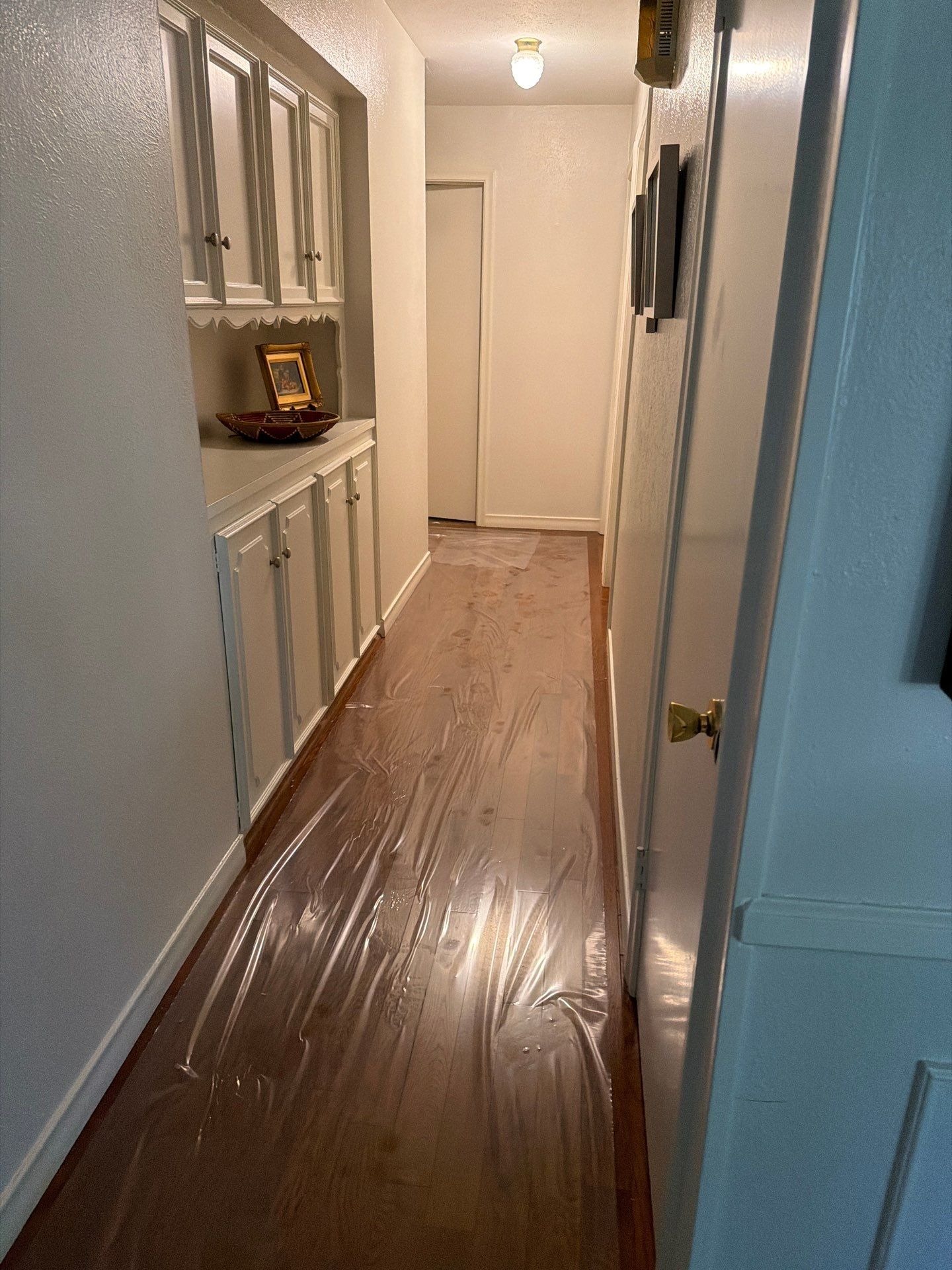
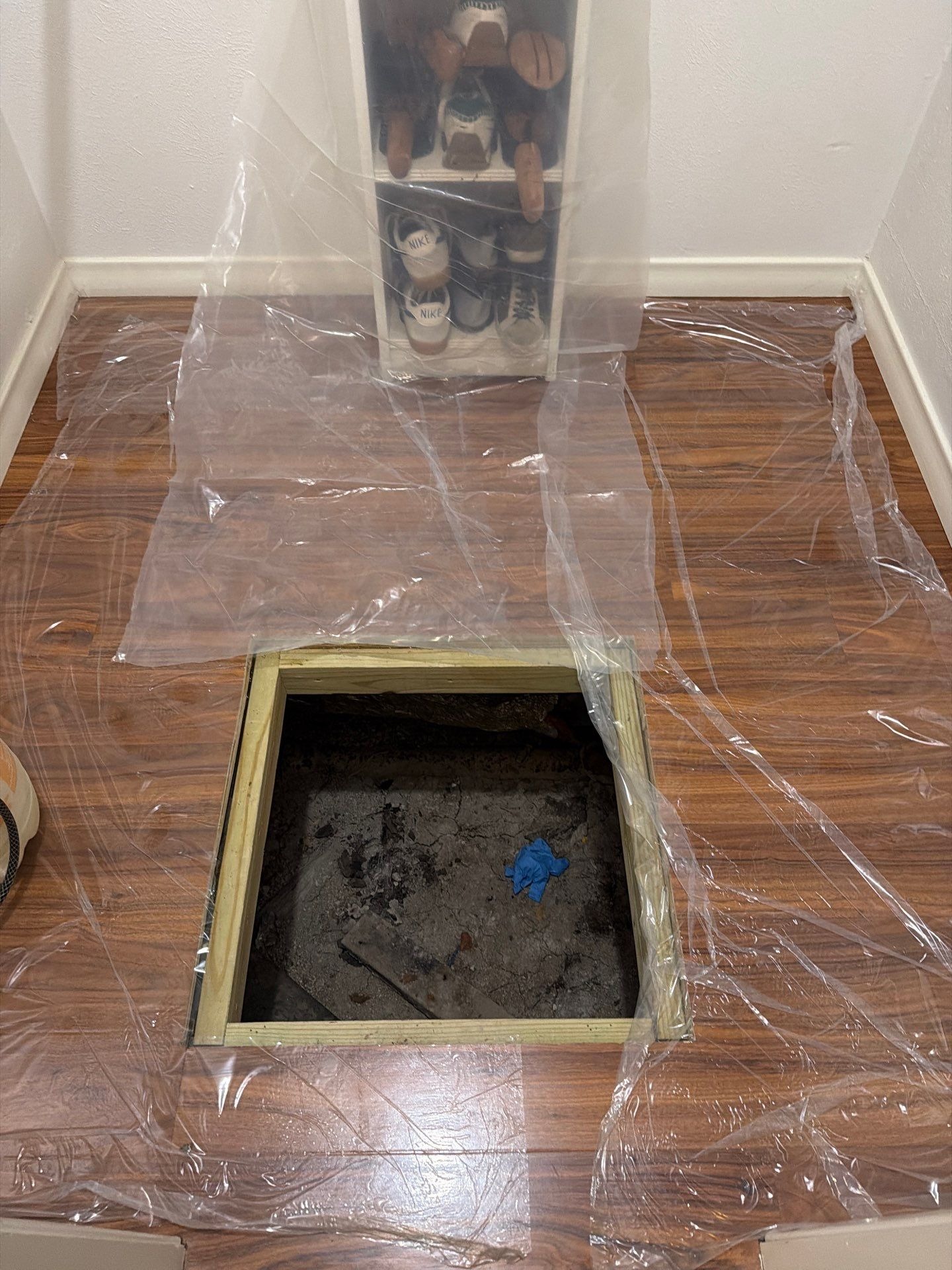
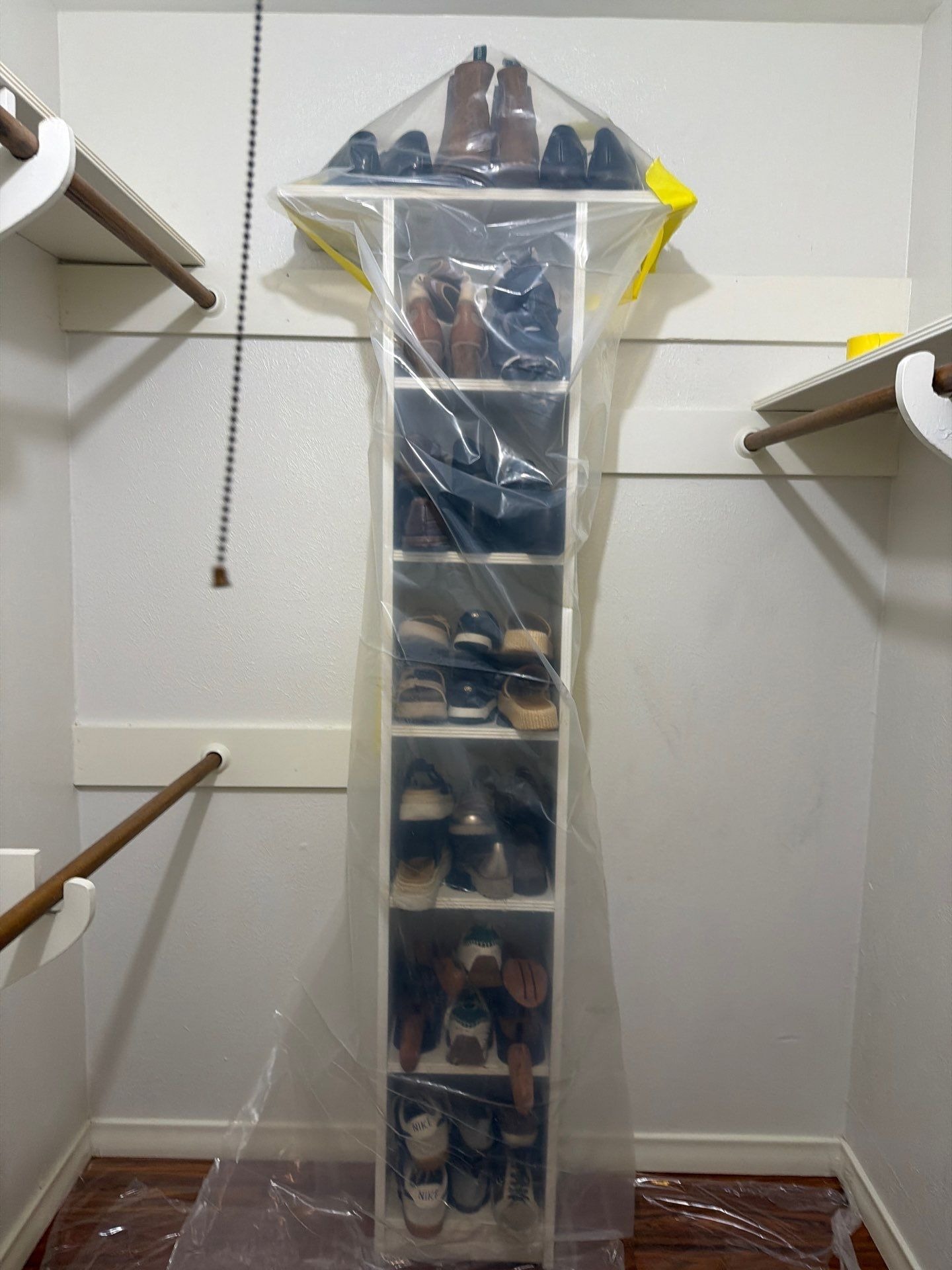
Before starting any treatment, the crew covered contents and walkways in plastic sheeting. This protected surfaces in the crawlspace from overspray and foot traffic during the work. Once that containment was in place, we applied an antimicrobial product throughout the space as a preventative measure. This step targets surfaces where humidity could otherwise support future growth, rather than treating an existing infestation, since none had been documented.
What the photos show
The photos from this job document the crawlspace conditions before treatment and the plastic containment set up to protect contents and walkways. They also show the antimicrobial application in progress across the crawlspace surfaces.
Why poor ventilation is worth taking seriously
Poor ventilation in a crawlspace does more than trap stale air. It keeps humidity elevated day after day, and that steady moisture load can affect wood framing, insulation, and air quality inside the living space above. Because crawlspaces are hard to see and easy to forget, problems here often go unnoticed until they show up as musty odors or higher humidity indoors. Addressing ventilation and moisture control early is a practical way to avoid a much larger remediation project later.
Result and next step
The crawl space moisture control in Dallas concluded with the antimicrobial application fully applied across the treated surfaces. We recommended installing a dehumidifier or a sump system to manage the humidity at its source going forward. Treating the surfaces addresses today’s conditions, but ventilation and moisture control equipment address the reason humidity built up in the first place. Homeowners who skip that second step often find themselves scheduling another crawlspace visit down the road.
Guidance for property owners in Dallas and North Texas
If your home has a crawlspace, periodic checks for humidity and airflow are worth the time. For Dallas homeowners specifically, our Dallas service area page and our water damage restoration in Dallas, TX page outline what we handle locally. Ventilation upgrades, vapor barriers, and dehumidification equipment all work together to keep crawlspace humidity in a safe range. Waiting until you smell moisture or notice higher indoor humidity usually means the crawlspace has been struggling for a while already.
More Rainy Day projects: Attic-to-Interior Water Damage Mitigation in Dallas, TX · Mold Remediation in Dallas, TX After Mold Reached the Subfloor and Framing.
Related guidance
Learn more about our crawl space moisture control services, review the signs of water in a crawl space, or get help scheduling an evaluation for your own home.
Frequently asked questions
What causes high humidity in a Dallas crawl space?
Poor ventilation is a common factor, since it keeps moist air trapped instead of letting it cycle out. Other factors like grading and drainage can also contribute, though this job did not document a specific water intrusion source.
Why did Rainy Day apply an antimicrobial with no visible mold?
An antimicrobial application works as a preventative step in crawlspaces with elevated humidity. It treats surfaces before conditions turn into active growth, which is a proactive approach rather than a reactive one.
Is crawl space moisture control in Dallas a licensed service?
Yes, our mold and water division is IICRC-certified and licensed under RCO1416 in Texas. This crawlspace work fell under that licensed, certified scope.
What is the next step after an antimicrobial treatment?
We recommended a dehumidifier or sump system for this crawlspace. That equipment addresses the humidity source directly instead of only treating the surfaces affected today.
“Very professional and responsive.”