Water obeys gravity. When it gets into a home high up, in the attic or a second floor, it does not stay there. It runs down through ceilings, walls, and cabinets, damaging everything in its path on the way to the lowest point it can reach. This Dallas project shows what that looks like when the water starts near the top of the house, and it explains why the demolition has to follow the water down through the structure rather than stopping at the first wet room.
Following the water from the attic down
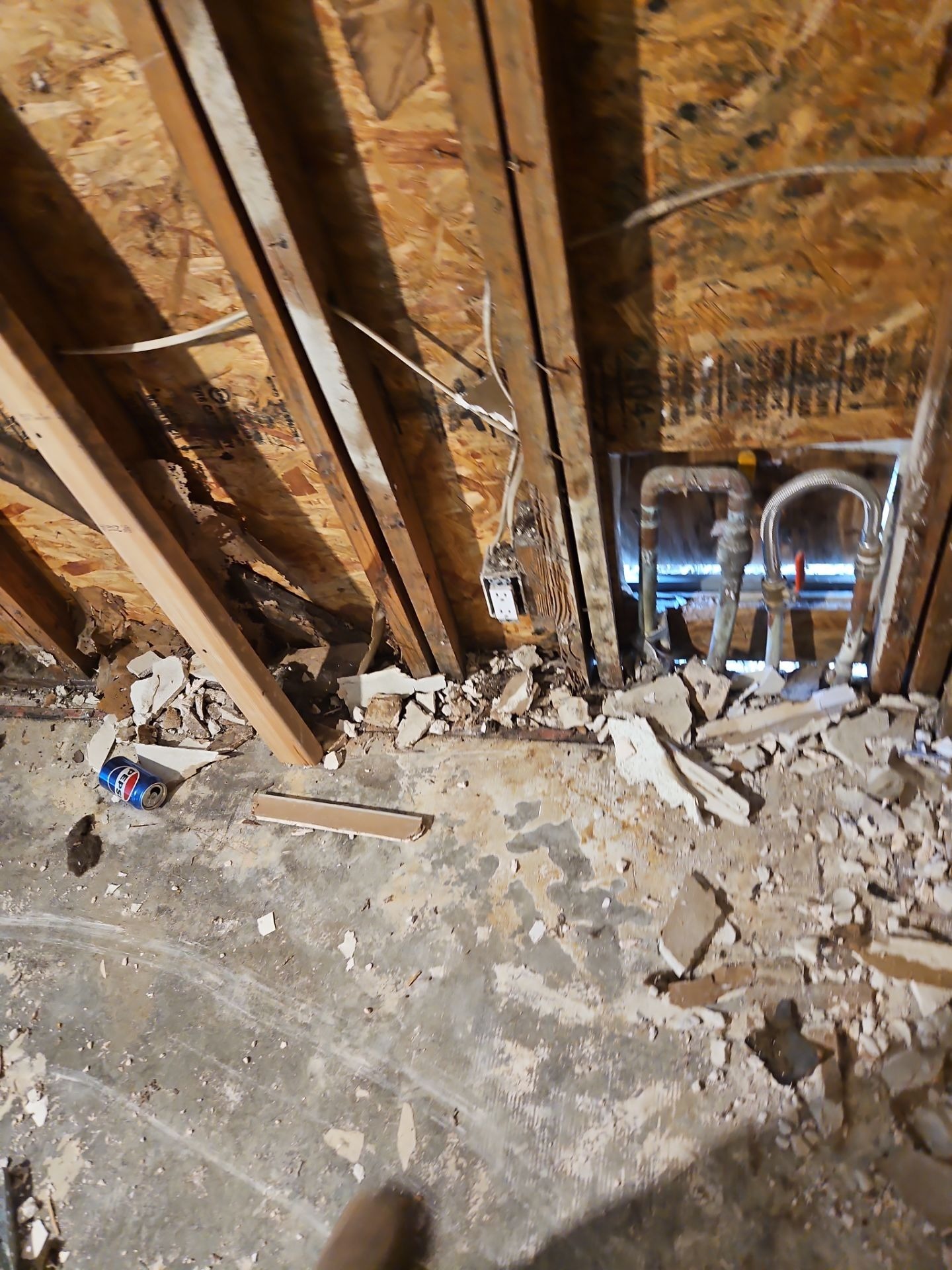
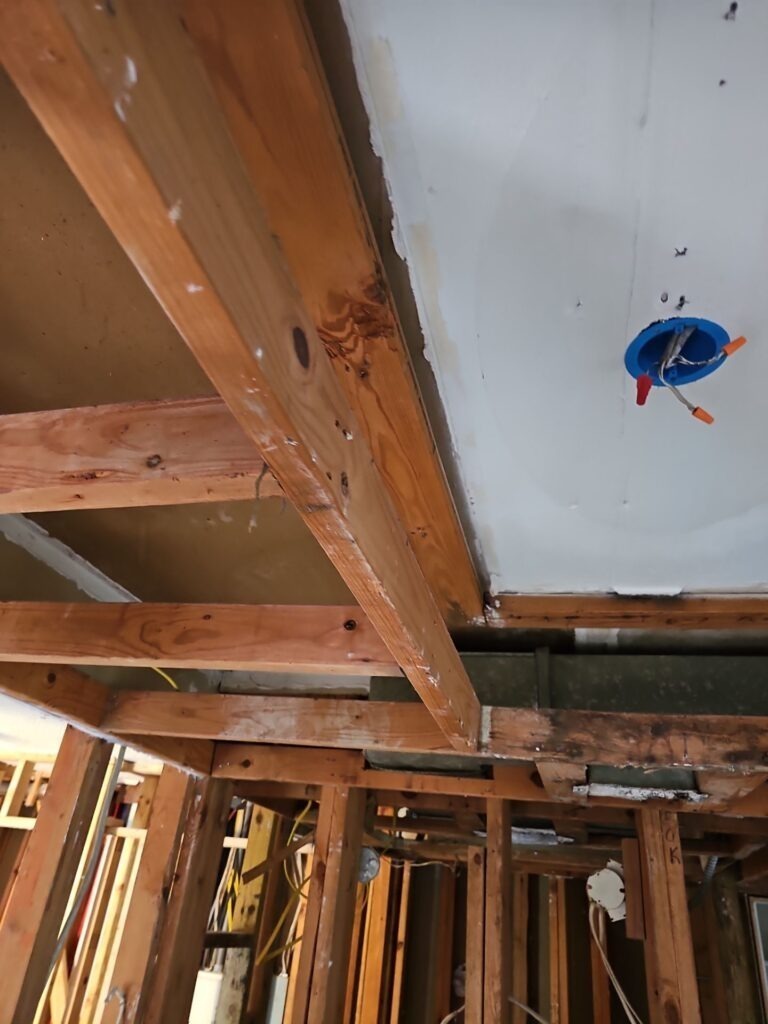
At this Dallas property, the damage ran from the attic through the interior. The attic showed exposed roof framing and demolition debris where wet materials were removed, and the same water had traveled down into ceilings, walls, and a kitchen and bathroom below. Removing the damaged materials at each level, attic, ceilings, wall cavities, and cabinetry, is how you chase the water to its full extent. Stopping at one room would leave wet materials hidden above and behind the finished surfaces.
Controlled demolition to a defined scope
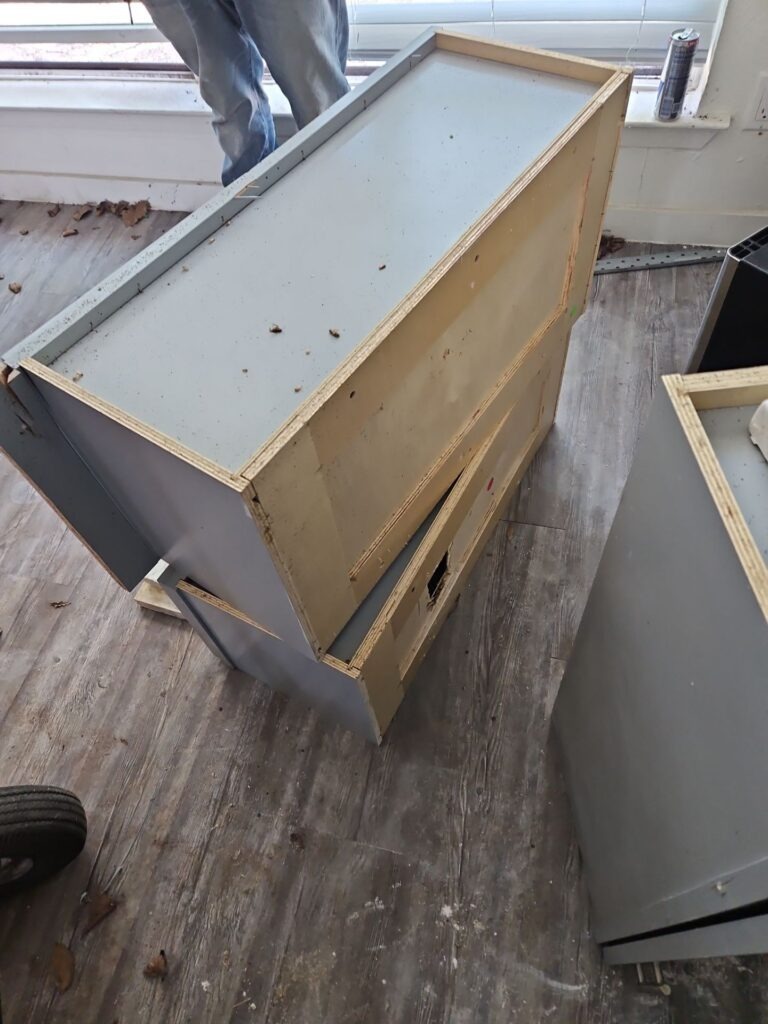
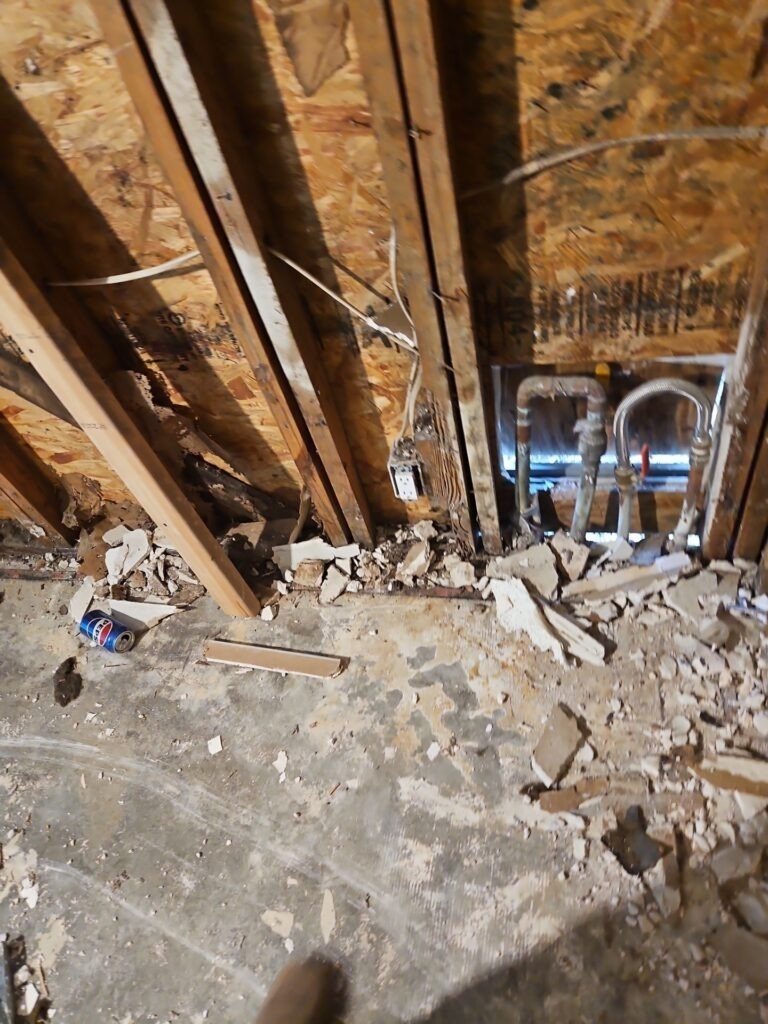
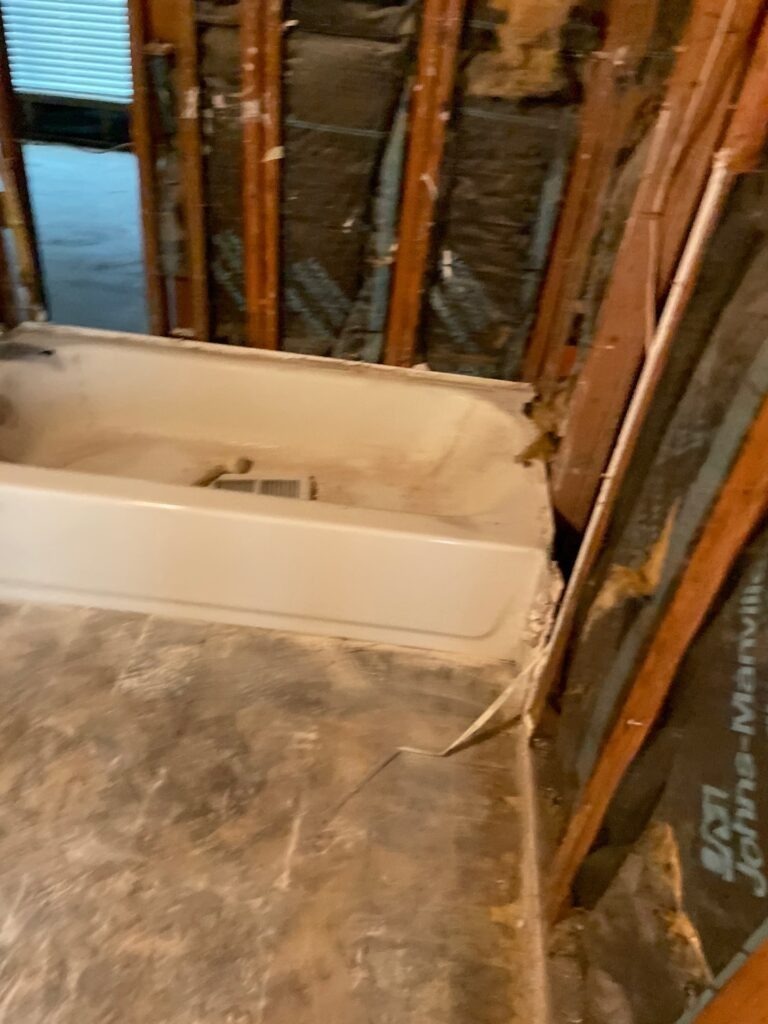
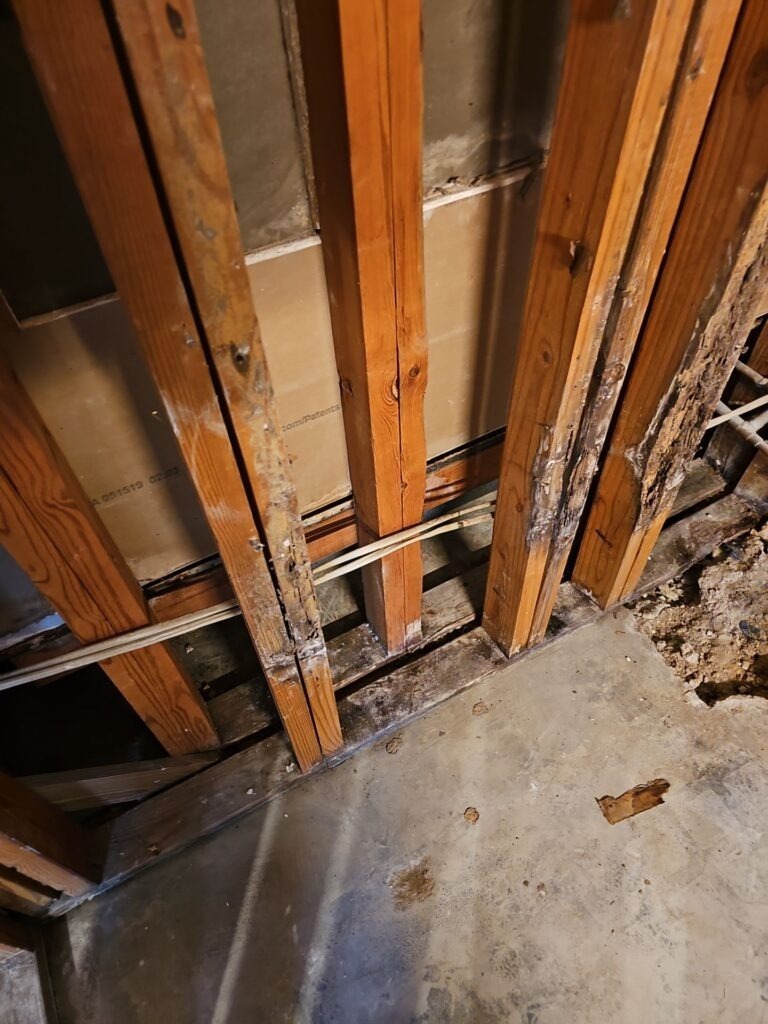
Demolition on a job like this is deliberate, not destructive. Wall drywall was removed to expose the studs, ceilings were opened to the framing, and a kitchen base cabinet was detached to reach the subfloor beneath it. Each of these removals has a purpose: to expose the wet structure so it can be dried and to take out saturated materials that cannot be saved. Working to a defined scope keeps the demolition limited to what the water actually reached.
Why the full path has to be opened
The reason to open the entire water path is mold prevention. Any wet material left sealed inside a ceiling or wall, especially in the warm space of an attic, is a place mold can establish out of sight. By exposing the framing from the attic down and drying it to measured levels, the whole affected structure is brought back to dry before anything is rebuilt, which is what keeps a large water event from turning into a large mold problem.
Result and next step
The project record documents the attic demolition, the exposed ceiling and wall framing, and the kitchen and bathroom demolition at this Dallas property. If water has entered your home from above, the right next step is a mitigation that traces the water down through the structure and opens the full path, so no wet material is left hidden behind a finished surface.
Guidance for property owners in Dallas and North Texas
If a leak starts in an attic or on an upper floor, expect the damage to extend below where you first see it. Ask the restoration company to check and open the full path the water took, from the source down, and to confirm each level is dry. Chasing the water completely is what prevents hidden pockets of moisture from becoming mold after the visible repair is done.
More Rainy Day projects: Crawl Space Moisture Control in Dallas, TX After High Humidity and Poor Ventilation.
Related guidance
Learn more about our water damage restoration service, or get help now for an inspection.
More Rainy Day projects: Apartment Water Mitigation in Waxahachie, TX.
“They did a great job and cleaned up very well!! Thank you!!”