Water damage restoration in Richardson began after hours, when a coupler on a 4-inch main supply line failed. The crew arrived to standing water, wet drywall, and saturated baseboards throughout the affected area. Moisture readings confirmed how far the water had traveled. Because the source was a pressurized supply line, water spread quickly before the leak was found. The team extracted standing water within the first hour and started placing drying equipment the same night. This report walks through what we found, what we did, and what property owners should understand about a fast plumbing failure like this one.
What we found in Richardson
The property showed elevated moisture readings across multiple areas. Standing water sat on hard flooring near the break, and wet drywall and baseboards extended along nearby walls. Visible water staining marked how high the water had traveled before it drained or evaporated. No cause was documented beyond the burst coupler itself; readings and visual evidence guided every decision from that point forward.
Rainy Day’s role
Rainy Day Restoration & Roofing has worked as one company from first call through rebuild since 1999. On this job, our water damage work falls under IICRC-certified, RCO1416-licensed scope. That licensing and certification cover the extraction, drying, and antimicrobial work described here, not any roofing trade. John Hopewell, who holds IICRC certification, led the technical response and reporting on this project.
The water damage restoration in Richardson, step by step
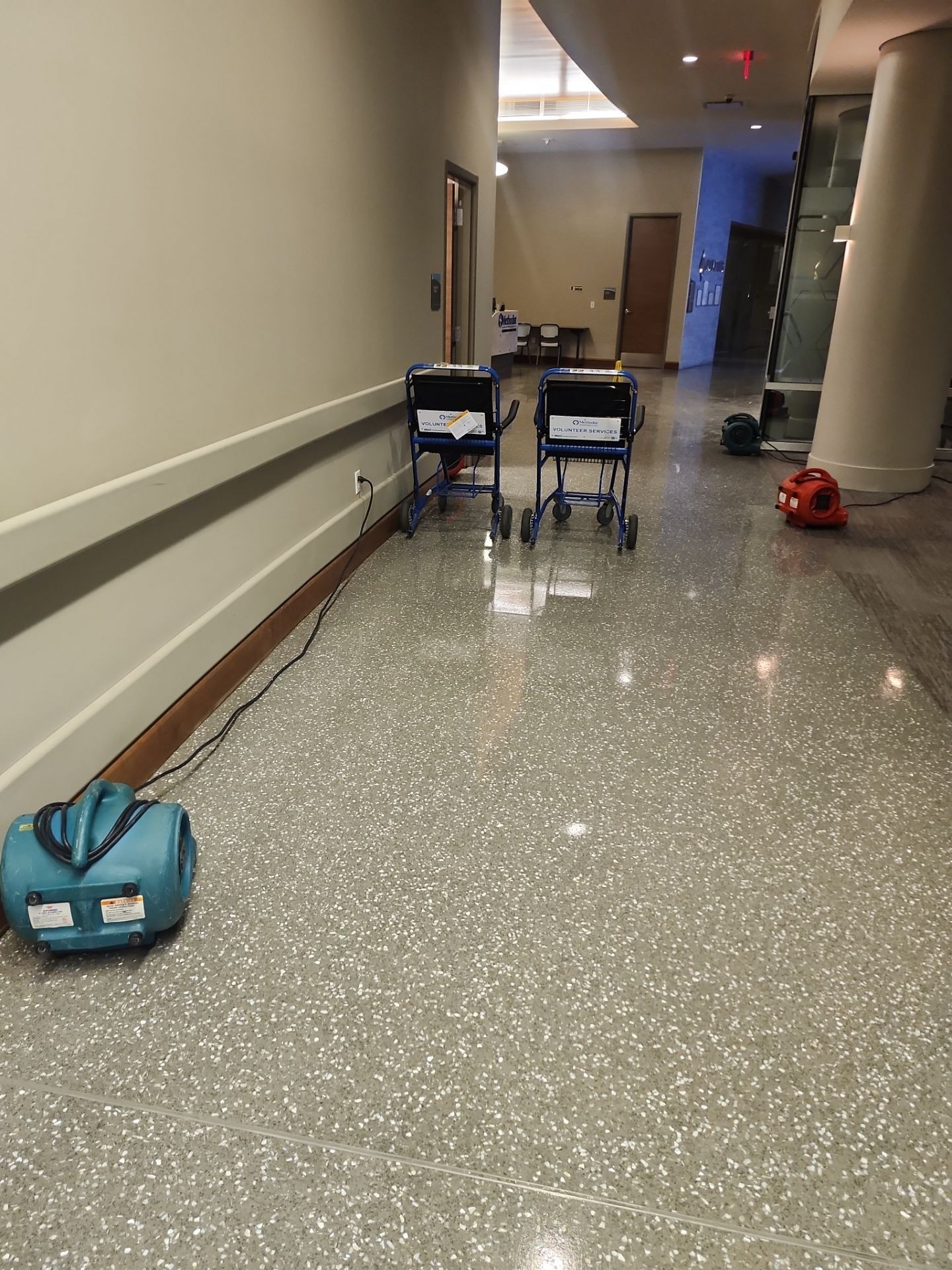
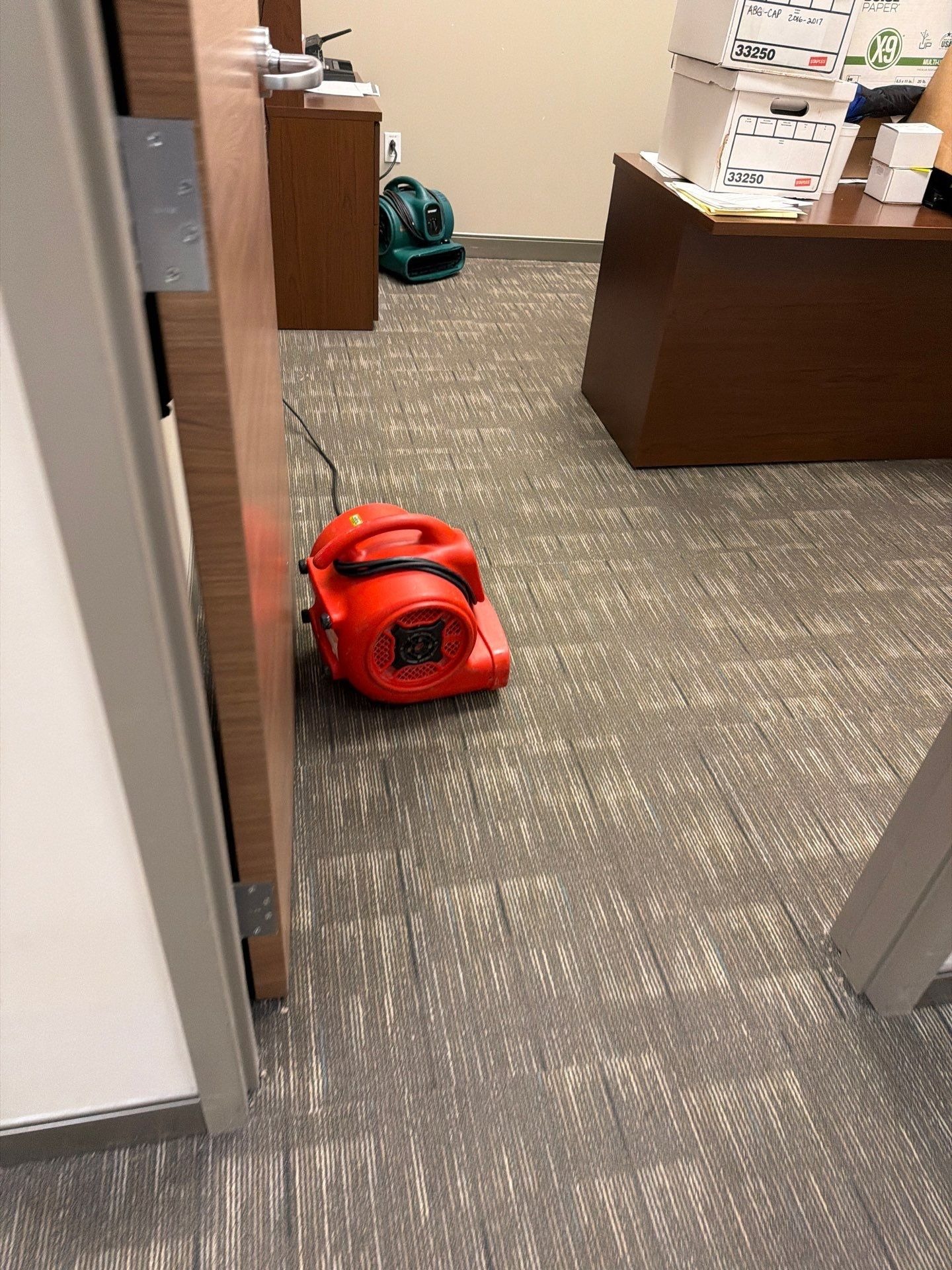
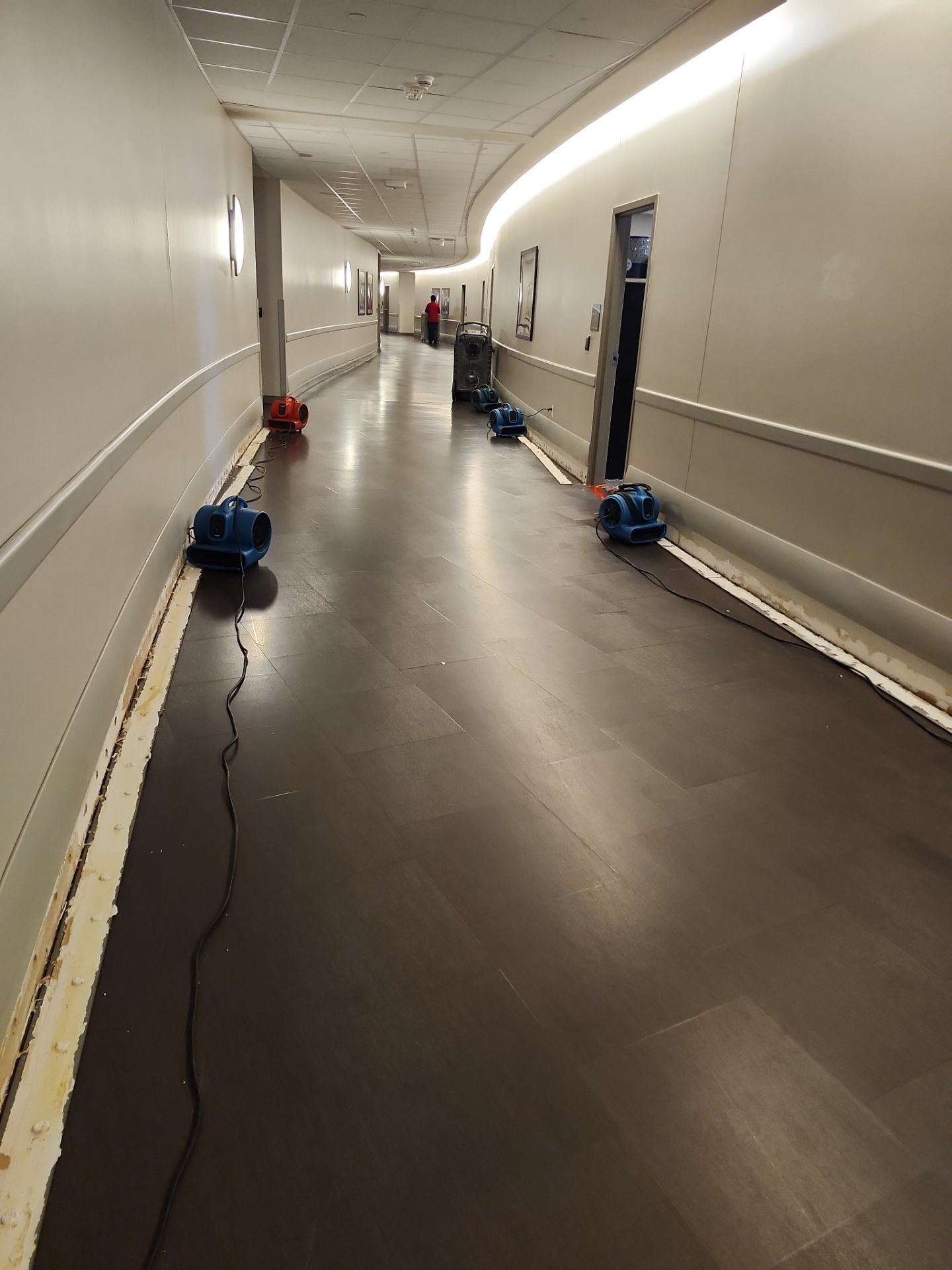
The crew extracted standing water first, since removing bulk water is the fastest way to limit further absorption into building materials. Moisture mapping followed, using readings to define exactly how far water had migrated into walls and floors. Once the scope was clear, the team set drying equipment and applied antimicrobial treatment to surfaces with elevated moisture. The crew returned the next day to monitor progress, fully scope the project, and add equipment where readings called for it. Daily drying reports went to the facilities manager throughout the job, so the timeline stayed documented and transparent. Material removal stayed minimal; the crew removed base cove and drilled small holes to expedite airflow instead of tearing out larger sections. Contents in the affected area were manipulated as needed to support drying and protect belongings.
What the photos show
The photos from this job document the condition found and the drying work that followed. They show the moisture levels recorded, the equipment placement, and the targeted material removal used to reach dry standard.
Why water damage is worth taking seriously
A burst supply line can release a large volume of water in a short time. Once water reaches drywall, baseboards, and flooring, it keeps migrating unless it’s mapped and addressed quickly. Delayed drying allows moisture to sit inside wall cavities, which can lead to further material damage over time. Daily monitoring and moisture readings, like the ones used on this job, confirm when a structure has actually reached dry standard rather than just looking dry on the surface.
Result and next step
This water damage restoration in Richardson reached dry standard within four days of the initial extraction. Moisture readings, daily reports, and ongoing monitoring confirmed the structure was dry before equipment came down. No insurance claim was filed on this job. For property owners facing a similar plumbing failure, the next step is a fast response paired with clear documentation, so drying decisions rest on data rather than guesswork.
Guidance for property owners in Richardson and North Texas
If a supply line fails in your home or facility, shut off water at the source as soon as it’s safe to do so. Then call for extraction quickly, since standing water spreads and absorbs into materials with every passing hour. Ask for moisture readings and daily documentation, not just a visual check, so you know when the structure is actually dry. For ongoing symptoms like water through a ceiling or a stubborn ceiling stain, understanding the underlying moisture pattern matters more than treating the surface alone.
More Rainy Day projects: Roof Inspection In Richardson Finds Soccerball-Sized Hole And Storm Damage.
Related guidance
Learn more about our water damage restoration services, review signs of ceiling staining from water intrusion, or get emergency help if you’re dealing with an active leak now.
Frequently asked questions
What does water damage restoration in Richardson involve after a burst supply line?
It starts with extracting standing water, then mapping moisture with readings, setting drying equipment, and monitoring until the structure reaches dry standard.
How long did this job take to dry?
The property reached dry standard within four days of the initial extraction, based on daily monitoring and moisture readings.
Was insurance involved in this claim?
No insurance claim was filed for this job.
Did the crew remove drywall or flooring?
Material removal stayed minimal. The crew removed base cove and drilled small holes to expedite drying instead of larger tear-out.
“Recently used Rainy Day again for a tricky water leak on our roof. Josh explained the whole project; and as before, his team was prompt, efficient and thorough. Again, we highly recommend them.”