Mold remediation in Dallas, TX became a structural job once the growth reached below the flooring. Mold that has grown under a floor is not a cleaning problem. It is a structural one. By the time mold reaches the subfloor and joists, wiping surfaces will not fix it. The growth sits inside the wood, so crews must open the materials up, treat them, and in some cases remove them. This Dallas project shows what real mold remediation looks like once it reaches the structure. It also shows why the safe, thorough version happens in protective gear, behind containment, and gets verified with a moisture meter before anyone rebuilds.
Getting to the actual growth
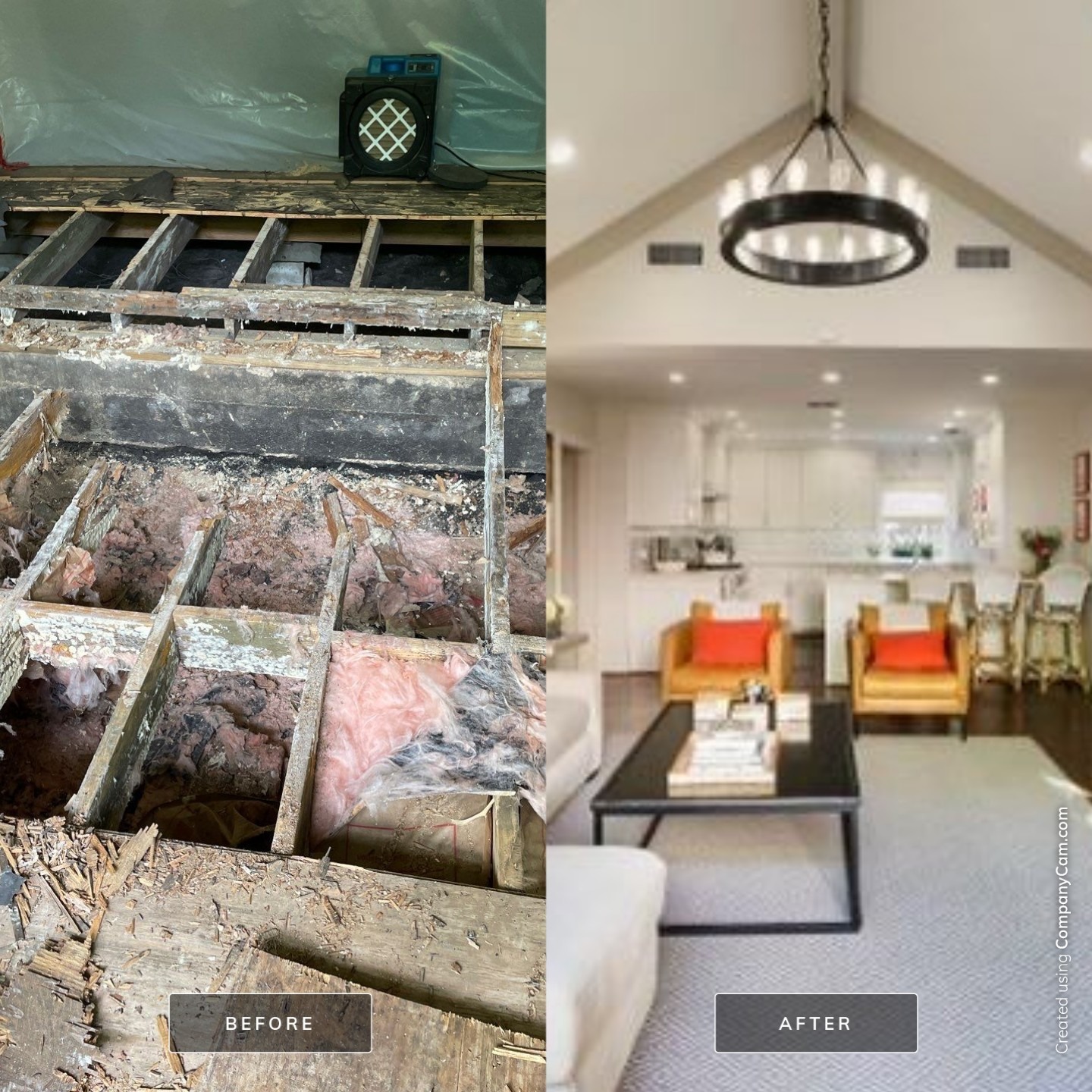
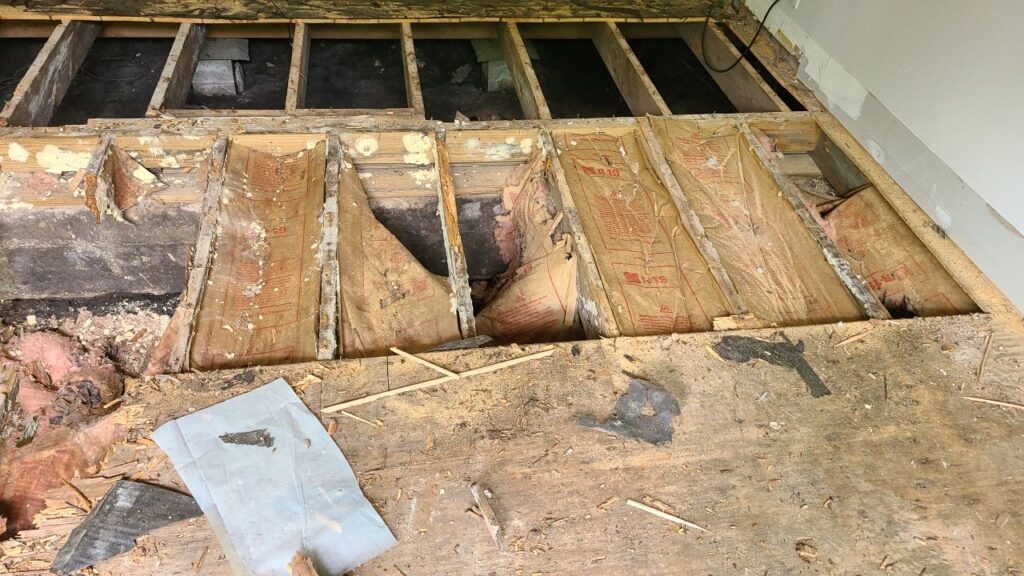
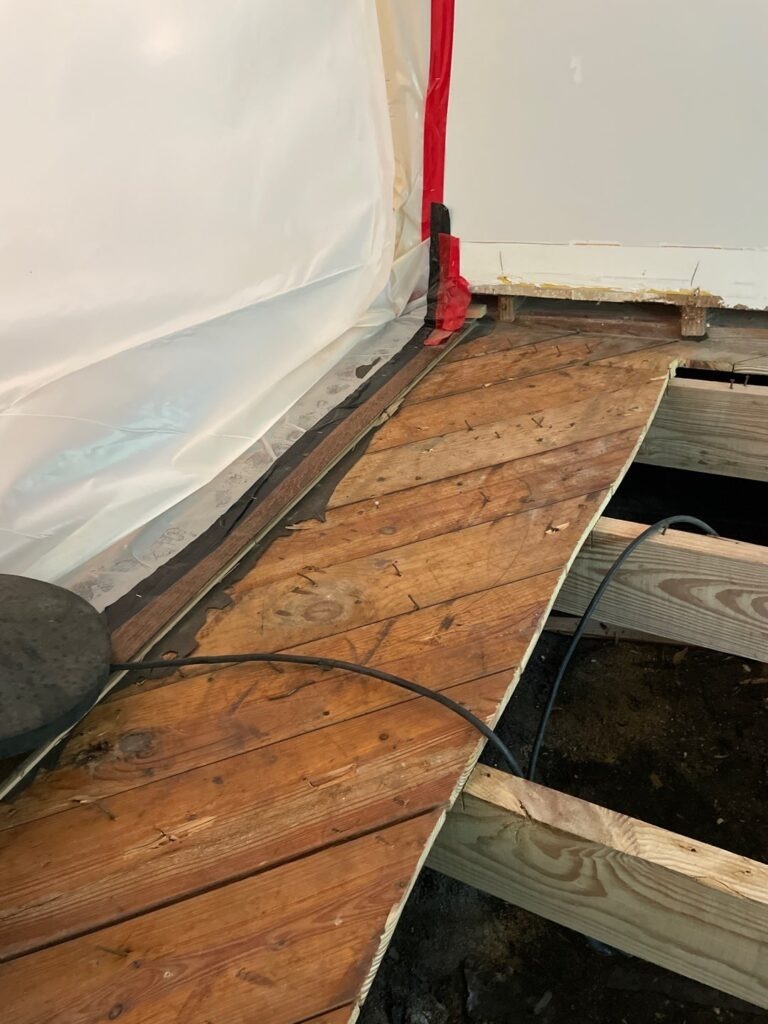
At this Dallas home, the mold had reached below the flooring. So our team removed the subfloor to expose the joists and the insulation beneath. This step separates remediation from cover-up. You cannot treat mold you cannot reach. Painting or wiping over a floor with mold in the structure underneath simply hides it until it spreads. Opening the floor let our team see the full extent of the growth and treat the framing directly.
Doing it safely and without spreading it
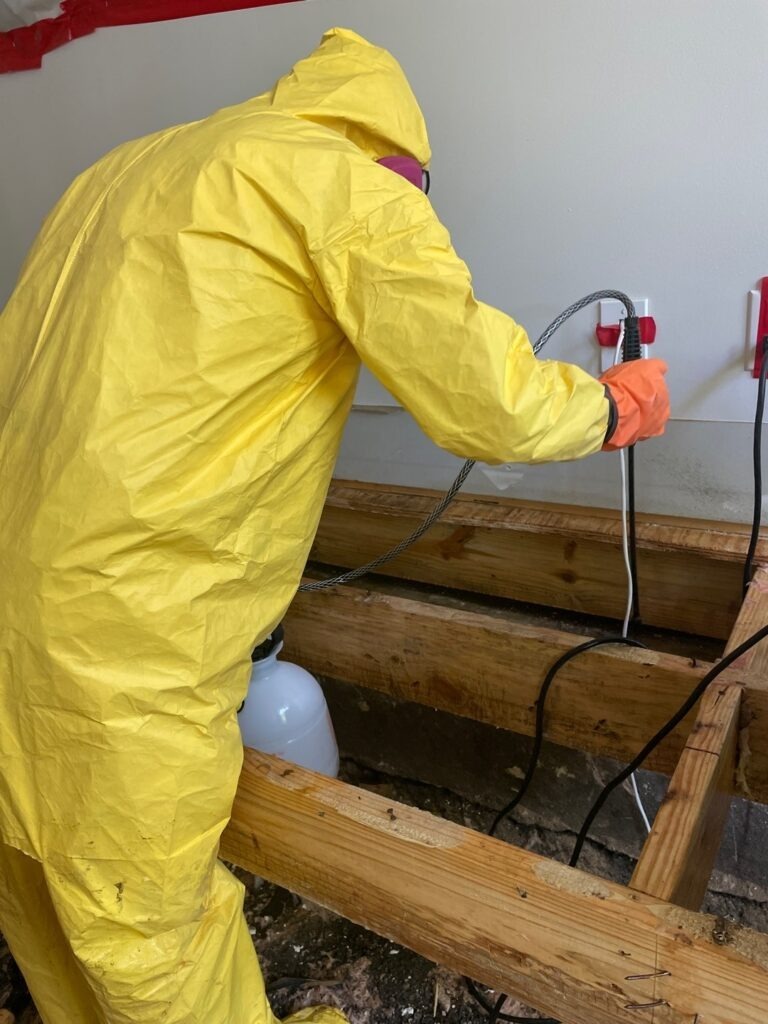
Mold remediation disturbs spores, so containment matters. Our team worked behind containment sheeting to isolate the affected area and keep spores from traveling to clean parts of the home. The technician treating the exposed framing wore protective gear for the same reason mold deserves serious treatment: airborne spores are a health consideration, not just a cosmetic one. Our team applied antimicrobial treatment to the exposed wood to kill the growth and discourage it from returning.
Confirming it is dry before closing it up
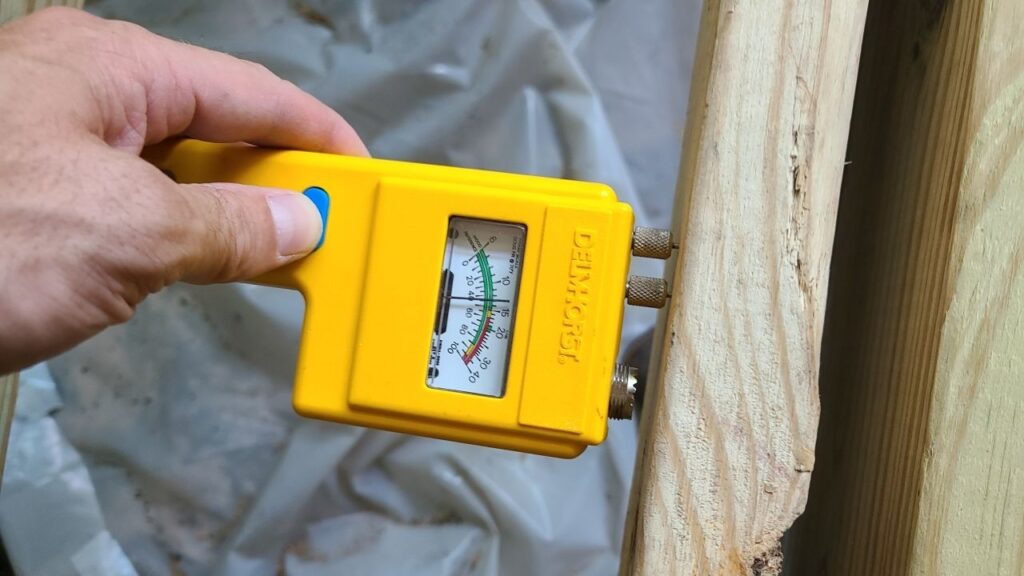
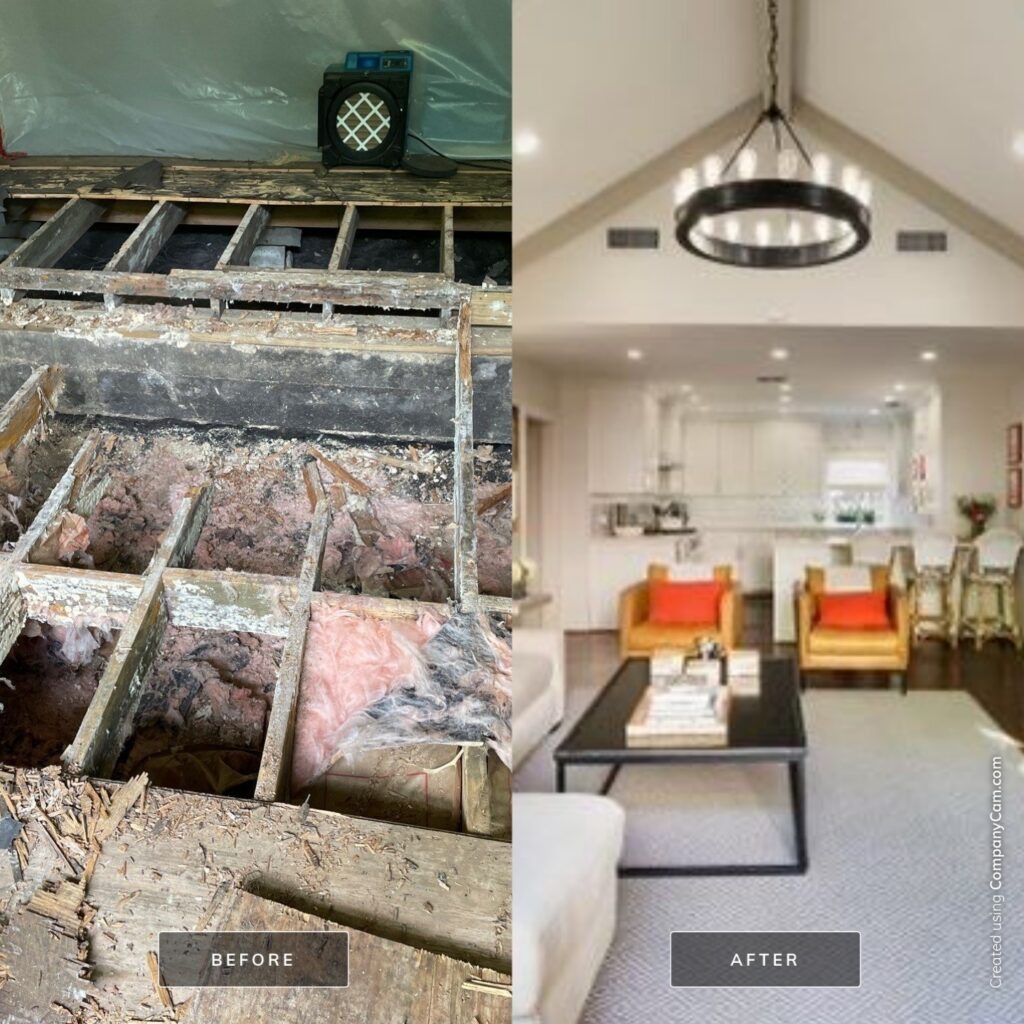
Because mold needs moisture, remediation is not finished until the underlying moisture problem is resolved. Our team used a moisture meter on the exposed framing to confirm the structure had reached normal, dry levels. Sealing a floor back up while the wood is still damp would invite the mold right back. So the meter reading is what gives the green light to rebuild. The before-and-after here shows the payoff: from opened floor and exposed joists to a fully restored living area.
Result and next step
This mold remediation in Dallas, TX left a full record: the subfloor removal, the treatment of the exposed framing, the containment, the moisture verification, and the restored interior of this Dallas home. If you have found mold, especially near flooring or in a room that has had water, the right next step is an assessment. That assessment determines how far the mold has reached into the structure, so the remediation treats the source rather than the surface.
Guidance for property owners in Dallas and North Texas
Take mold near flooring seriously. Soft or discolored flooring can mean trouble. A musty smell that returns after cleaning can mean trouble too. Visible growth at the base of walls can also mean the problem has reached the subfloor or framing. Surface cleaning will not resolve structural mold. Disturbing it without containment can spread it through the home. A professional mold assessment is the right way to find out how deep the problem goes before deciding how to treat it.
Related guidance
Learn more about our mold remediation service, or get help now if you have found mold in your home.
More Rainy Day projects: Commercial Mold Remediation in Commerce, TX.
“⭐⭐⭐⭐⭐ An incredible act of service! I don’t usually take the time to write reviews, but this is one I feel strongly about sharing. My family recently went through a very difficult season, and we found ourselves dealing with a serious mold issue in our home during a time when we were already struggling financially. It was an overwhelming situation and we honestly didn’t know what we were going to do. Through a friend, we were connected with Rainy Day Roofing and Restoration, and what they did for our family meant more than we can properly put into words. They stepped in during a time of real need and chose to help us when they absolutely didn’t have to. Their willingness to work with us and show genuine compassion made it possible for us to take care of a major problem in our home that otherwise would have been out of reach for us. Not only did they help us when we needed it most, but the work they did was professional, thorough, and high quality. Throughout the entire process they treated us with kindness, respect, and understanding. Businesses that operate with this level of integrity and heart are rare. Rainy Day Roofing and Restoration didn’t just provide a service — they truly helped our family during a very hard time. If you’re looking for a company you can trust that stands behind their work and genuinely cares about people, I highly recommend them. We will always be grateful for what they did for us. Thank you again. 🙏”