Water extraction in Oak Point, TX became urgent the moment a toilet leak flooded a room faster than towels could keep up. Standing water on the floor is the first priority, not drywall or cabinets, because it soaks deeper into subfloor and padding with every passing minute. That’s exactly what this Oak Point call was about. Our team handled the emergency portion of the job: we extracted standing water and removed wet carpet and pad. The homeowner chose to handle the drying phase on their own, so we placed no drying equipment and removed no drywall or cabinetry. This report walks through what we found, what we did, and why the steps after extraction matter for anyone in the same situation.
What we found in Oak Point
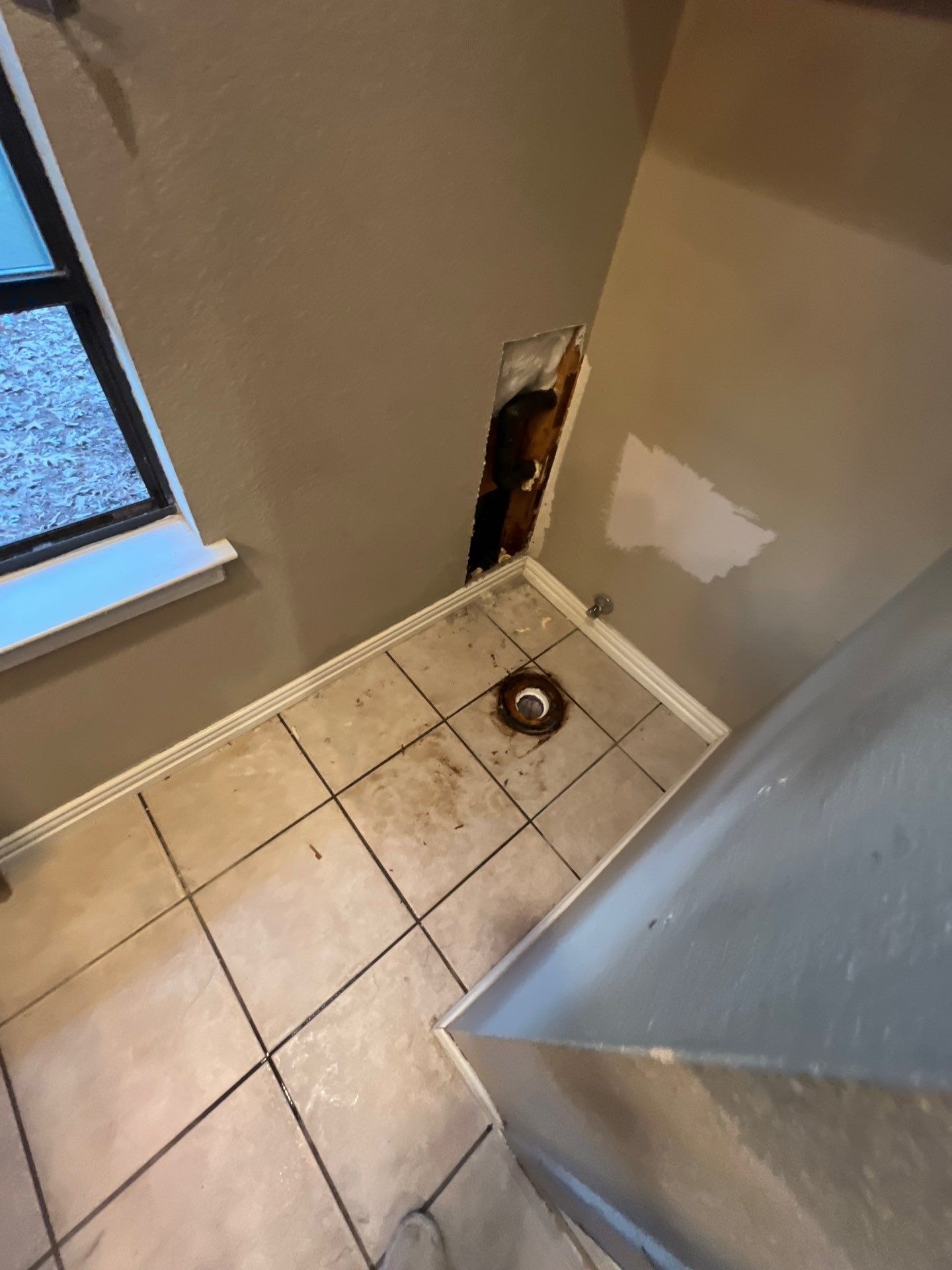
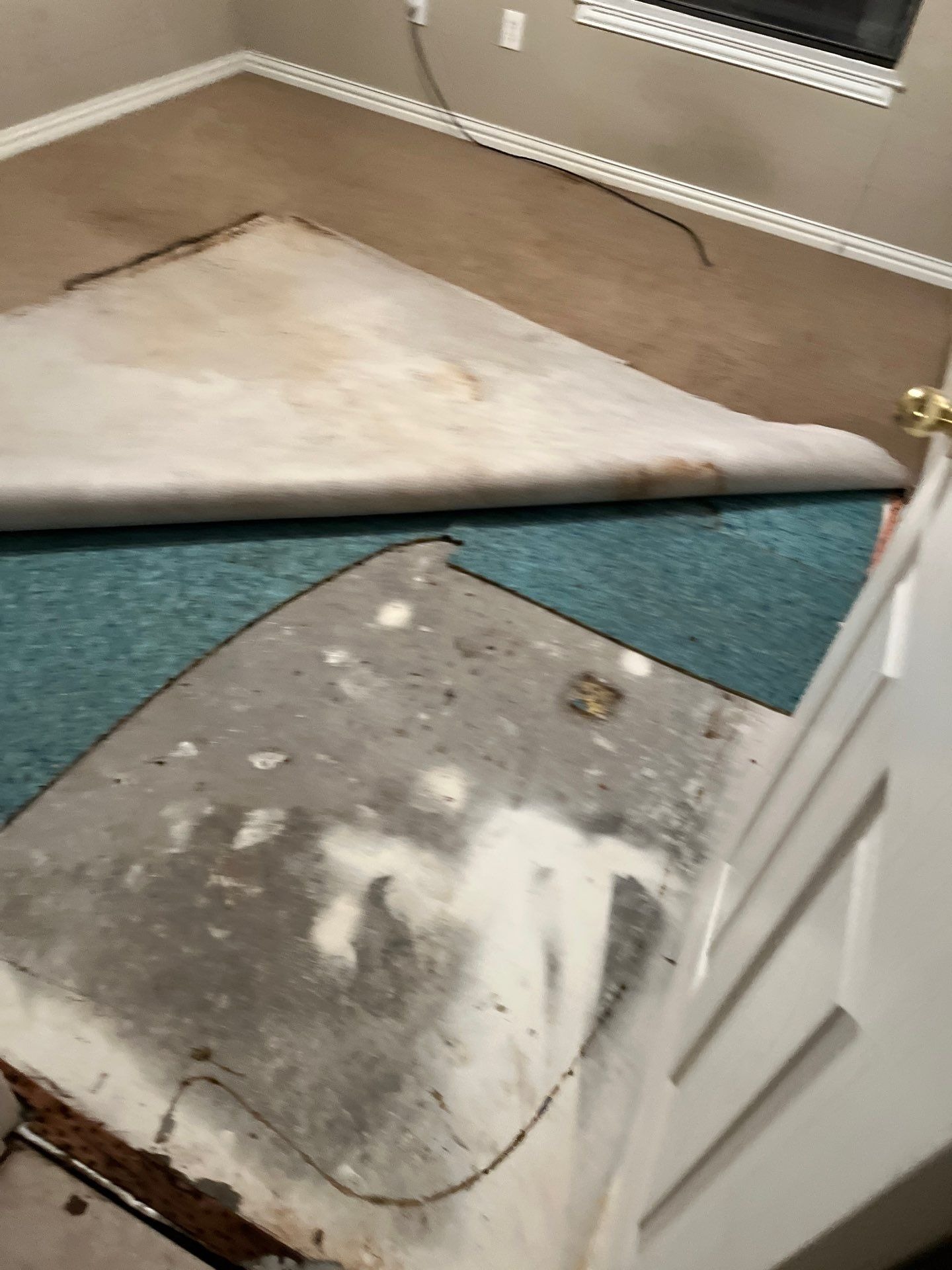
On arrival, we measured elevated moisture readings across the affected flooring. We confirmed standing water in the room where the toilet had leaked. The subfloor beneath the wet carpet also read wet. We documented the cause as a toilet leak. The water had sat long enough to fully saturate the carpet and pad in the area.
Rainy Day’s role
As a family-owned company working in North Texas since 1999, and IICRC-certified, we often get called for exactly this kind of fast-moving situation. A fixture failure puts standing water on the floor and needs immediate extraction before it spreads further or soaks into more material. Licensed under RCO1416, our role here was the emergency response piece. We worked to stop the water from sitting any longer, remove what was already too wet to save, and give the homeowner a clear picture of what we measured so they could decide how to proceed.
The water extraction in Oak Point, step by step
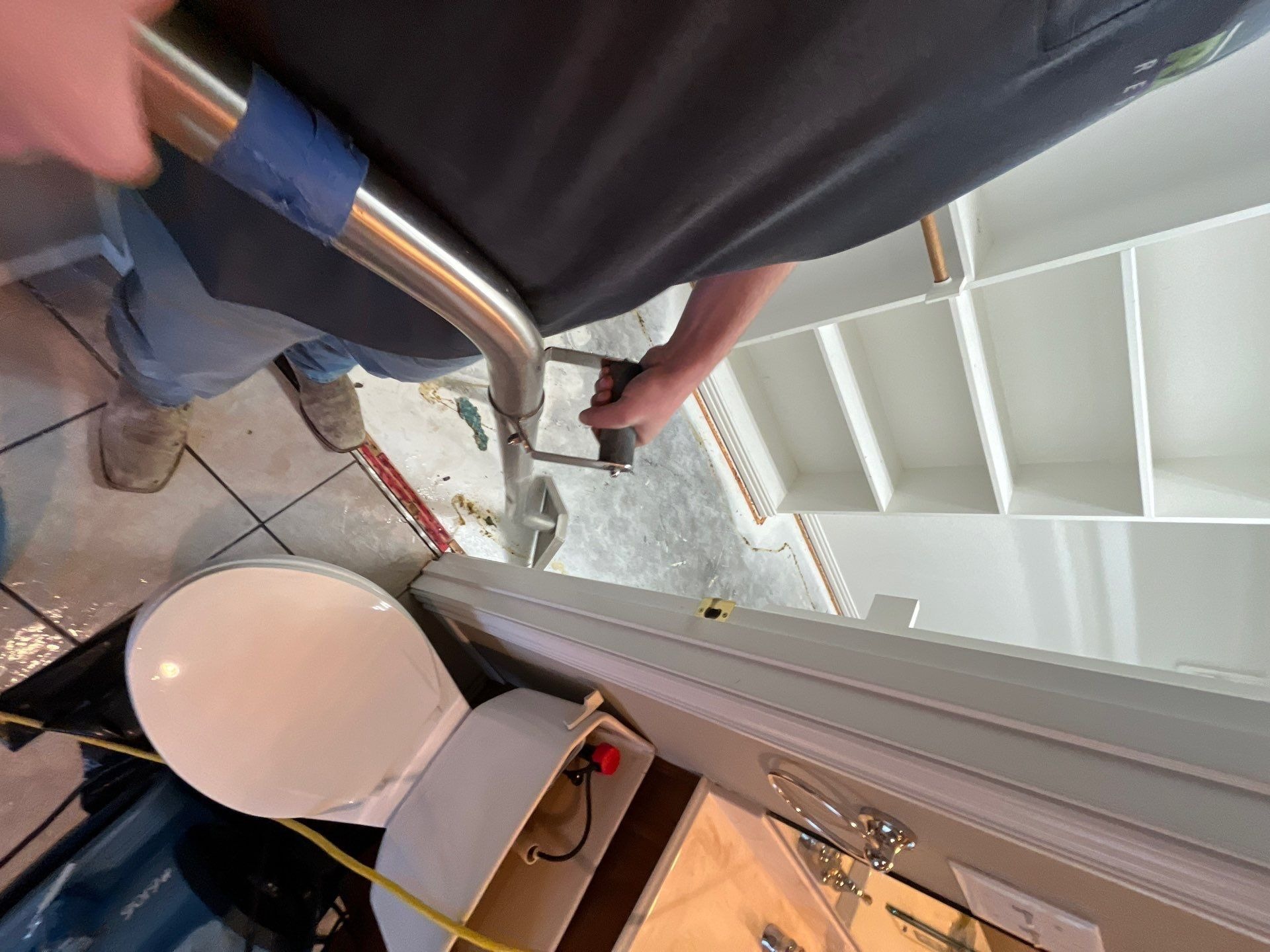
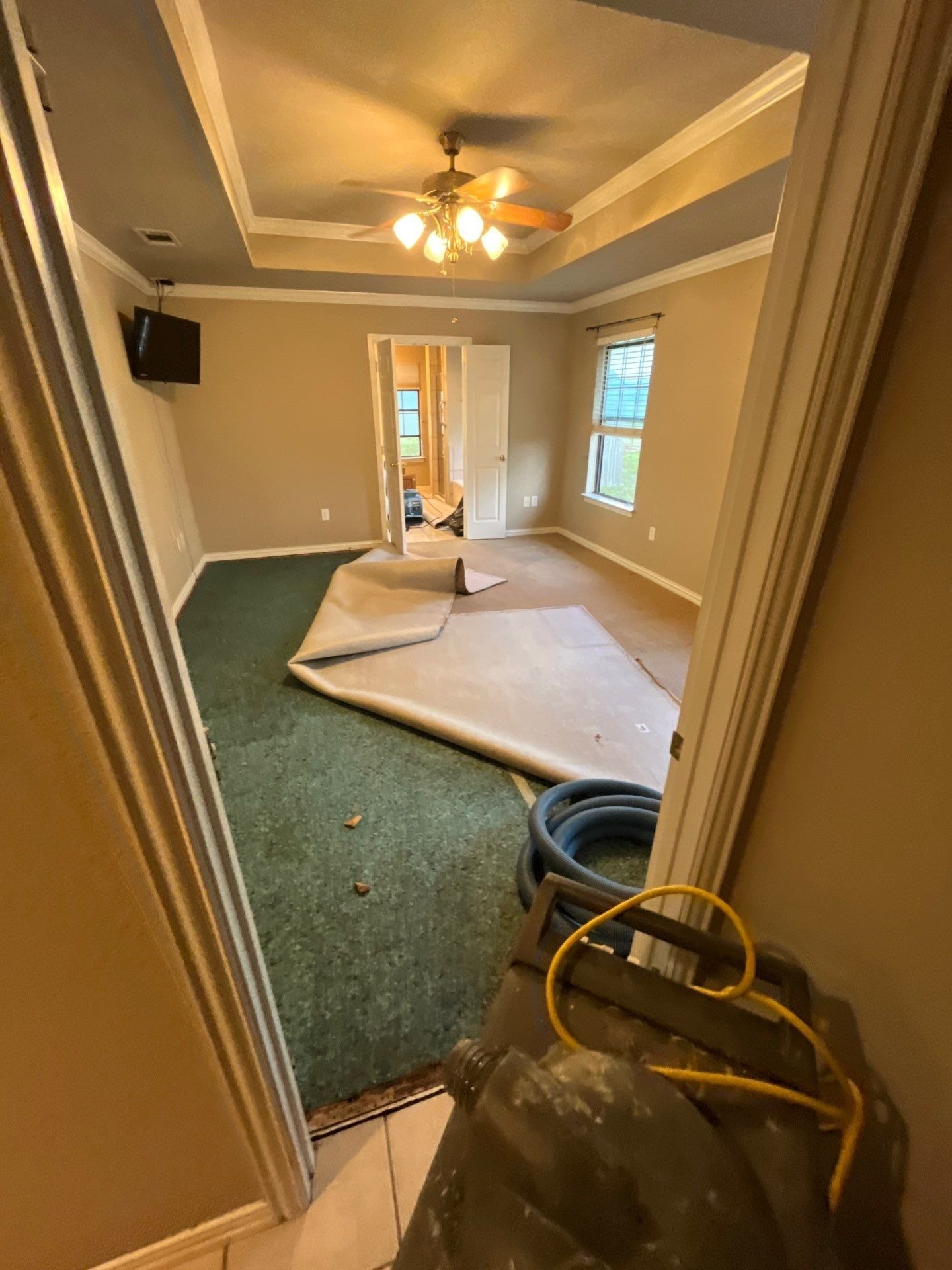
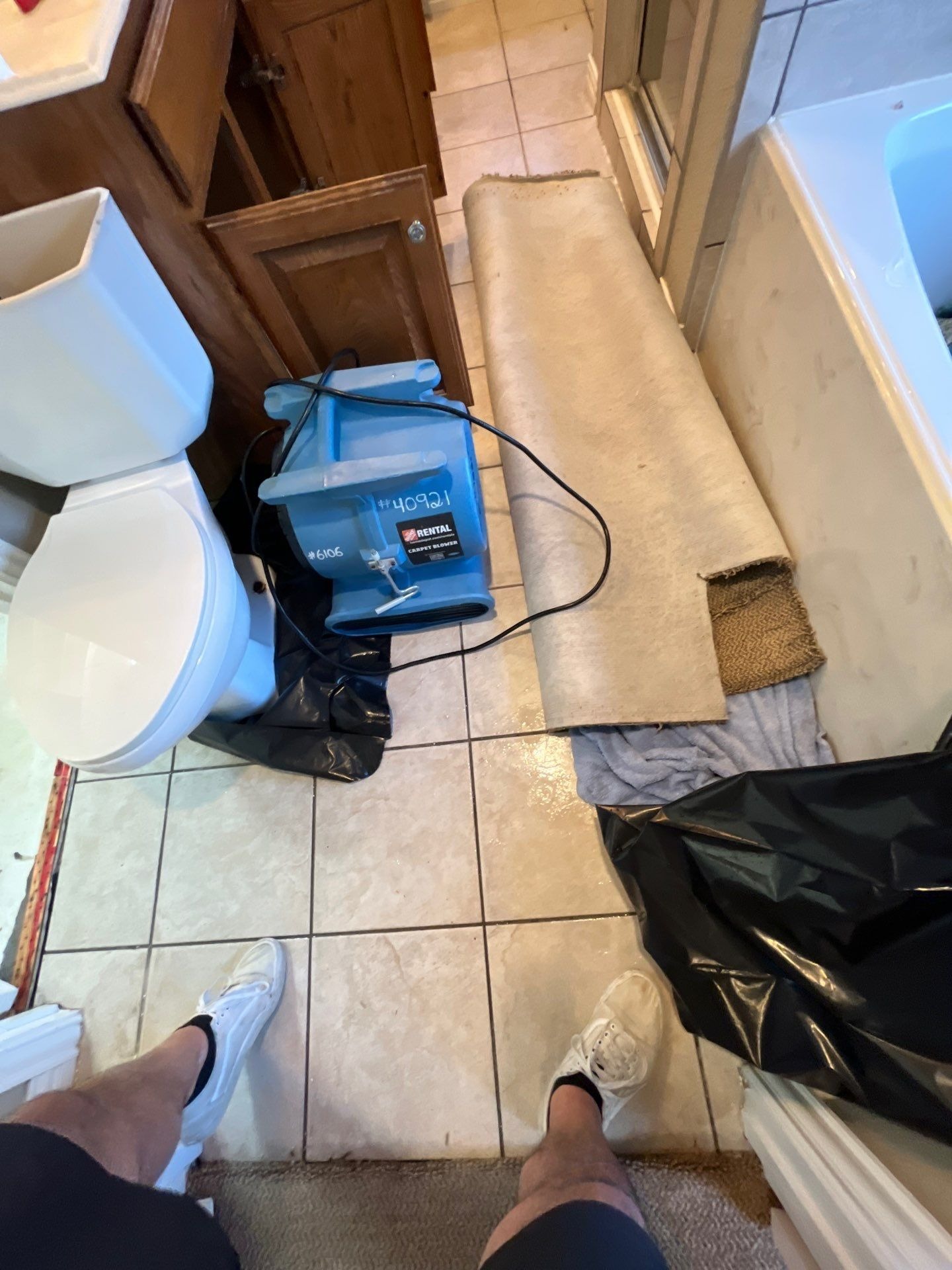
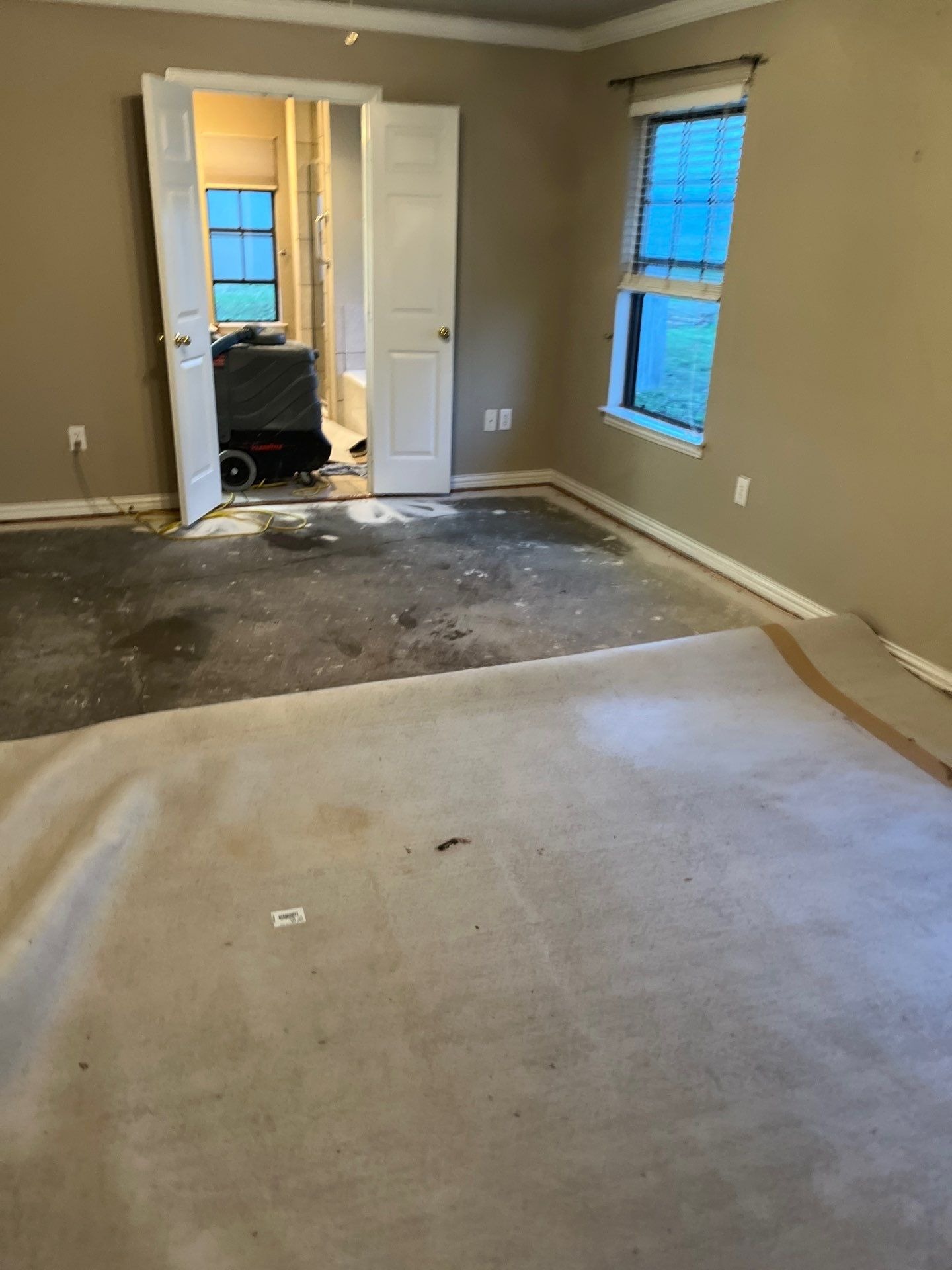
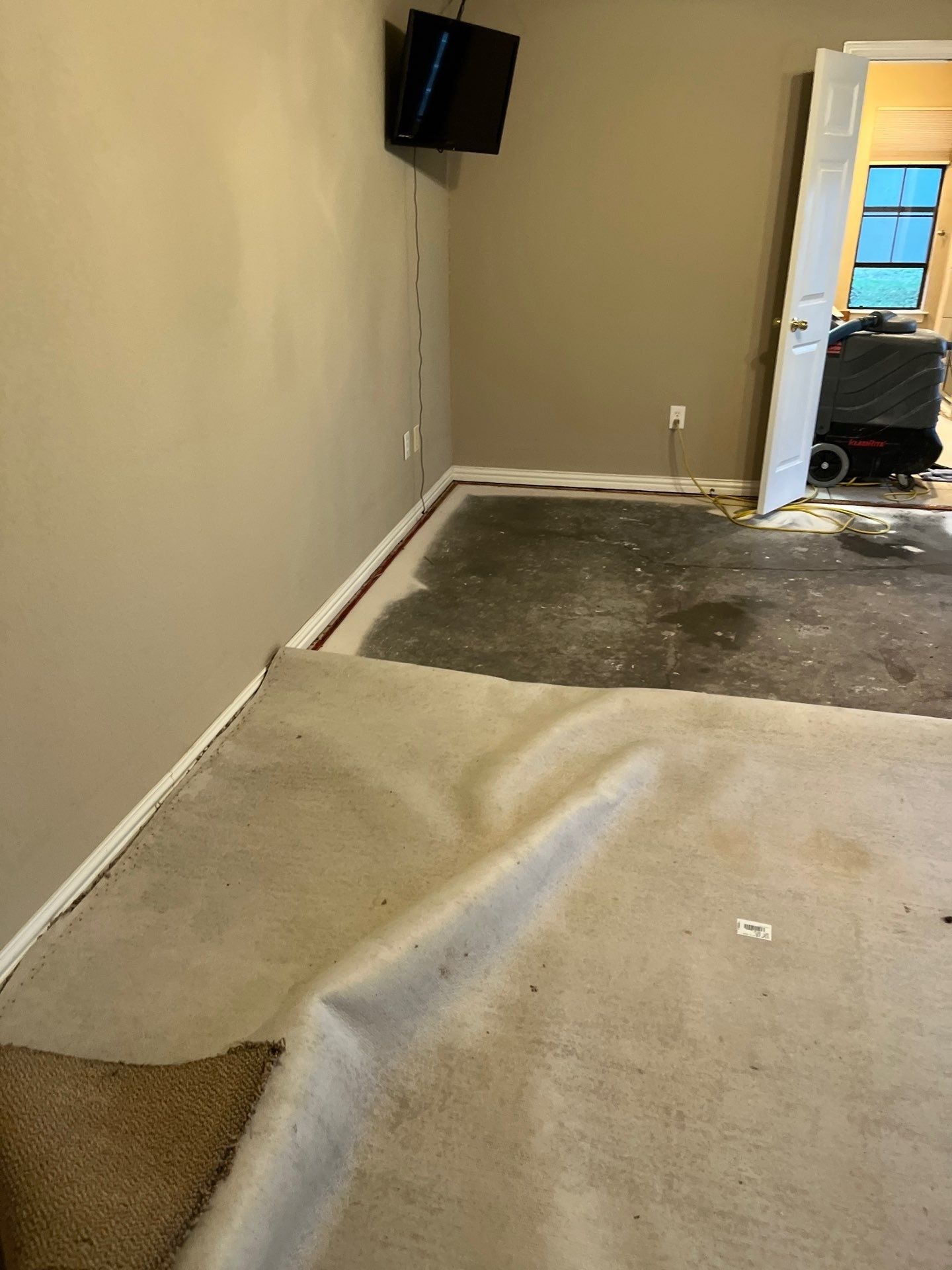
We extracted the standing water from the affected area and performed a flood cut to remove the wet carpet and pad. We did not remove drywall or cabinets, and we did not set up drying equipment – the homeowner made the decision to dry the space out on their own. We treated this as a quick emergency job focused solely on water removal and disposal of saturated flooring materials.
What the photos show
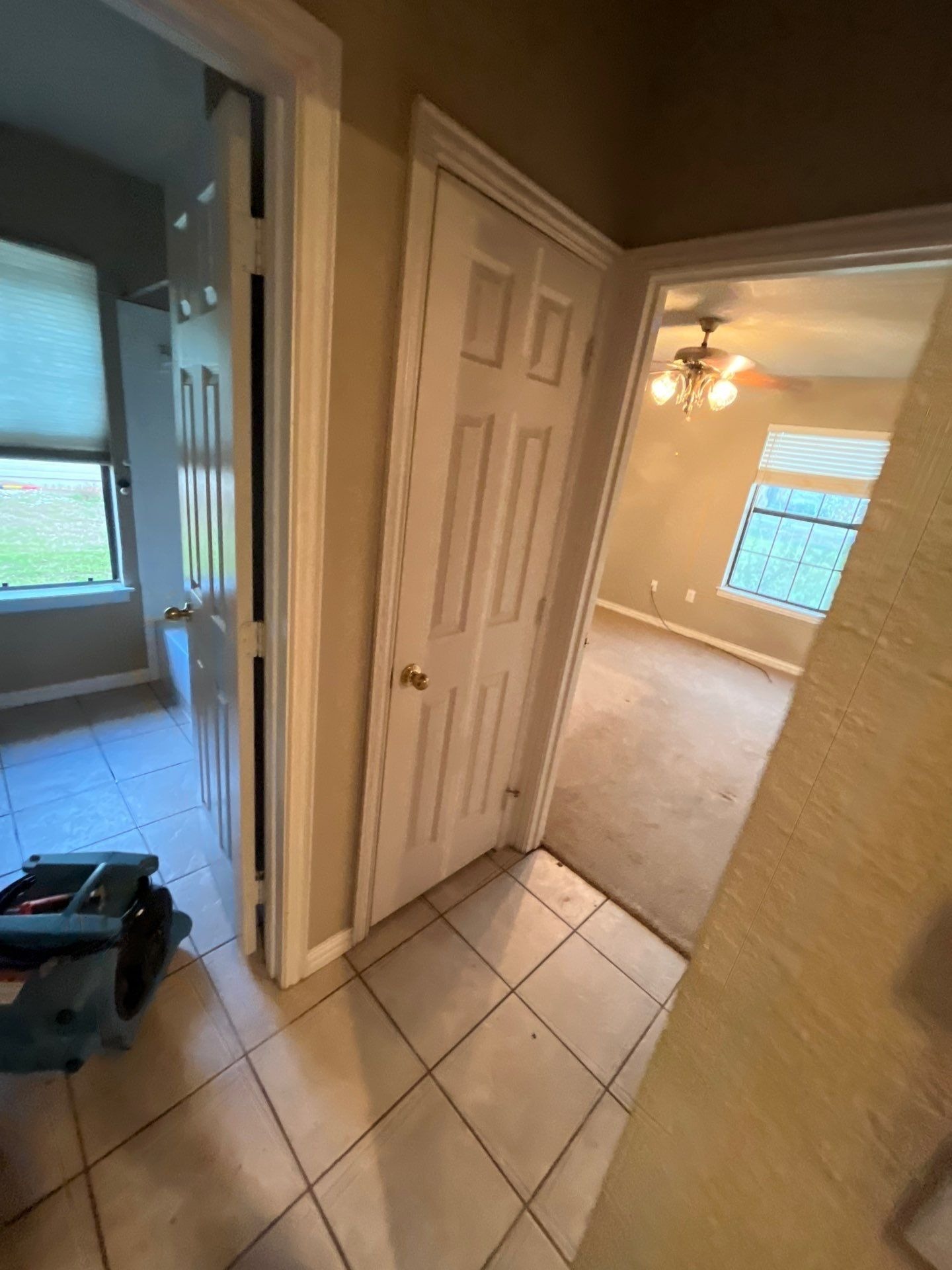
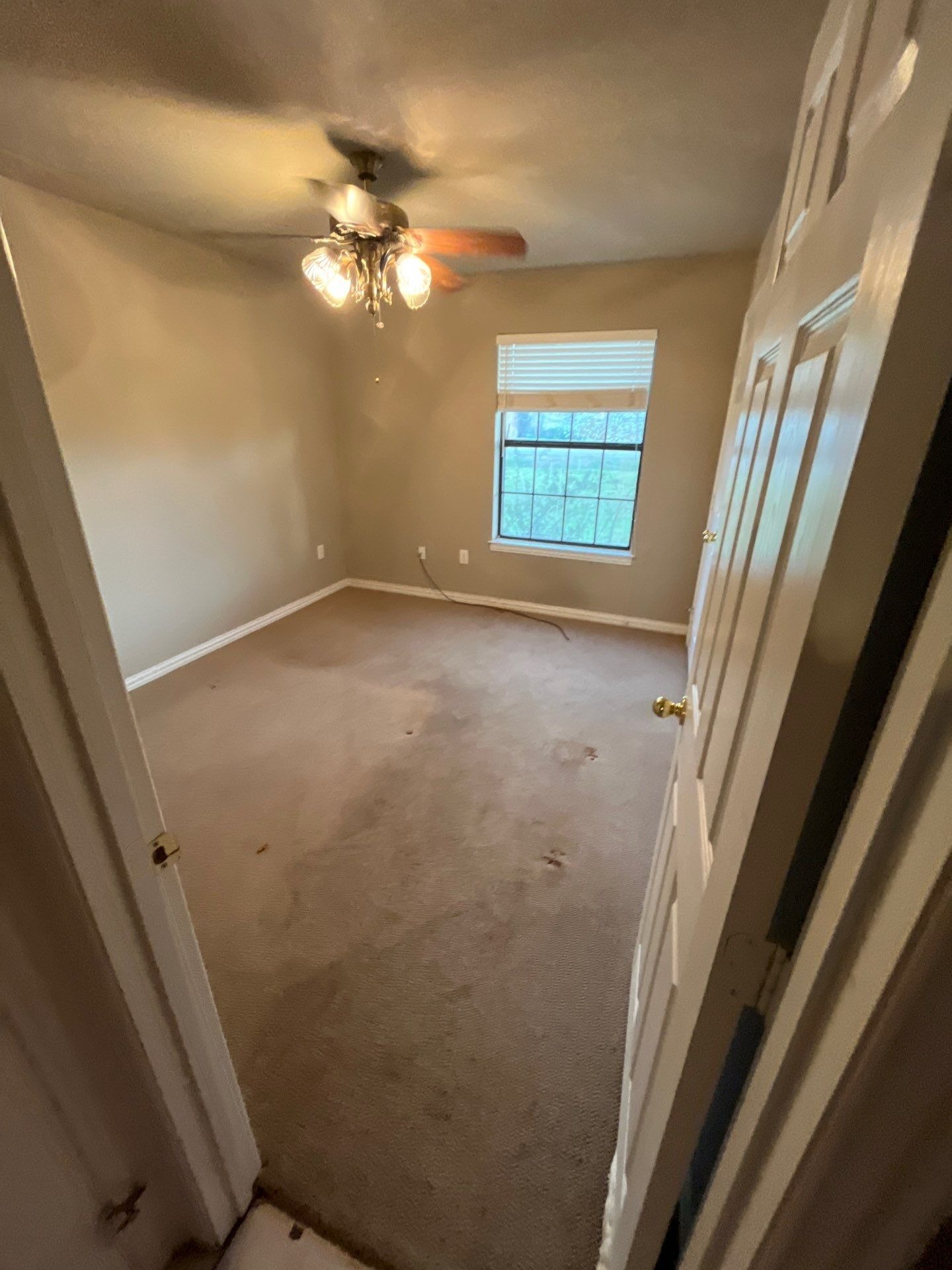
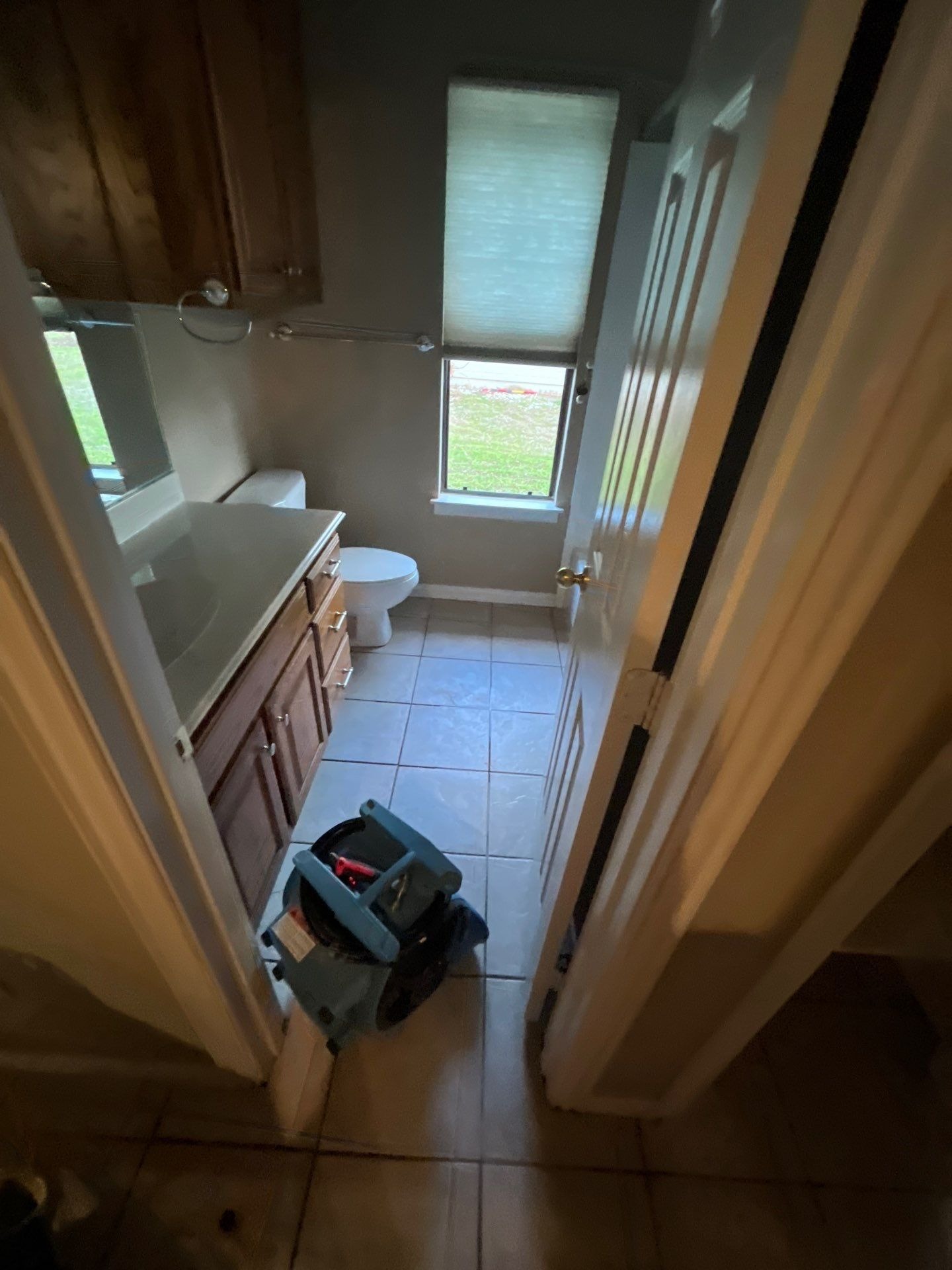
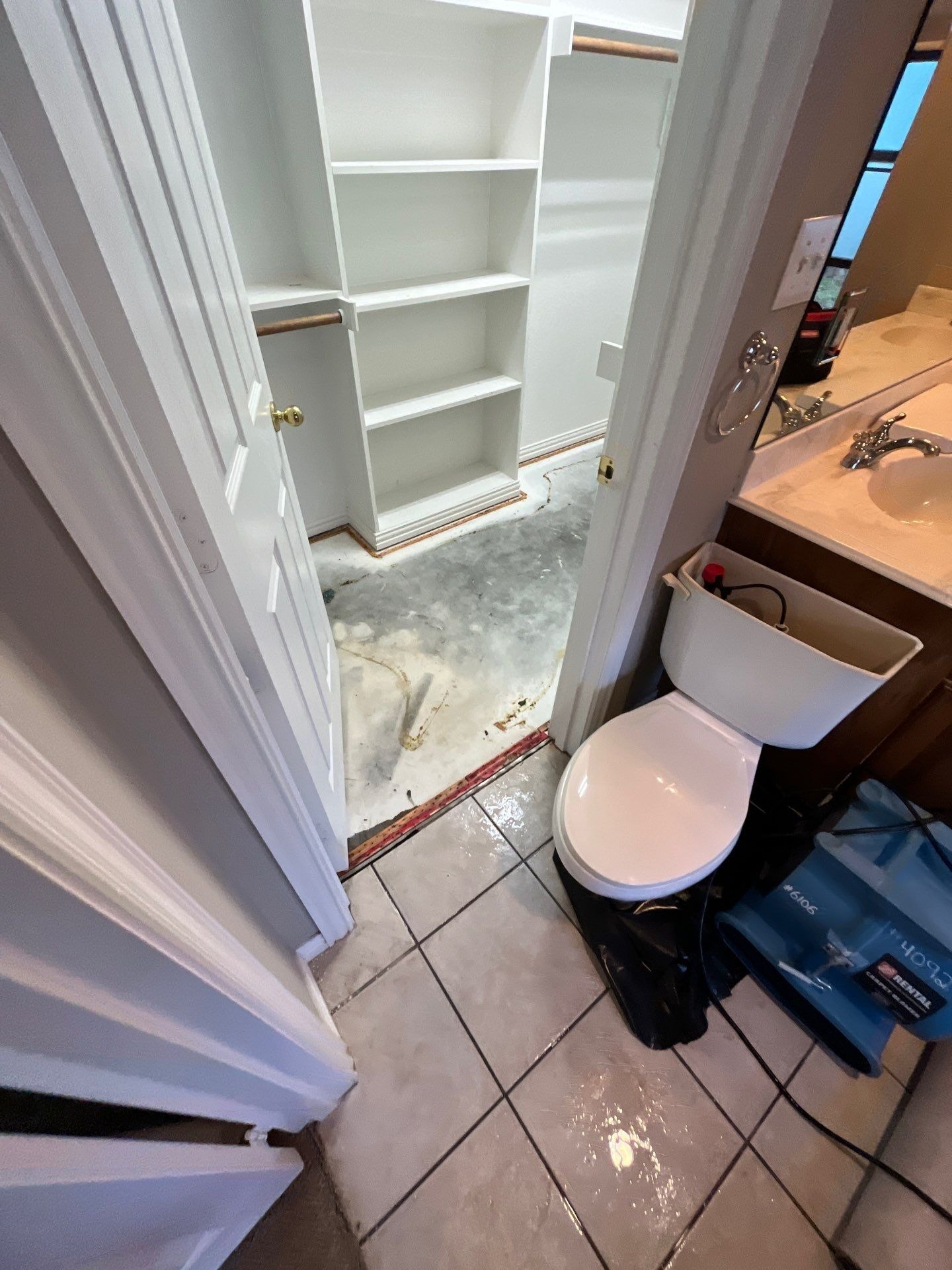
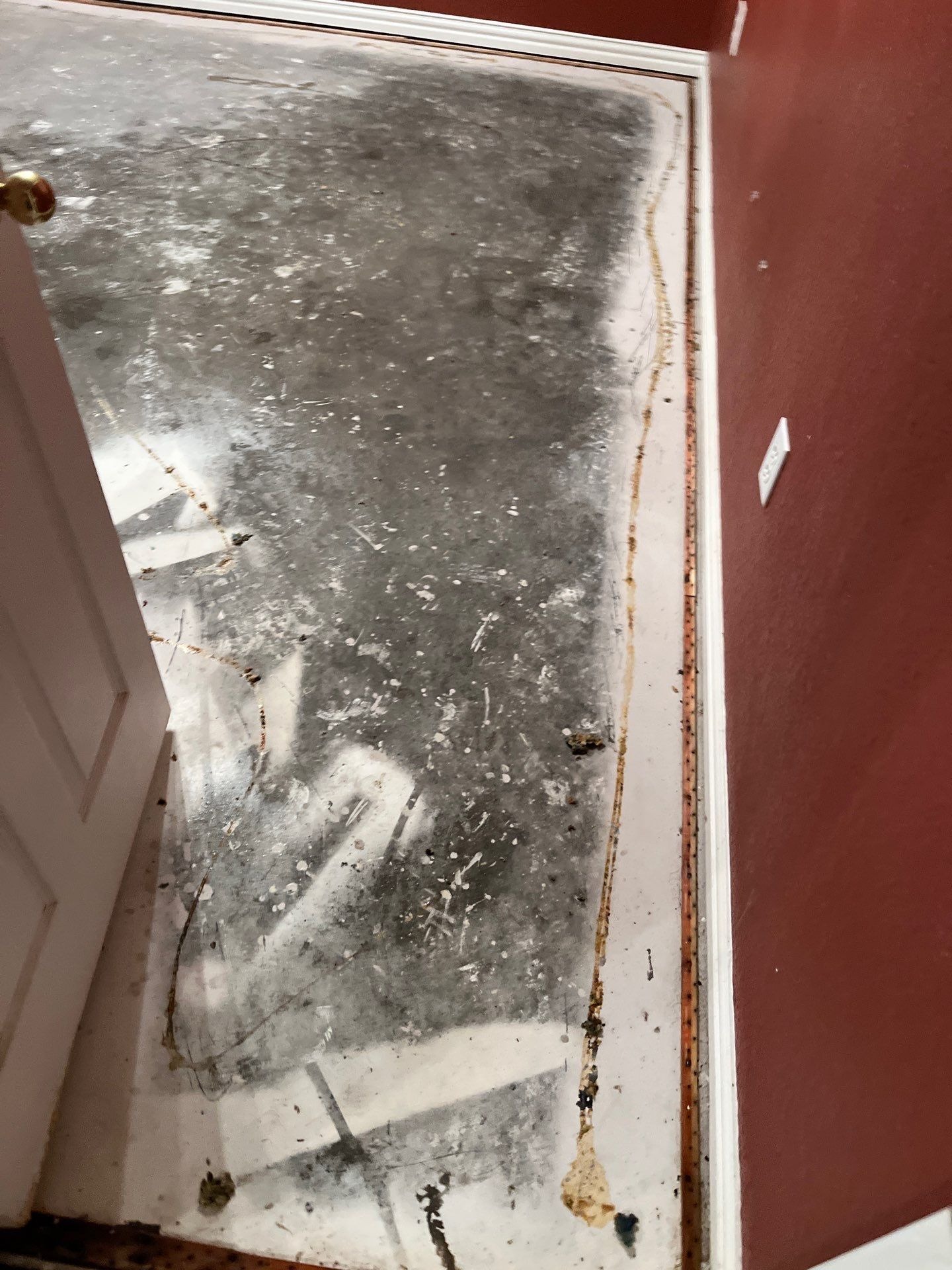
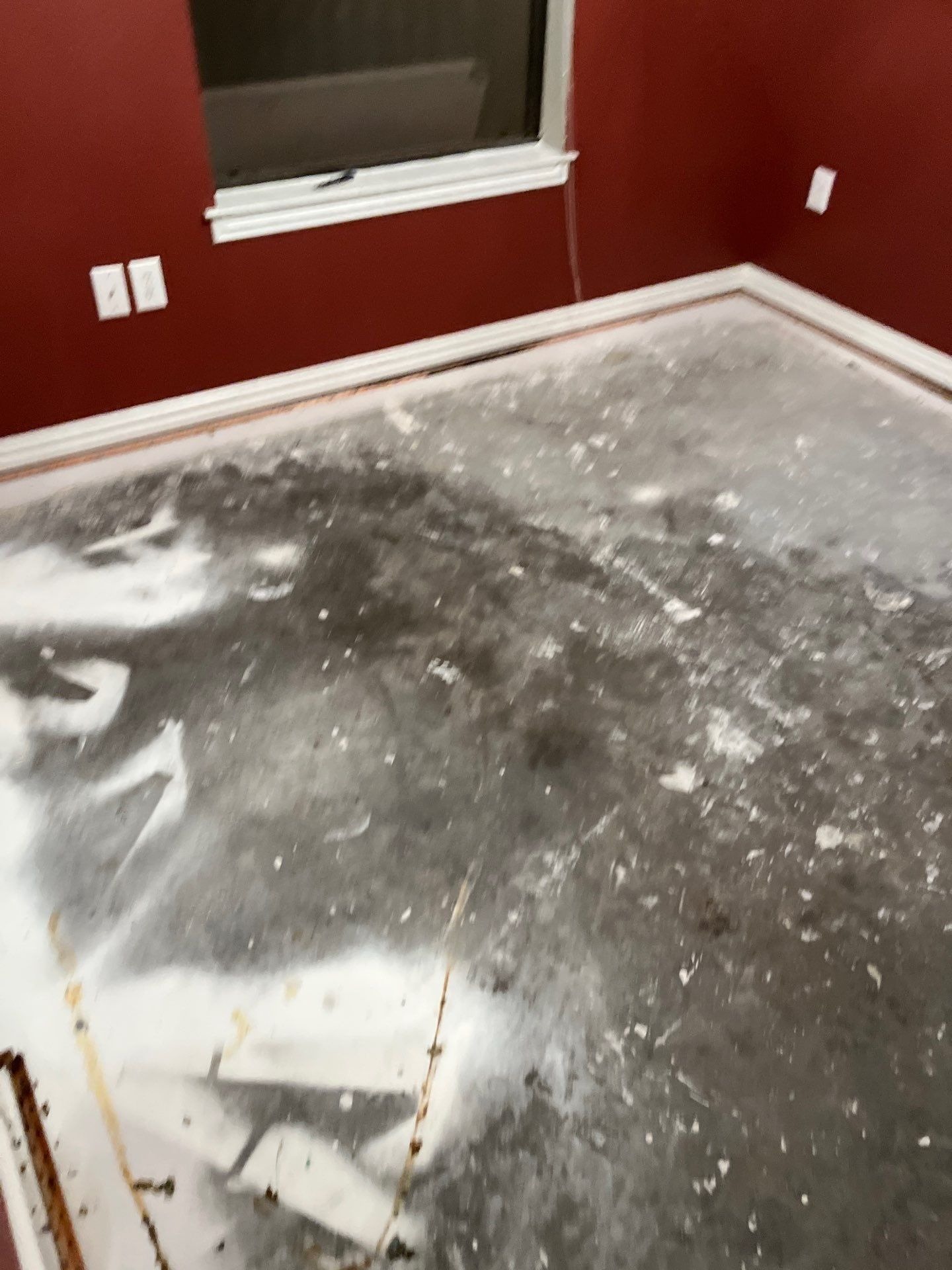
The photo set documents the standing water at the time of arrival, the condition of the wet carpet and pad before removal, and the exposed subfloor once the flood cut was completed. The documentation also reflects moisture readings taken during the visit, giving a record of how far the water had traveled into the flooring materials.
Why toilet leak water damage is worth taking seriously
Toilet leaks can release water that carries contaminants. Even clean-looking water left standing on a floor will wick into carpet pad, subfloor, and baseboards within hours. Once materials become saturated, they can hold moisture long after the surface looks dry. That’s why we rely on moisture readings, not visual inspection alone, to confirm what’s actually wet. Leaving saturated carpet and pad in place after a leak like this raises the risk that the subfloor stays damp longer than it should, since carpet pad holds water against the surface underneath it.
Result and next step
Water extraction in Oak Point wrapped up with the standing water gone and the wet carpet and pad removed, exposing the subfloor. We placed no drying equipment, and the homeowner chose to manage the drying process on their own. Anyone in this position should plan to check subfloor moisture levels over the following days, since wood and OSB subfloor can retain moisture well after a room appears dry to the touch.
Guidance for property owners in Oak Point and North Texas
If a fixture leak has put standing water on your floor, extraction should happen as soon as possible. Any carpet or pad that’s been sitting in water usually needs to come out rather than get dried in place. If you decide to handle drying on your own, use a moisture meter on the subfloor over the next several days rather than relying on how the surface feels or looks. Rainy Day Restoration works as one company from first call through rebuild. So if drying doesn’t go as planned or moisture readings stay elevated, the same team that handled the extraction can pick the project back up.
Related guidance
For homeowners dealing with a similar situation, these resources may help: learn more about our water damage services, understand the risks of water in a crawl space if moisture has migrated below the home, or get help if you’re currently dealing with standing water from a fixture leak.
Frequently asked questions
Why didn’t Rainy Day dry out the room after removing the carpet?
The homeowner chose to handle the drying process themselves after the emergency extraction and carpet removal wrapped up. Our visit covered the emergency portion of the job. We extracted standing water and removed saturated carpet and pad, but we did not perform equipment-based drying.
How do you know the subfloor is dry if no equipment was set up?
We don’t make that determination without follow-up readings. Moisture levels in subfloor can stay elevated for days after a leak. So anyone drying a space on their own should recheck with a moisture meter rather than assume it’s dry once it looks dry.
Why was the carpet and pad removed instead of dried in place?
The carpet and pad held standing water from the toilet leak. Once padding holds that much water against the subfloor, drying it in place works far less effectively than removing it and addressing the subfloor directly.
What should I do about water extraction in Oak Point if my toilet leak looks similar to this one?
Shut off the water source if possible, then remove standing water quickly. Have moisture levels checked on the flooring and subfloor. If materials are saturated, plan on removal rather than drying in place, and monitor the area closely in the days that follow.