
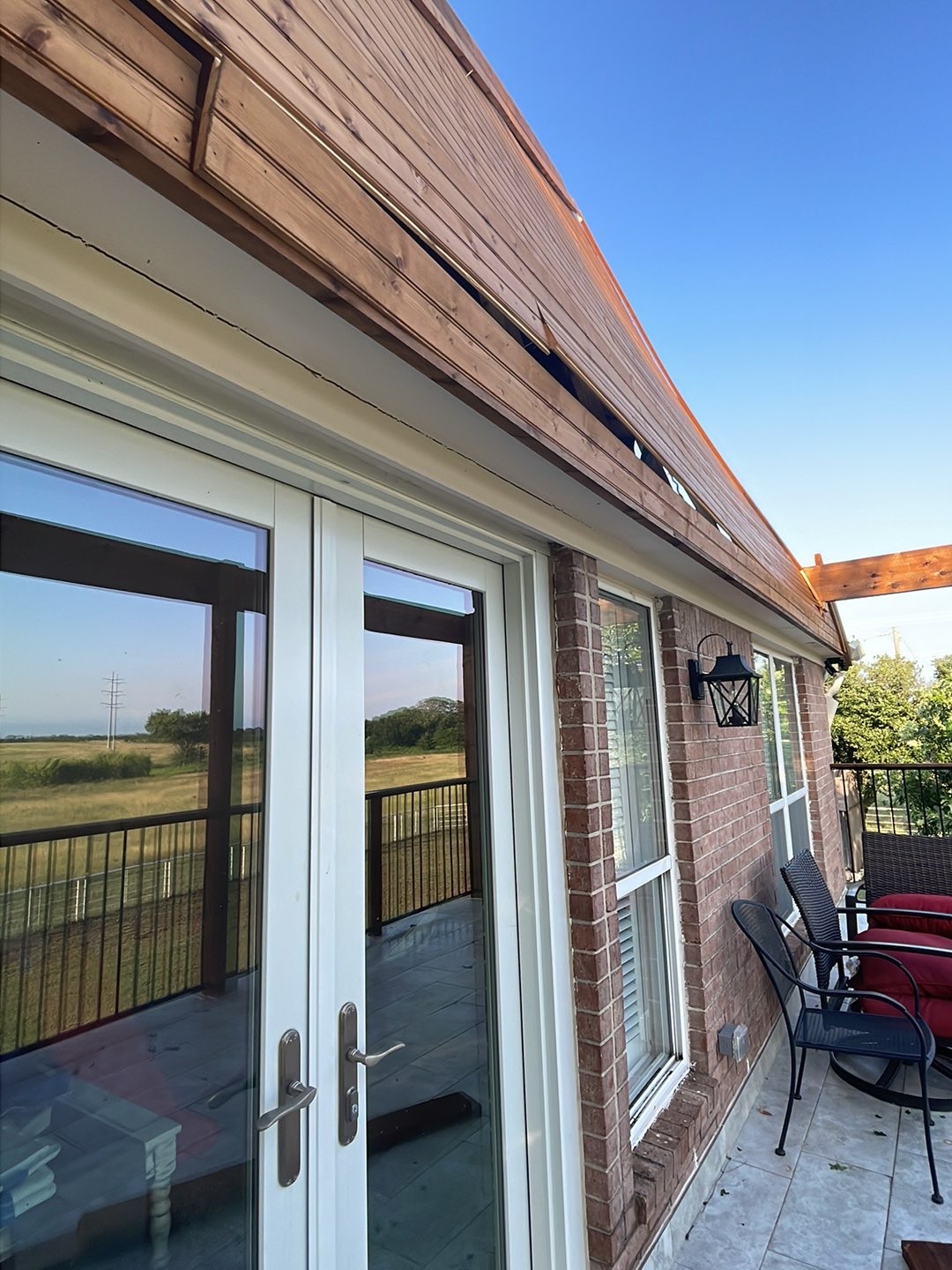
Water damage restoration in McKinney, TX does not always start in the living room. Garages, eaves, and the edges of a house are common places for water to get in. People do not spend much time there, so they miss the signs. This McKinney project followed a water problem from the exterior eave into the garage. From there, our crew tracked it back out to a finished repair. The job shows two things a good restoration company does that a quick cleanup crew skips: it protects your belongings while it works, and it does not call the job done until the space goes back together.
Where the water got in
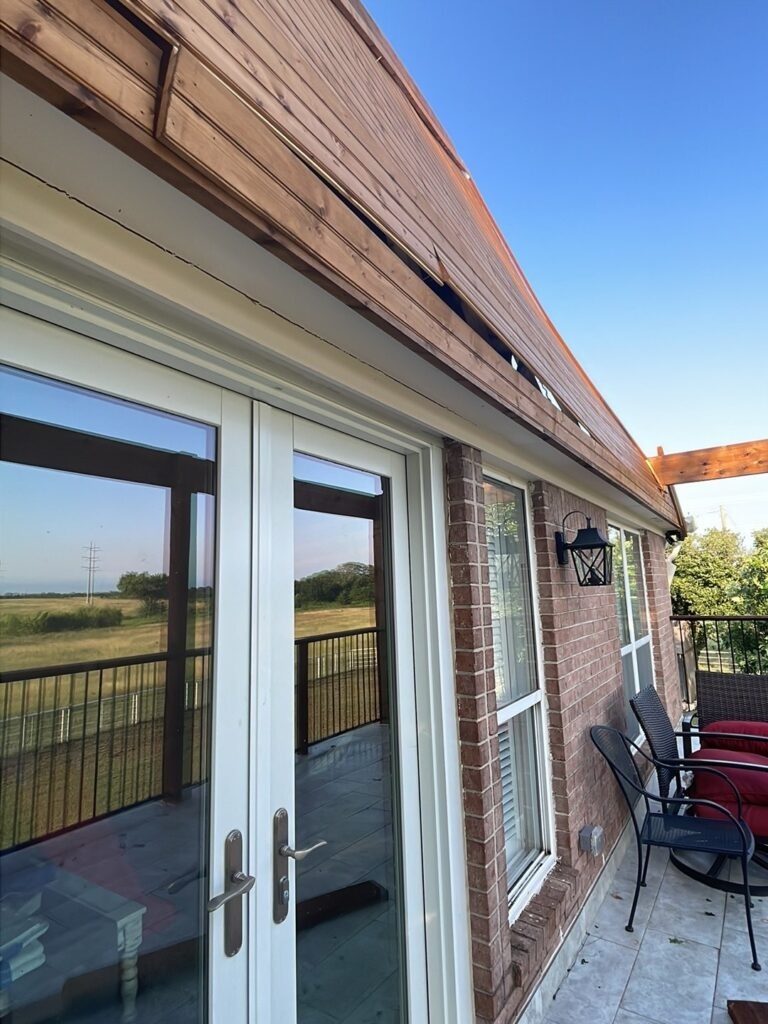
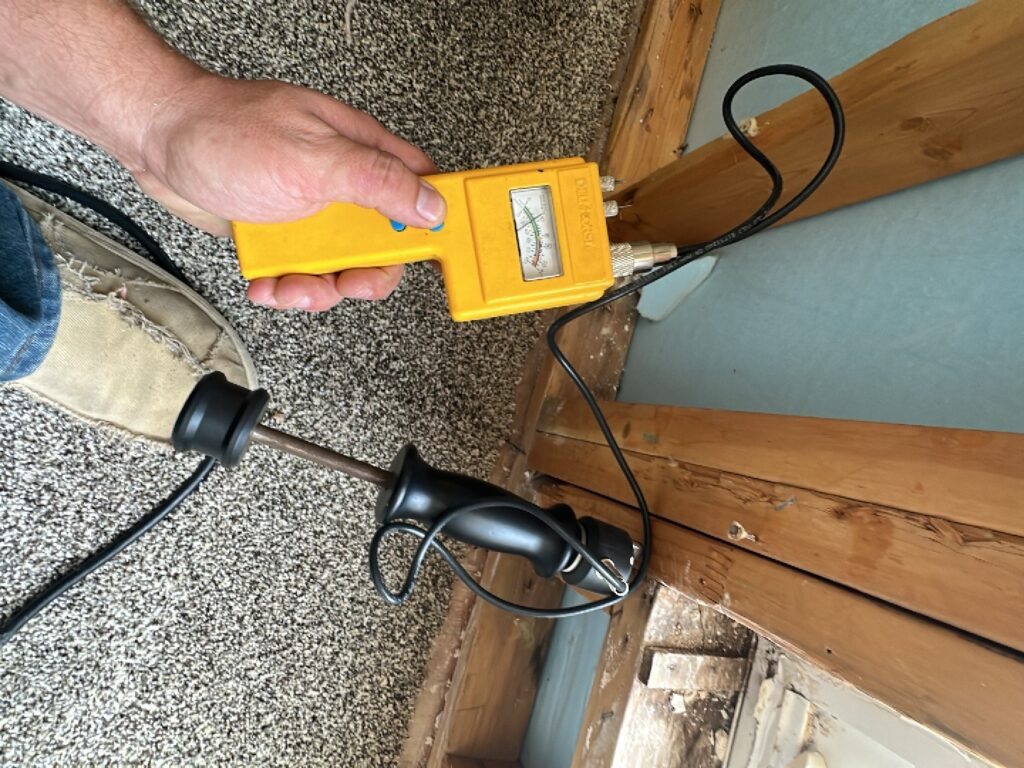
Our inspection started outside, at the brick exterior and eave. We checked the areas where water tends to enter a home before it shows up inside. From there the problem led into the garage. We used a moisture meter to test the exposed wall framing and confirm where water had actually traveled. Checking the outside and the inside together matters. Drying the garage without understanding how the water got there would just set up the same problem to happen again.
Drying without damaging your belongings
A garage usually holds the things a family stores rather than displays, and those contents are easy to ruin during a careless dry-out. Here, our crew covered and protected belongings before the air movers and dehumidifier went to work. That let the drying equipment run hard against the wet framing and ceiling without exposing stored items to the process. Protecting contents is not an afterthought. It is part of doing the job like the space belongs to someone.
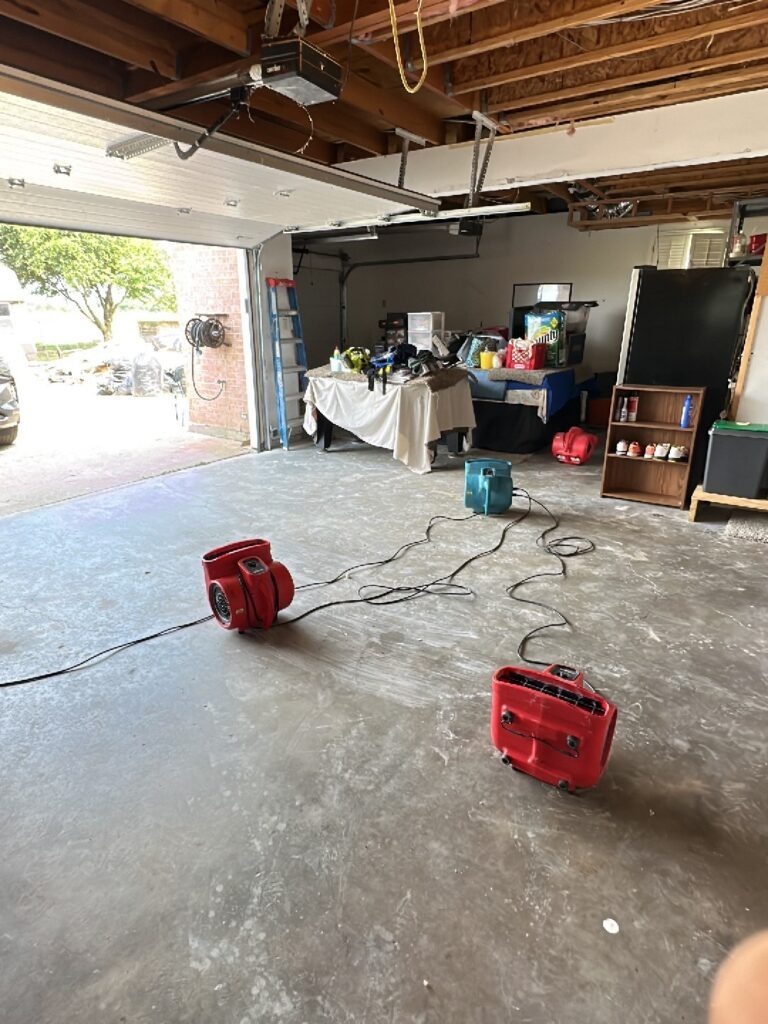
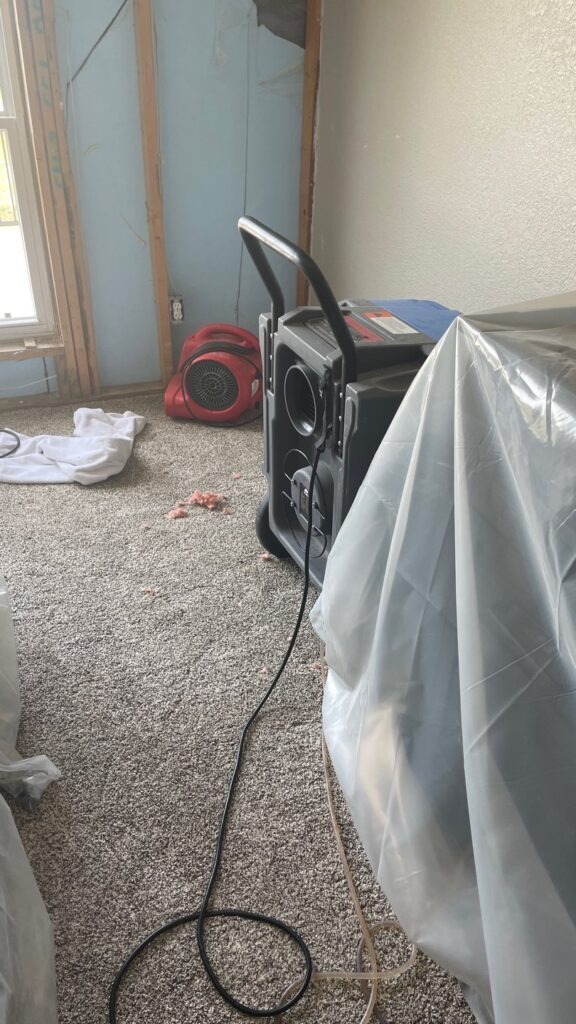
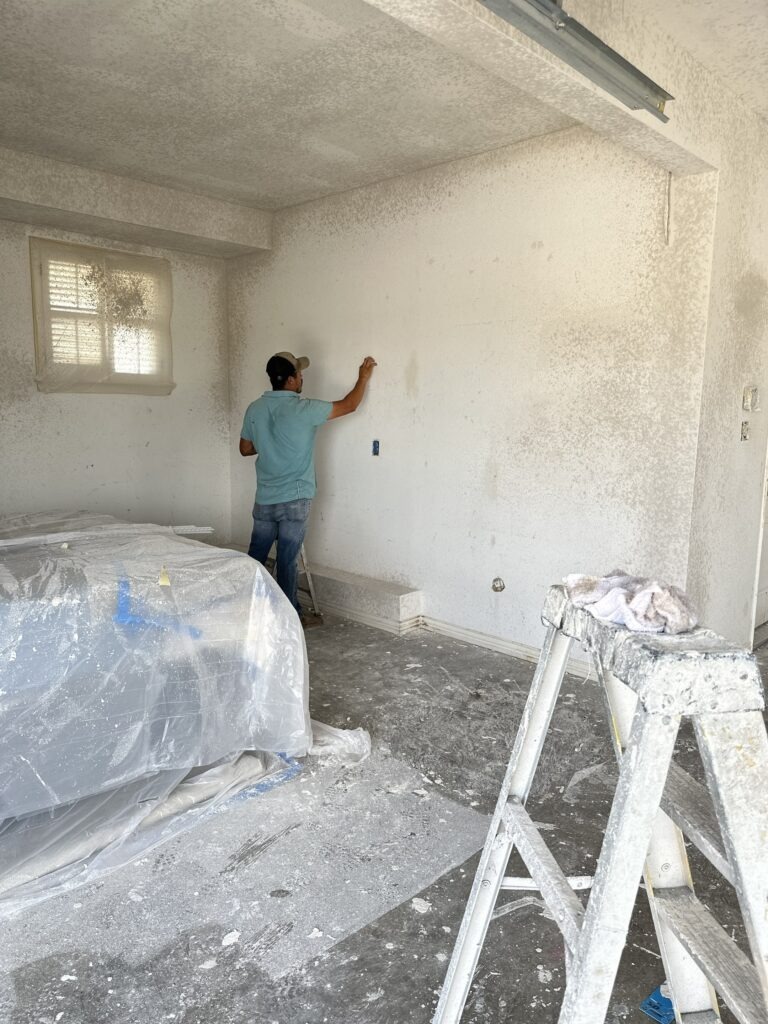
The water damage restoration in McKinney, TX, step by step
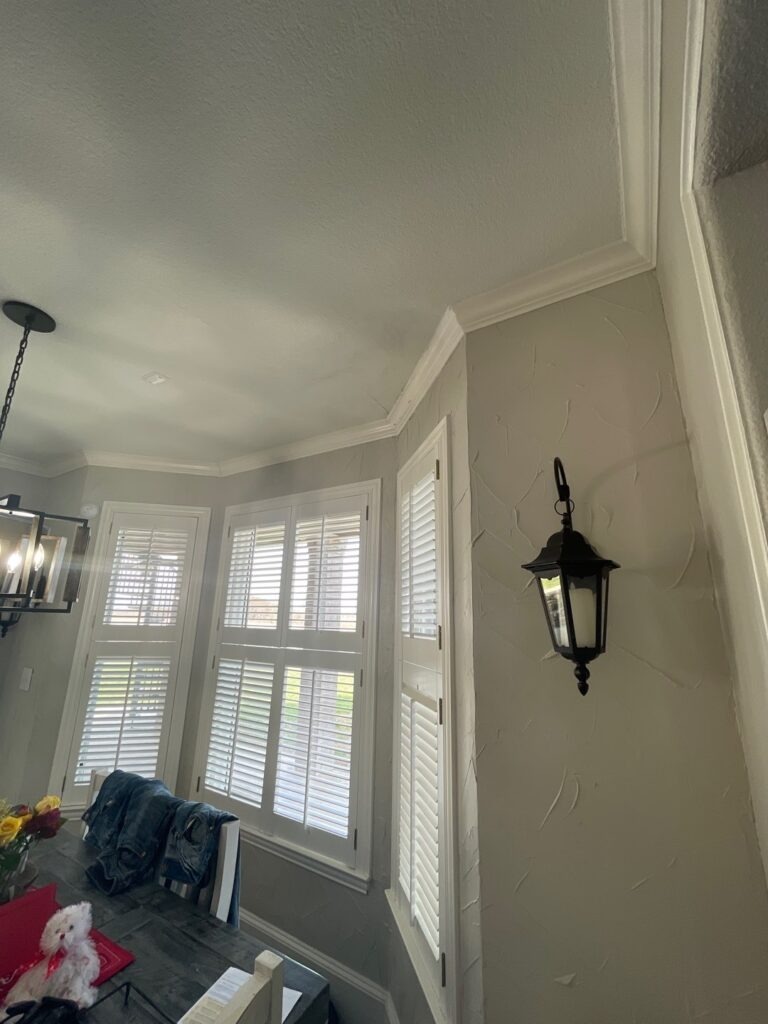
With the framing exposed, air movers and a dehumidifier brought the structure back down to normal moisture levels. But the part that earns trust came after the drying: our crew refinished and painted the repaired interior wall, returning the space to the condition it held before the water arrived. A lot of companies stop when their meters read dry and hand you a list of contractors for the rebuild. Because Rainy Day handles the work from the first call through the rebuild, the same team that found and dried the water also finished the repair.
Result and next step
This water damage restoration in McKinney, TX documents the exterior and garage inspection, the moisture testing, the protected structural drying, and the interior repair and repaint at this home. If water has gotten into a garage or along the edges of your home, the right next step is an inspection. It should check both where the water ended up and where it came in, so the repair fixes the cause and not just the symptom.
Guidance for property owners in McKinney and North Texas
Do not ignore the parts of the house you do not live in. Check garage walls and ceilings for staining or a musty smell after heavy rain. Look at eaves and rooflines for gaps where wind-driven water can enter. Pay attention to anything stored against an exterior wall that feels damp. Catching water at the edges of a home early keeps it from working into the finished, more expensive living space.
Related guidance
Learn more about our water damage restoration service, or get help now to have your property inspected.
More Rainy Day projects: Roof Repair and Water Intrusion Mitigation in Van Alstyne, TX.
“After a nightmare evening of dealing with a major plumbing leak, Rainy Day Restoration came that next morning to the rescue. John, Jeff and their entire team were extremely knowledgeable and answered every question. I highly recommend their services.”