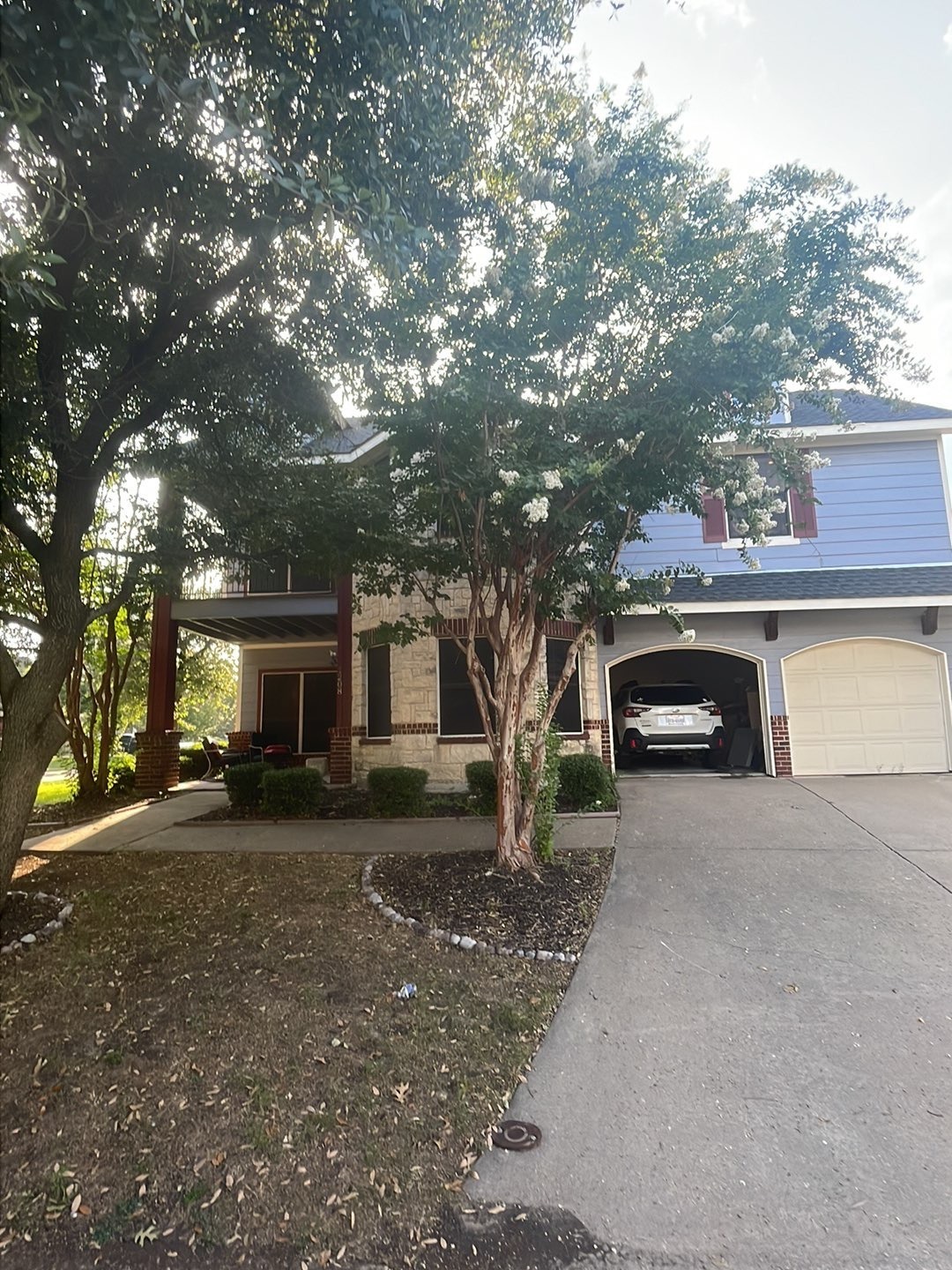
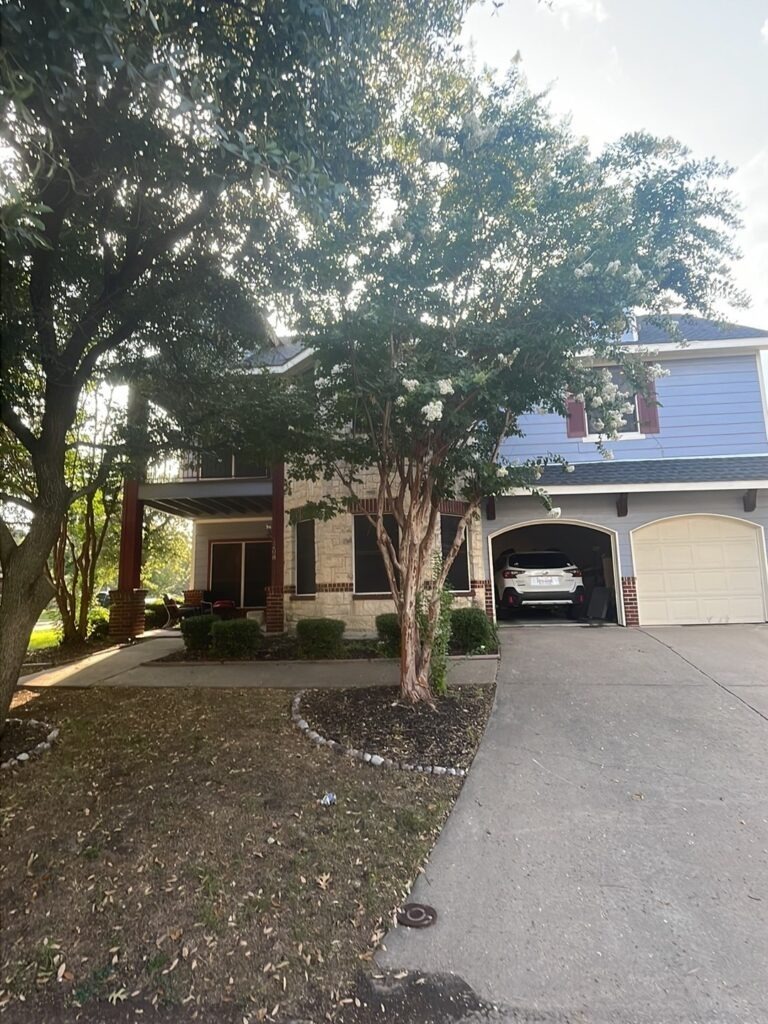
Water damage restoration in McKinney, TX plays out differently when a home sits on a concrete slab. The slab itself holds moisture and releases it slowly. Flooring laid over a wet slab keeps getting damaged until the slab underneath dries out. This McKinney project shows a clear example of slab-related flooring mitigation. It shows why the moisture reading on the concrete, not just the look of the floor, decides when the job is done.
Reading the slab, not just the floor
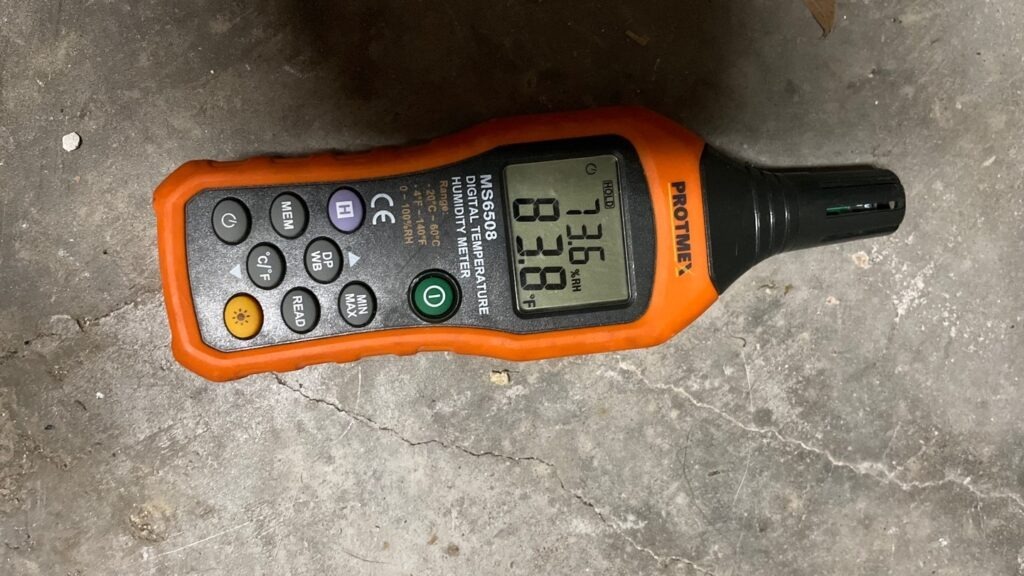
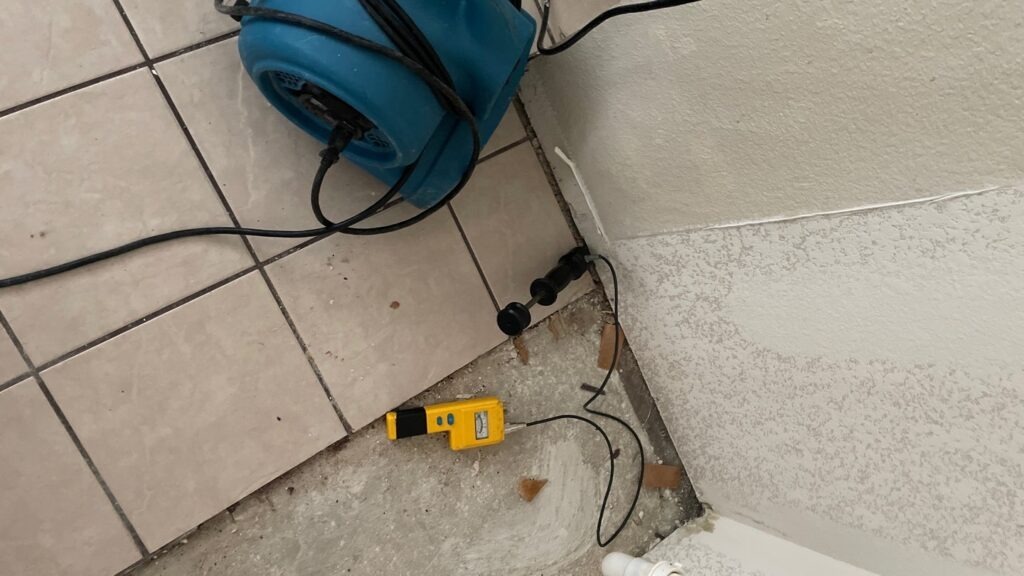
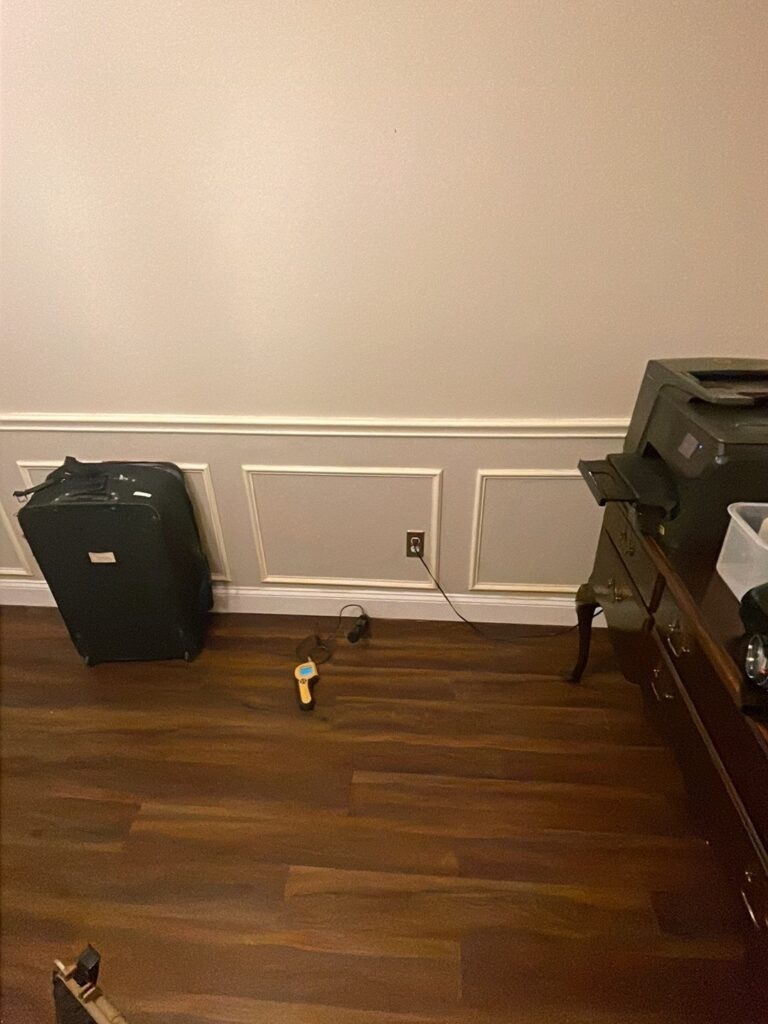
At this McKinney home, our team used a moisture meter directly on the concrete floor to document the slab’s condition. That reading is the key measurement in a slab home. Flooring can feel dry on top while the slab beneath it still holds water. Any new flooring installed over a wet slab faces real risk. Measuring the concrete tells us whether the moisture has actually cleared or whether drying needs to continue.
Drying the flooring in place
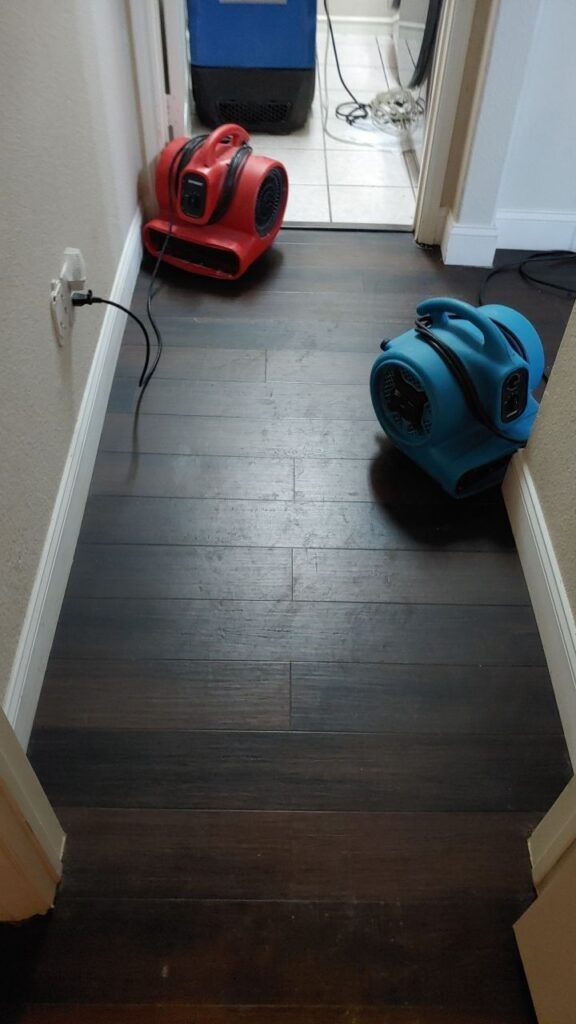
Our crew set up air movers throughout the affected areas, including along the hallway and against the walls, to dry the flooring and the slab. Directing high-velocity air across the floor speeds evaporation from both the flooring surface and the concrete. Metering at the flooring edges tracks the progress. Where flooring like hardwood can be saved, drying it in place this way avoids an unnecessary tear-out, as long as the readings confirm it is coming back to normal.
Letting the numbers decide completion
Measurement drives the whole approach. Drying continues until the slab and flooring reach normal moisture levels, not until they simply look or feel dry. On a slab home this discipline matters even more. Trapped slab moisture closed up under new flooring is a common cause of flooring failures and mold months after the visible water is long gone.
Result and next step
This water damage restoration in McKinney, TX documents the exterior, the moisture readings on the concrete slab, and the flooring drying with air movers at this home. If water has reached the floors of a slab home, the right next step is a mitigation that meters the slab itself and dries it fully. Any flooring that gets saved or installed then goes over dry concrete.
Guidance for property owners in McKinney and North Texas
In a slab home, do not judge water damage by how the floor feels on top. Ask the restoration company to meter the concrete and confirm the slab is dry before anyone reinstalls flooring. Trapped slab moisture is a frequent and avoidable cause of repeat flooring problems. Confirming the slab is dry is what prevents it.
Related guidance
Learn more about our water damage restoration service, or get help now for an inspection.
Related reading: What Actually Happens During Water Damage Restoration in McKinney, TX.
“We had a water leak and had to call Rainy Day Restoration, they were quick and easy to work with. They explained the process and were very knowledgeable in the business. They communication was very helpful as they communicated everyday letting us know where we were in the process. I highly recommend this company for any restoration need.”