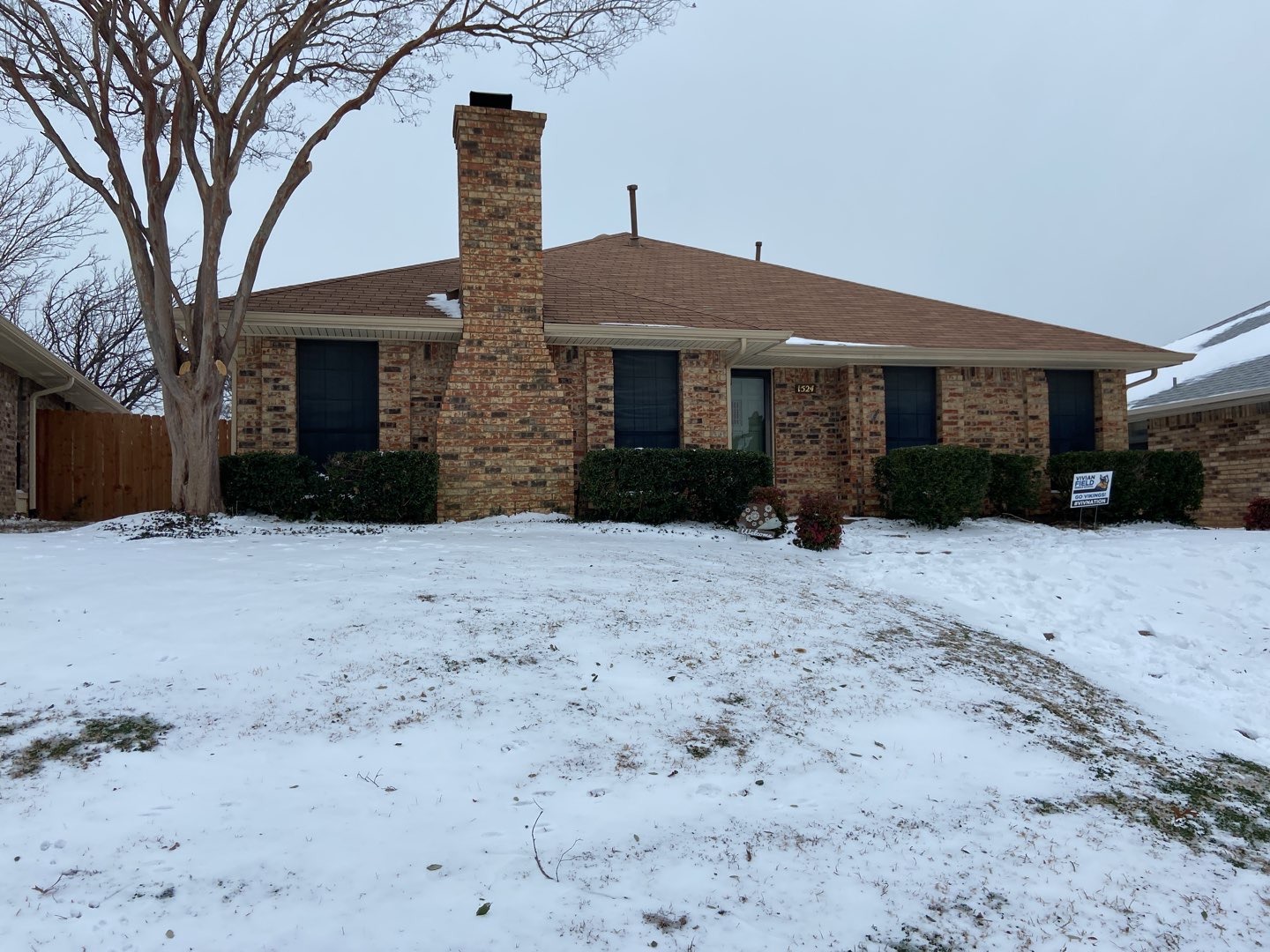
Water damage restoration in Carrollton, TX often starts with a home that looks fine from the curb. A home can look dry and intact outside while water is already moving under the flooring, into the base of the walls, and behind the cabinets. This Carrollton project started in exactly that situation. Snow covered the ground outside, and water worked its way through the inside of the house where no one could see it. It shows how Rainy Day Restoration finds the full reach of a water problem before drying it out. It also shows why measuring the damage matters more than reacting to the part you can see.
What we found in Carrollton
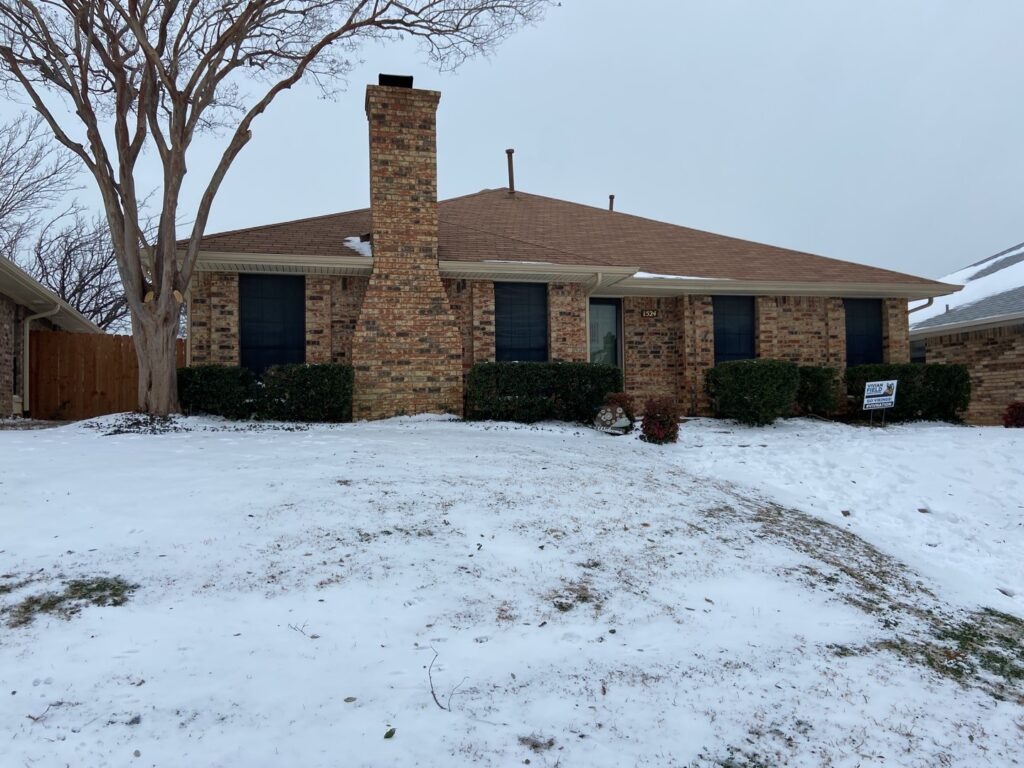
At this Carrollton home, the water had reached more than one room. Our inspection documented affected flooring, wet interior walls, and moisture in both the kitchen and a bathroom. The exterior photo shows the winter conditions the home faced. Inside, the damage spread across finished living space rather than staying in a single spot. That pattern is common with water intrusion. It follows the path of least resistance and shows up in several rooms at once.
Rainy Day’s role
The homeowner needed two things done right: a complete map of how far the moisture had actually traveled, and the wet structure dried and rebuilt without a gap in the middle. Rainy Day handles the work from the first call through the rebuild. Because of that, the same team carried this job from moisture inspection through structural drying and into reconstruction. No one had to re-explain anything to a second company, and no wet material got sealed up behind new finishes.
The water damage restoration in Carrollton, TX, step by step
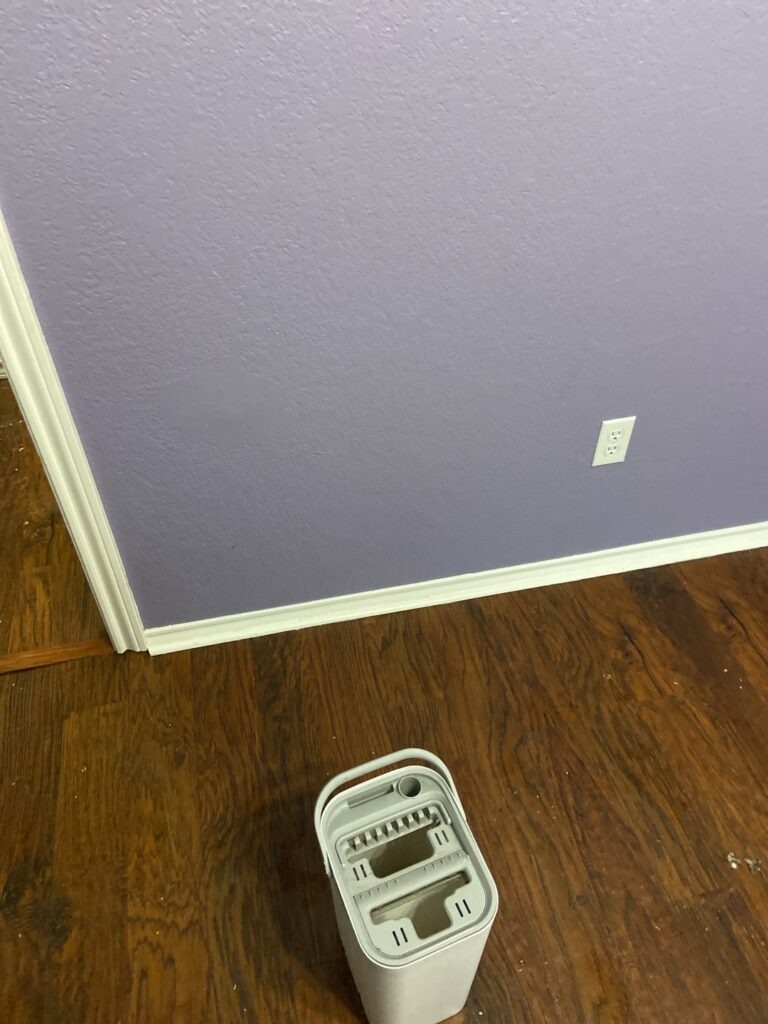
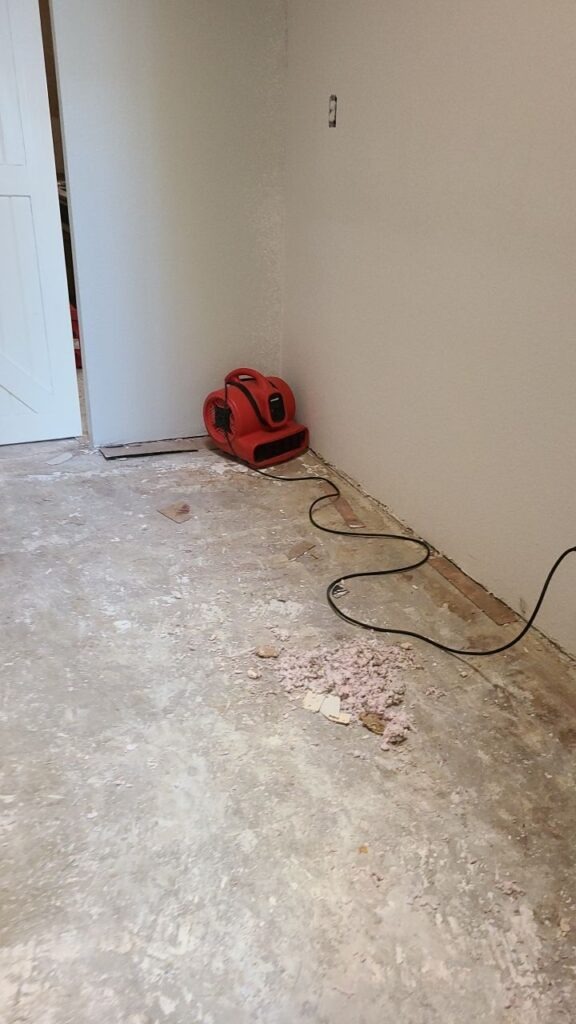
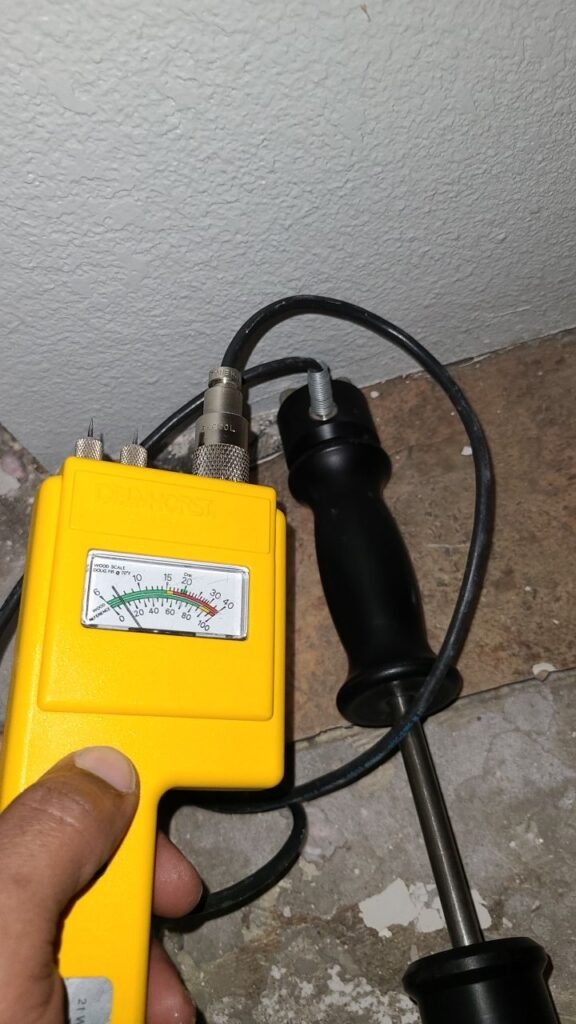
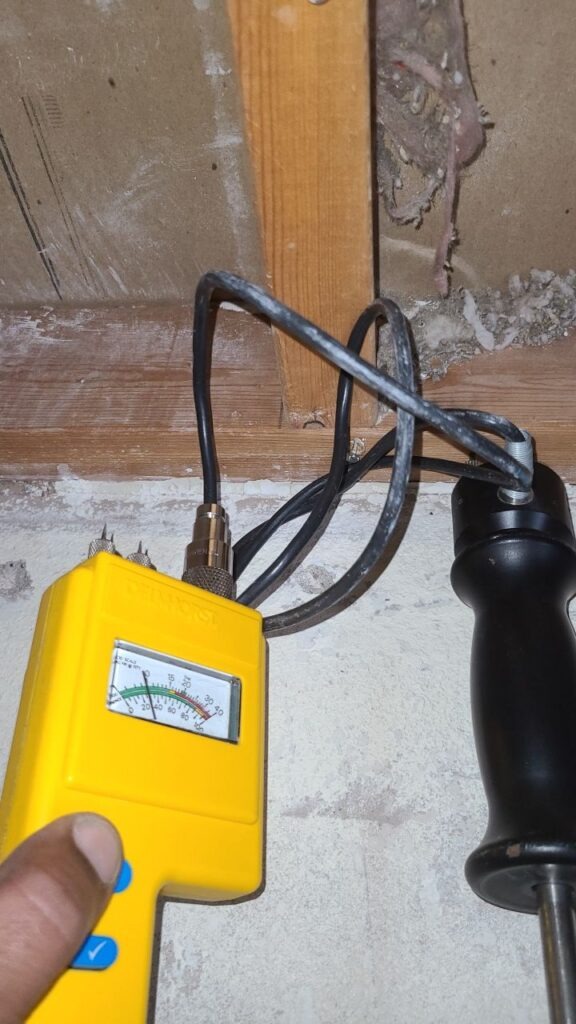
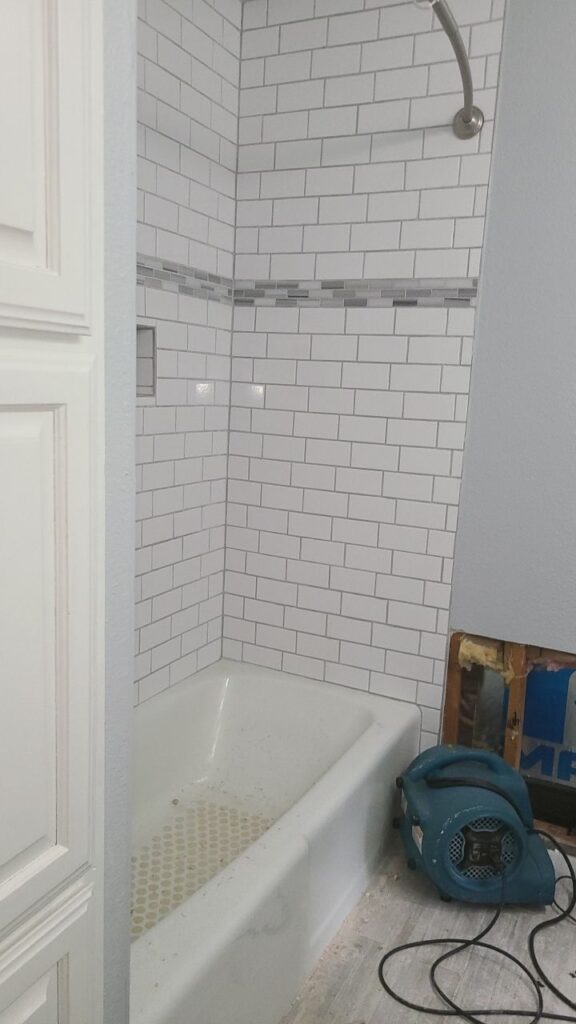
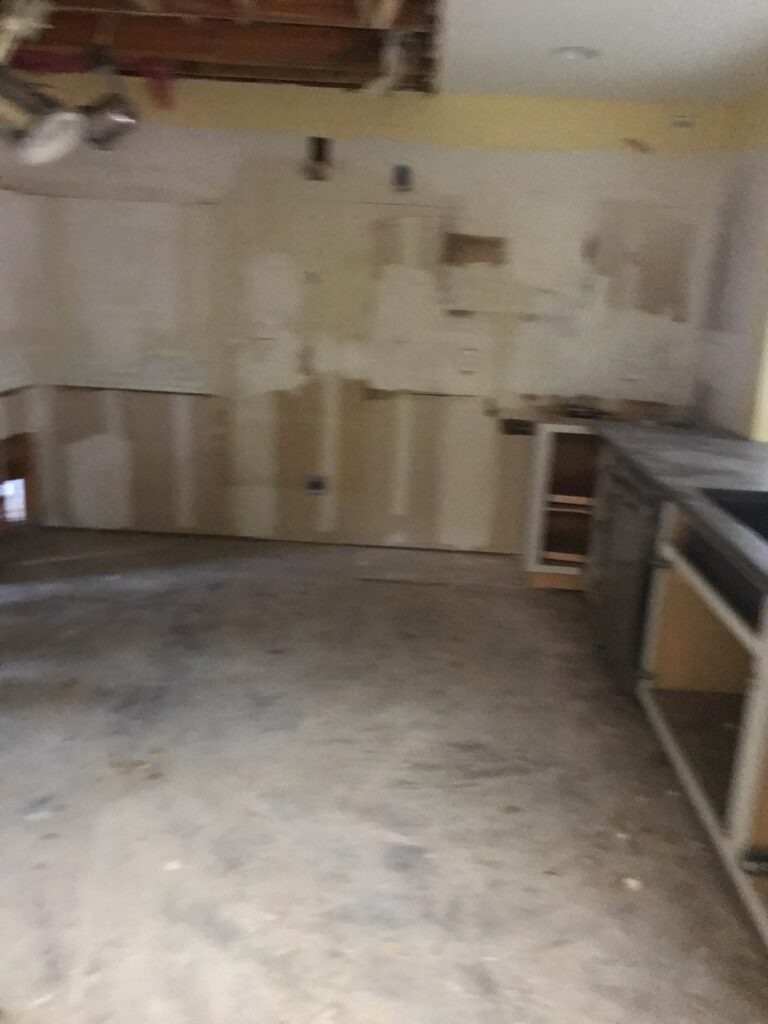
We started by measuring. Our IICRC-certified technicians used moisture meters to test the affected walls and flooring. That work defined exactly which materials were wet and how far the water had spread beyond the visible damage. This mapping is what turns guesswork into a plan. We then set up professional drying equipment and air movers in the affected rooms, including the bathroom, to dry the structure down to normal levels. Some materials were too damaged to save, such as the lower kitchen cabinets and sections of wall. We removed those materials so the structure behind them could dry and be rebuilt properly.
Why hidden water is worth taking seriously
Water left in a wall or under a floor does not simply dry on its own before it causes harm. It wicks into subfloor, framing, and insulation. It raises the humidity of the whole space. Within a couple of days, it starts to feed mold and warp materials. We measure and document moisture up front for one reason: to catch every wet area while it is still just wet. Otherwise, you discover it weeks later as a stain, an odor, or a soft floor. Drying the structure fully before reconstruction keeps a water event from quietly becoming a mold event.
Result and next step
This water damage restoration in Carrollton, TX shows up fully in the project record: the moisture inspection, the mapping of the affected rooms, the structural drying, and the reconstruction of the removed materials. If water damage has touched more than one room in your home, take the same next step taken here. Have a professional measure the moisture across the whole affected area before deciding what needs to be dried, removed, or rebuilt.
Guidance for property owners in Carrollton and North Texas
After any significant water event, watch for the quieter signs that water spread further than the obvious puddle: a musty smell in a room that was not directly wet, baseboards or cabinet bases that look swollen or stained, flooring that feels soft, or a space that stays humid. Winter is a common time for these problems in North Texas. So if you have had a leak or a burst line, get a professional moisture inspection even after the visible water disappears.
Related guidance
If you are seeing signs of this in your own home, start with our water damage restoration service and our guidance on water in the crawlspace, or get help now for an inspection.
Frequently asked questions
How did Rainy Day Restoration find the full extent of the water damage restoration needed in Carrollton?
Our IICRC-certified technicians used moisture meters to test the affected walls and flooring. They mapped exactly which materials were wet and how far the water had traveled beyond what was visible. This inspection showed the water had reached both the kitchen and a bathroom rather than staying in one spot.
Why were some materials, like the kitchen cabinets, removed instead of dried in place?
Some materials were too damaged to save, such as the lower kitchen cabinets and sections of wall. We removed them so the structure behind them could dry fully and be rebuilt properly. Leaving damaged materials in place would have trapped moisture and stopped the structure from drying to normal levels.
Did the same company handle both the drying and the rebuild for this Carrollton project?
Yes. Rainy Day Restoration handles work from the first call through the rebuild. Because of that, the same team carried the job from moisture inspection through structural drying and into reconstruction, so no one had to re-explain anything to a second company.