
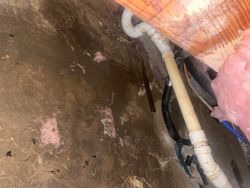
When water collects under a home, most of the damage happens where no one can see it — in the crawlspace, under the flooring, and behind the baseboards. By the time a wet spot shows up on the surface, moisture has usually already traveled. This Denison project shows how Rainy Day finds and dries that hidden water before it becomes a structural or mold problem, and what a homeowner facing the same thing should look for.
What We Found in Denison
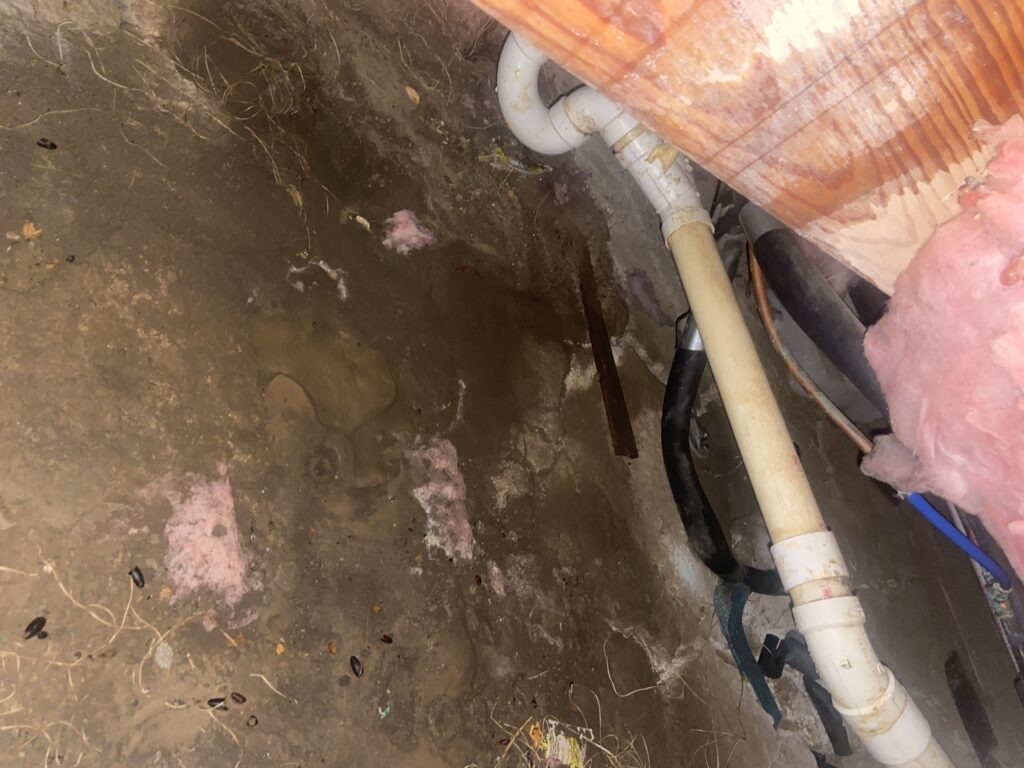
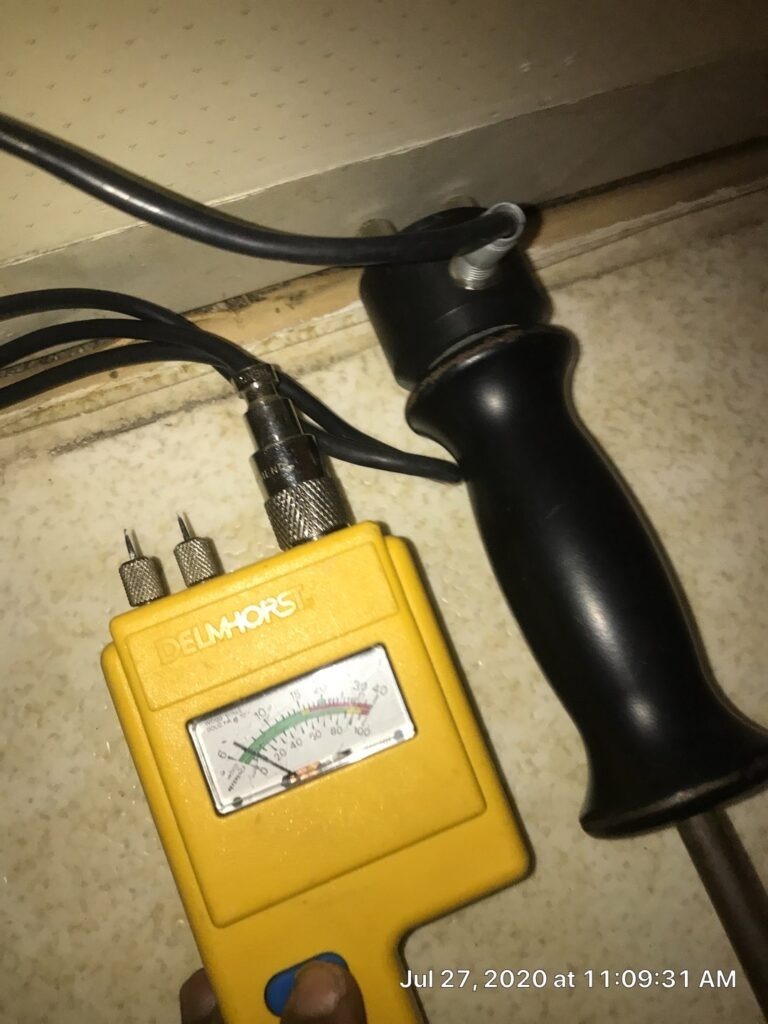
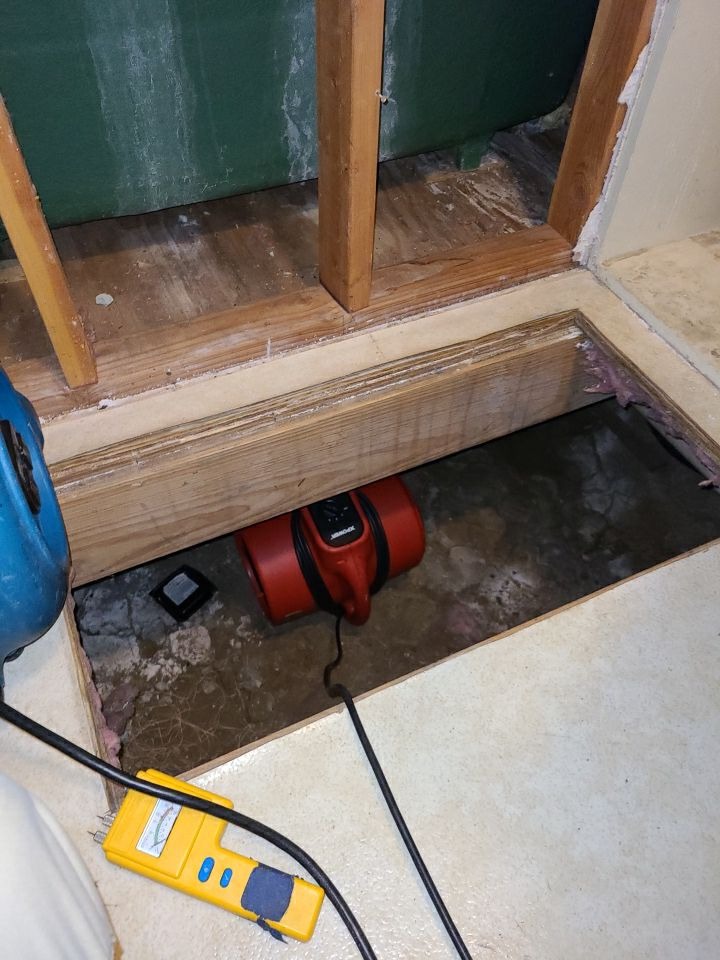
At this Denison home, the water problem was concentrated below the living space. Our inspection documented wet ground in the crawlspace, exposed under-floor plumbing, and elevated moisture readings at the edges of the flooring and along the base of the interior walls. The surfaces people actually walk on looked far better than the conditions underneath them — which is exactly why under-floor water is so easy to underestimate.
Rainy Day’s Role
The homeowner needed two things: a clear picture of how far the moisture had actually spread, and the affected structure dried out before any repairs began. Because Rainy Day handles the work from the first call through the rebuild, the same team carried the job from inspection and moisture mapping through structural drying and into the repair phase — so nothing got lost in a handoff between companies.
What We Did
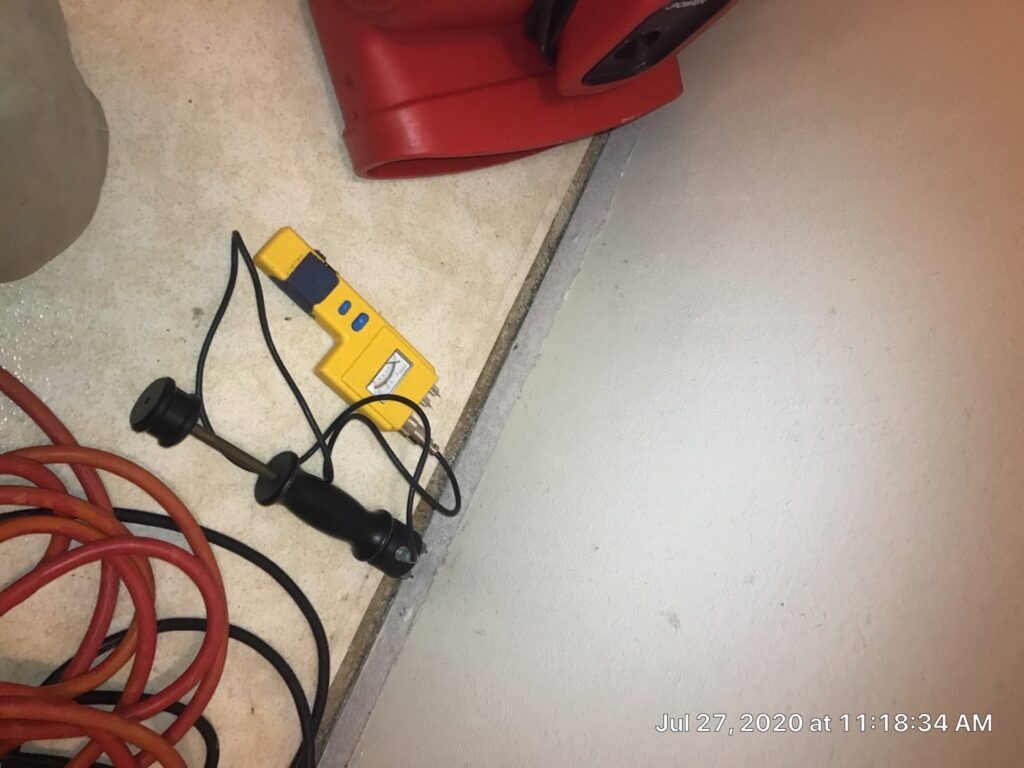
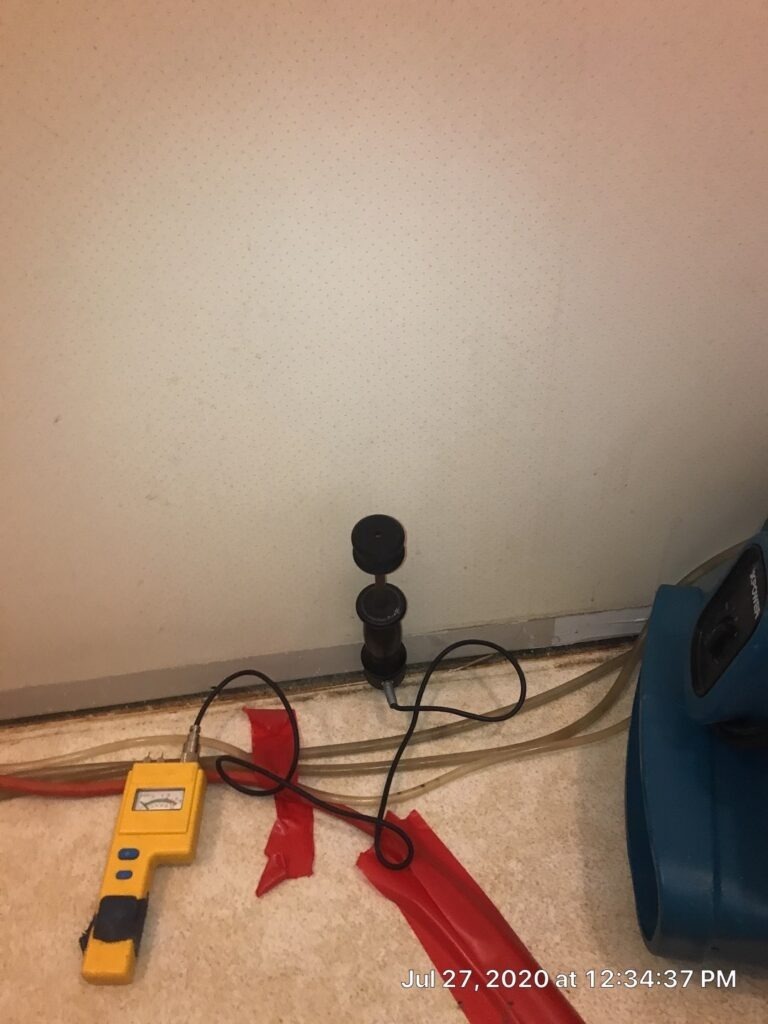
We started below the home, since that’s where the evidence lives. Using moisture meters and probes, our IICRC-certified team measured moisture under the floor and worked outward to the perimeter — the floor edges and baseboards — to map how far the water had moved. That mapping is what turns a guess into a plan: it defines exactly which materials are wet, which have to be dried, and which are dry and can be left alone. From there, the documented work moved into water mitigation and structural drying while the family stayed in the home, and on into the repair of the affected areas.
Why Hidden Moisture Is Worth Taking Seriously
Under-floor and crawlspace moisture rarely stays put. It wicks up into subfloor, framing, and insulation, and it raises the humidity of the whole space. Left undried, that moisture is what feeds mold, cups and softens flooring, and quietly degrades the wood a house is built on — often for weeks before anyone notices an odor or a stain. Measuring and documenting the moisture up front is what prevents a small, invisible problem from turning into a demolition-and-rebuild one later.
Result and Next Step
The project record documents the moisture inspection, the mapping of the affected areas, and the structural drying, followed by the repair work for the areas that were involved. If you’re dealing with moisture you can smell but can’t fully see, the right next step is the same one taken here: get the actual moisture measured before deciding what needs to be repaired.
Guidance for Property Owners
Watch for the early signals of under-floor water: a musty smell in one room, baseboards that look stained or swollen, flooring that feels soft or has started to cup, or a space that just feels humid. Any of those is worth a professional moisture inspection — not because every case is severe, but because measuring it early is cheap and guessing about it is expensive.
Related Guidance
Frequently asked questions
How did Rainy Day find the water damage at this Denison home?
Our IICRC-certified team used moisture meters and probes to measure conditions in the crawlspace, then worked outward to the floor edges and baseboards to map exactly how far the water had spread. This mapping showed which materials were actually wet and needed drying versus which could be left alone.
Why is under-floor moisture a concern if it can’t be seen from inside the house?
Moisture in a crawlspace rarely stays put; it wicks up into subfloor, framing, and insulation and raises humidity throughout the space. Left undried, it can feed mold, cause flooring to cup and soften, and degrade the wood structure, often for weeks before anyone notices a smell or stain.
Did the homeowner have to work with multiple companies for the inspection, drying, and repairs?
No. Because Rainy Day handles work from the first call through the rebuild, the same team carried this Denison job from inspection and moisture mapping through structural drying and into the repair phase, so nothing was lost in a handoff between companies.