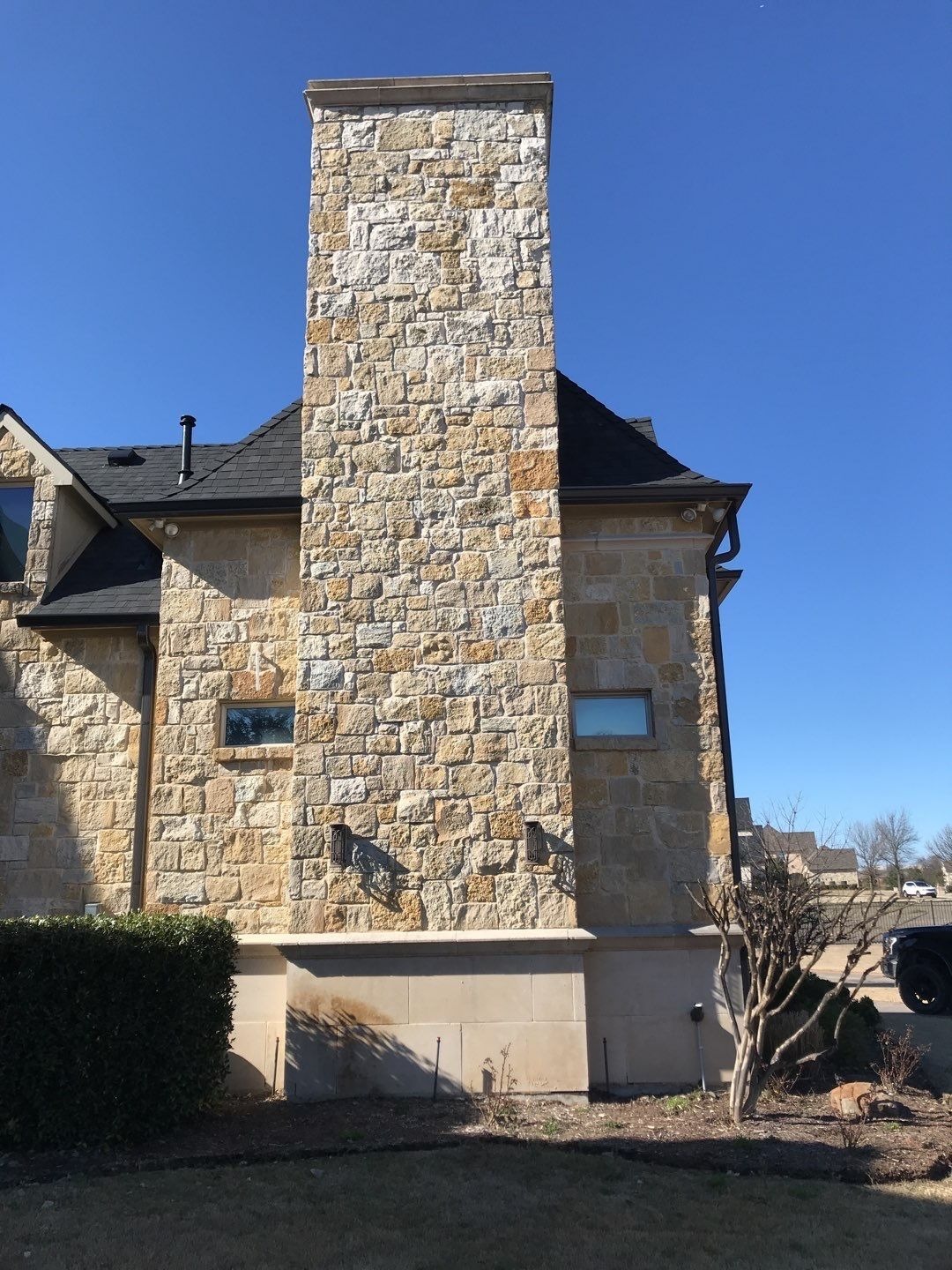
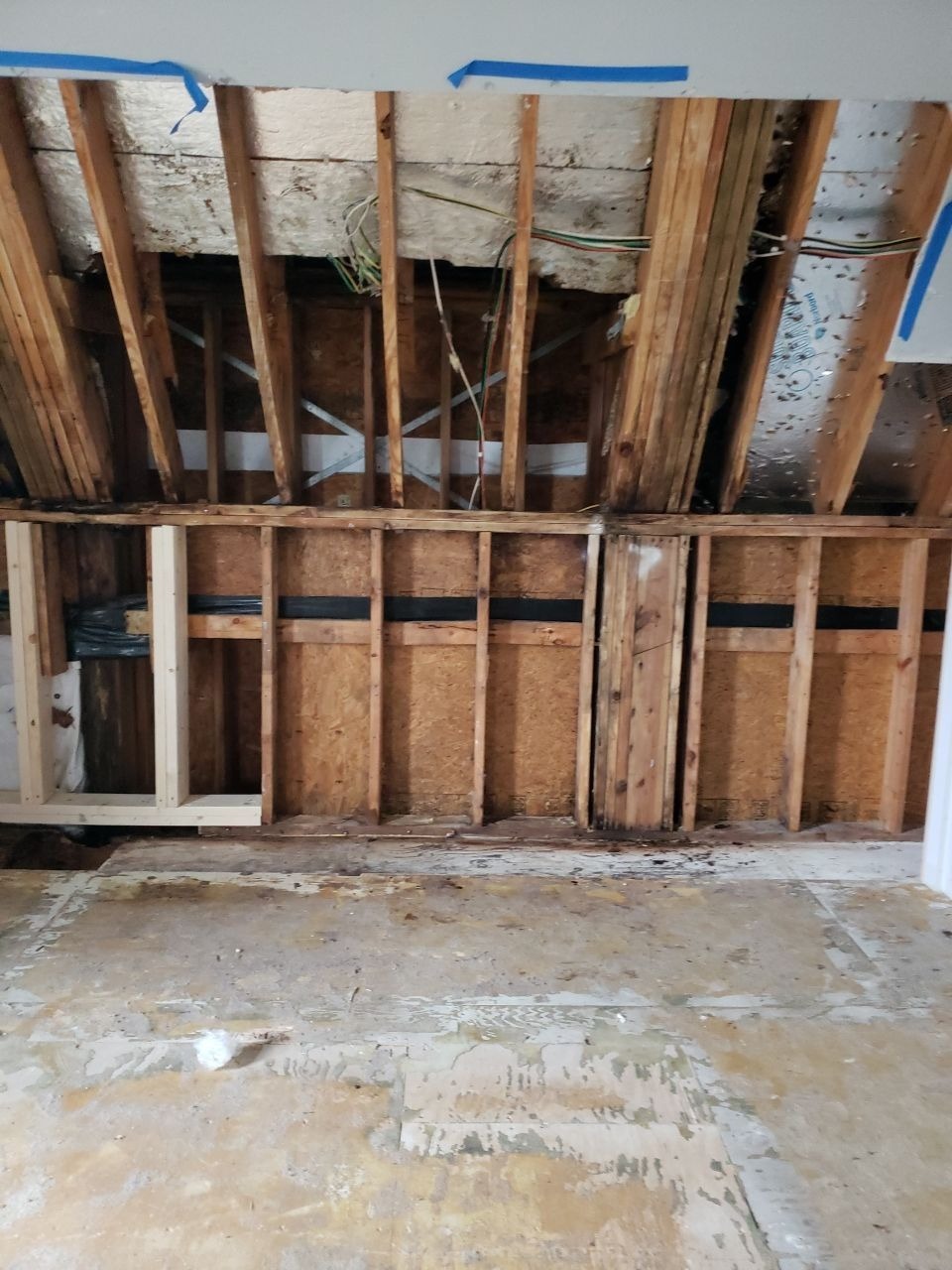
A chimney leak in this Prosper home caused hidden structural damage and visible mold growth in an upstairs living space and the downstairs play area below it. This was a returning customer, and when she reported a leak affecting both floors, our first step was a careful visual inspection rather than an assumption about the source. That inspection turned up visible mold growth, which changed the scope of the job immediately. Because growth was present, we referred the situation to a Mold Assessment Consultant (MAC) before any remediation work began, and we followed that professional’s protocol from that point forward. The protocol led us to structural damage at the chimney, which required removing drywall and insulation from floor to ceiling in the affected areas. After mitigation and remediation work was complete, the home passed its first clearance test.
What we found in Prosper
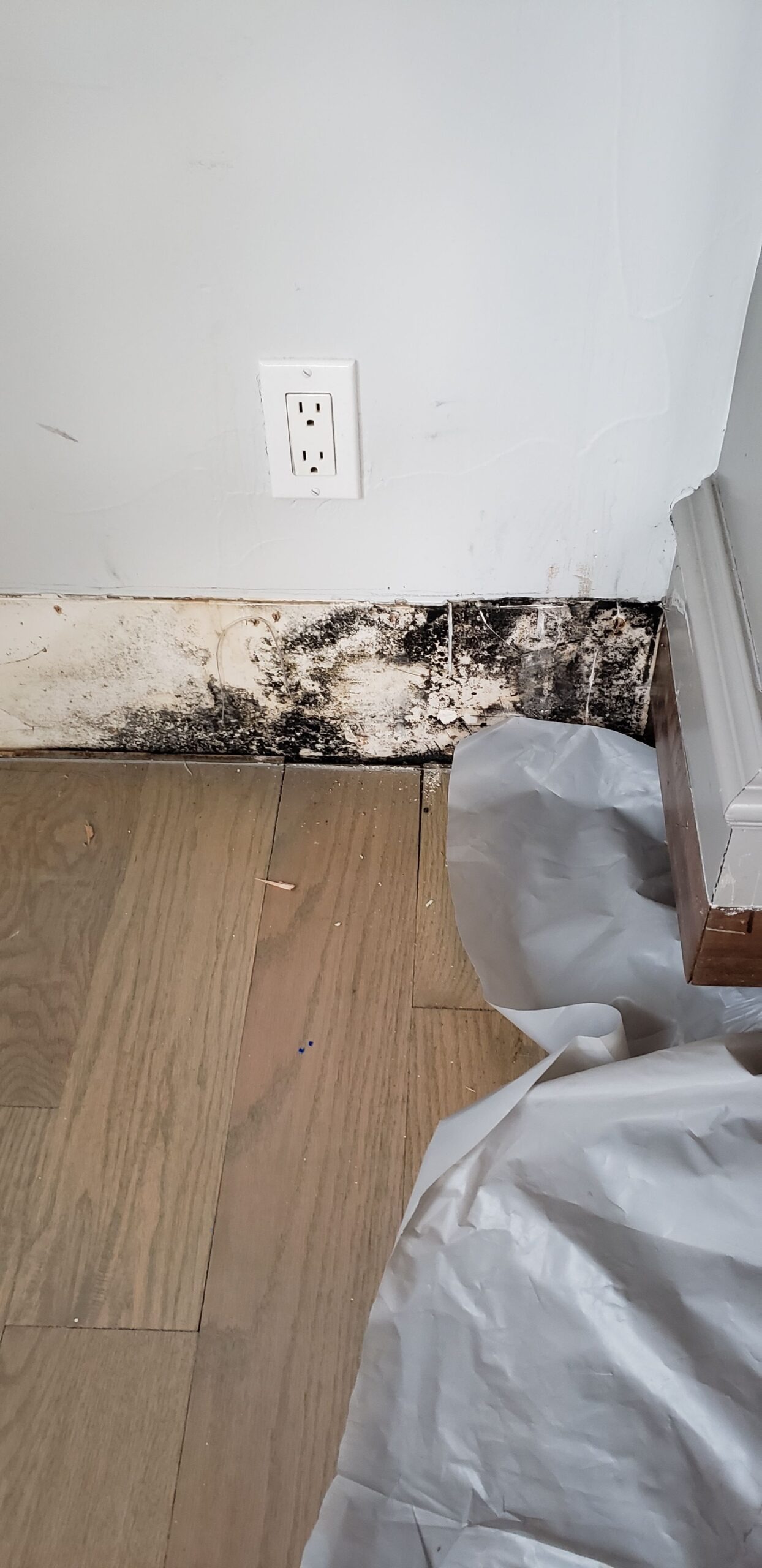
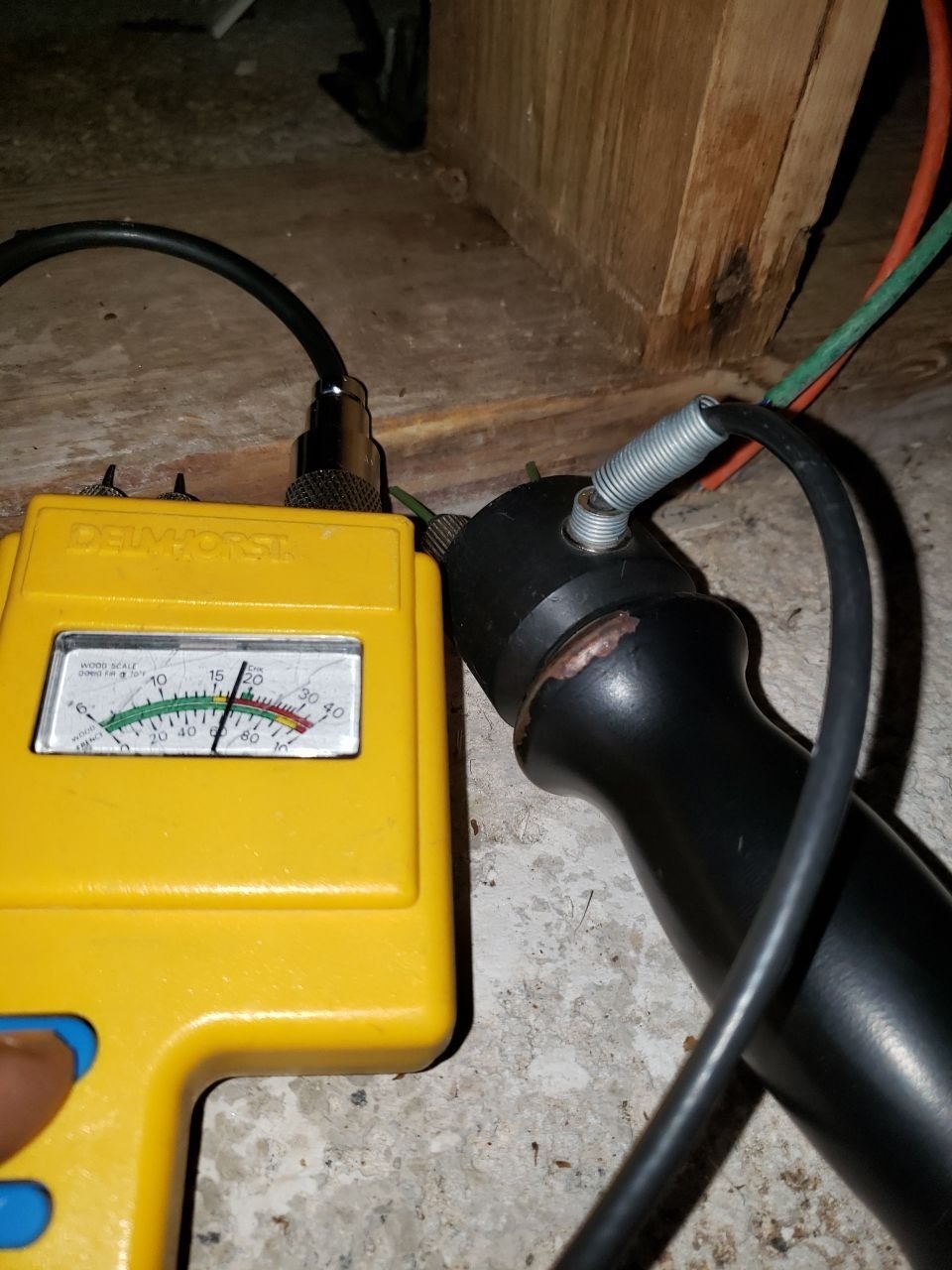
The homeowner described a leak affecting an upstairs living space and the downstairs play area beneath it, a pattern that told us water was likely moving vertically through the structure. On inspection, we documented elevated moisture readings and wet flooring and subfloor material in the affected rooms. We also observed visible mold growth, which is the point at which a water damage job in Texas legally and practically shifts toward a mold assessment process rather than straightforward drying.
Rainy Day’s role in Prosper
As an IICRC-certified, licensed contractor (RCO1416) that has worked with this homeowner before, our role was to document conditions accurately, bring in a third-party Mold Assessment Consultant when growth was observed, and then execute the MAC’s written protocol precisely. Rainy Day Restoration & Roofing is built to be one company from first call through rebuild, which matters on a job like this one, where mitigation, remediation, and structural repair all had to be sequenced correctly rather than handled by separate, disconnected crews.
What we did
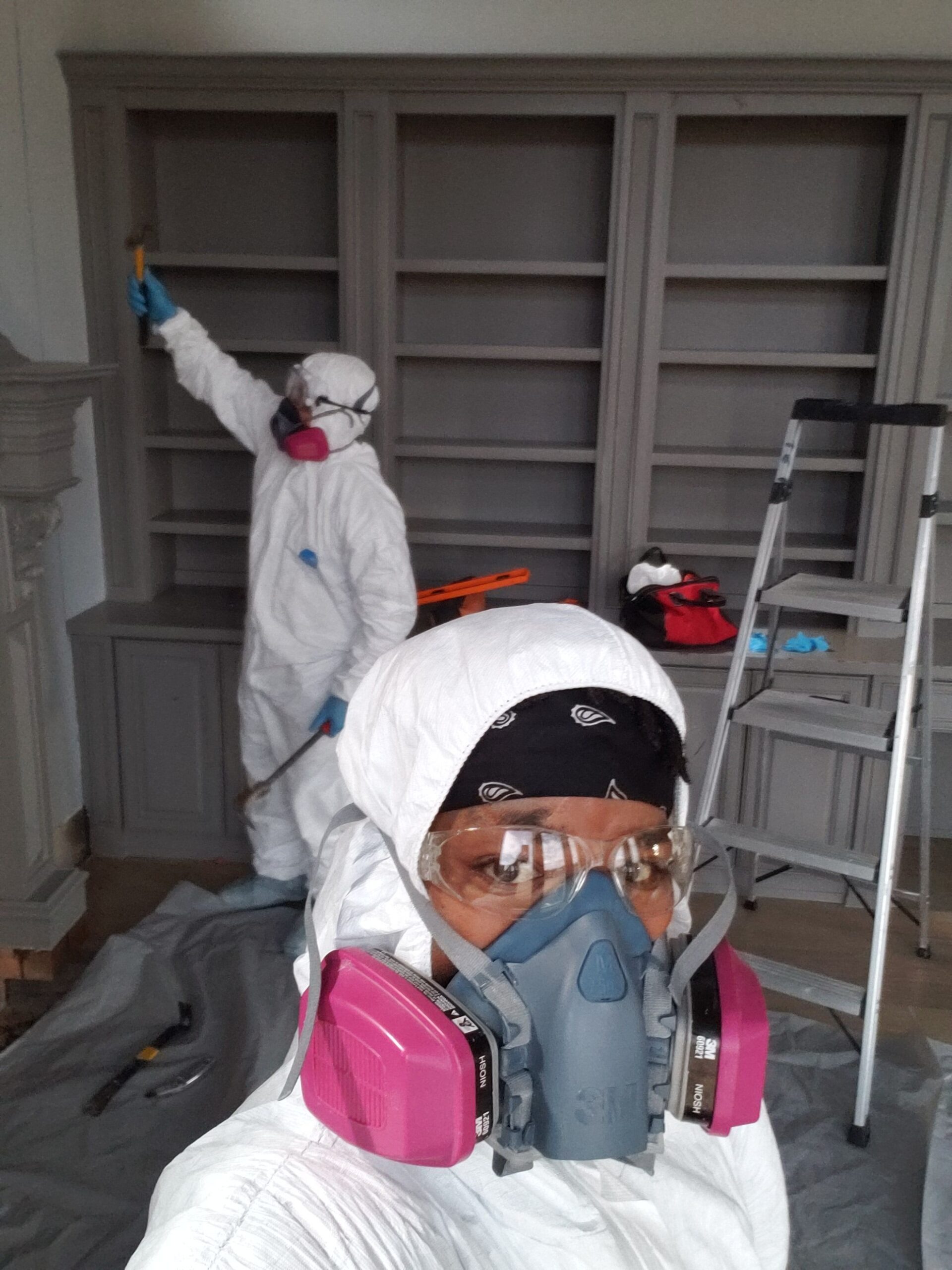
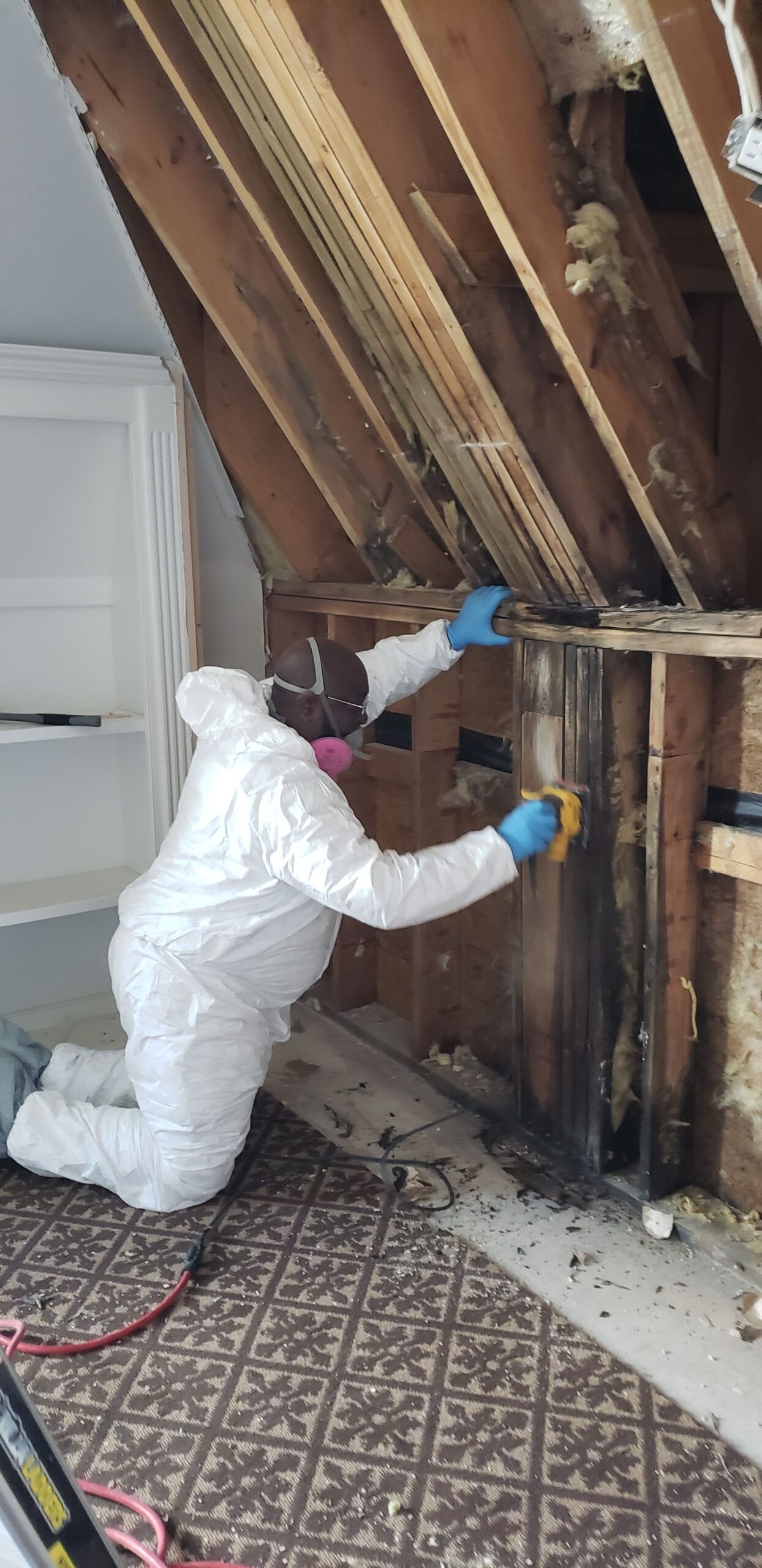
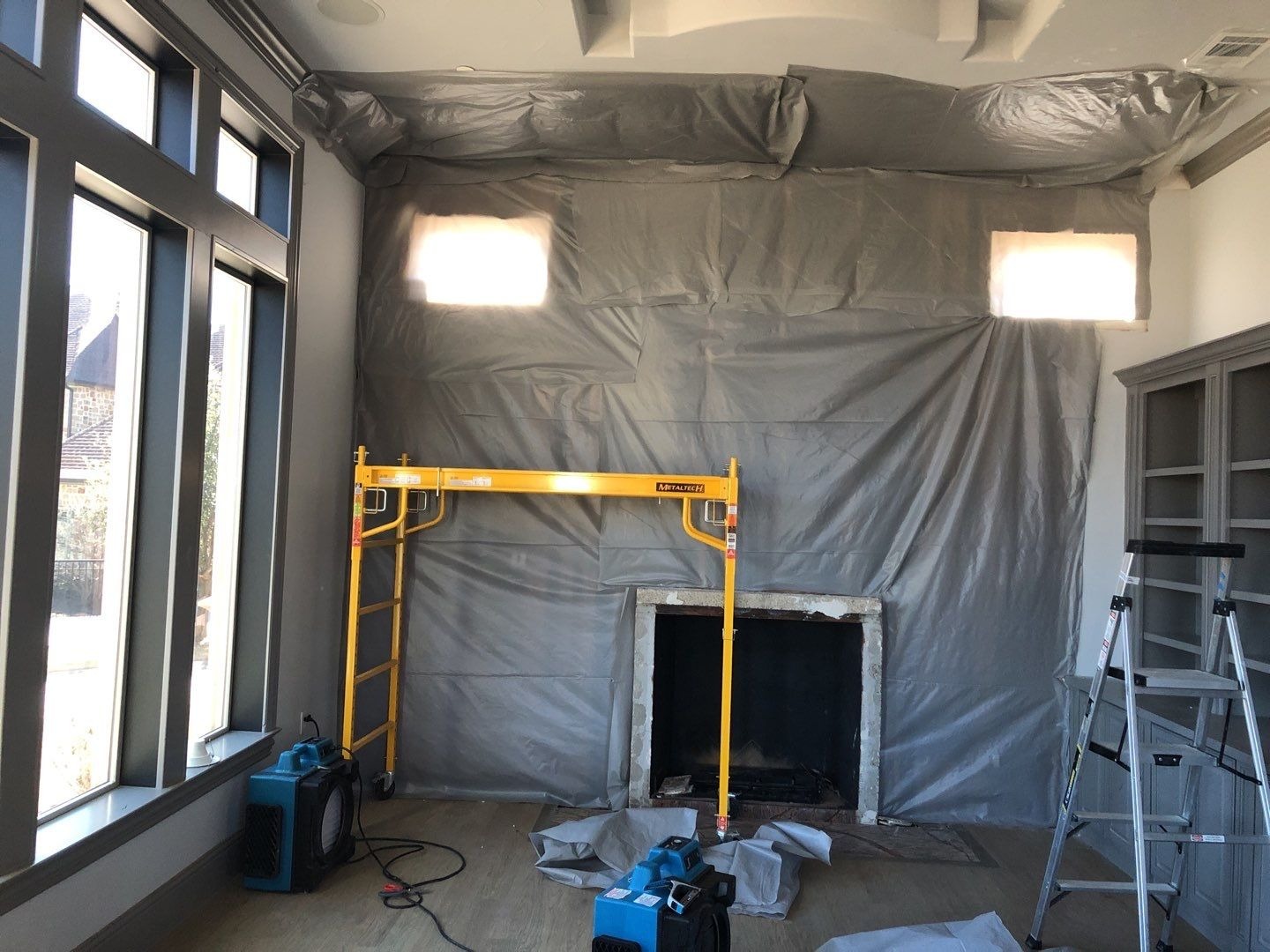
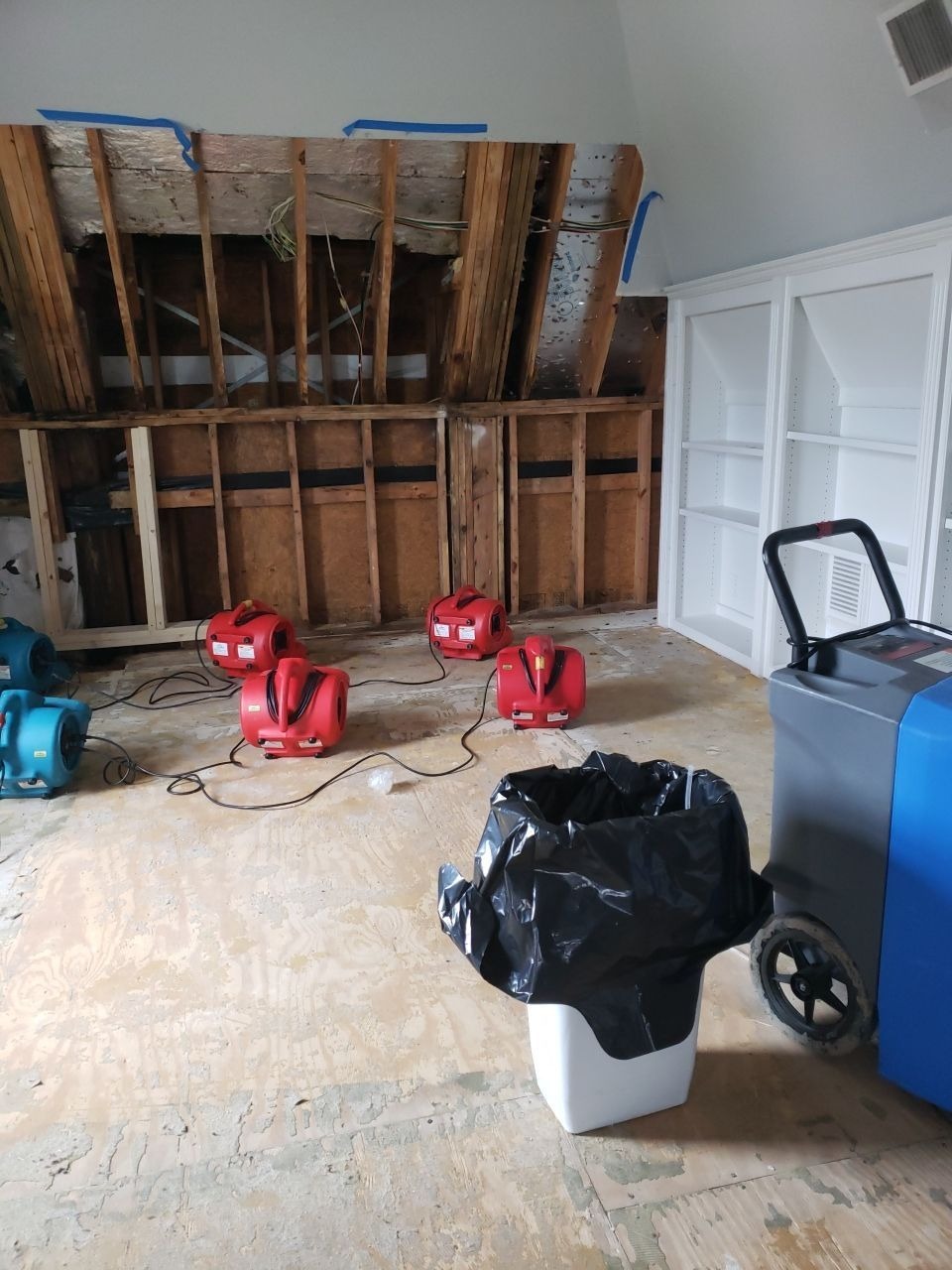
We started with moisture mapping and readings throughout the upstairs living space and downstairs play area to define the true boundary of the damage, not just the visibly affected drywall. We set drying equipment to begin managing moisture in the structure. Once the MAC protocol identified structural damage at the chimney as part of the affected assembly, we removed drywall and insulation floor to ceiling in the areas the protocol called for. That removal is a necessary step when a MAC identifies contaminated or compromised building materials; it is not optional demolition, it’s dictated by the assessment.
What the photos show
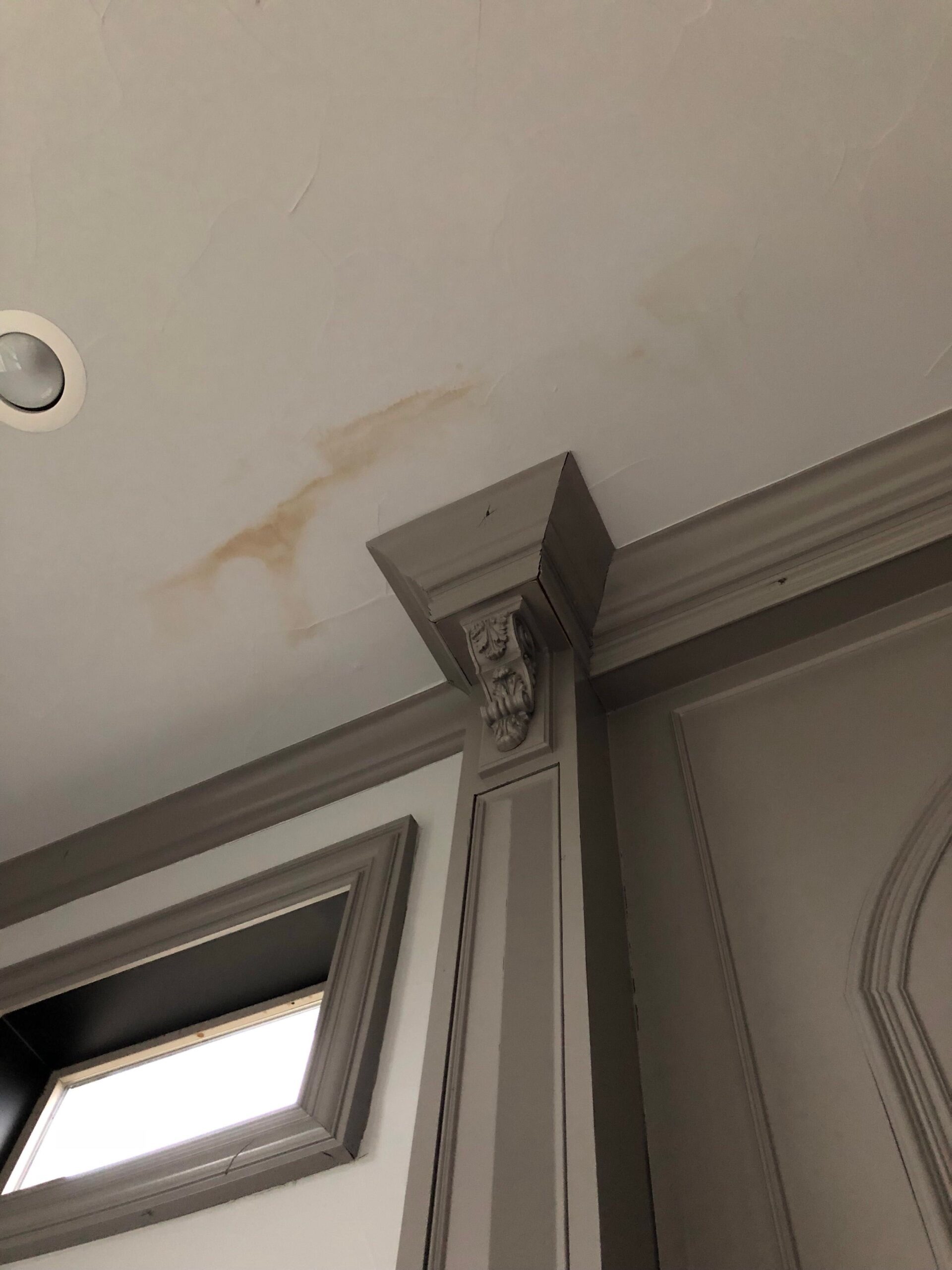
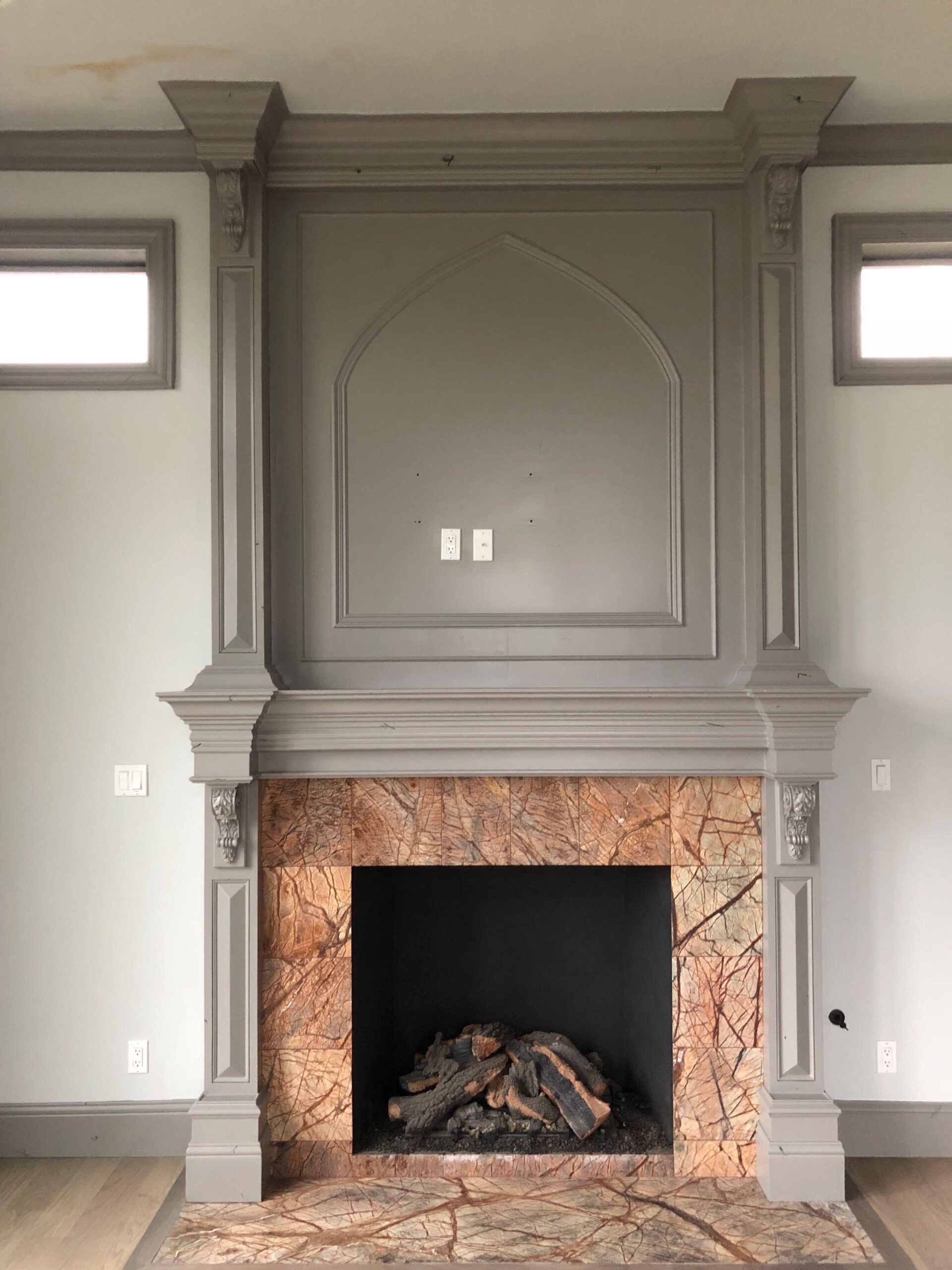
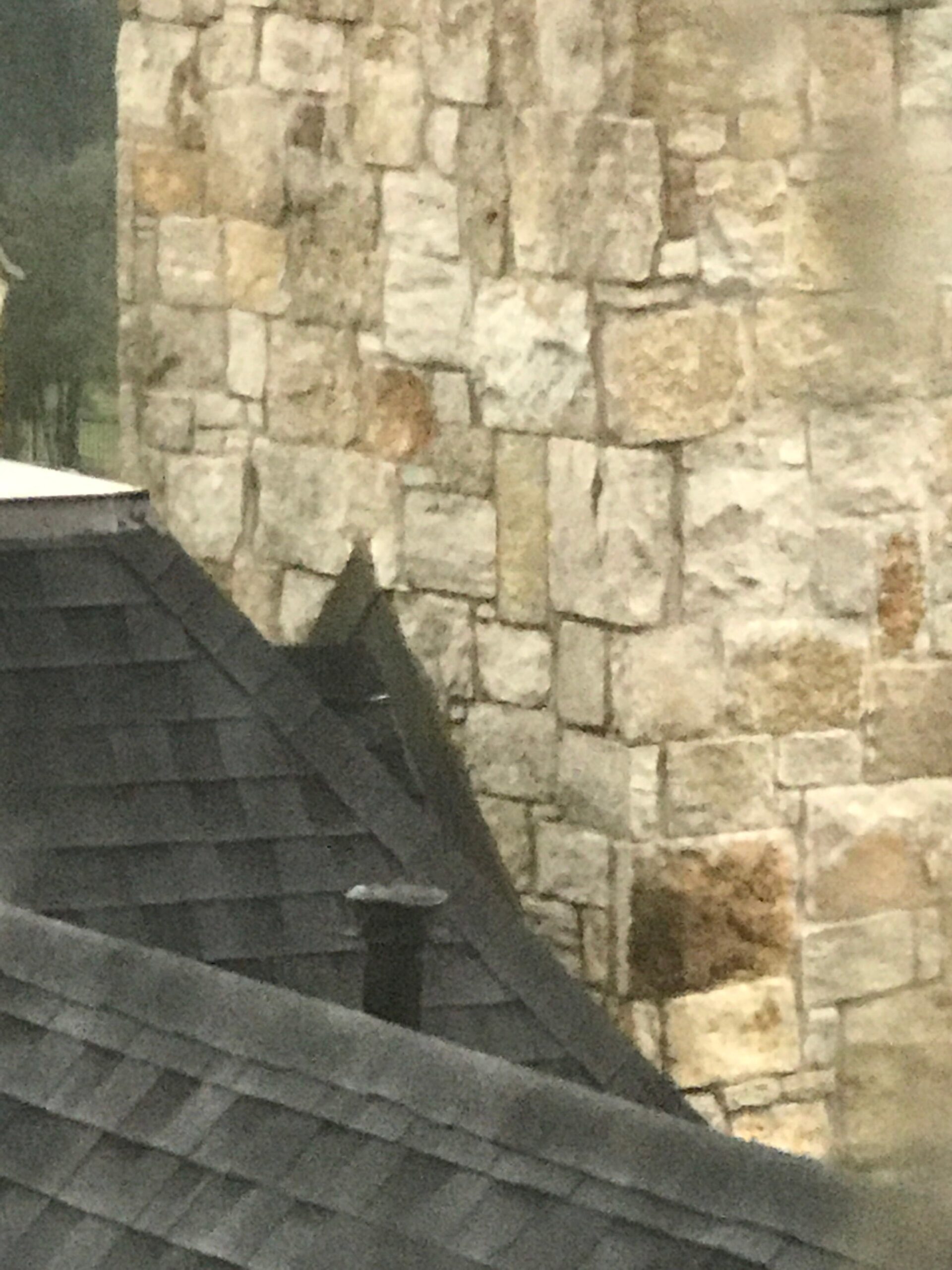
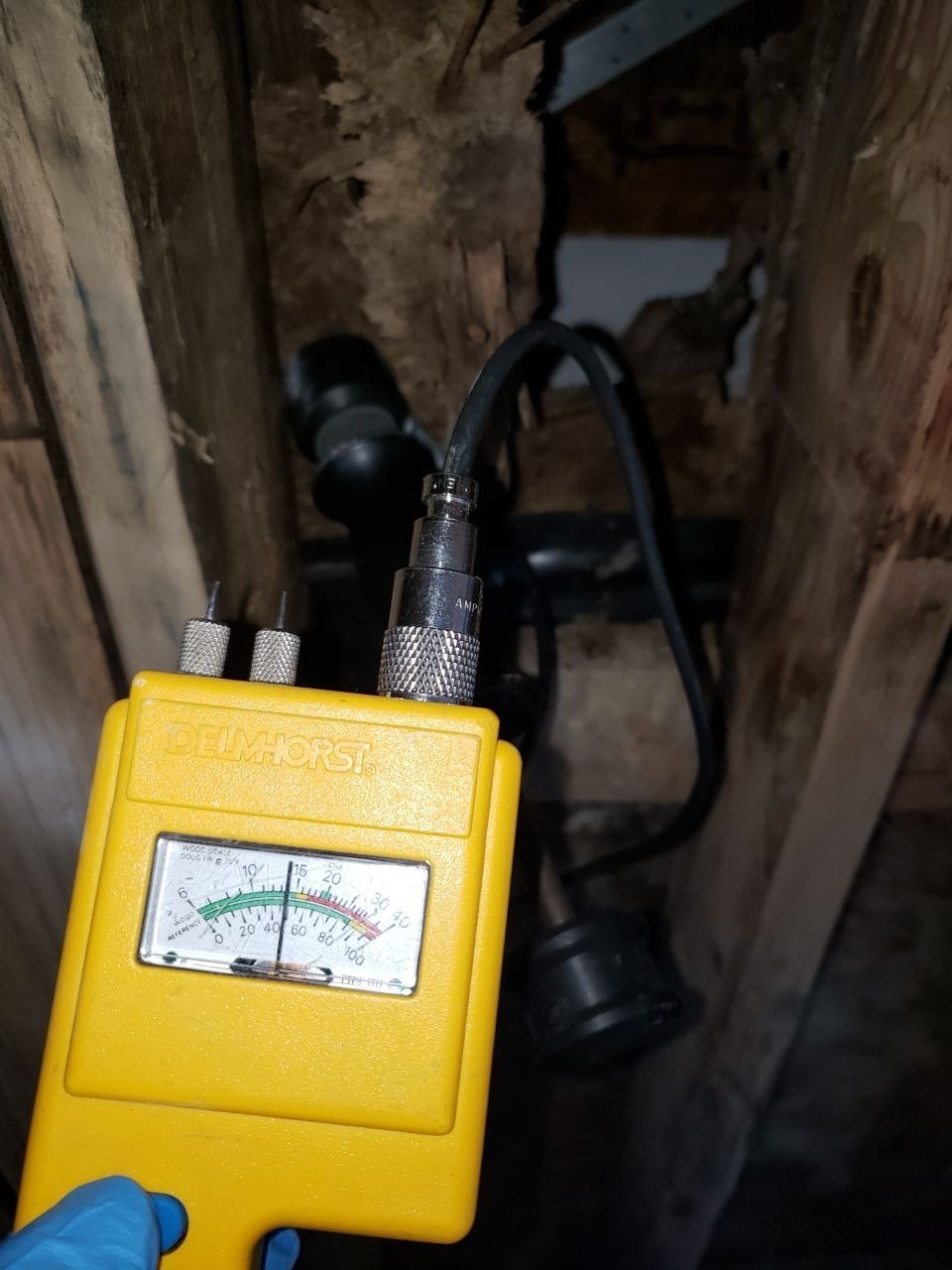
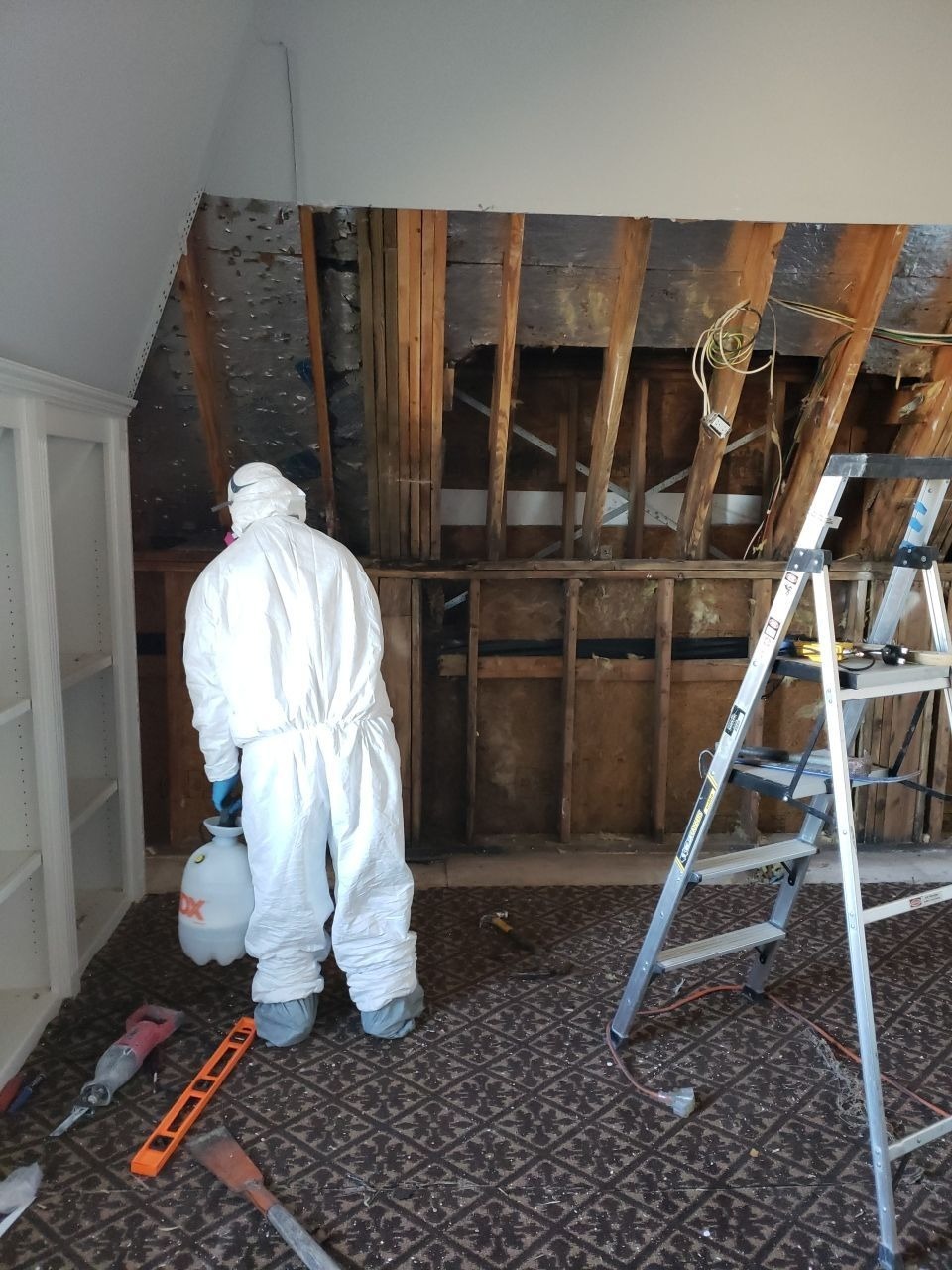
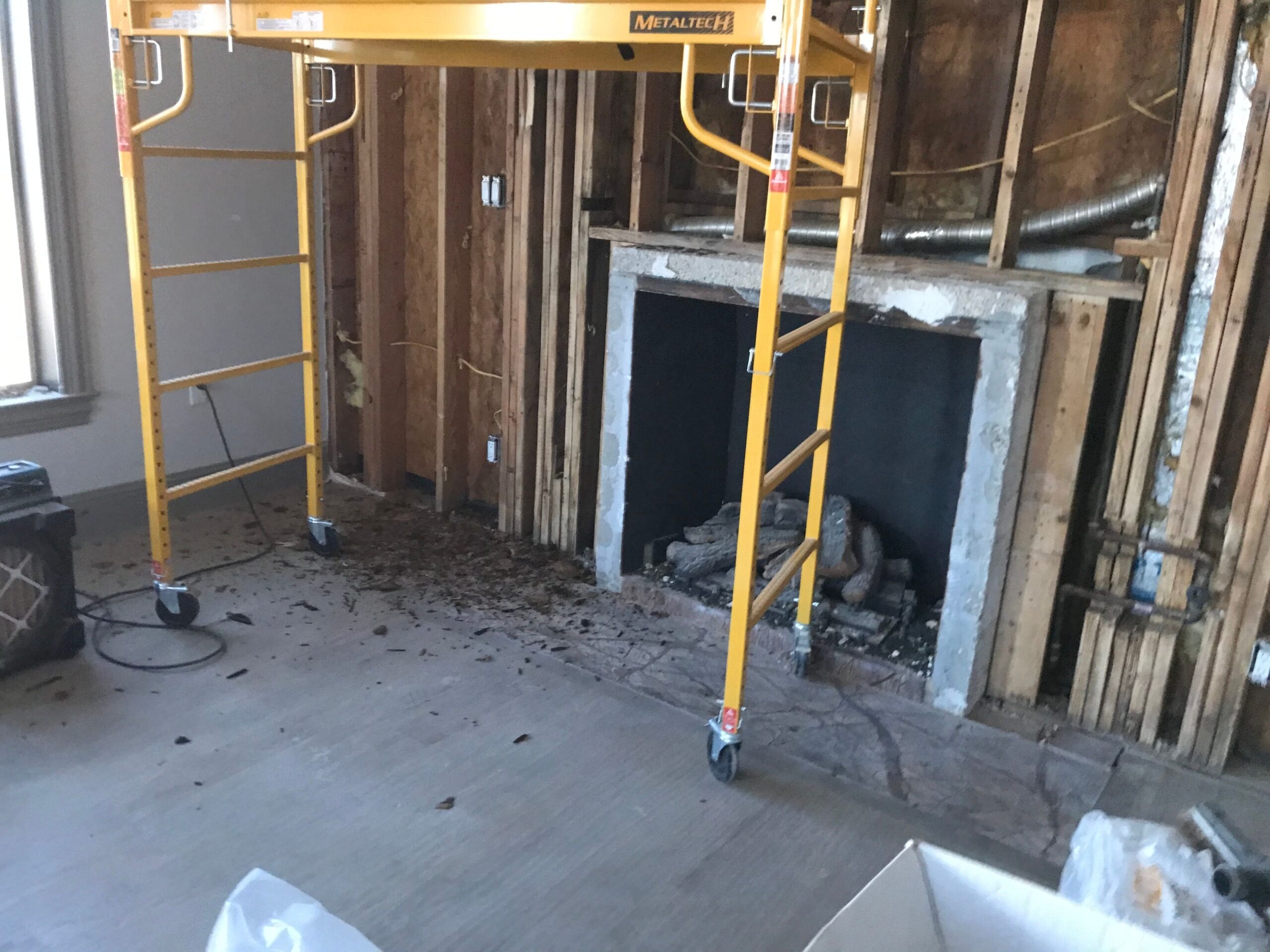
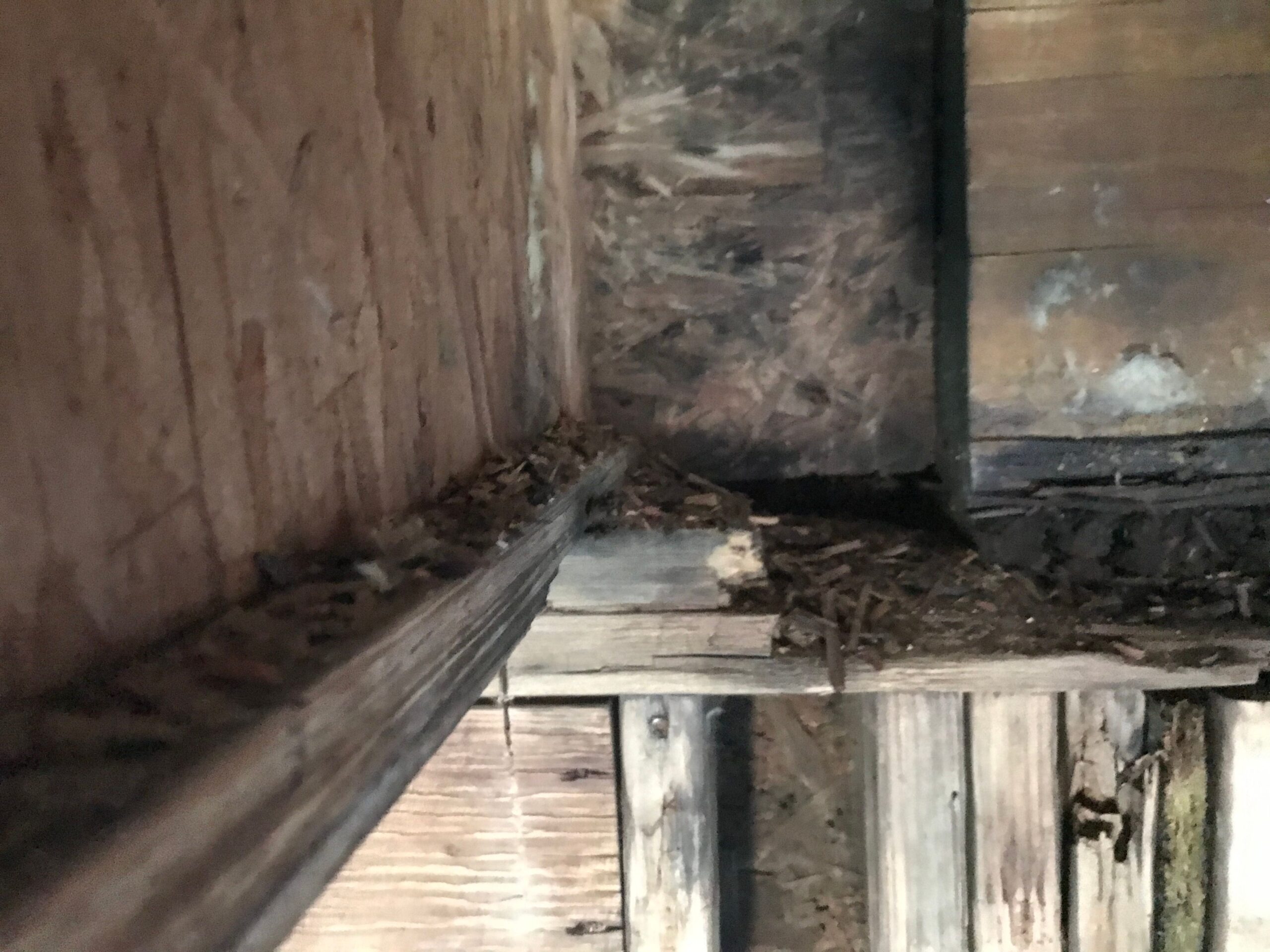
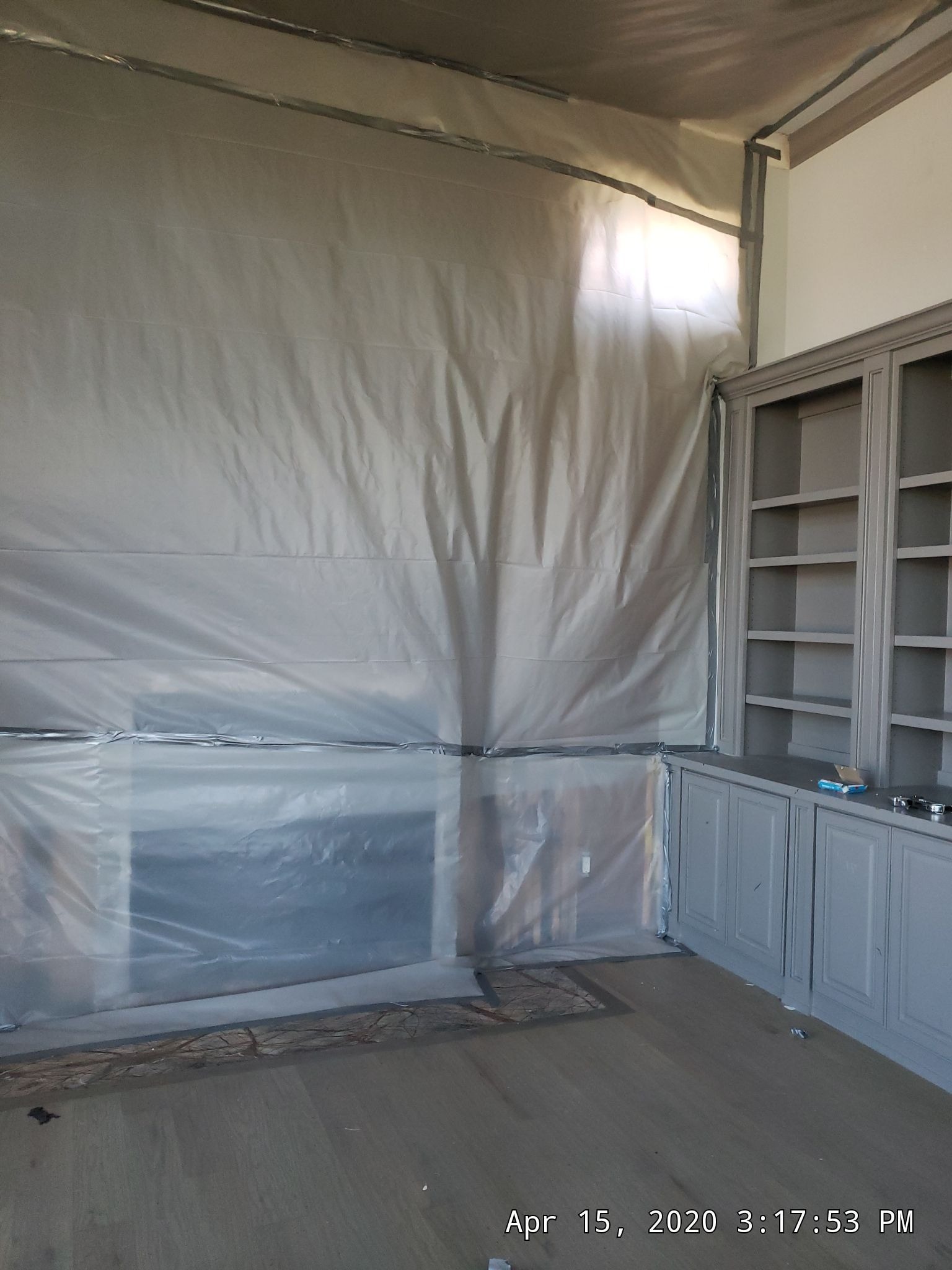
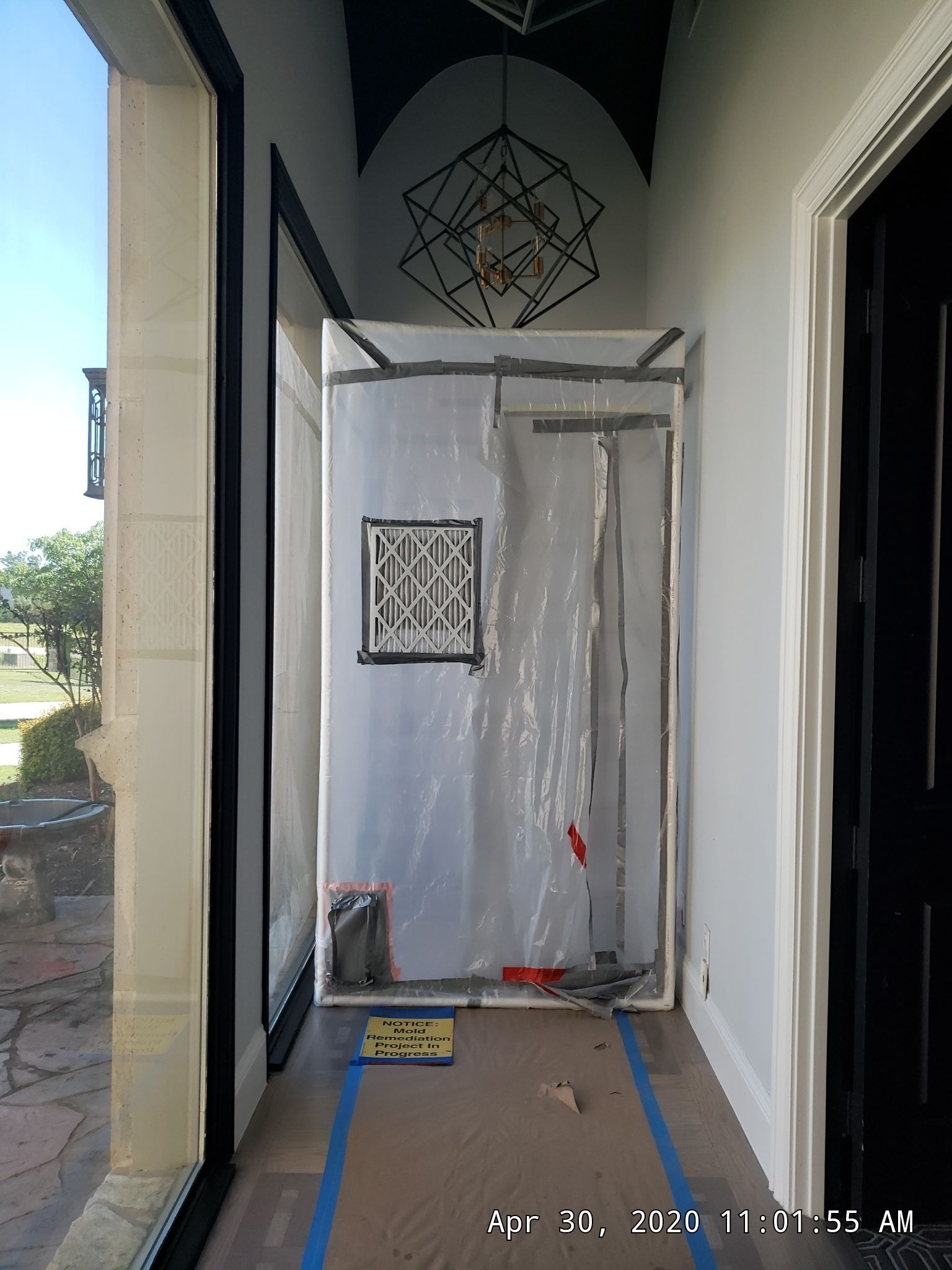
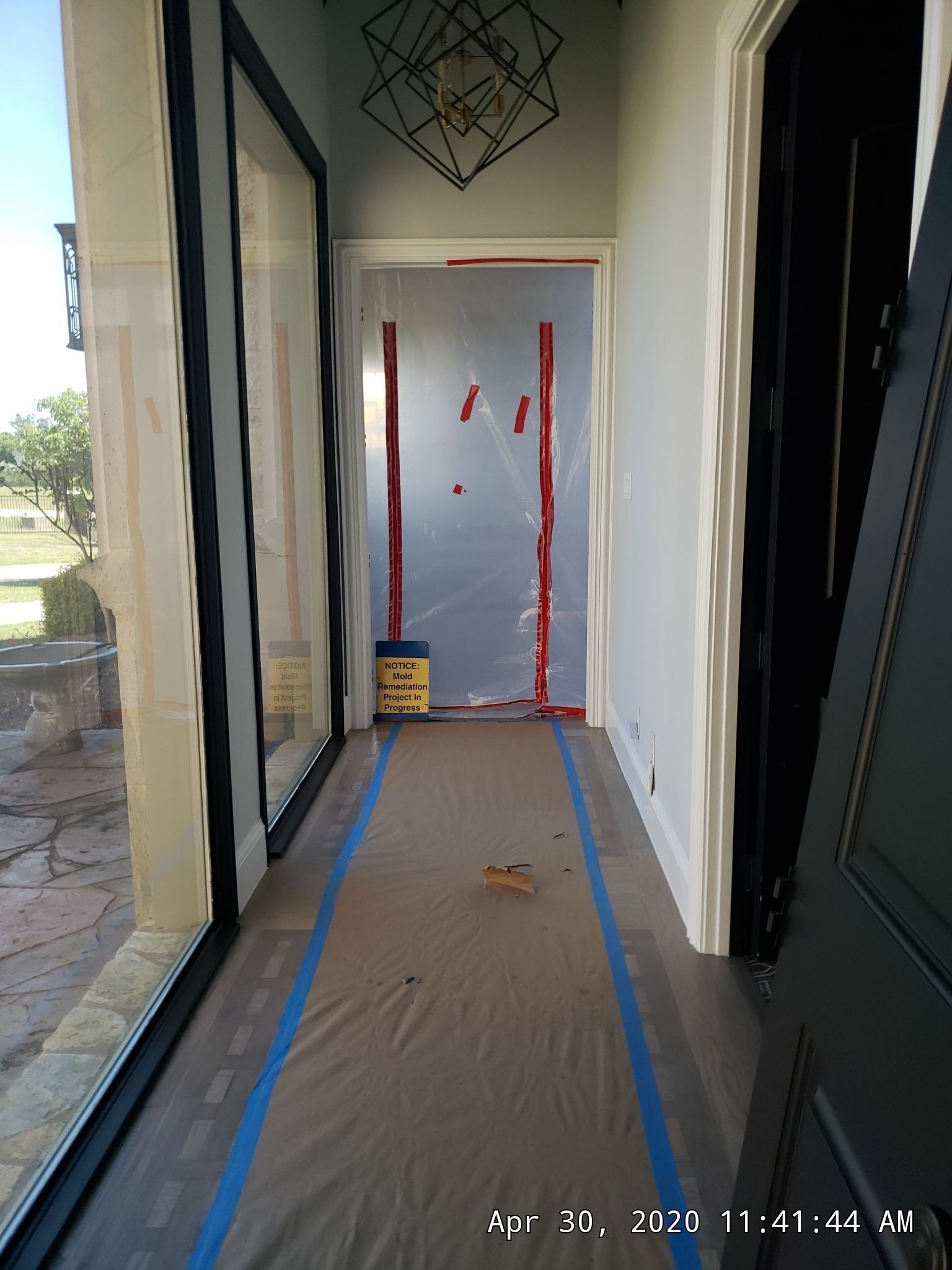
The photo set documents the condition of the upstairs living space and downstairs play area before work began, the moisture readings taken at the chimney and surrounding framing, the visible mold growth identified during inspection, the drywall and insulation removal down to framing, and the drying equipment placed to bring the structure back into an acceptable moisture range.
Why a chimney leak is worth taking seriously
Chimneys are a common, often overlooked entry point for water in North Texas homes. Flashing, mortar, and the chimney structure itself take direct weather exposure, and a leak there doesn’t always show up where it starts. In this home, a chimney-area leak produced damage on two separate floors before it was fully understood. Left unaddressed, that kind of moisture intrusion allows mold to establish itself inside wall cavities and insulation, which is exactly what a MAC protocol is designed to identify and contain before remediation begins.
Result and next step
The affected drywall and insulation were removed down to framing in the areas identified by the MAC protocol, drying equipment brought the structure to standard, and the home passed its first post-remediation clearance test. The next step for this homeowner is coordinating structural repair at the chimney and rebuilding the removed drywall and insulation, which Rainy Day can carry forward as the same company that handled the mitigation and remediation.
Guidance for property owners in Prosper and North Texas
If you notice a leak affecting more than one floor of your home, don’t assume it’s a single simple source. Vertical water movement often means the origin point is higher up than where you first see damage, and a chimney is worth checking. If you see visible mold growth at any point during an inspection, treat that as a signal to bring in a qualified assessment before remediation proceeds, since the scope of work depends entirely on what that assessment finds.
Related guidance
For homeowners dealing with similar issues, learn more about our water damage services, understand the signs of a ceiling stain that may point to a hidden leak, and get help from our team to schedule an assessment.
More Rainy Day projects: Kitchen Plumbing Leak Water Damage Dried and Verified in Sachse.
Frequently asked questions
How did a chimney leak cause damage on two floors of this Prosper home?
Water entering at the chimney moved through the structure and affected an upstairs living space, then continued downward into the play area below it, which is why both levels showed elevated moisture and wet flooring.
Why was a Mold Assessment Consultant (MAC) brought in for this job?
During inspection we observed visible mold growth, which requires an independent assessment and written protocol in Texas before remediation work can proceed.
Why was drywall and insulation removed floor to ceiling?
The MAC’s protocol identified structural damage at the chimney and affected wall assemblies, so the compromised drywall and insulation had to be removed down to framing as part of proper remediation.
Did the home pass its moisture and clearance testing?
Yes. After drying equipment brought the structure to standard, the home passed its first post-remediation clearance test.