
This job centered on water damage restoration in Frisco after a plumbing leak upstairs sent water into a wall, the subfloor beneath it, and the kitchen ceiling and wall below. The homeowner noticed staining and called the same day. Our crew arrived to find elevated moisture readings across multiple rooms, wet drywall and baseboards, and soaked insulation. Because the leak had traveled between floors, the damage was not confined to one room. This report walks through what we found, what we did, and why plumbing leaks like this one deserve quick attention.
What we found in Frisco
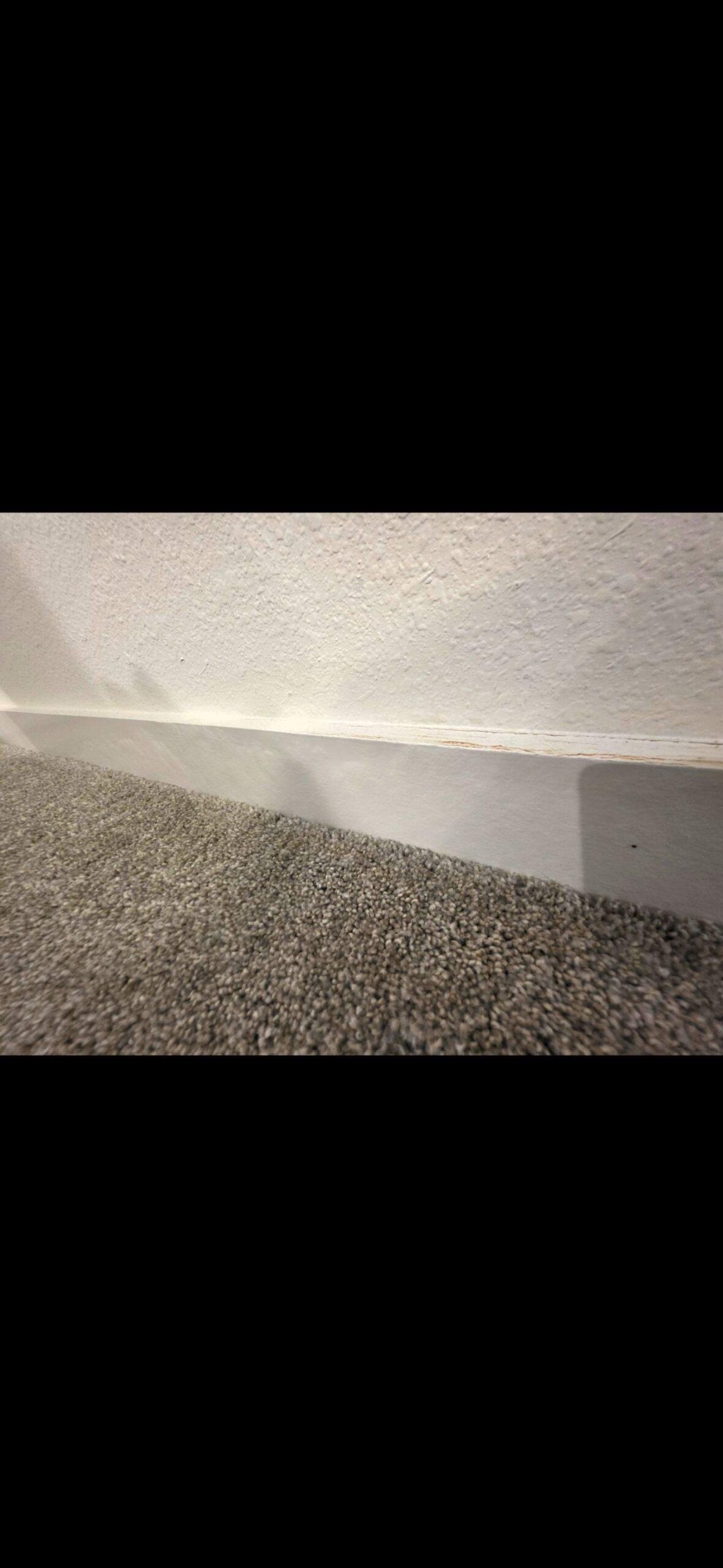
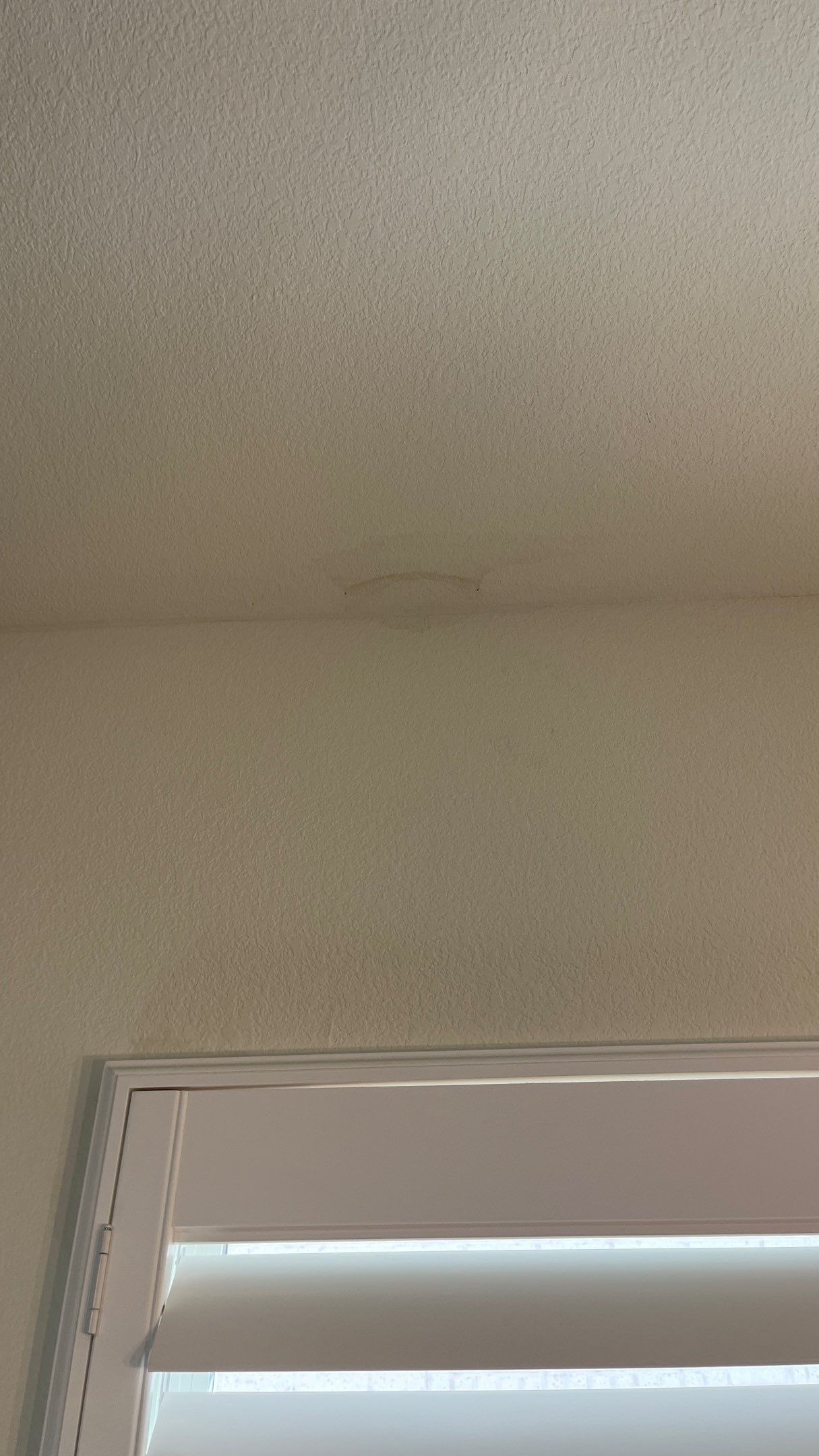
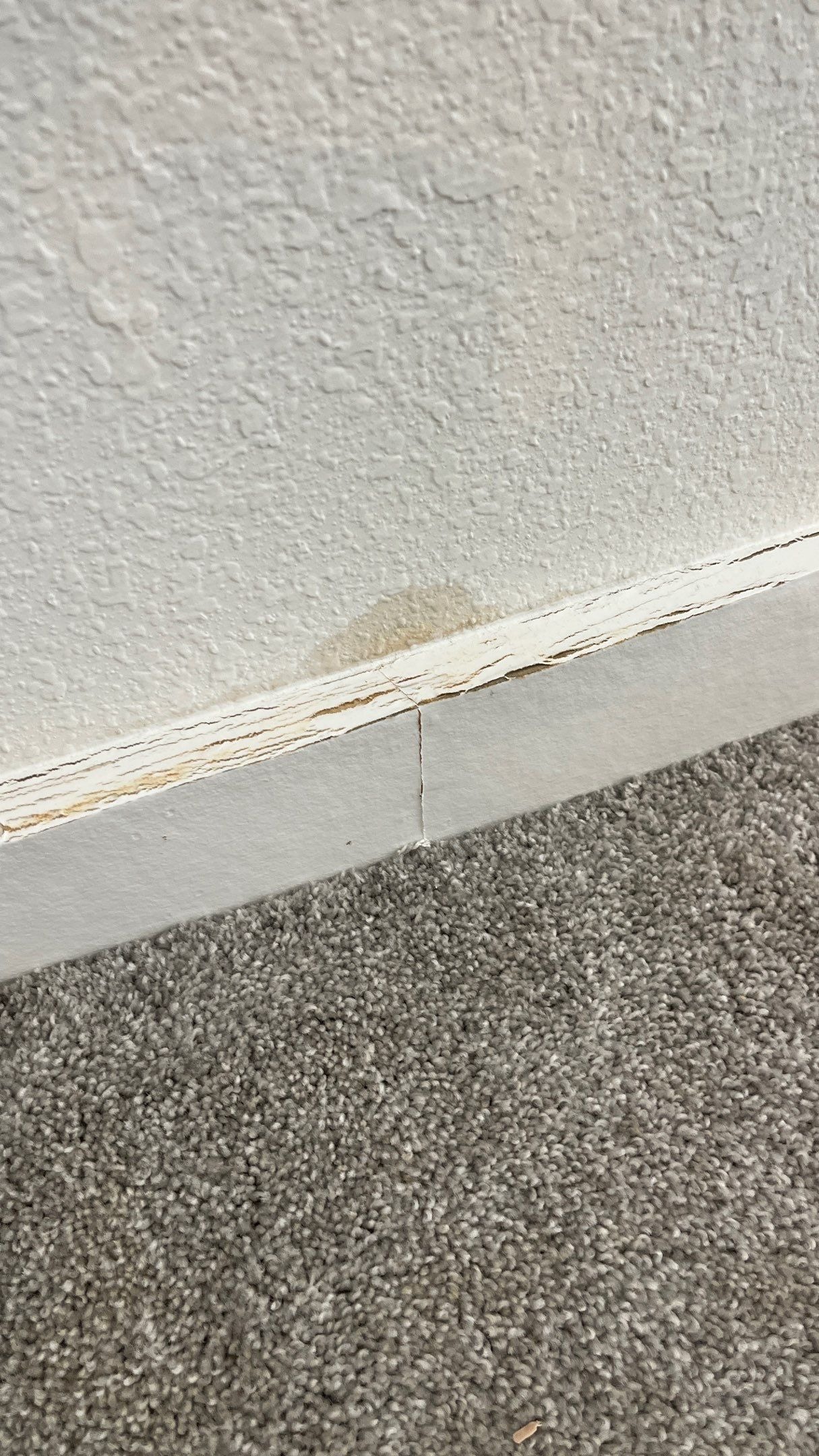
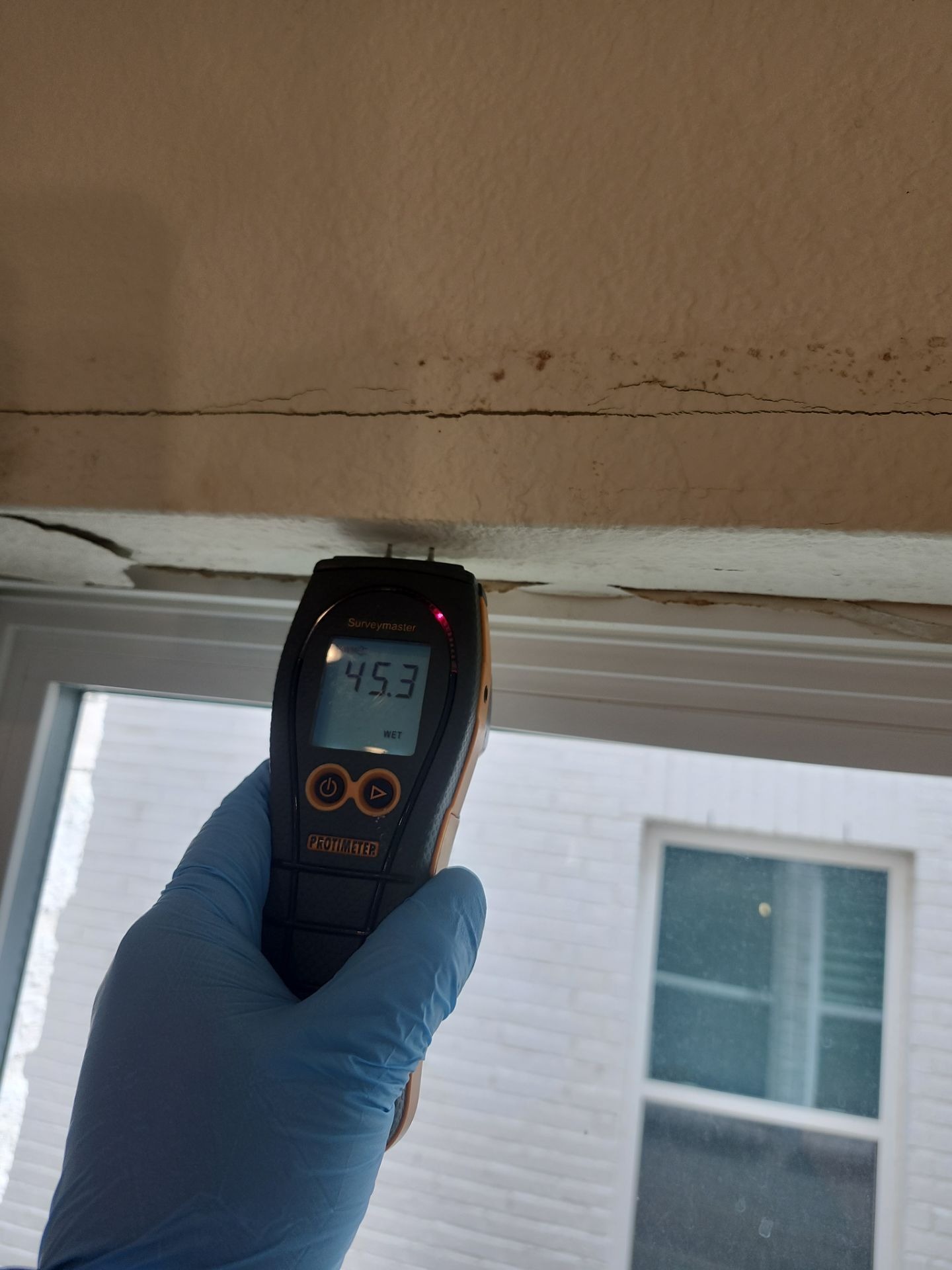
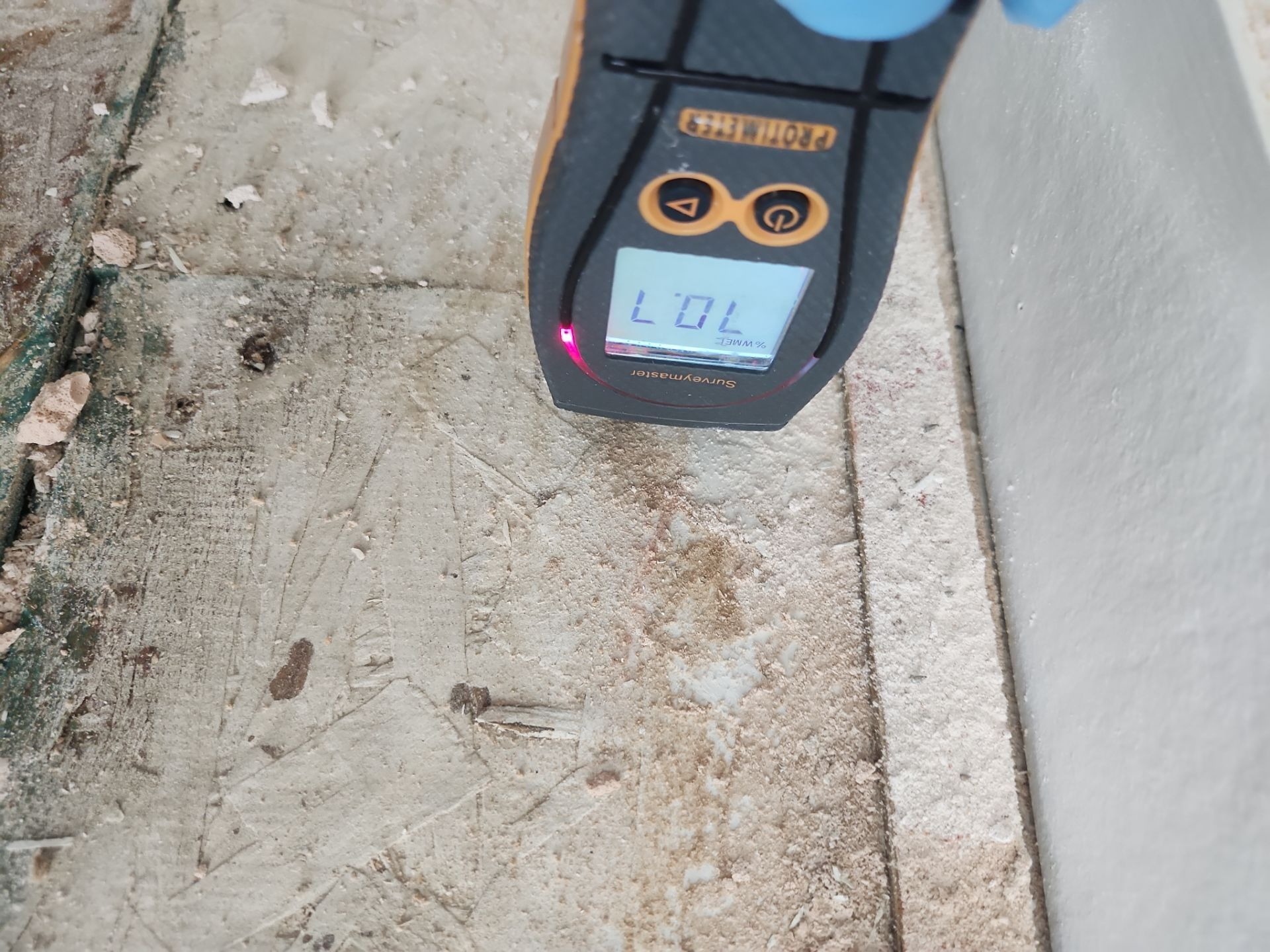
Moisture meters showed elevated readings in the upstairs wall cavity and the subfloor directly beneath the leak. Downstairs, the kitchen ceiling and an adjoining wall carried visible water staining. Insulation inside the wall had absorbed water and lost its ability to insulate effectively. Multiple rooms showed wet baseboards and flooring, which told us the water had spread further than the original leak point. All of this pointed to a supply-line plumbing leak, which was later confirmed as the documented cause.
Rainy Day’s role
Rainy Day Restoration & Roofing handled the water damage portion of this job under our mold and water license, RCO1416, and IICRC-certified protocols. Josh Hopewell, our IICRC-certified technician, led the assessment and the drying plan. As a family-owned company since 1999, we work as one company from the first call through the rebuild, so the same team that mapped the moisture also oversaw the drying and final checks.
The water damage restoration in Frisco, step by step
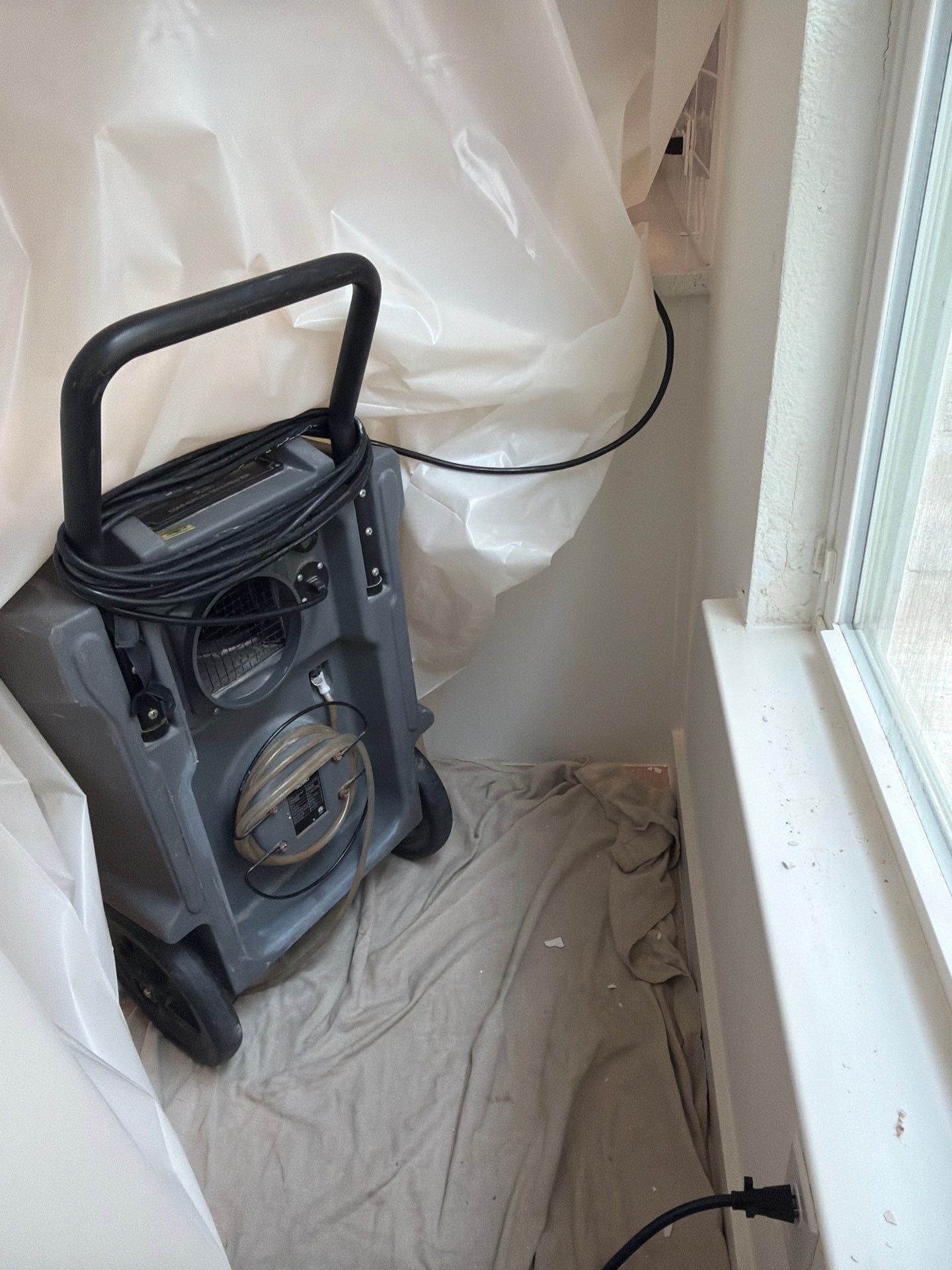
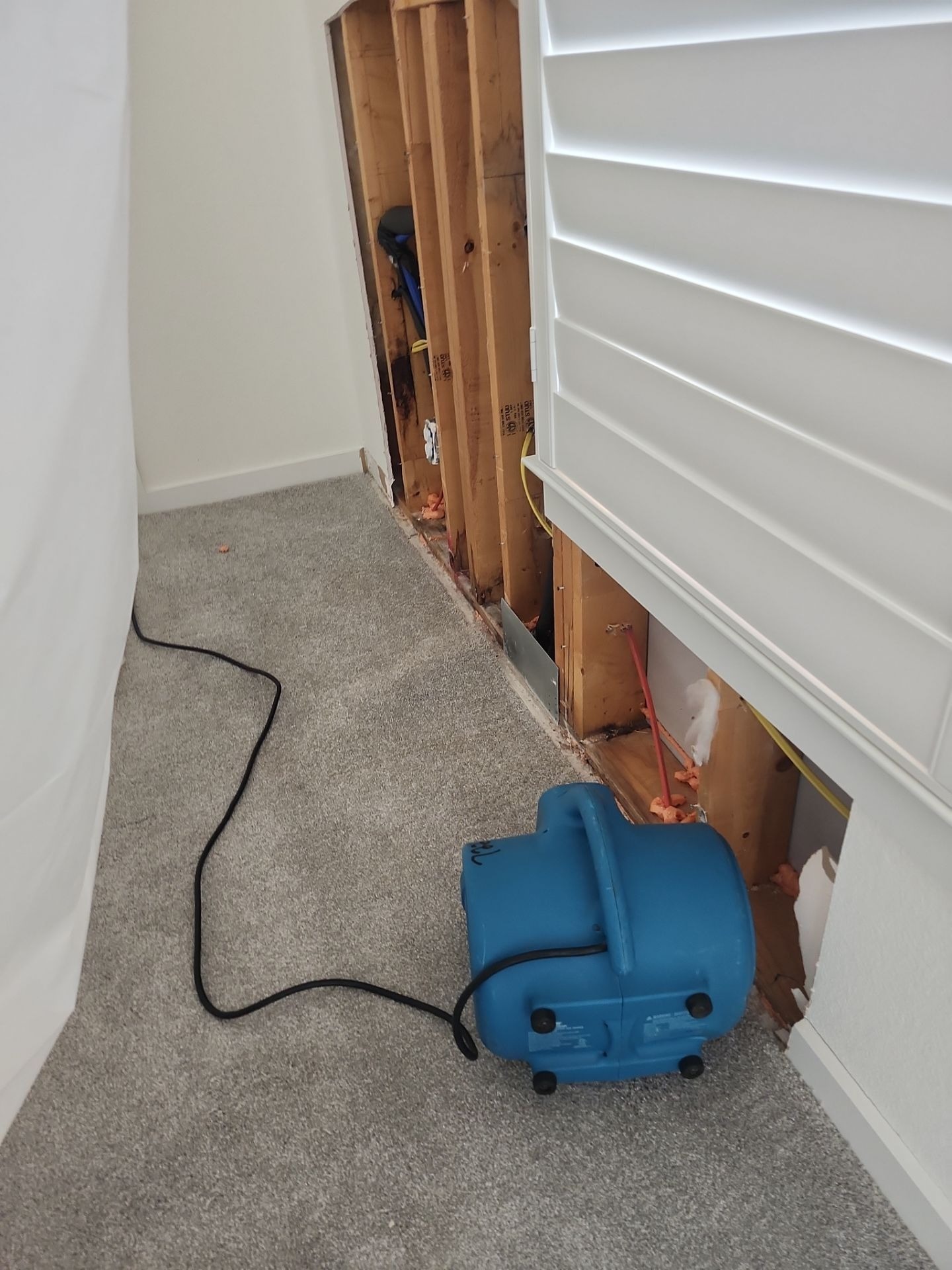
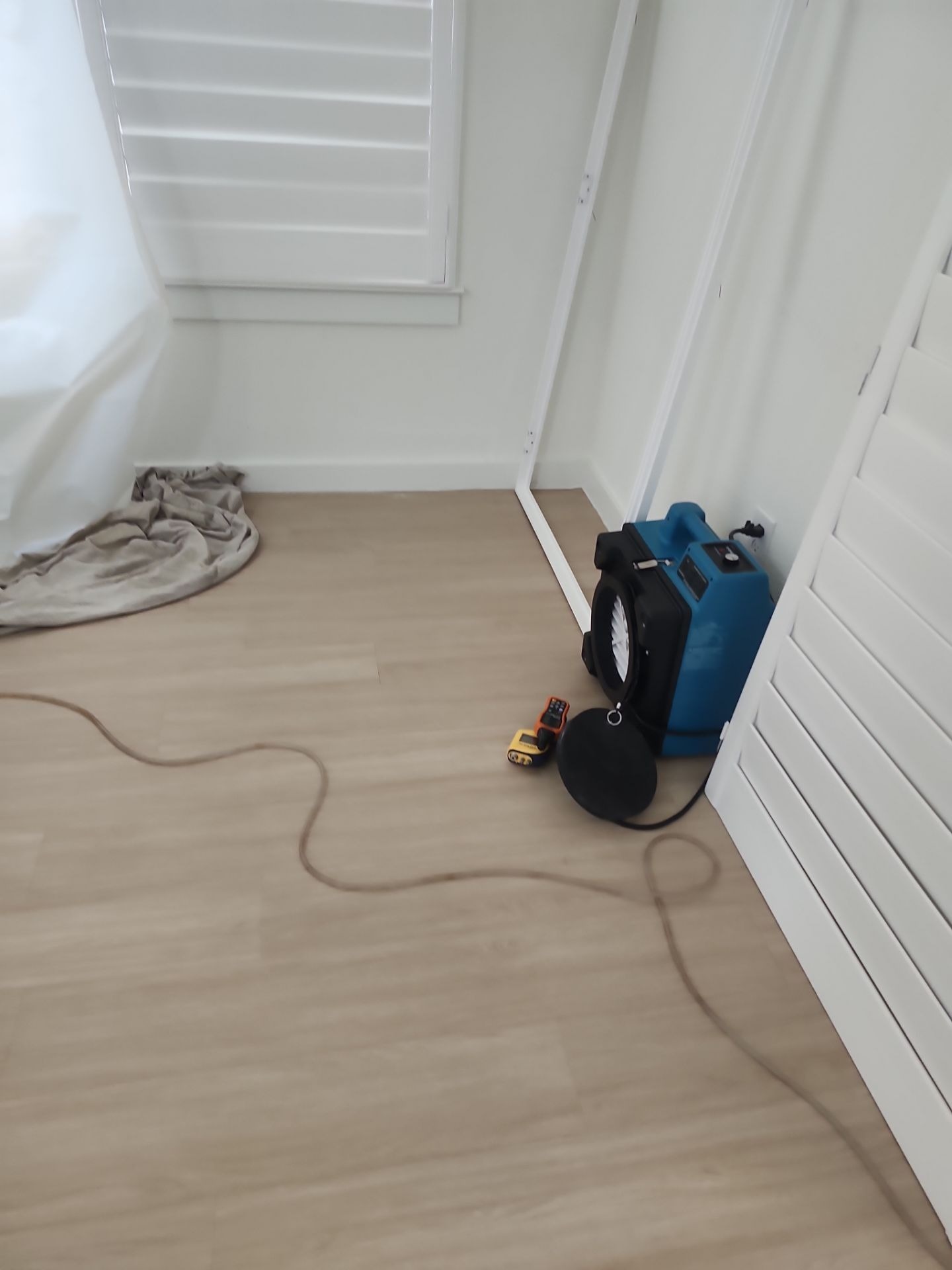
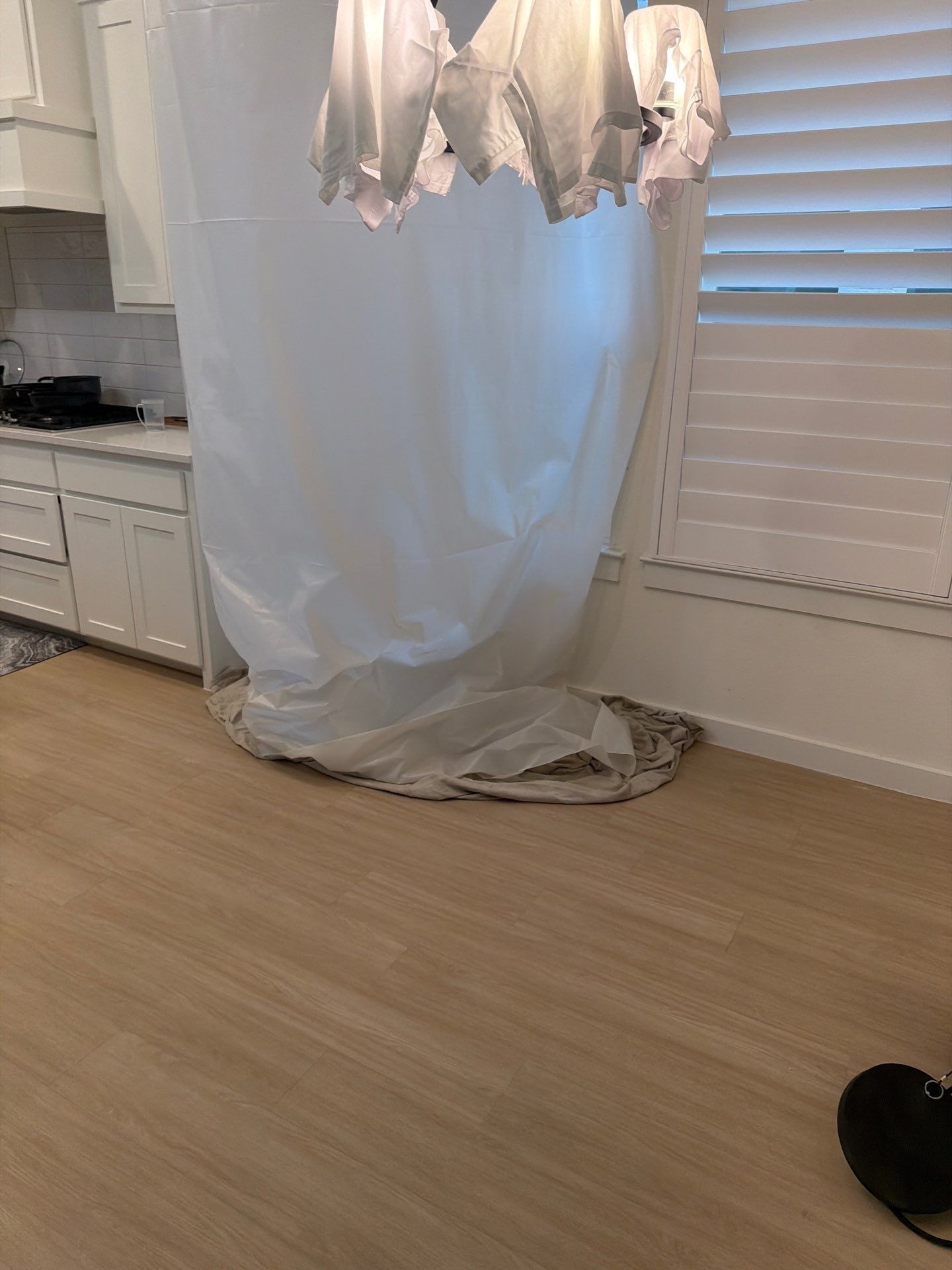
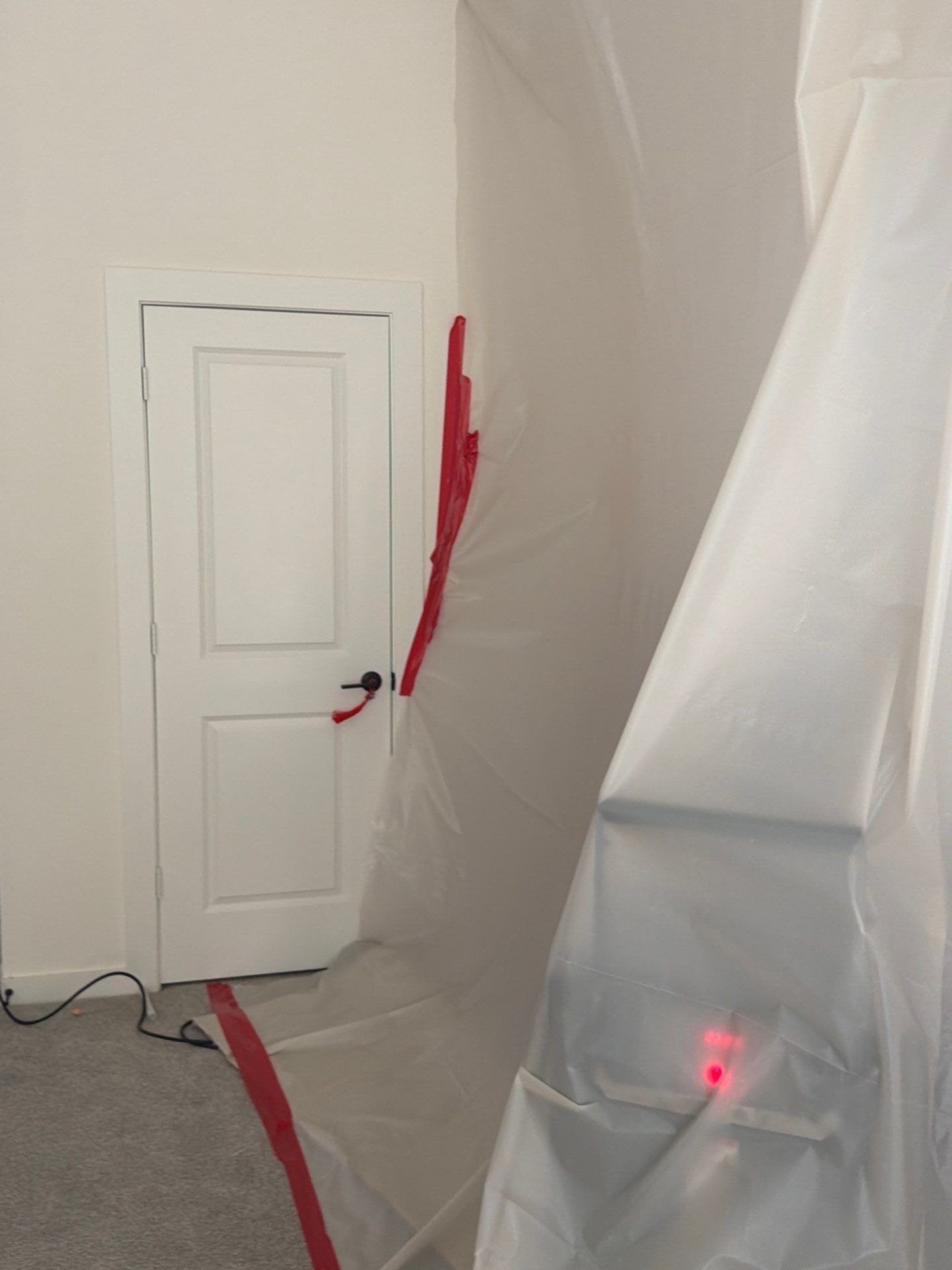
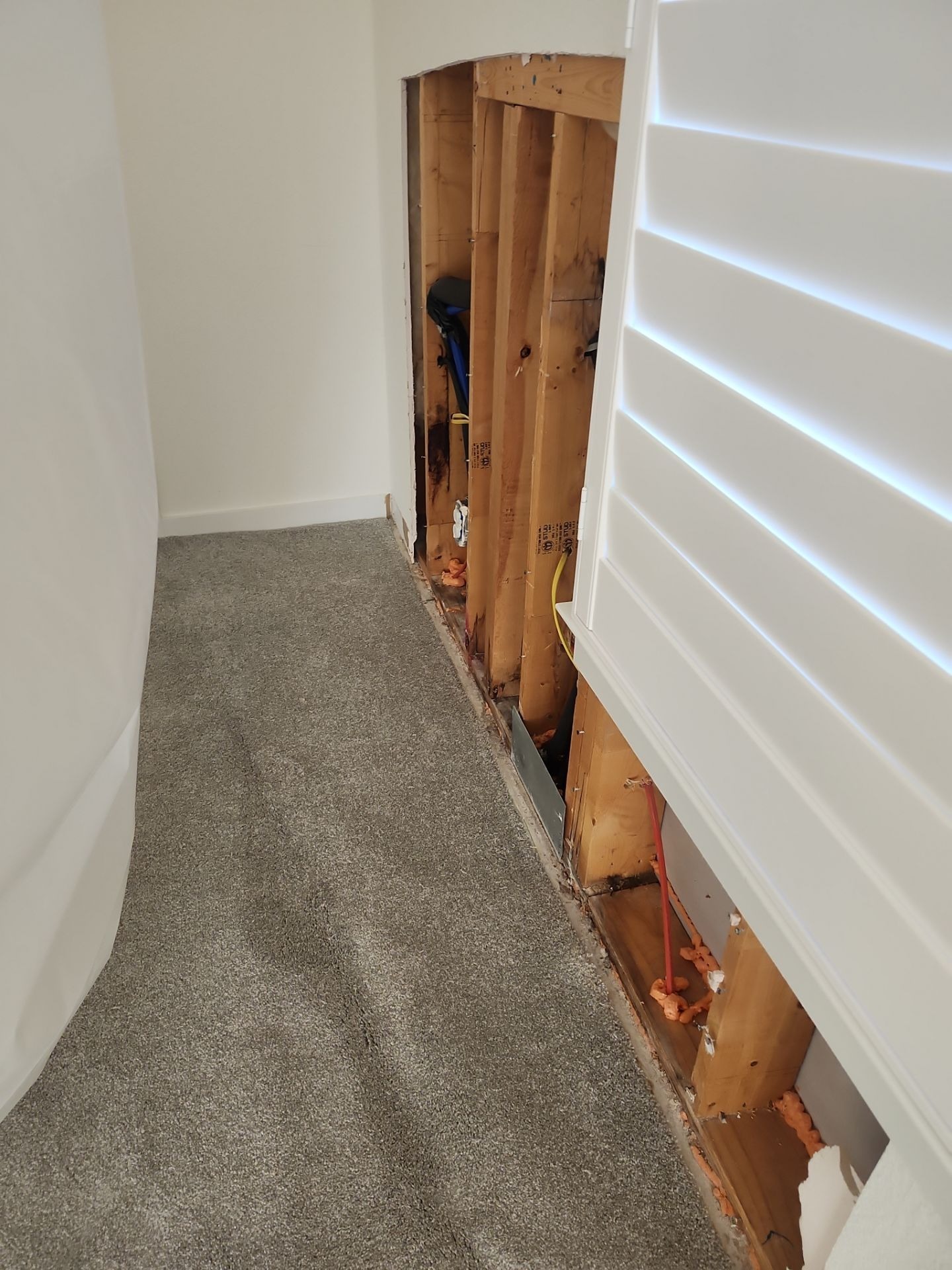
We started with moisture mapping to define exactly how far the water had traveled, both upstairs and down. Once we had readings across all affected areas, we set drying equipment to begin pulling moisture from the wall cavities, subfloor, and ceiling. Because the affected areas were large and open, we set up plastic containment to help focus the drying process rather than losing airflow to the rest of the home. Next, we performed a flood cut to remove wet drywall and baseboards that could not be dried in place. After removal, we applied an antimicrobial treatment to the exposed materials as a preventive step. From there, we monitored moisture levels daily until every affected area reached dry standard.
What the photos show
The first five photos document the damage as we found it: staining on the kitchen ceiling, wet baseboards, and the upstairs wall where the leak originated. The next six images show the drying phase, including the containment setup, drying equipment placed in key rooms, and the flood-cut sections where wet material had been removed. The final photo shows the space after equipment removal, once every area had passed its final moisture check.
Before
During
After
Why plumbing leak damage is worth taking seriously
A plumbing leak upstairs does not always stay upstairs. Water follows gravity and gaps in framing, so it can reach a subfloor, drop into a ceiling below, and spread into an adjoining wall before anyone notices. Wet insulation loses its effectiveness even after the surface looks dry. If wet materials are left in place too long, they can become an ongoing moisture source inside the wall or ceiling cavity. That is why moisture mapping matters: it tells us where the water actually went, not just where the stain appeared.
Result and next step
This water damage restoration in Frisco reached dry standard across every affected area, and the job passed its final moisture check. The job took four days from start to finish, with same-day response after the initial call. Because no insurance claim was involved, the approximate cost stayed under $5,000. For homeowners in a similar situation, the next step after drying is usually reviewing which materials need replacement, such as drywall or baseboards removed during the flood cut.
Guidance for property owners in Frisco and North Texas
If you notice a ceiling stain or wet baseboards after any plumbing issue, act quickly rather than waiting to see if it dries on its own. Homeowners in Frisco can review our water damage restoration services in Frisco to understand what a typical response involves. For a broader look at how we serve the area, visit our Frisco service hub. Plumbing leaks are not weather-related, but if you are dealing with storm damage instead, our North Texas hail history page for Frisco and the National Weather Service Fort Worth office are reliable sources for local storm data.
Related guidance
For more on how we approach active water intrusion, see our water damage restoration service page. If you are seeing a ceiling stain like the one in this job, our ceiling stain guidance explains what it often means. If you are dealing with a leak right now, you can request help to start the process.
Frequently asked questions
What does water damage restoration in Frisco involve after a plumbing leak?
It starts with moisture mapping to find how far the water traveled. Then crews set drying equipment, remove unsalvageable materials, and monitor moisture until every area reaches dry standard.
How long did this water damage job take?
This job took four days from the initial moisture readings to the final dry-standard check, with a same-day response after the call.
Why did a leak upstairs damage the kitchen ceiling downstairs?
Water from the upstairs leak traveled through the subfloor and wall cavity, then reached the kitchen ceiling and wall below before it was found.
Was insurance involved in this claim?
No insurance claim was involved in this job. The approximate cost stayed under $5,000.
“Had a great experience with these guys working a complicated leak on my house. They took the time to make sure the leak was fully taken care of before finalizing the job. It had a few entry points and they were very patient in helping us determine all the ways the water was getting in. much appreciated!”