
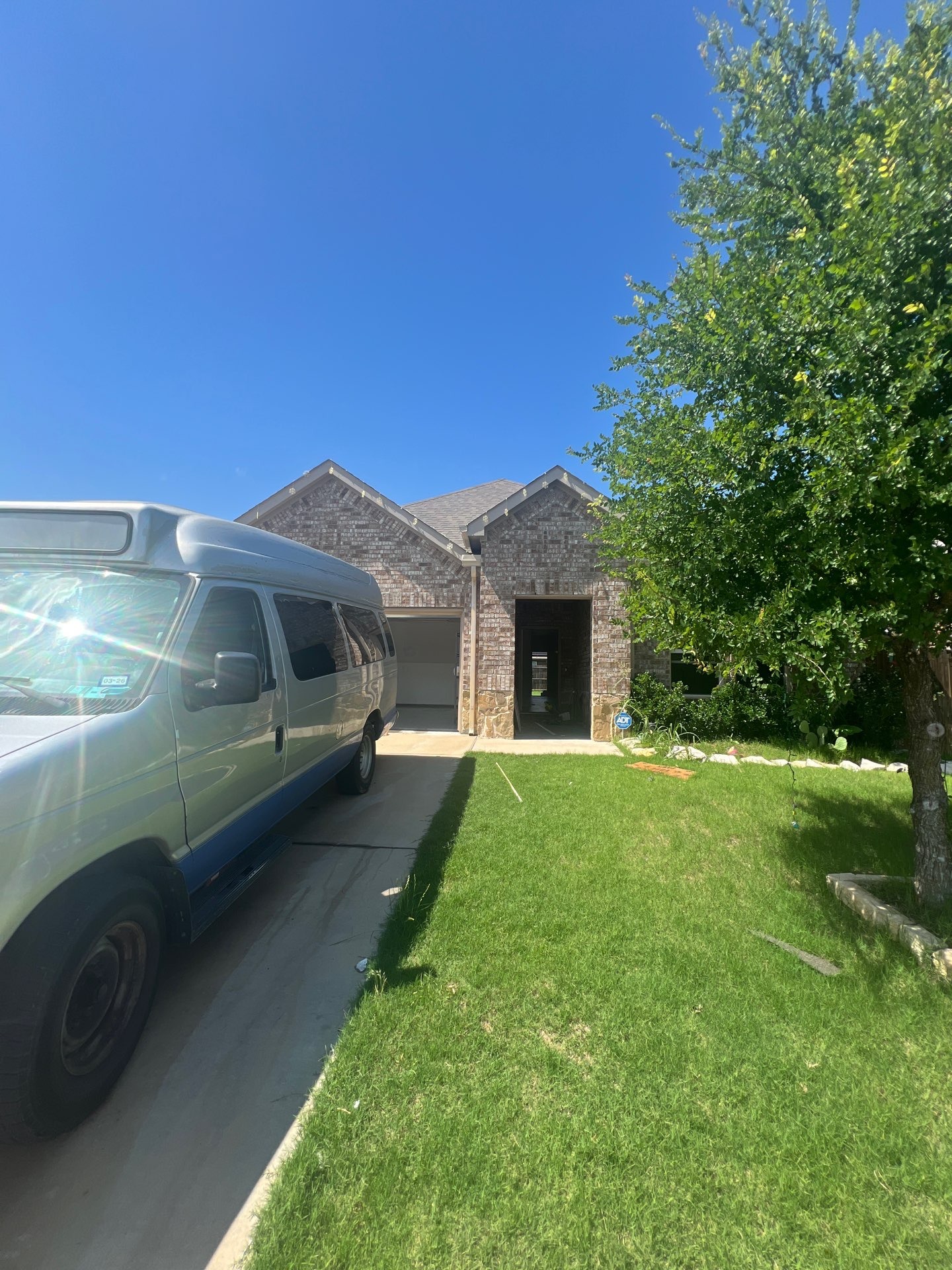
Roof leak water damage mitigation in Princeton, TX starts with a simple truth: when water shows up on a floor, most people look down. But the source is often above your head. A roof leak can send water down through the structure. It often travels out along a hallway floor far from where it entered. That is why good water mitigation checks the roof, not just the visible damage. This Princeton project traced the water from the interior back to the roof. It shows why fixing the entry point actually solves the problem.
Looking up to find the source
At this Princeton home, our inspection included the roof. We examined the shingle surface and slope to find where water was getting in. Interior water damage along walls and floors often starts as a roof intrusion. Drying the interior without addressing the roof would only buy time until the next rain. Checking the roof as part of the water inspection separates a lasting repair from a temporary one.
Confirming the interior moisture with imaging
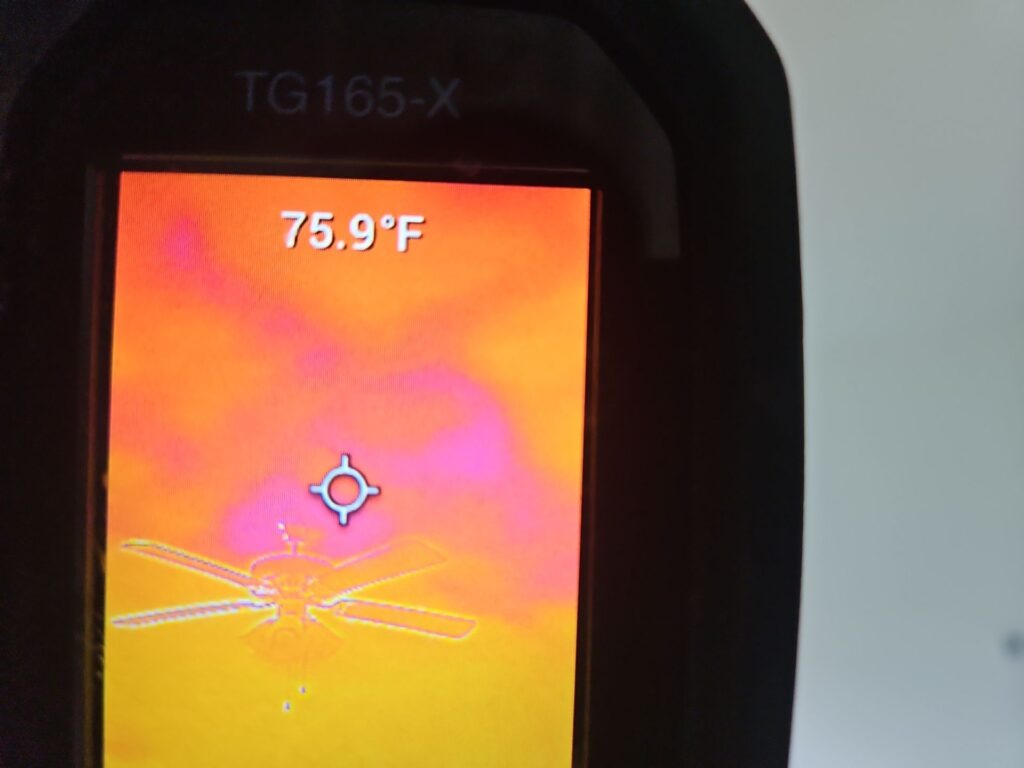
Inside, we used thermal imaging to scan for moisture and trace where the water traveled through the structure. Thermal imaging reveals the cooler patterns that hidden moisture leaves behind. Pairing it with the roof inspection connects the dots between where water enters and where it ends up. That full picture, source to symptom, is what a proper assessment provides before any materials come out.

The roof leak water damage mitigation in Princeton, TX, step by step
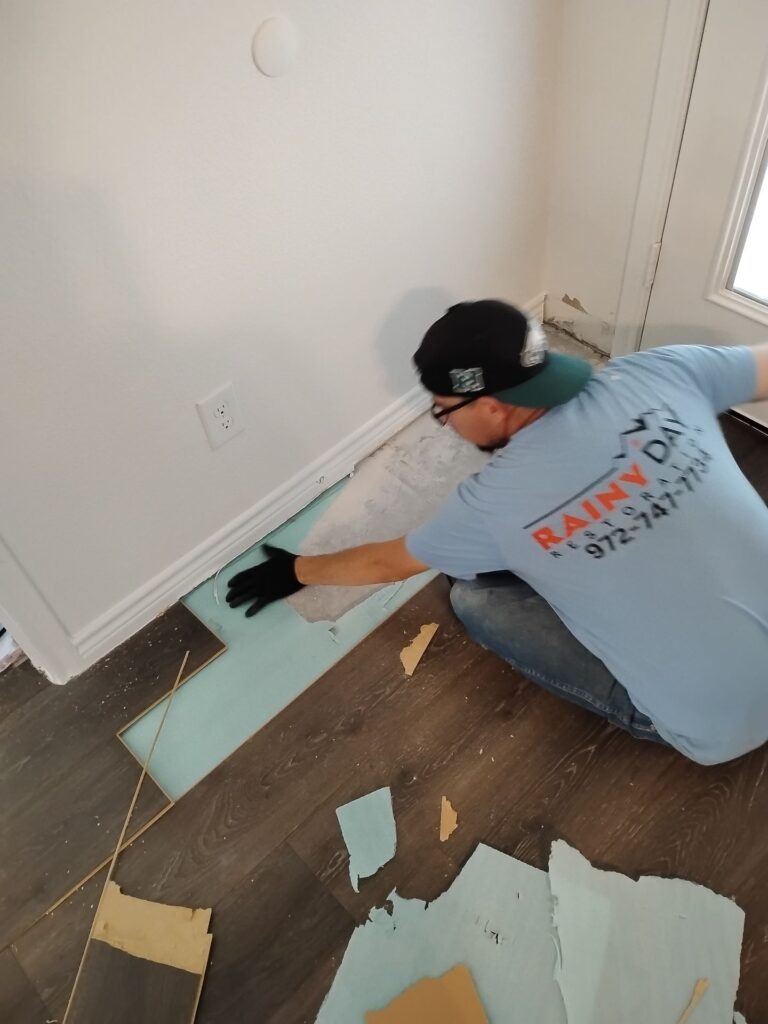
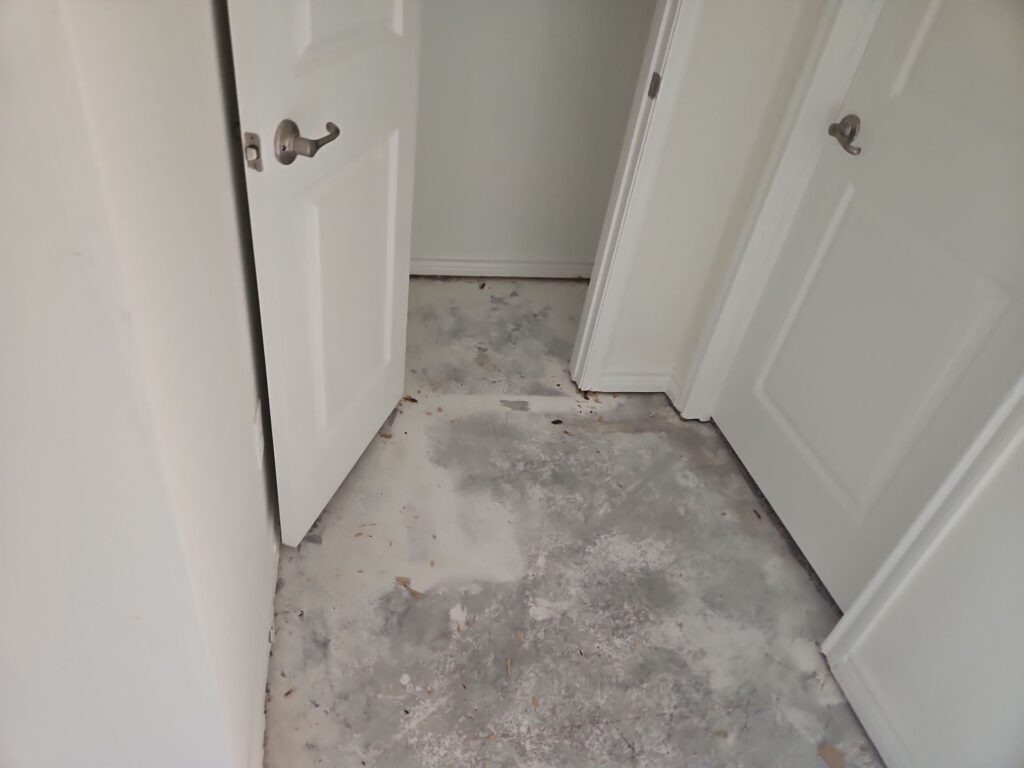
Where flooring had damage, our crew removed it along the affected walls to expose the subfloor. That let us dry the subfloor properly. Removing ruined flooring does two jobs. First, it takes out materials that would stay wet and risk mold. Second, it opens the subfloor and framing so drying equipment can bring moisture back to normal levels. Moisture readings on the exposed subfloor guide how long the drying continues.
Result and next step
This roof leak water damage mitigation in Princeton, TX documents the roof inspection, the thermal moisture scan, the removal of damaged flooring, and the exposed and dried subfloor at this Princeton home. If you have interior water damage, the right next step is an inspection that looks for the source. That includes the roof, not just the wet floor, so the repair addresses where the water actually comes from.
Guidance for property owners in Princeton and North Texas
If water appears on a ceiling or a floor after rain, suspect the roof. Look for stains that worsen with weather, damp spots along interior walls, or a musty smell in an upstairs room. Have the roof and the interior inspected together. That approach finds both the entry point and the damage, so you are not drying the same floor again after the next storm.
Related guidance
Learn more about our water damage restoration and roofing services, or get help now for an inspection.
Frequently asked questions
What does roof leak water damage mitigation in Princeton, TX involve?
It starts with a roof inspection to find the entry point. Then we use thermal imaging to trace moisture inside the home. After that, we remove damaged flooring and dry the exposed subfloor.
Why check the roof if the damage shows up on the floor?
Water often enters through the roof and travels through the structure before it appears on a floor or wall. Checking only the visible damage misses the actual source. Fixing the roof is what stops the problem from returning.
How does thermal imaging help during an inspection?
Thermal imaging shows cooler patterns left behind by hidden moisture. It helps our team trace how water moved through the structure. That information connects the roof leak to the interior damage.
More Rainy Day projects: Burst Frozen Pipe Water Damage Dry-Out in a Princeton Home.
“Rainy Day is a life saver! My house was basically gutted and they brought my vision to life. My home is absolutely beautiful. Every person that stepped foot into my house was professional, polite, kind, and helpful. They were all just a joy to work with and I will definately use them again.”